Table of Contents
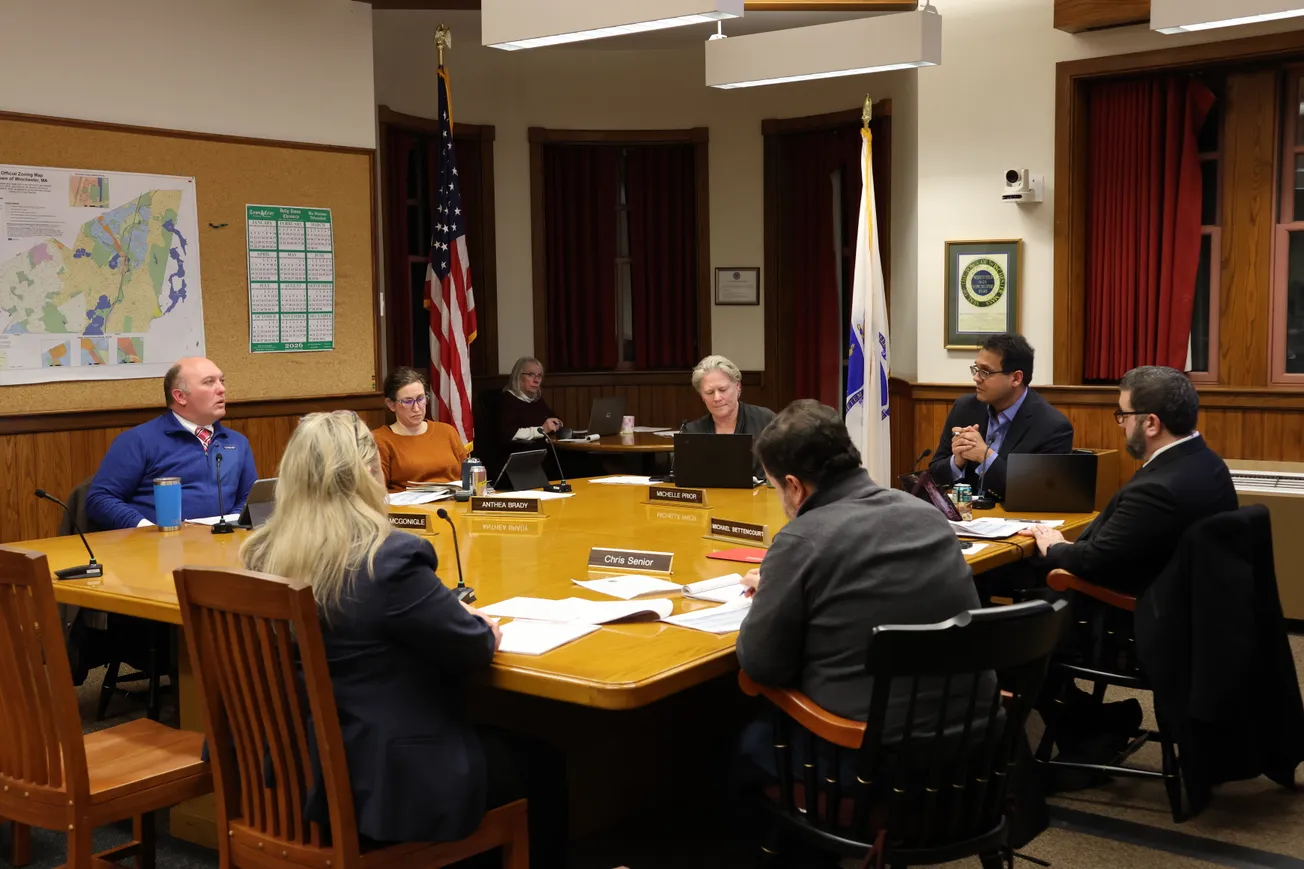
Winchester Select Board members reached consensus Feb. 12 on an $11.5 million Proposition 2½ override after nearly three hours of tense negotiation, splitting the ask between $9 million for operations and $2.5 million for capital projects.
The override would increase the average single-family tax bill by approximately $1,006 in fiscal year 2027 and $1,463 in fiscal year 2028, calculated as the midpoint between tax projections for $11 million and $12 million overrides shown during the meeting. That works out to roughly $122 monthly in FY 2028.
Operations funding targets a three- to four-year runway for town and school needs, while capital dollars divide evenly between building and capital stabilization funds to address Town Hall restoration and school facilities.
The vote came three days after a Feb. 9 Special Town Meeting and public hearing that exposed a sharp divide among board members and residents over whether to pursue an aggressive $12.5 million to $15 million override or a conservative $8 million to $10 million approach.
Board members trade commitments to reach consensus
Thursday’s session turned that disagreement into concrete negotiation, with board members trading commitments on health insurance policy, transfer station revenue and spending cuts for support on a final number.
The discussion exposed competing views on financial risk: ask voters for a cushion against unforeseen costs or hold to a leaner figure and trust the board’s ability to find savings.
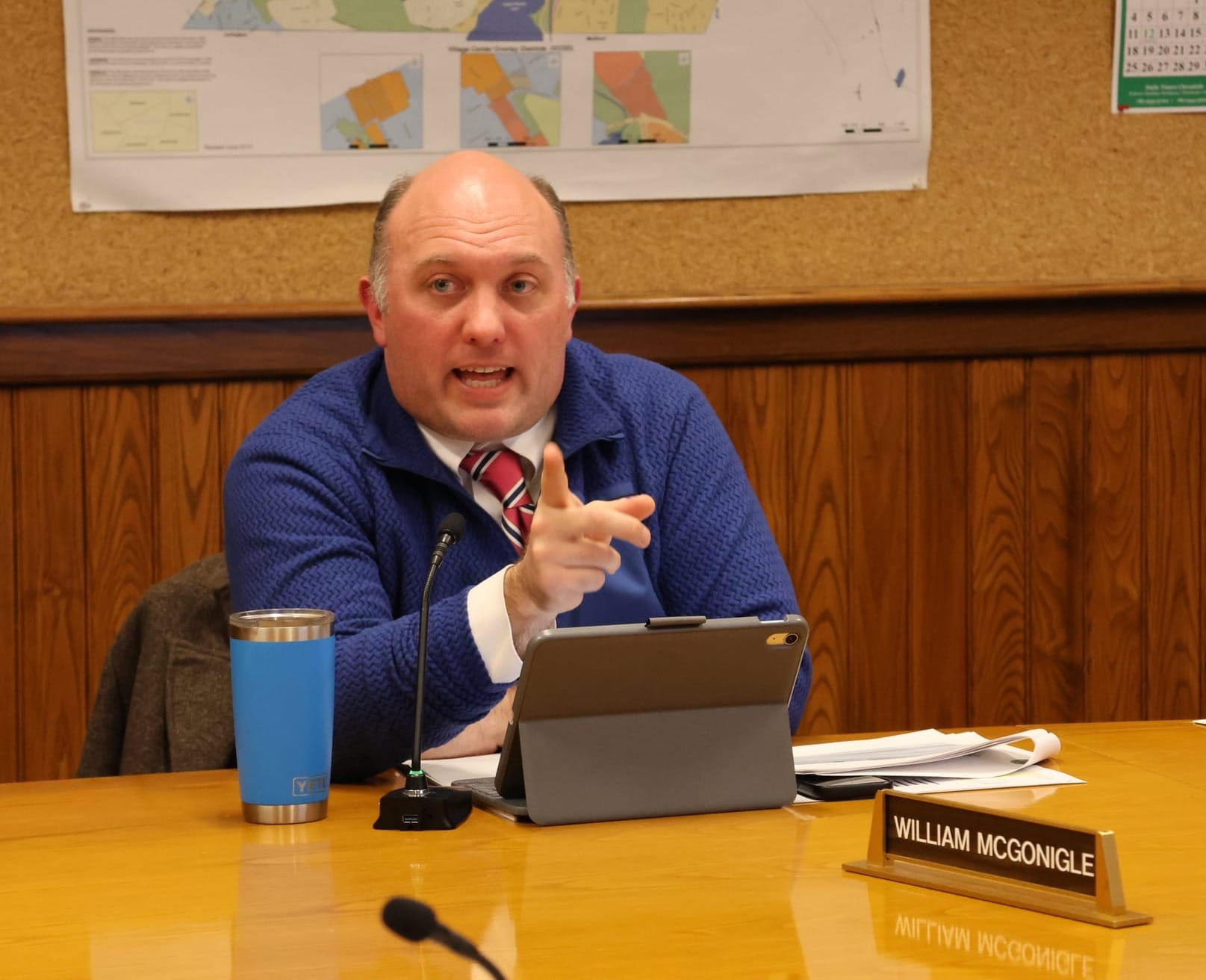
Select Board member Paras Bhayani opened the meeting, walking colleagues through potential cost reductions and revenue increases: $400,000 in reduced school fringe costs by cutting 10 positions from the staffing plan, up to $500,000 in transfer station revenue from commercial rate increases and $250,000 in new growth from housing developments expected in fiscal 2028 or 2029.
Bhayani emphasized that some of the proposed savings carried more certainty than others, noting health insurance costs remained largely outside the board’s direct control even as the town pursued plan design changes and premium adjustments.
“Some of them are easy to bank,” Bhayani said. “Some of them have trade-offs. Some of these we do not fully control the outcome of.”
Health insurance costs emerge as central sticking point
Select Board member Bill McGonigle made clear early in the discussion that he would not support a final operating number unless the board formally committed to health insurance cost management and agreed to sponsor a Town Meeting article replenishing the health care stabilization fund from excess override capacity.
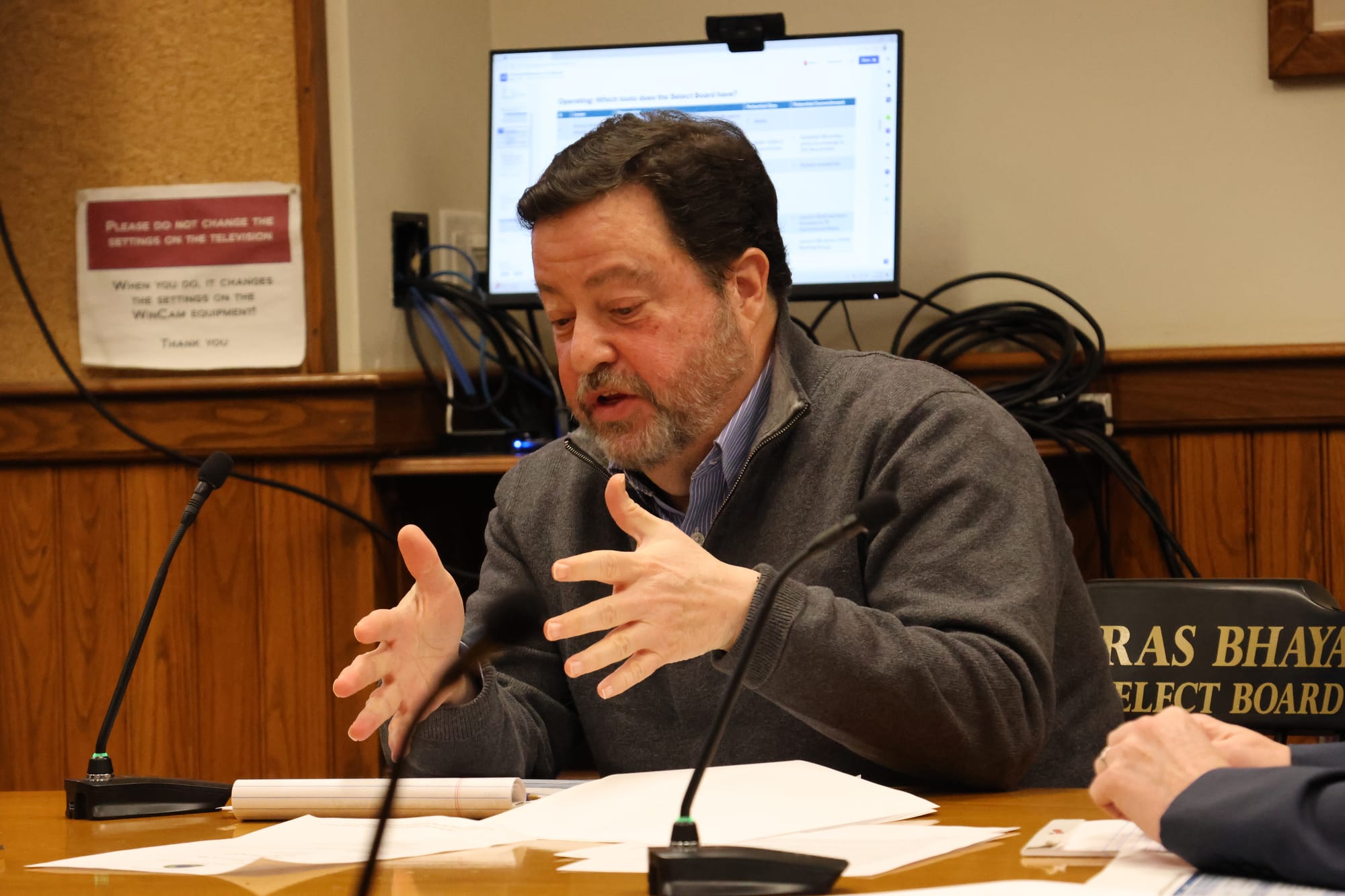
“My concern is, again, more than anything else, I see so much of that coming from health care,” McGonigle said.
Select Board Chair Michelle Prior pushed back, saying the health care stabilization fund serves a narrow purpose and cannot address broader budget pressures in schools or municipal departments.
“It’s only for health insurance,” Prior said. “So it doesn’t solve school needs, it doesn’t solve all the municipal things. It’s a buffer for a very specific line item in the budget that I think puts other items at risk.”
She argued that committing override funds to the stabilization fund would require a two-thirds Town Meeting vote to withdraw and reduce flexibility.
McGonigle refined his proposal to a policy framework rather than pre-committing dollars.
The board voted to sponsor a spring Town Meeting article directing the town manager to replenish the health care stabilization fund using available override revenue.
Members clash over size of financial cushion
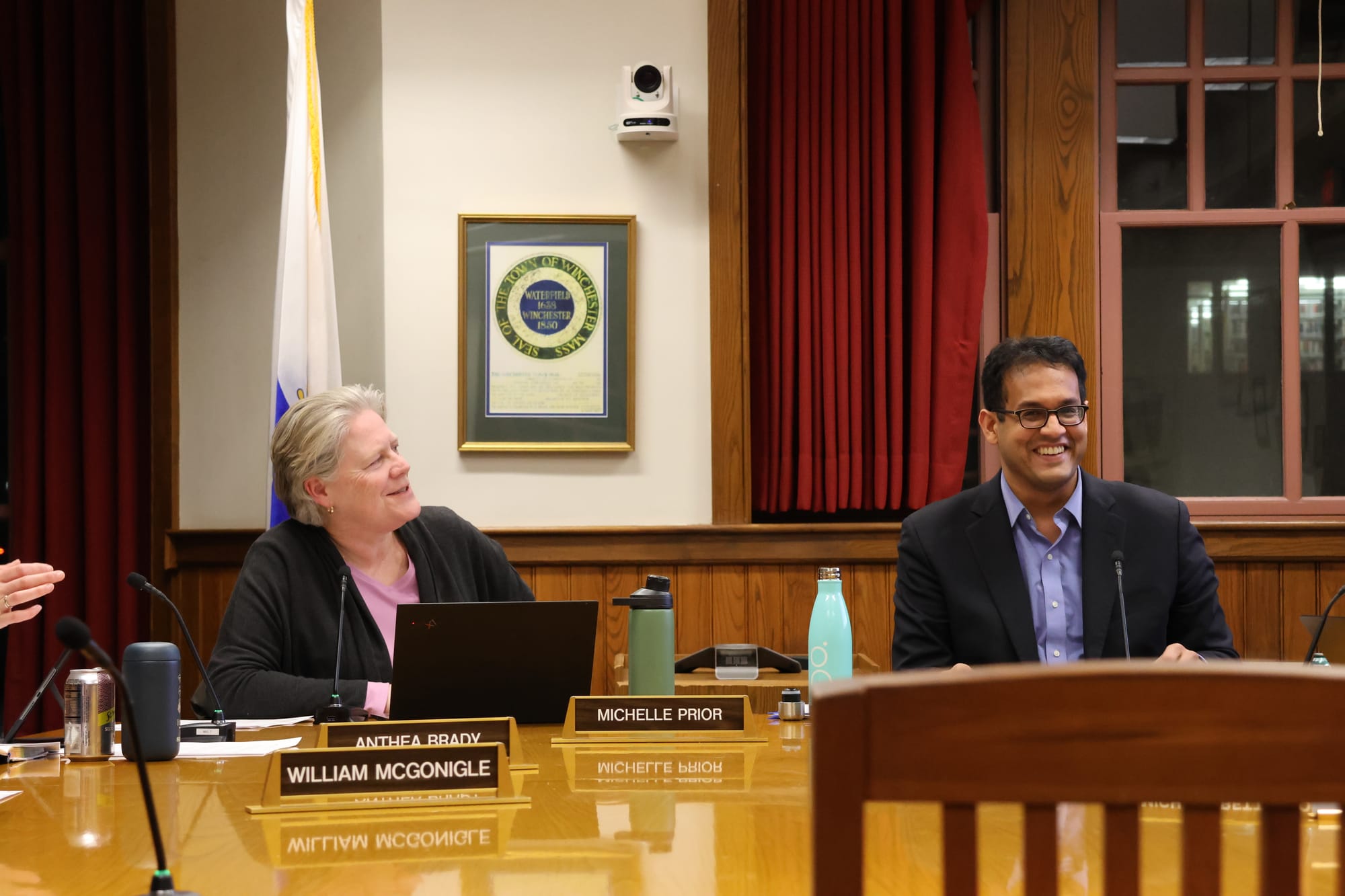
Select Board member Anthea Brady pushed repeatedly for a higher operating figure than the $9 million Bhayani, Prior and Select Board member Michael Bettencourt supported, arguing the difference would provide crucial breathing room entering fiscal year 2030 without imposing significant additional tax burden.
Prior resisted moving higher, saying the board should not ask voters for money beyond what modeling showed was necessary to fund identified school and municipal priorities through fiscal year 2029.
“We’re asking people now to give us a lot of money and we’re never going to say we want more money just in case we’re wrong,” Prior said. “I’d rather be wrong or I’d rather work hard at being right than ask for more money.”
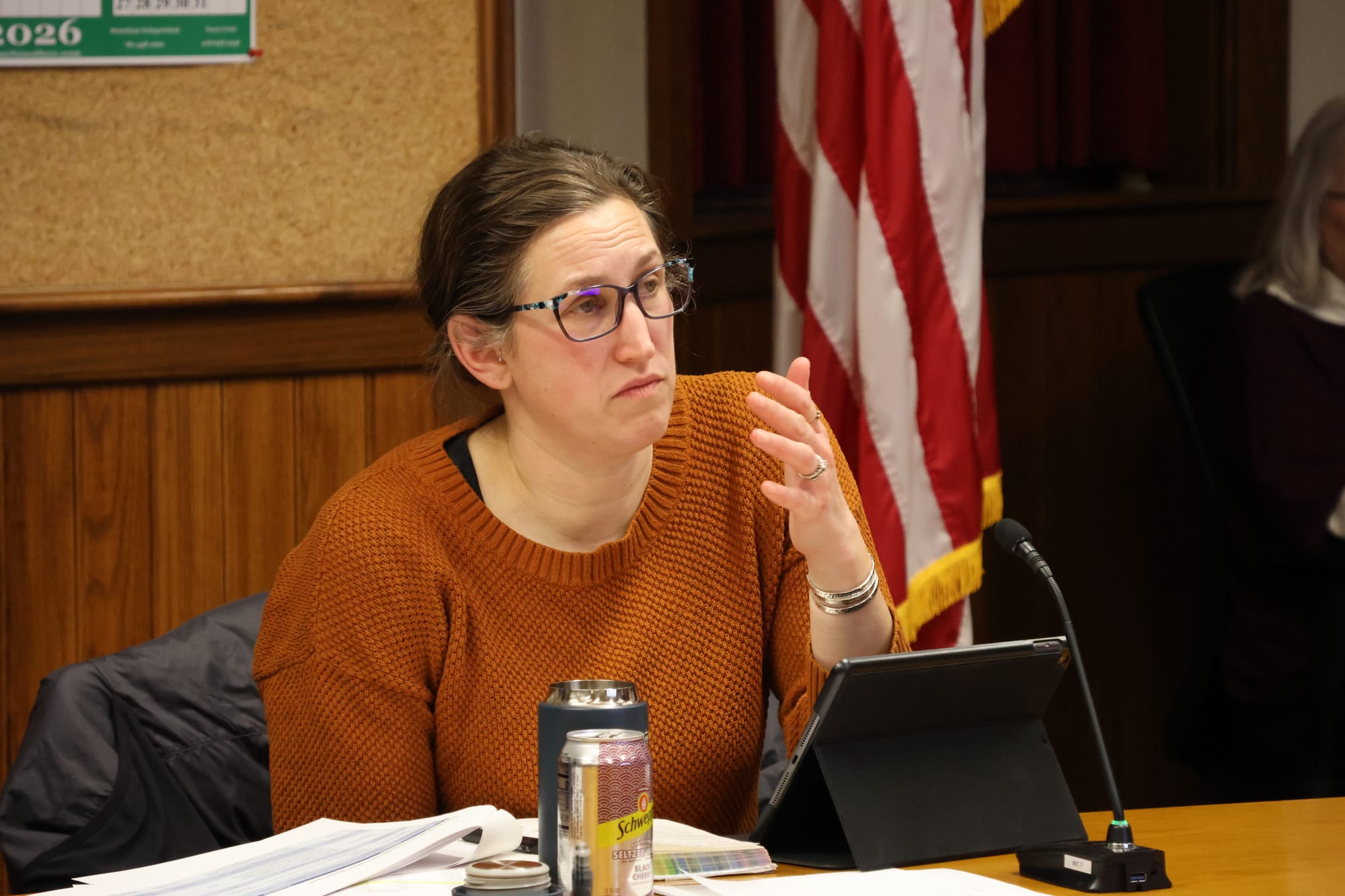
Prior pointed to expected savings from health insurance, housing tax revenue and enrollment-driven staffing reductions. She cited rising human services and recreation scholarship requests as evidence of affordability pressures.
McGonigle framed his position as rooted in risk aversion rather than philosophical opposition to fiscal restraint. He noted he had started the override deliberations advocating for $19 million and had moved substantially lower, but remained concerned about the board’s ability to manage unforeseen cost shocks without additional levy capacity.
“I am very risk averse,” McGonigle said. “The likelihood of something going wrong is always there out of our control.”
Bettencourt said he trusted the financial modeling and the board’s commitment to pursuing non-tax revenue, but emphasized the need to formalize cost control commitments rather than treat them as aspirations.
As part of the consensus package, the board voted to direct the town manager to create a transfer station working group targeting up to $500,000 in new revenue from commercial rates and fees, with at least half implementable by the next calendar year, and to create a policy capping municipal health insurance expense growth at 12% or less per year.
The board voted to remove several items from core municipal strategic additions, including an assistant facilities manager, a young adult librarian and a recreation program supervisor, preserving them as contingent additions if funding becomes available. The board also reduced the tree program to $100,000 per year in fiscal 2028 and beyond.
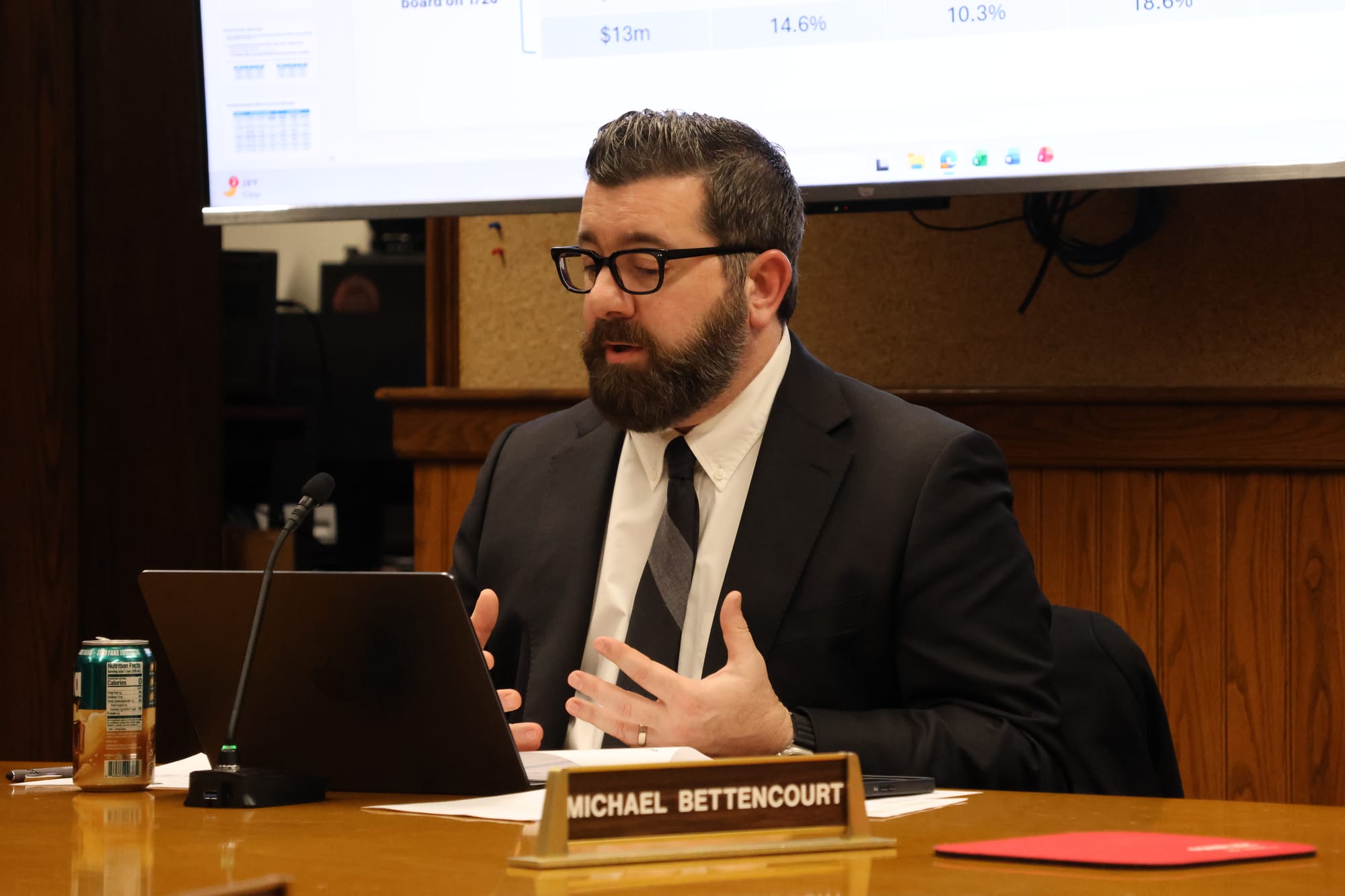
The debate over the operating figure continued as the clock moved toward 10 p.m. Brady pushed for $9.4 million or higher. McGonigle had come down from $19 million to the $11 million range, but remained uneasy about fiscal 2030. Prior, Bhayani and Bettencourt had coalesced around $9 million, but faced the prospect of a divided board on one of the year’s most consequential votes.
Bhayani breaks impasse
Bhayani broke the impasse by making explicit what had been implicit throughout the evening: he held the swing vote and would use it to prevent a public split.
“I don’t want to be on a three-to-two vote right now,” Bhayani said. “Somebody calls a vote, I’m going to abstain and it’s going to be a two to two. So I need us to try to bridge this somehow.”
Brady made a motion for $9 million in operating funding. Prior seconded. The board voted unanimously to approve.
Bhayani then moved that the board support a capital override of $1.25 million into the building stabilization fund and $1.25 million into the capital stabilization fund.
The board voted unanimously to approve.
Will Dowd is a Massachusetts journalist who covers municipal government and community life for Winchester News. He runs The Marblehead Independent, a reader-funded digital newsroom.