Table of Contents
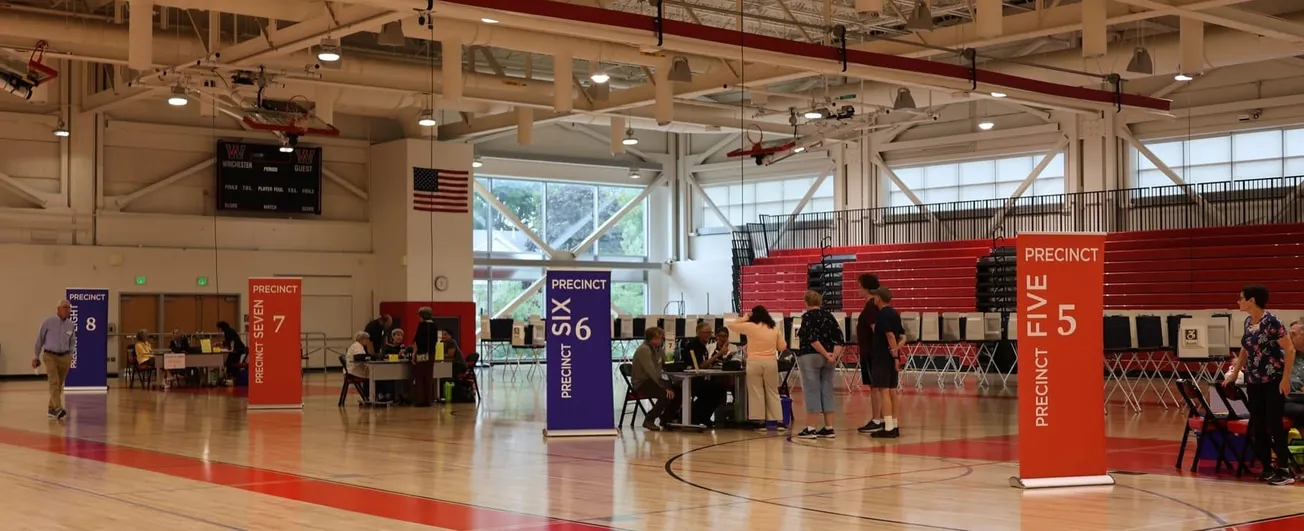
The gymnasium at Winchester High School was doing something on Sept. 1 it had not done in at least a generation: hosting a vote on two open state Senate seats at once.
All eight precincts cast ballots on the second floor at 80 Skillings Road, and depending on which precinct a voter came from, the ballot handed across the table listed an entirely different set of names.
By the end of the night both races had resolved, and neither was decided in Winchester.
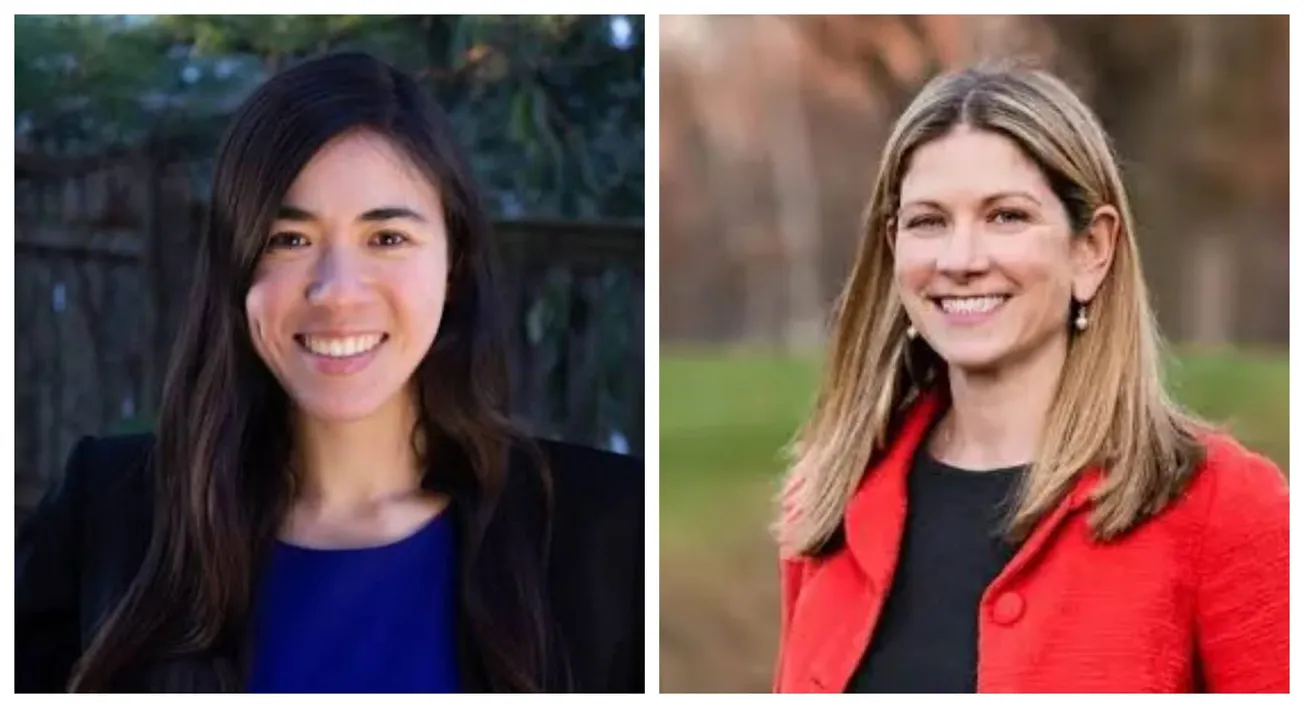
Erika Uyterhoeven, the Somerville state representative and self-described democratic socialist who has spent five years arguing that the Legislature hides its own votes, won the Democratic nomination in the Second Middlesex District.
Kate Lipper-Garabedian, the Melrose state representative who chairs House Ethics and ran on a list of enacted laws, won the Fifth Middlesex.
Because no Republican filed in either district, both are now the near-certain senators-elect.
Winchester has no single state senator, a fact that surprises residents every two years. Precincts 4, 5, 6 and 7 vote in the Second Middlesex, the seat Patricia Jehlen has held since 2005. Precincts 1, 2, 3 and 8 vote in the Fifth Middlesex, the seat held by Jason Lewis, a Winchester resident who announced in February that he would leave after nearly 12 years in the Senate and about five in the House.
Jehlen said in February that it was simply time, after 50 years of public service.
The two retirements landing in the same cycle stripped Winchester of a 20-year committee chair and its own hometown senator in a single night. Both replacements will arrive on Beacon Hill as freshmen. Seniority does not transfer.
Second Middlesex: Somerville splits, and Uyterhoeven survives it
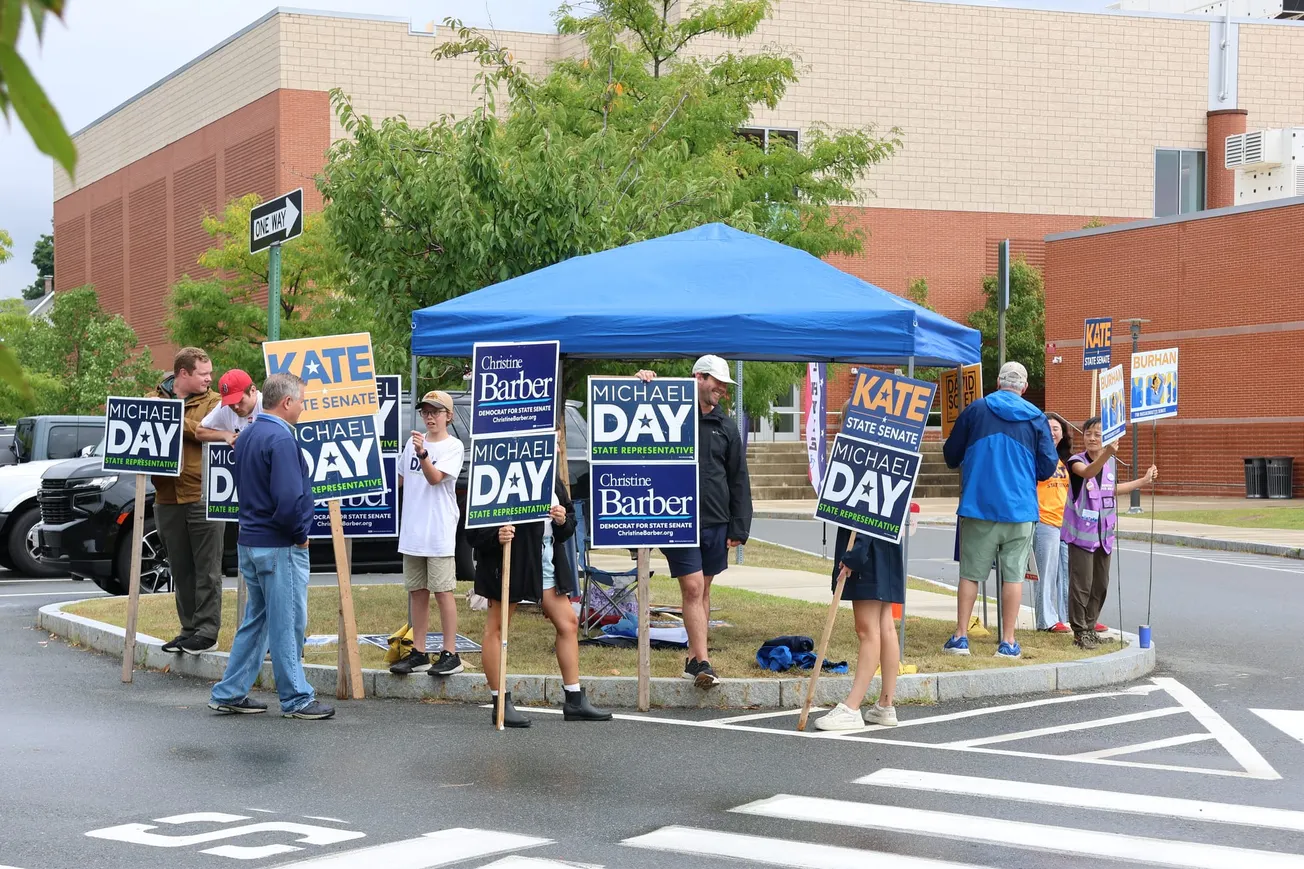
The Second Middlesex race was never a fight over ideology. Uyterhoeven, state Rep. Christine Barber, Somerville City Councilor Matt McLaughlin and Cambridge Vice Mayor Burhan Azeem all ran well to the left of center and largely agreed on housing, transit, climate and affordability. What separated them was method — whether to build coalitions inside the building or attack how the building operates.
Uyterhoeven ran on the second answer. A former Bernie Sanders staffer and antitrust economist, she co-founded Act on Mass and campaigned on making committee votes public, arguing that affordability in Massachusetts is a product of a Legislature that prioritizes donors and companies over constituents.
She also had money. Office of Campaign and Political Finance filings reported by Winchester News showed her holding $144,886 in cash as of June 30, the strongest reserve in the field, built partly on 60 maxed-out $1,000 donors worth $60,000 and partly on small gifts — 64% of her 689 itemized contributions, or roughly 441 of them, came in at $100 or less.
Barber entered with the largest starting balance, $112,811.52, and the endorsements that usually settle races like this one: Jehlen herself, in a rare public preference about her own succession, and Gov. Maura Healey.
The geography was always going to decide it. Somerville supplies roughly 46% to 47% of the district's vote and Medford roughly 27% to 30%, with Cambridge's four in-district precincts at 19% to 22%. Three of the four active candidates were based in Somerville. Winchester's precincts 4 through 7 account for only about 4% to 5% of the district — enough to notice, never enough to decide.
One name on the Second Middlesex ballot was not running at all. Tom Hopcroft, a Winchester School Committee member and Precinct 7 Town Meeting member, ended his campaign July 28, citing money and organization. He filed too late to have his name removed.
Any votes recorded for him Tuesday were name recognition, concentrated where he lives, not a candidacy.
Fifth Middlesex: Malden divides, Melrose does not
The Fifth Middlesex math had been visible for months, and it held.
Lipper-Garabedian faced two Malden city councilors, Carey McDonald and Ryan O'Malley. Malden is the largest municipality in the district, casting 22,875 of 93,352 ballots in the 2024 state election, or 24.5% — the biggest single bloc, but nowhere near a majority.
Melrose cast 17,301, or 18.5%. Reading, Wakefield and Stoneham followed close behind at 17.8%, 17.7% and 14.7%. Winchester's four precincts cast 6,363 ballots, 6.8% of the district.
Two Malden candidates dividing a quarter of the electorate while a third consolidated her home city and her existing House turf in Wakefield is not a novel outcome in this district. It is how Lewis himself won the seat. In the 2014 Democratic special primary, Lewis took 23.4% of the candidate vote in Malden and 15.7% in Wakefield and won anyway, on the strength of Melrose, Reading, Stoneham and an 88.4% share in Winchester.
Lipper-Garabedian also assembled the broadest institutional roster in either race. Lewis endorsed her. So did 1199SEIU.
Per the Reading Observer, more than 35 local elected officials across all six communities backed her, along with 15 labor and advocacy organizations and five sitting state legislators. In Winchester that included Select Board Chair Anthea Brady and board members Michael Bettencourt and Bill McGonigle, plus School Committee Chair Timothy Matthews and members John Bellaire and Stefanie Mnayarji.
Her legislative record ran to the kind of bills that rarely make headlines and often make law: lead sponsorship of the long-term-care and assisted-living reform statute, renter tax relief and the law permitting campaign funds to cover child care. She has said she used personal money for child care before that bill passed.
McDonald, the Unitarian Universalist Association executive vice president who is Malden's first out trans elected official and uses they/them pronouns, ran with the broader movement coalition — Progressive Mass, the Massachusetts Working Families Party, SEIU 509, the Boston Teachers Union, Malden Firefighters Local 902 and Malden Mayor Gary Christenson among them. O'Malley, the Ward 4 councilor, is an attorney and former park ranger.
Two freshmen will now represent a town that until Tuesday was covered by a 20-year Senate veteran and a hometown incumbent, and neither inherits the committee assignments that made those relationships useful.
The general election is in November. Neither seat has a Republican nominee, though the final general-election ballot will determine whether any write-in or otherwise qualified candidate appears.
Will Dowd is a Massachusetts journalist who covers municipal government and community life for Winchester News. He is also the founder and editor of The Marblehead Independent, a reader-funded digital newsroom.