
Table of Contents
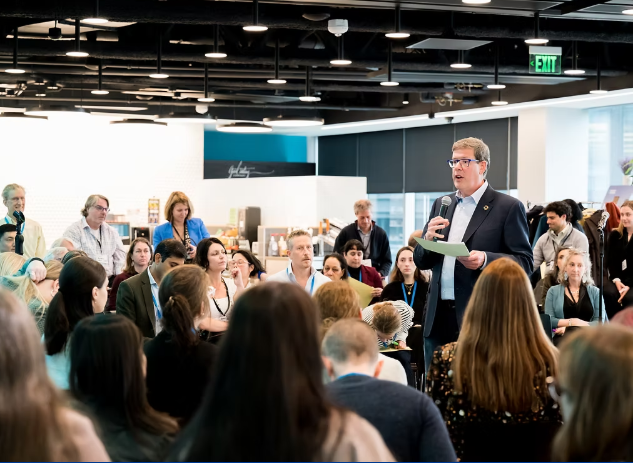
Candidates running for the 2nd Middlesex District Senate seat addressed issues including affordability, environmental justice, human and labor rights and the arts during a multi-community forum hosted by several community groups July 16 at Somerville High School.
The five contenders running for the spot said themselves that they all held similar values — although they had different strategies for achieving their various political goals. What this race will come down to is who can get the job done, according to several community members at the event.
“I want somebody who’s going to stand up for us, and I want someone who’s going to be real,” said Crystal Huff, a Somerville resident of over a decade.
About 150 people from Cambridge, Medford, Somerville and Winchester, the cities that would be represented by this Senate seat, attended the event in-person while about 80 others joined online.
The forum aimed to give residents, businesses and community groups an opportunity to interact with candidates before the primary election in September, according to the event’s press release.
The questions — asked by the event’s moderators, Isabella Drago and Emily Baillieul — opened up a range of responses on topics from housing to utility and energy costs to childcare. The forum finished with a rapid-fire round before candidates gave their final addresses.
Each candidate had 90 seconds to initially answer each question with an optional 30 seconds to add to their answers after the other candidates spoke.
Get to know the candidates
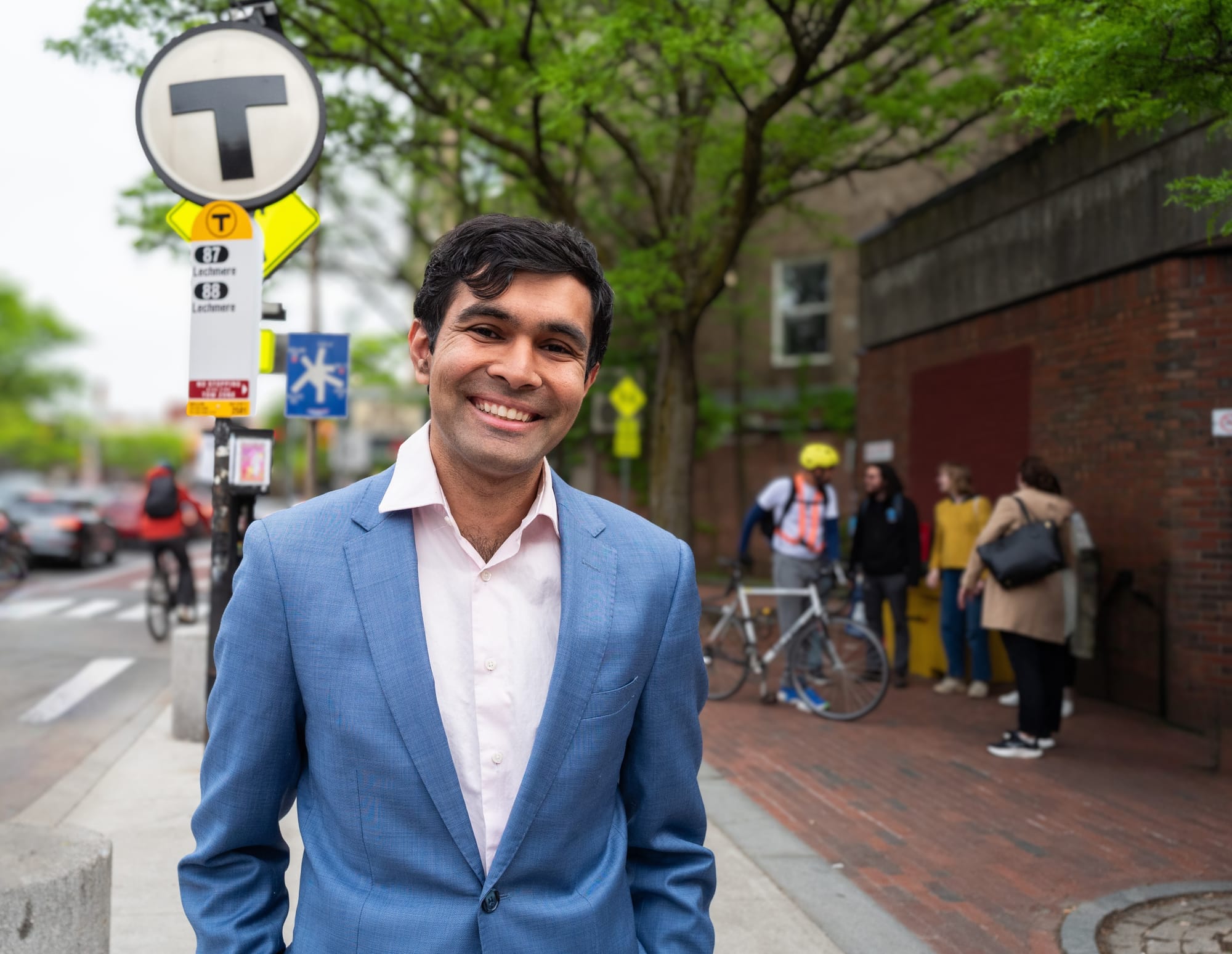
Cambridge Vice Mayor Burhan Azeem, the city’s youngest-ever city councilor, is centering his campaign around improved public transit, increased housing, and universal pre-K. He said he is focused on passing legislation that actually works and entered this race because “there’s so much that’s left on the table.”
“You look at the results and that’s not what you get,” Azeem said in his closing statement. “I don’t think it’s just about passing policy. It’s about the policy we pass.”
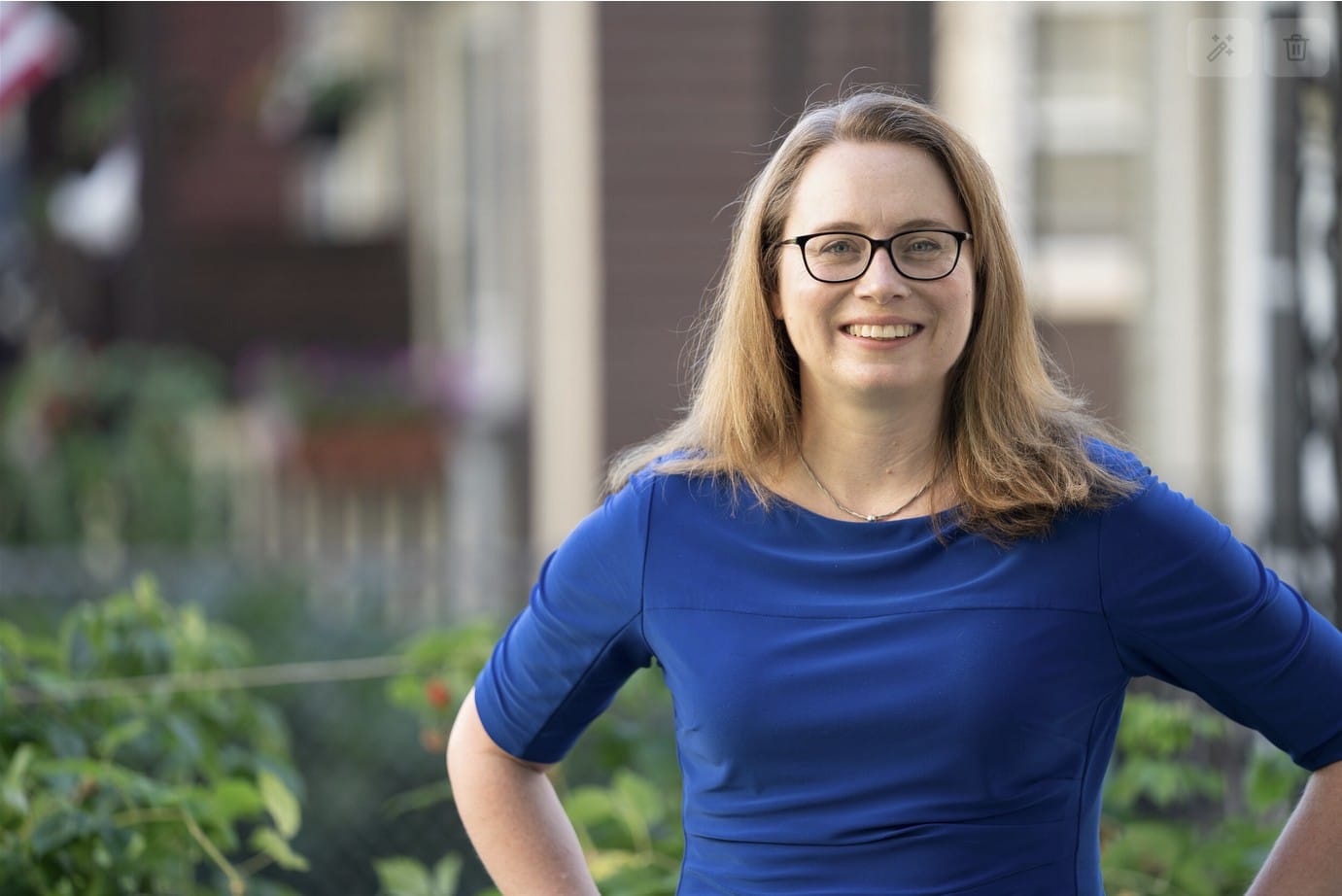
Christine Barber of Somerville
Christine Barber has focused the strength of her campaign around past action she’s taken as a state representative for the 34th Middlesex District to show that she has created political action and will do so once again.
She is prioritizing education, housing, transportation and climate resilience and public health and safety, according to her campaign website. For her, making an impact doesn’t require being the loudest in the room, but being the person who delivers.
“A value doesn’t bring down anyone’s rent,” Barber said. “A statement doesn’t help a mother get her insulin. A social media post doesn’t help get the license in the hand of a father who’s scared to drive to work because he could be detained. It’s easy to file a bill. It is much harder to get those passed into law.”
Winchester School Committee member Tom Hopcroft noted that he is not a career politician. Instead, he’s spent most of his professional life leading organizations like the Mass Technology Leadership Council, MassTLC and the Net Zero Institute.
His campaign focuses on topics ranging from affordability to the creation of economic pathways to mental health, according to his campaign website. For him, Massachusetts’ largest resource is its people — and the innovation that comes along with them.
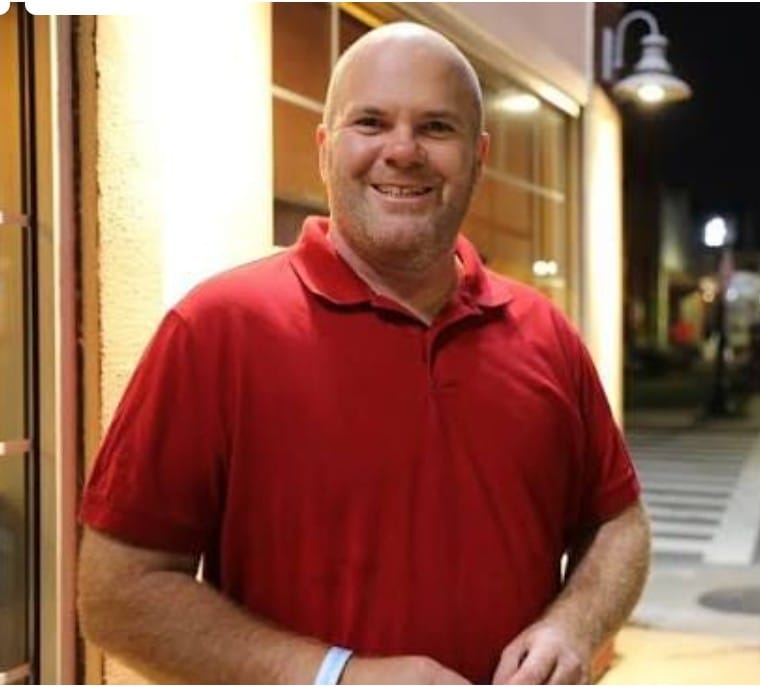
Somerville City Councilor Matt McLaughlin said he is asking for votes not because he is from Somerville, but because he refuses to leave.
He is campaigning as the “community candidate” and focusing on a series of issues ranging from affordable and increased housing to safety to government transparency, according to his campaign website.
For the forum, he announced he would answer every question with a story and did so but for one regarding data centers, which he said happened too recently for him to have a story for.
“I bring the voice of people who are struggling,” he said. “People who are suffering. People who have the lived experience that politicians talk about. I have lived that life. I am fighting for people who don’t think they have a future in this community.”
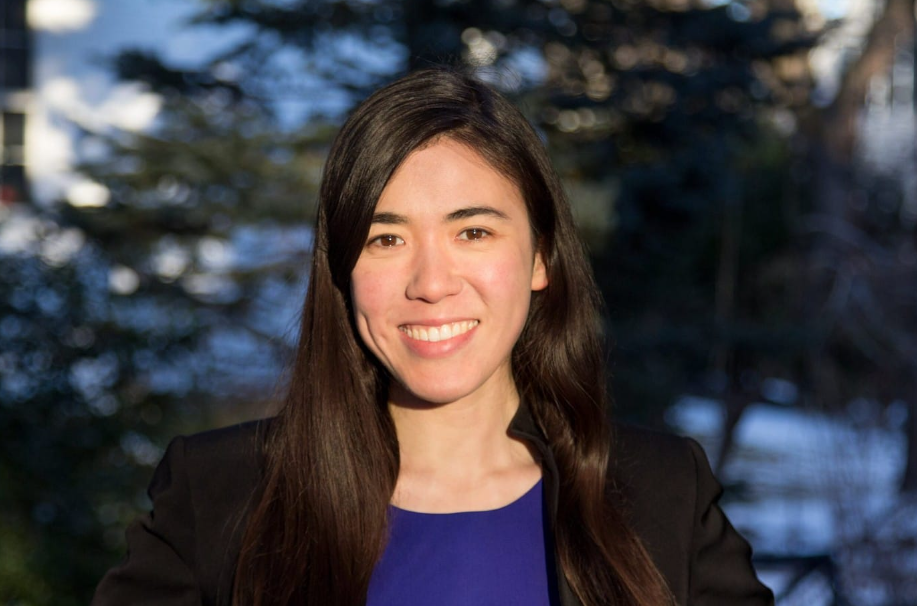
Erika Uyterhoeven of Somerville
Questions and answers on issues
Energy costs in Massachusetts, including electricity, oil and gas, have increased significantly over the last five years. Unclear charges for “delivery” and “other” inflate bills. What steps would you take as state senator to clarify costs and reduce the financial burden faced by Massachusetts residents?
Azeem: There are two pieces for utility costs, which are transmission and generation. The state should build wind and solar on a scale to bring costs down. Deregulating energy generation “just didn’t work,” he said. The State House should ban postcards advertising community electricity programs, which he said are usually “scams” and have higher costs than programs in the state.
Barber: Change the Gas System Enhancement Program so the state stops investing in the creation of more gas infrastructure and invests in renewable energy instead. Supports clarifying the bills by passing a law that changes what utility corporations can say when informing customers.
Hopcroft: Lean into renewable energy while investing in safe repairs for current infrastructure to keep the existing network safe. Crack down on deceptive practices and clarify the bill. It would be “nonsensical” to cut MassSave, he said.
McLaughlin: Massachusetts needs more programs like MassSave. The state should increase renewable resources but still fix current infrastructure. It should also explain to people what transmission costs are.
Uyterhoeven: The state should invest in publicly owned renewables and renewable energy investments like MassSave, which would take a lot of the burden off of the grid, she said. It should also hold Eversource and National Grid, which are the private corporations running most energy-related operations in the state, accountable.
The cost of living, including housing, continues to rise. What is your most creative solution at the state level to prevent displacement of members of our communities while increasing housing in Massachusetts?
Barber: Rent control. She said she filed a bill to create a commission on rent control now that that ballot question has been removed. There are several creative ideas to solve the housing crisis, and “we really need all of them,” she said.
Hopcroft: Convert rental tax deduction into a tax credit. Focus on outcome metrics, not activity metrics, before developers can qualify for grants. Build into community benefit agreements with energy and say to energy companies “if you do comply, we’ll give you a tax break. If you don’t comply we claw it back.”
McLaughlin: Take Somerville’s affordable housing overlay and make it a statewide requirement. Allow three family housing as a right throughout the city. He said he would make sure state representatives do not speak out against affordable housing.
Uyterhoeven: Push for municipal investment in housing. There should be tenants’ opportunity to purchase housing so they can keep it permanently affordable as well as more funding sources in addition to the Community Preservation Act.
Azeem: Make it easier and legal throughout the state to build starter homes.
In 2024, the Legislature passed the qualified data center sales and used tax exemptions tax breaks to encourage data center builds. In June 2026, the Healey administration halted applications for the exemptions and proposed a framework for regulation. Some municipalities, like Everett, are already trying to institute local regulation. As a state senator, what legislation would you seek to pass to regulate the creation and operation of data centers?
Hopcroft: The state should take a pause and evaluate data center impacts before moving forward. There needs to be protections to make sure ratepayers aren’t paying disproportionate amounts for the energy grid. The state should be careful to not stop innovation and pointed towards safe nuclear fusion energy as an example.
McLaughlin: “It’s not a hard no,” he said. Developers who are reliant on the city’s infrastructure should help pay for it through taxes, like Somerville did with having developers pay for some of the Green Line station installation in Union Square, and he is open to nuclear energy.
Uyterhoeven: The state needs to put a halt on data centers until their impact can be determined and the community can have a say in that impact. Make sure the state is protecting environmental justice communities first, and there are teeth behind the agreements pushed by the community.
Azeem: These topics are technical, and the state needs the expertise of someone who knows the details. Without this, there are “downstream impacts,” which can make it difficult to deal with the details of the issue, he said.
Barber: Put a pause on data centers and make sure that environmental justice communities are at the table. If the centers are installed, it needs to be done in a thoughtful way that supports the most heavily impacted communities, and their regulations need “teeth.”
Head Start serves the most vulnerable 3- and 4-year-old children. The Trump administration has tried to withhold or withdraw funds for Head Start and exclude some immigrant families. Courts have temporarily blocked these changes, but the threat to Head Start remains. If Massachusetts loses federal funding, how would you ensure adequate funding for Head Start, including for immigrant families, many of whom have been impacted by ICE raids.”
McLaughlin: The state needs to tap into its rainy-day funds for the next few years to “weather the storm” and be able to support universal childcare for everybody through vouchers or “anything to help people assist themselves,” he said.
Uyterhoeven: The rainy-day fund is a source, as well as other resilient funding sources. The GILTI bill, which stands for Global Intangible Low-Taxed Income, should be flipped to get about half a billion dollars in taxes from offshore assets, which she said she has already filed. Instate a progressive tax code where “if you earn a little more, you pay a little more.” The Legislature needs increased urgency when moving forward on immigrant needs and not corporation needs.
Azeem: Offer municipal vouchers to mixed status families and use federal vouchers for families whose members are all U.S. citizens and qualify for the federal benefits. Re-arrange the money so there is a portion that is federal money and some that is state funds, which can then go to mixed status families. Make it more difficult and take longer for ICE to operate.
Barber: Supports corporate fair share and making sure that big corporations are paying for their health insurance. The state should be taxing these corporations to make sure it is getting the money it should be as well.
Hopcroft: Invest in education and early childcare and expand early education. Tap into rainy day funds or other sources and make sure critical parts of the economy, like research and early education, are being back filled.
Federal labor law preempts states from going beyond the National Labor Relations Act to strengthen workers' rights. Given that reality, how would you use your position as a state senator to better protect workers rights in Massachusetts? What legislation would you seek to pass, if any, that would help improve wages and working conditions for workers in the private sector?
Uyterhoeven: The state needs to make it easier for workers to form unions and push for increased minimum wage and a wage theft protection bill. Create a formal written code for project labor agreements and prioritize unions.
Azeem: Wage theft is an issue that needs to be addressed. The state should also focus on user experience and take in factors like filing for unemployment on federal holidays.
Barber: The state needs to work with unions and make them strong and expand “what we’re thinking about when we’re supporting labor,” she said. Make sure any state contractor or state agency is paying livable wages and paying for healthcare and benefits.
Hopcroft: Support unions and provide enforcement methods lifting supporting services and benefits for everyone. Examples of this could be bringing housing costs down or increasing minimum wages, he said. Make sure that workers are able to form unions without intimidation from organizations’ management.
McLaughlin: The State House can hold developers and billionaires at higher standards. Prioritize working people. The state should also be examining the contract classification system and changing it, he said.
According to a study by the Greater Boston Food Bank and Mass General Brigham, in 2025, food insecurity in Massachusetts reached 40% of households. The Trump administration has drastically cut SNAP benefits while imposing onerous work requirements to qualify. As a state senator, what would you do to help those who qualify for SNAP benefits but need help with the paperwork or who can’t find the requisite employment. What alternative pathways would you pursue to address food insecurity in Massachusetts?
Azeem: Indirectly, address the biggest issues like housing, transportation, utility costs and healthcare. That way, people have more money in their budgets to put towards food. Directly, the state can increase access to food banks and use different vouchers to fill in food needs.
Barber: Pointed towards past actions she’s done to get people and children the food they need, like getting money to support Project Bread, and said she will “continue this fight.”
Hopcroft: Working across areas like housing, transportation, utility costs, healthcare and childcare so people can focus more of their money and resources on food. Provide early childcare and invest in and support people more.
McLaughlin: Give food to people for free and allocate it to the right people. Shouldn’t need paperwork to qualify. “If you’re saying I’m hungry, I believe you,” he said. “And that’s how we should deal with food insecurity.”
Uyterhoeven: Get rid of administrative hurdles that make it difficult for people to access food and any food-related government benefits, like SNAP. Make free meal programs, like the free meals kids receive at school and Meals on Wheels, universally available for all. Implement state-owned grocery stores to lower costs.
MASSCreative has proposed the Creative Space Act, a no cost bill that would allow municipalities to create cultural trusts without going through a home rule petition. If you were a state senator, would you support this bill? And what concrete strategies would you pursue to subsidize artists’ workspace to make it affordable?
Barber: Supports it. Pointed out past work she’s done to help people learn how to become new artists and said she thinks there is more revenue, both privately and publicly funded, that the state can find to create rules to preserve artists’ housing and studio space.
Hopcroft: Would support the Creative Space Act. Provide tax incentives to developers to lower the costs of developing the creative or artist portion of their facilities. He said communities should be protected against “extractive” building owners and work with owners who are “benevolent” and community members.
McLaughlin: Supports it. Discussed his past experiences supporting the arts through government and said he’s prioritized affordable artist space.
Uyterhoeven: In favor of the act and sees it as a first step to build the infrastructure for a trust fund. The state should make sure there are pathways for cities to raise funding or for the state to provide the funding, so artists aren’t displaced.
Azeem: Would vote yes for the bill. Drew attention to maintenance as an art form and said there should be an art fund or art trust set aside specifically for maintenance to give the art that is so expensive and time-consuming to create “new life.”
Rapid fire round questions
Do you support congestion pricing on highways to raise more money for transit and alternative transportation?
All said yes, except for McLaughlin who said maybe.
Senate Bill 2344 would allow cities and towns to use speed and red-light cameras. Would you support the bill if you were in office?
All said yes.
Do you support noncitizen suffrage in state elections?
All said yes.
Do you support 16- and 17-year-olds being able to vote in municipal, state and/or federal elections? Please answer with municipal, state, federal, all or none
All candidates said all.
Crystal Yormick is a 2026 graduate of Boston University, where she studied journalism. She is currently freelancing for local news outlets.