Table of Contents
The Winchester Select Board voted to create a working group charged with drafting a bylaw to establish a Human Rights Commission for the town, with the goal of bringing a warrant article to the 2026 Spring Town Meeting.
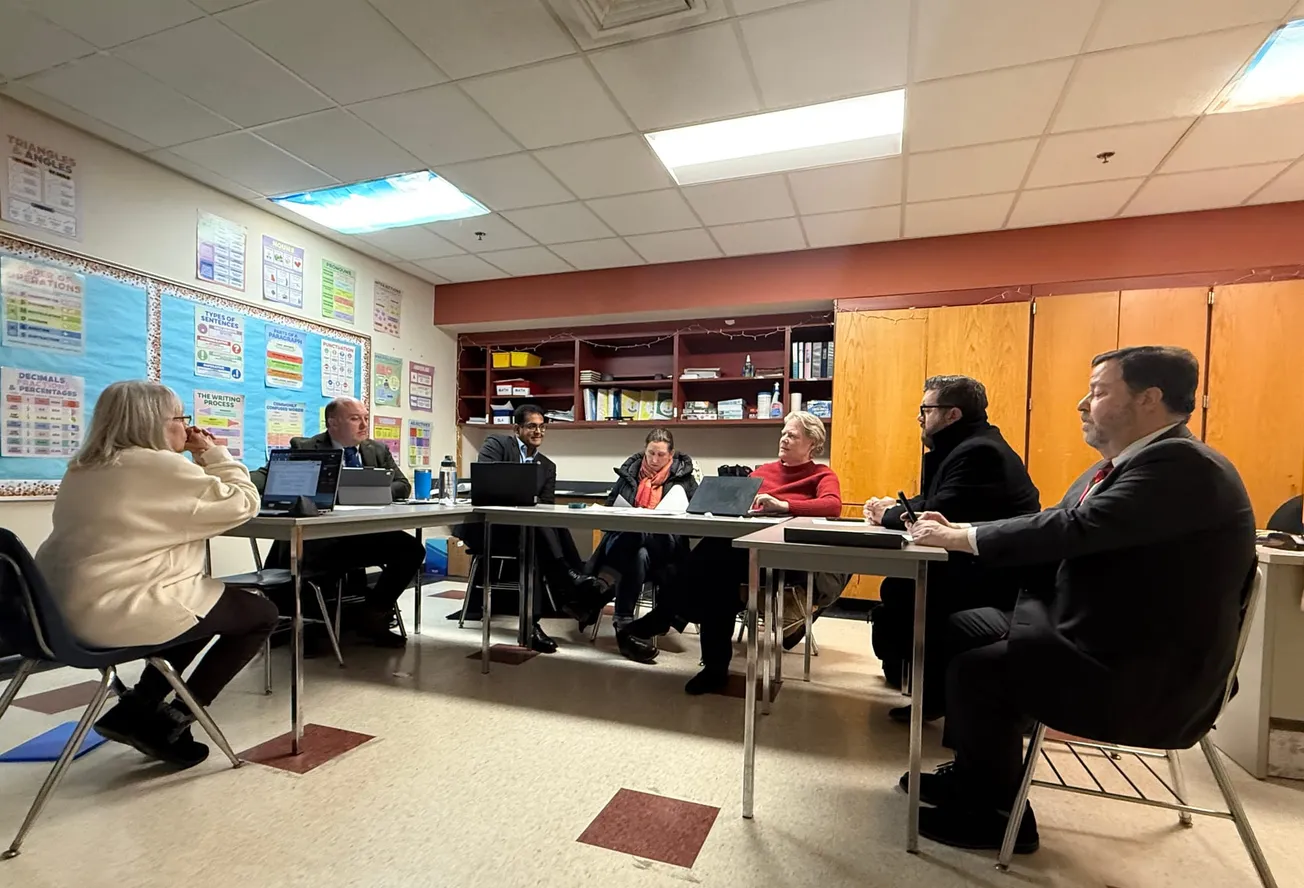
The board approved the working group during its meeting the week of Feb. 9. Select Board member Anthea Brady, who has led the effort, made the motion to “compose the Human Rights Commission working group to address the development of a bylaw for the spring town meeting” and appoint its members. The board voted unanimously in favor.
Brady framed the effort as fulfilling the board’s direction from the fall.
“This is what this board wanted in the fall, to have a small working group to be prepared to have a bylaw,” she said.
The working group will include four community volunteers: Bob Davidson, Shreya Nair, Hillary Turkewitz and Rebecca Slisz. The group will also include a member of the School Committee and a staff member designated by the town manager. Brady will serve as the Select Board liaison.
The group is expected to produce a proposed bylaw and Town Meeting warrant article, frequently asked questions related to the bylaw and a Town Meeting presentation, according to materials Brady shared with the working group by email on Feb. 9.
The proposed commission would advocate for policies and programs supporting the town’s Human Rights Statement, which affirms Winchester as “a community that is grounded in respect for every individual” and commits to ensuring equal treatment regardless of race, gender, gender identity, ethnicity, religion and other protected categories, according to the presentation materials.
Membership on the permanent commission would include residents appointed by the Select Board and School Committee, including student members and liaisons to the Council on Aging and Disability Access Committee, according to the presentation.
During the meeting, board members discussed at length what model the commission should follow.
Select Board member Paras Bhayani said he had researched several neighboring communities’ commissions, speaking with officials in Stoneham, Arlington and Lexington.
Bhayani said Arlington’s commission is “very adjudication oriented” and that no other community he researched followed that model. He described Stoneham’s as focused on being “a trying to buffer things and keep people happy,” while Lexington’s “does a lot of like public forum type events.”
Select Board member Michael Bettencourt agreed Arlington’s model would not be a good fit.
“I think that’s not a modern way of doing it,” Bettencourt said, of the adjudication approach. He said he saw the commission functioning “kind of like what the network does, as far as like talking about issues and being promoting values that we have in the Human Rights statement.”
When an issue arises, Bettencourt said, the commission's role should be “to refer that to the appropriate authorities.” He added: “They’re not people that are there to be the judge and jury of situations, right? It’s just sending stuff out saying here, if this is a problem you’ve identified, here is the local or state agency that you should go to. Here’s the contact information, so it's more of a resource on that side, rather than anything else.”
Bhayani agreed, describing the commission as ideally serving as “a connector resource, a place that the network can plug in, or the Chinese American community can plug in, but not an adjudication body.”
He noted that Arlington has dedicated diversity, equity and inclusion staff members to support its commission, adding, “I just don’t think that's our model.”
Select Board member Michelle Prior said she supported the working group, but wanted the board to weigh in before the bylaw is drafted.
“I just think maybe we should spend some time, maybe as a group, think that there’s a direction or things we like, then the working group should go try to find examples of those,” Prior said.
Brady said she would compile that feedback and share it with the working group.
“If you can provide feedback by the 23rd, I can compile that feedback on it, and we can discuss it, and that can be shared with the working group,” she said.
Presentation materials included a comparison of human rights commissions in six neighboring communities, with creation dates ranging from 1963 in Lexington to 2019 in Stoneham and membership sizes ranging from seven to 13.
The working group’s formation follows discussion at the 2025 Fall Town Meeting. The board had already met with officials in Arlington, Lexington and Stoneham and planned further engagement with the Network for Social Justice and local organizations before the spring meeting, according to the presentation.
The working group members bring varied backgrounds, according to bios shared in Brady’s email.
Davidson is an assisting priest at Parish of the Epiphany Episcopal Church in Winchester active in immigration and refugee causes.
Nair is a 2020 Winchester High School graduate and first-year law student at Yale Law School.
Turkewitz has volunteered with the Network for Social Justice since its founding in 1991.
Slisz is the network’s executive director, with degrees from Dartmouth College and Georgetown’s McDonough School of Business.
Will Dowd is a Massachusetts journalist who covers municipal government and community life for Winchester News. He runs The Marblehead Independent, a reader-funded digital newsroom.