Table of Contents
The Winchester Committee on Community Preservation approved $1,036,000 across nine projects in the town’s pilot funding round, a slate that fell well short of the $3.27 million requested but exceeded the committee’s original pilot target of $800,000.
The recommendations, approved by Town Meeting in fall 2025, marked Winchester’s first use of CPA funds since voters adopted the act in November 2024.
For committee members, the pilot served both as a test of the new funding mechanism and a crash course in standing up a grant-making process under a compressed timeline.
The nine-member committee had roughly two months to review applications, interview sponsors and deliberate on recommendations. Initial eligibility applications were due July 7, with final applications submitted by Aug. 1.
“The silver lining of working within a compressed time period for the pilot round was that it forced us to be efficient with our time,” said Christina Marshall, who assumed the chair role midway through the process.
Committee members were paired and assigned responsibility for subsets of applications, meeting weekly throughout August to interview applicants and work toward consensus.
Where the money went
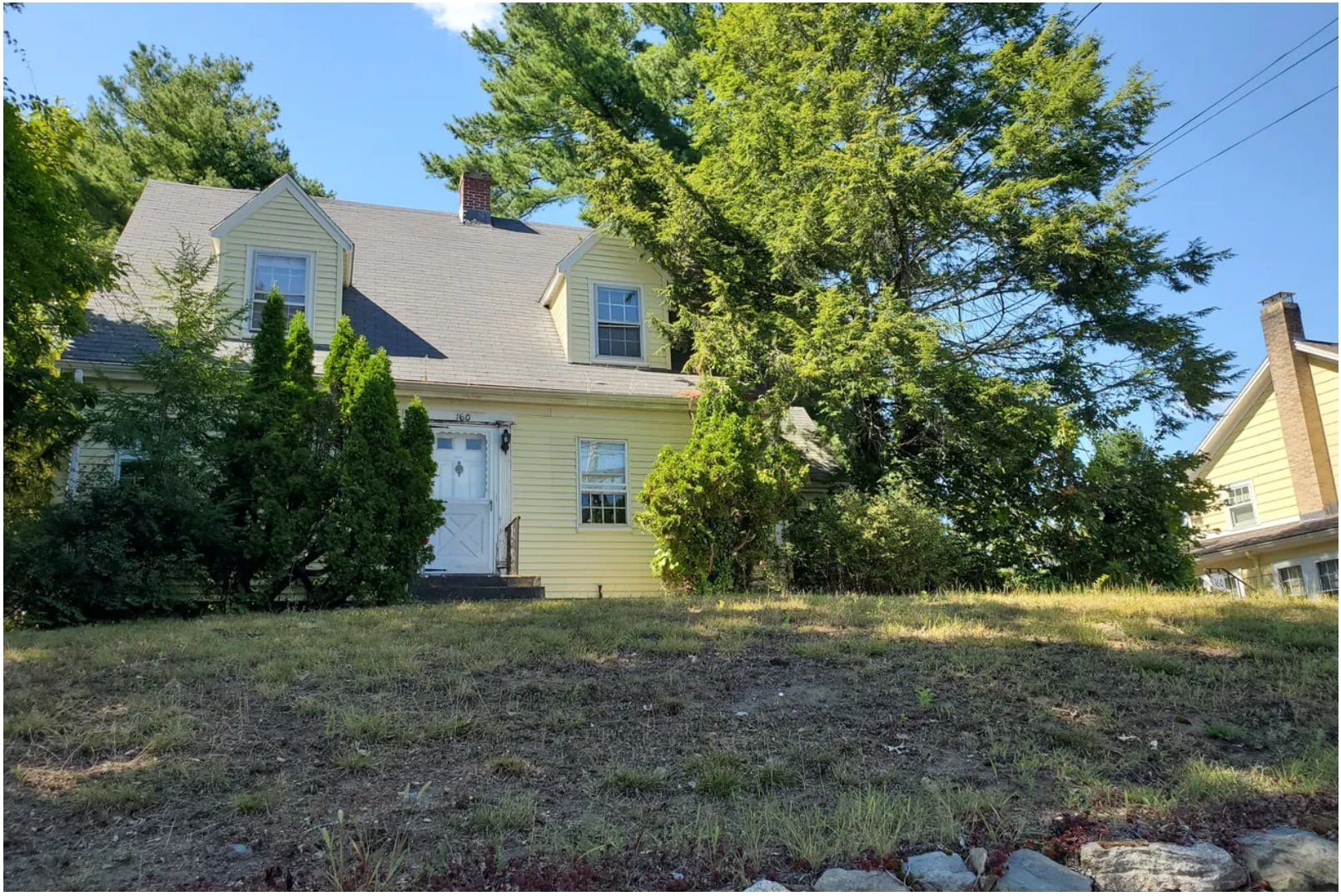
The largest single allocation went to the Affordable Housing Trust’s 160 Forest St. proposal, which received its full $350,000 request to renovate a single-family home for affordable ownership.
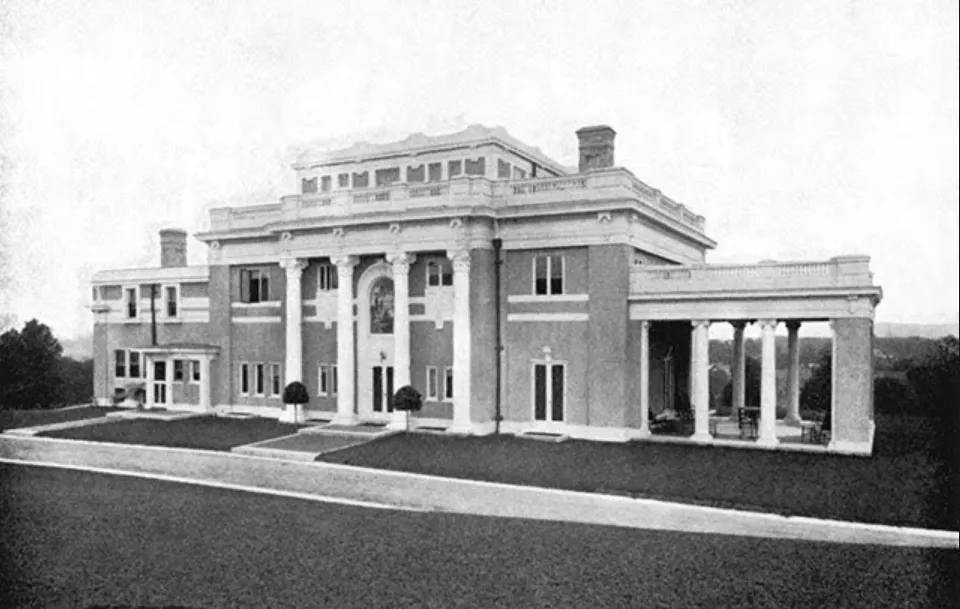
The Ginn Field restoration by Winchester Youth Softball was fully funded at $225,000, as was the Winchester Historical Society’s $112,000 request to restore columns at the Sanborn House. The Leonard Basketball Court rehabilitation received its full $90,000 request.
Other funded projects included $59,000 for a Wedge Pond submerged aeration system proposed by the Conservation Commission, $50,000 for Borggaard Park restoration and $50,000 for park and playground fencing and backstop repairs.
Several eligible projects received no funding or were substantially reduced. The Lincoln Elementary School HVAC project, with an overall budget of roughly $2.1 million, received $50,000 of its $400,000 request. The Wright Locke Farm application for historic barn doors, ramp access and signage received no funding.
Town Hall HVAC, Lincoln Elementary School flatwork, Ginn and McDonald bathroom improvements and Mystic Playground improvements were also not recommended for funding.
The Ginn Pickleball Courts proposal, submitted by Friends of Winchester Recreation at $390,000, was reduced to $50,000.
Marshall said the committee and the applicants concluded that additional work on noise mitigation was needed before construction could proceed.
“Rather than approaching it with an all-or-nothing mindset, we tried to meet in the middle and recommend funding for just the design and engineering stages of the project,” Marshall said. “Once that’s complete, we expect that the applicants will come back to us with an updated budget, and we'll consider the merits then.”
Building the process from scratch
Much of the groundwork for the pilot round was laid months earlier, when the committee was first constituted following the CPA vote.
David Miller, who chaired the committee during its formation, said the challenge was not simply choosing projects but building a functioning process under state law.
“The Community Preservation Act lays out how the money is raised and what it can be spent on,” Miller said. “But once Winchester adopted it, the town still had to stand up a committee, develop operating procedures, and be ready to function as a fully compliant public body.”
Miller, who also co-chaired the local campaign to adopt the CPA, said the committee originally planned to bring its first funding recommendations to Town Meeting in fall 2026. That timeline changed abruptly in spring 2025, when the Select Board asked the committee to accelerate the process by a full year.
“That’s when it became an absolute fire drill,” Miller said. “We had access to the funds, but not the systems in place yet. Working backwards from the warrant deadlines forced us to compress what normally would have been a year of work into a few months.”
Marshall credited Miller with shouldering much of the organizational work during that period.
“I’m not sure we would have ended up with such a good result without David’s contributions,” she said.
When the committee reached deliberations, Marshall said members found themselves more aligned than expected, despite arriving with different priorities. Votes on the recommended projects were unanimous.
“Even if we didn’t all share the same justifications behind an approval, we were able to come to consensus on the final vote,” she said.

Looking to 2026 and beyond
The committee’s guiding principle throughout the pilot was to prioritize projects ready for immediate implementation.
“We wanted to prioritize projects that were really ‘shovel-ready,’ so that the town could see the impact of adopting the CPA as soon as possible,” Marshall said.
Drawing the line between eligible capital improvements and routine maintenance — an issue town counsel described as a “close call” on some items — was a recurring focus during applicant interviews.
“A common refrain was making sure applicants had a solid maintenance plan in place,” Marshall said, “and that they understood they could not come back to the WCCP for maintenance.”
Although roughly $600,000 of available CPA funds were left unallocated, Marshall said that decision was intentional. Limited outreach time constrained the applicant pool, and the committee did not want to commit all funds before the program was widely understood. Unallocated funds will roll into the next fiscal year.
Among the challenges identified were coordinating with the Capital Planning Committee on overlapping projects and navigating applications that combined town resources with volunteer labor.
For the next cycle, the committee plans a longer application timeline. Applications for Fall Town Meeting will be due in mid-April, with final applications due in early June, allowing two months over the summer for interviews, coordination and deliberations.
“We are a smart growth tool for all town residents,” Marshall said. “And we work best when we’re able to be responsive to as wide of a swath of residents as possible.”
Will Dowd is a Massachusetts journalist who covers municipal government and community life for Winchester News. He runs The Marblehead Independent, a reader-funded digital newsroom.