Table of Contents
The Planning Board has unanimously approved a special permit for a proposed residential building at 10 Converse Place/33 Mt. Vernon Street at five stories with no affordable housing.
The permit includes a number of conditions, including a payment in lieu of providing on-site affordable housing from the developer and creating a study group to determine any bonus payments if the profits from sales of condominiums exceed expectations.
“After months of review and hours of discussion we are at the end of the line,” Chair Brian Vernaglia said, during a Feb. 27 meeting. “It’s sort of a compromise project between all the stakeholders,” a reference to disagreements about the footprint and height of the building size, its design and the number, makeup and siting of affordable units.
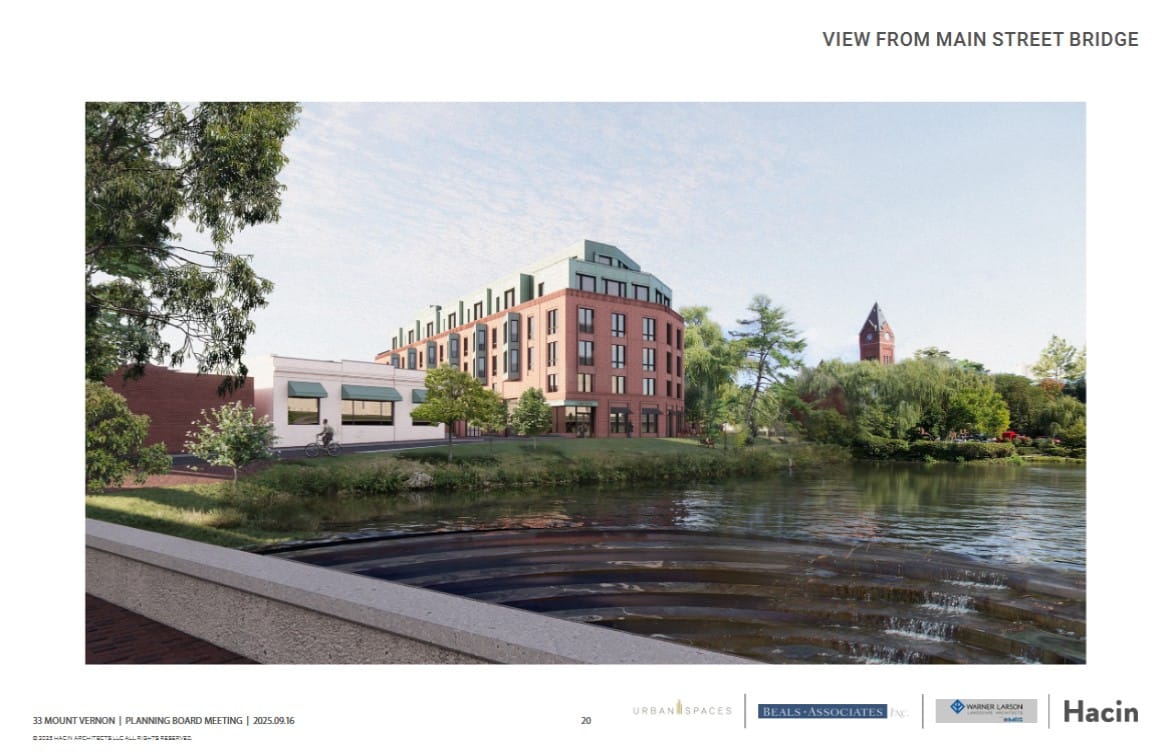
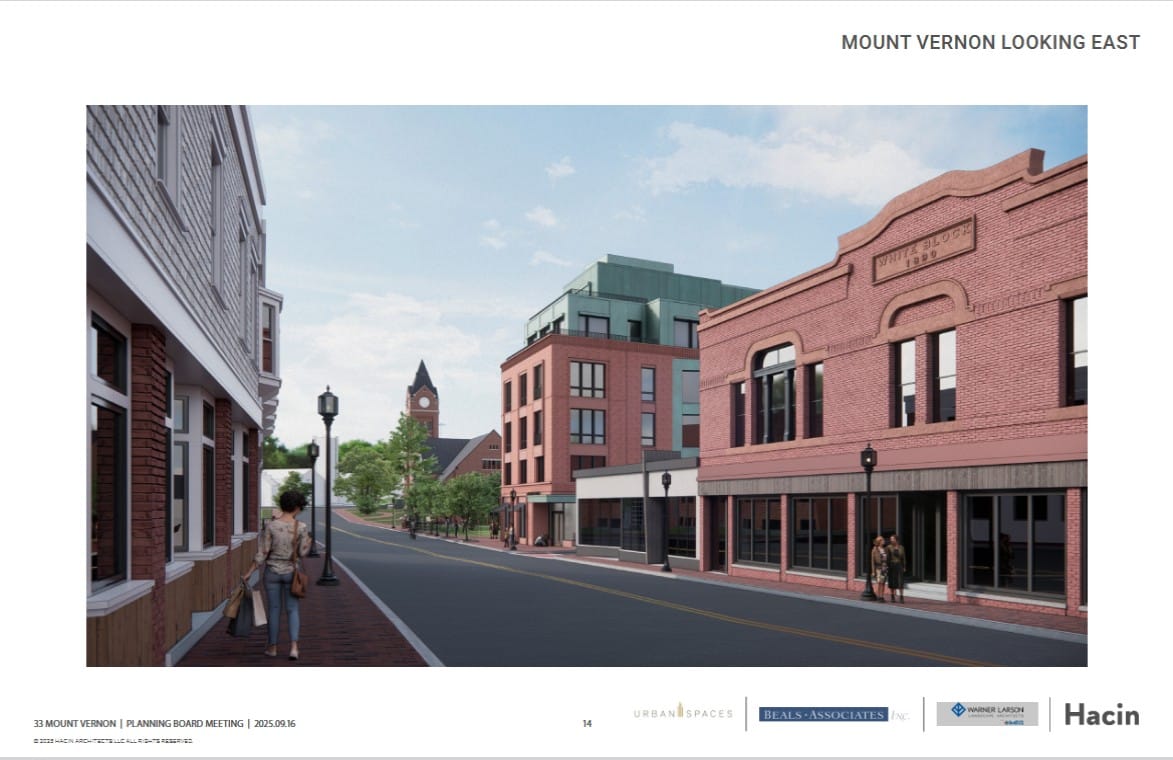
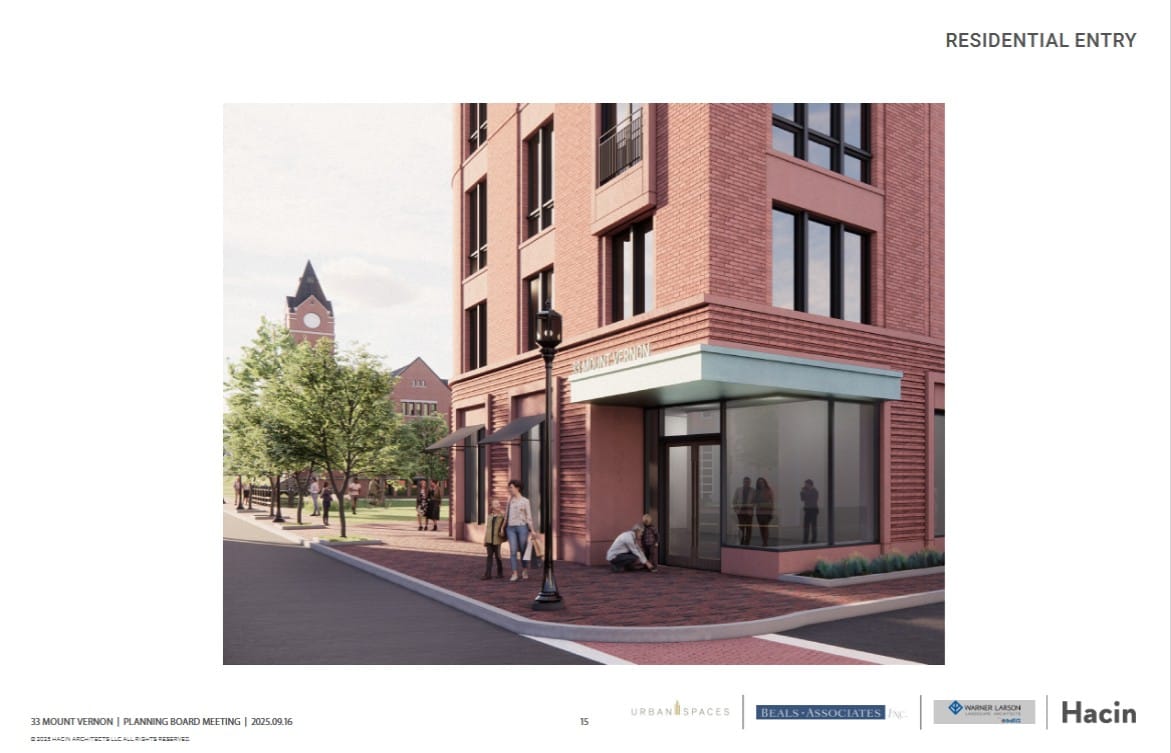
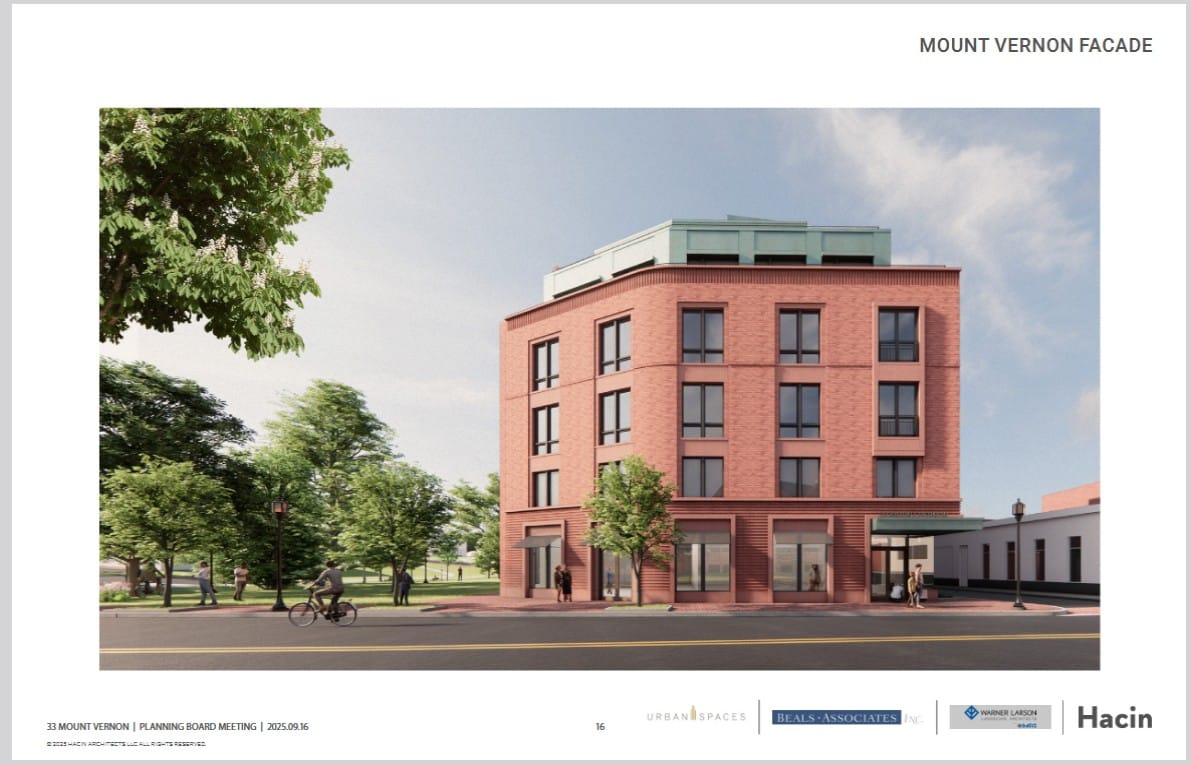
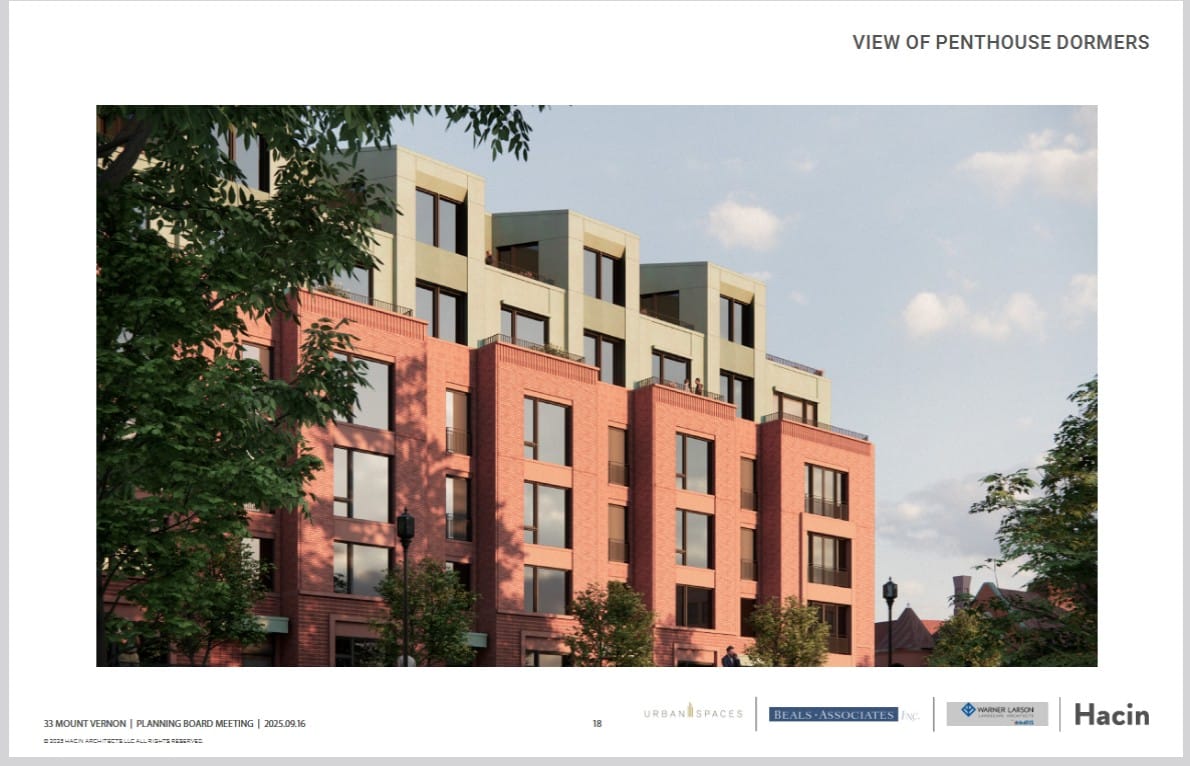
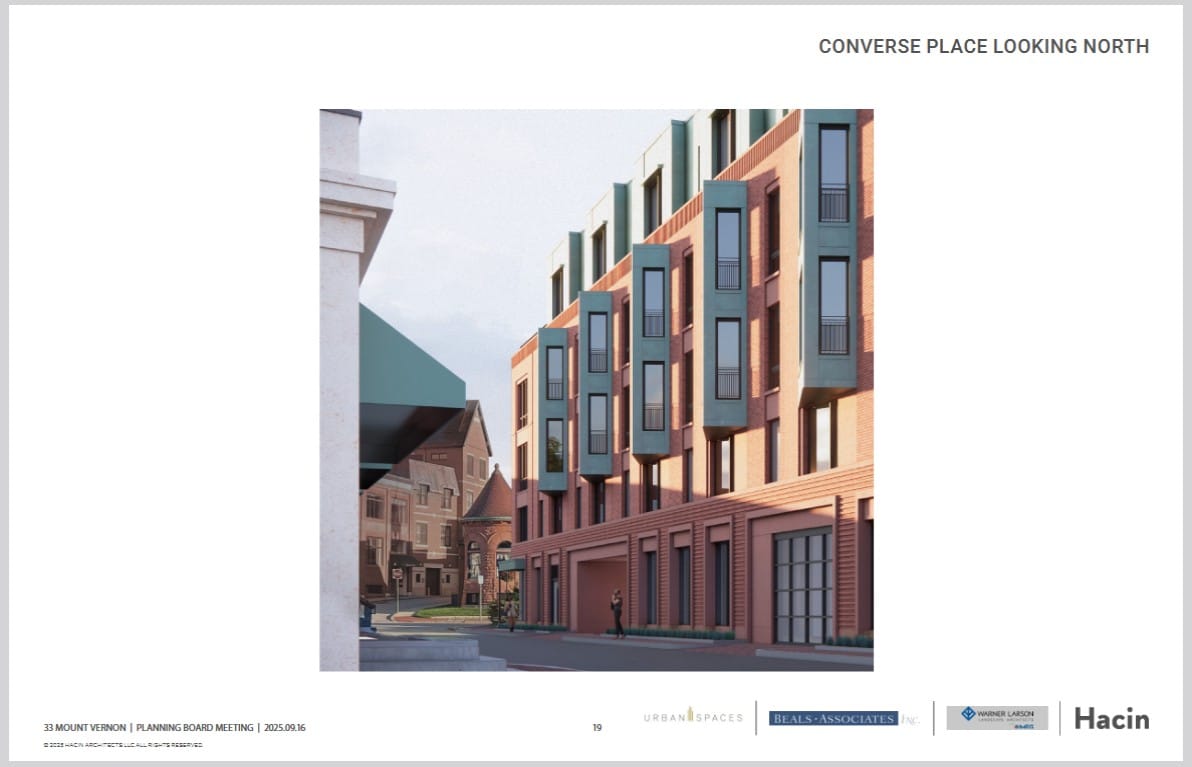
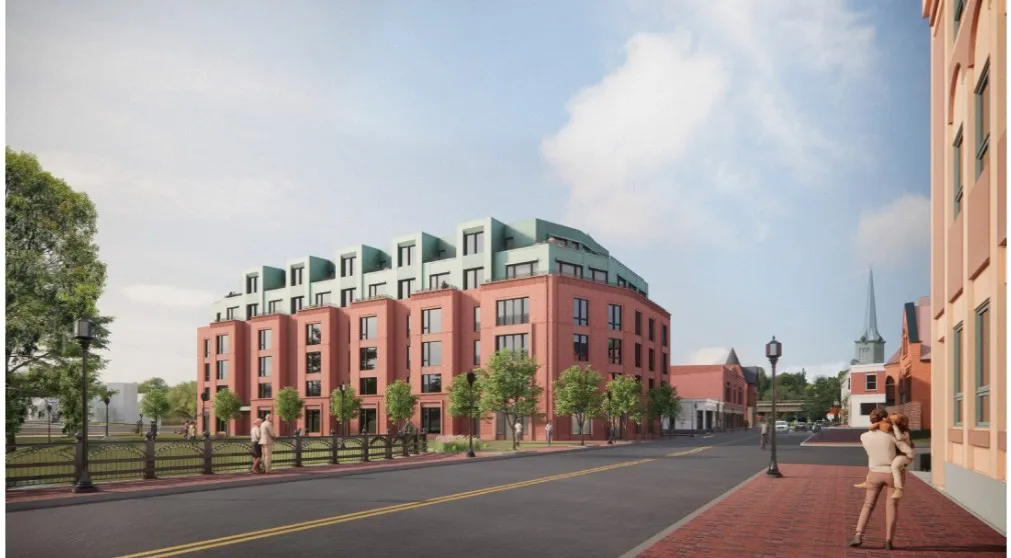
A look at renderings from the potential development. COURTESY PHOTO/TOWN OF WINCHESTER
There are still a lot of issues to be worked out, however, especially in light of artist conceptions being notoriously unrepresentative of what is actually built.
Eleven months ago, the plan for the development was for a 17,000 square foot, six-story, 69-foot high, 43-47 unit building with a commercial space on the ground floor and underground parking that covered nearly the entire area between 10 Converse Place and Mill Pond.
The concept displeased the Conservation Commission, among others, in part because it violated environmental and open space regulations.
By September 2025, Urban Space developer Paul Ognibene downsized the project to almost 15,000 square feet, hugging the street and leaving open space next to the pond. There were also changes in the design to recess the top floors to “make a six-story building look like a five-story one,” in Ognibene’s words.
Having affordable units in order to comply with town bylaws to increase the amount of affordable housing entered the picture in the fall, with four affordable units and two workforce units in the plans.
Affordable units are defined as being for people making 80% of the Area Median Income and workforce units for those making 120% of the AMI.
Objections to a six-story building persisted, however, and Ognibene came up with a plan for two affordable units, citing the lack of economic viability with any more in a five-story, 59-foot building.
Possible remedies included an in-lieu fee, having the town buy units in the building and subsidizing them to be affordable and waiving the building permit fee.
Consulting environmental law and land use attorney Kathleen Connolly said a hybrid solution of having some affordable units in the building and accepting an in-lieu fee was not permitted.
Ognibene was also facing financial pressure from his bank to get things wrapped up by Feb. 28 or March 2 since Feb. 28 was a Saturday.
“I feel like we have a gun to our heads,” Planning Board member Jack LeMenager said.
“It seems rushed,” Planning Board member John Cortizas agreed.
A study group was formed that included both Cortizas and fellow Planning Board member Keri Layton, to determine the validity of the ideas, while the Select Board declined to waive the building permit fee.
“Many alternatives have been explained and rejected and we ended up here,” Cortizas said in reference to the position the Planning Board found itself Feb. 24.
On Feb. 24, members came to consensus that a five-story building would be acceptable and receiving in-lieu fee would have to do.
“No one is thrilled with the options,” Layton said. “We’re faced with a decision that would change the character downtown or put affordable housing requirements at risk and we’re stuck.”
The members approved other elements of the special permit, like the height of fencing and what shrubs and trees would be planted, but the number for an in-lieu was elusive.
Reconvening Feb. 27, Vernaglia outlined the tasks of the Planning Board, if Ognibene’s claims about economic viability were valid and to come up with an in-lieu fee number.
“Do we agree it’s unfeasible and to accept an in-lieu fee?” he asked. “I would say yes. It seems to be clear.”
He also pointed out other elements of the plan, including use and maintenance of open space between the building and Mill Pond remained the same.
“These are the options,” Cortizas said. “It can’t be a hybrid and I don’t know what else we might hear. I’m not sure there’s a piece missing.”
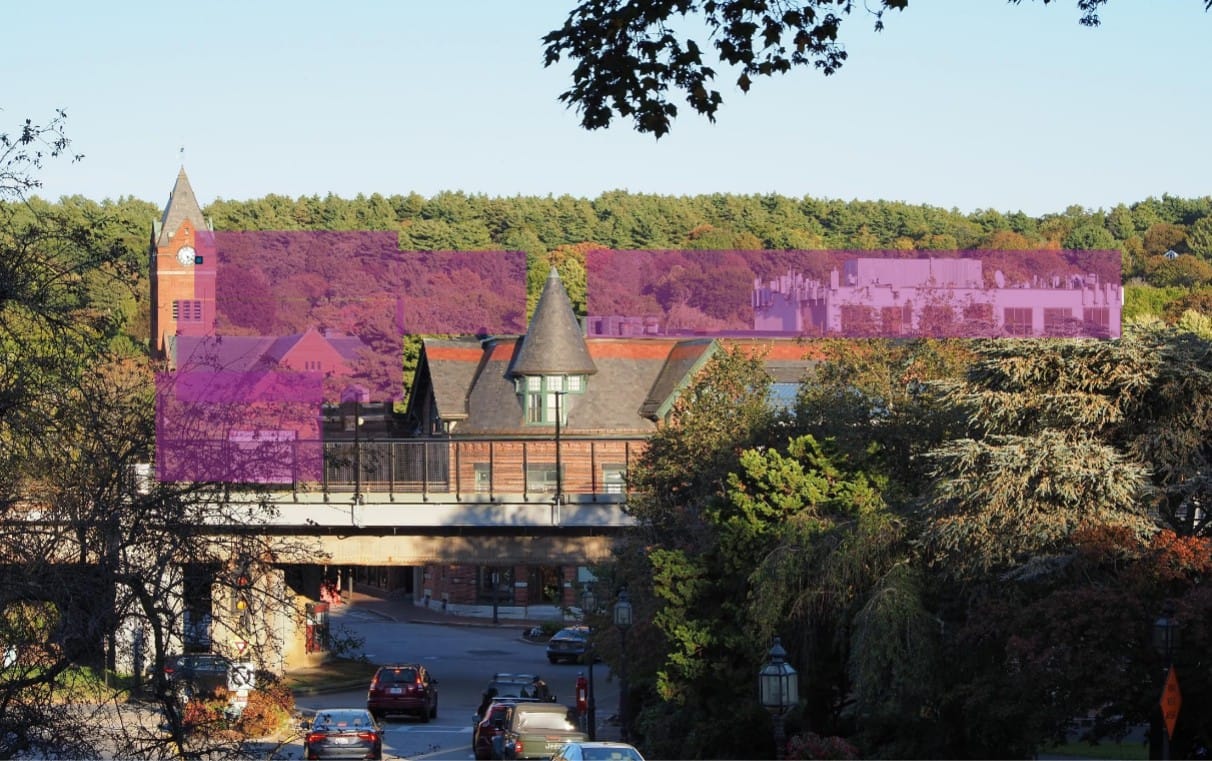
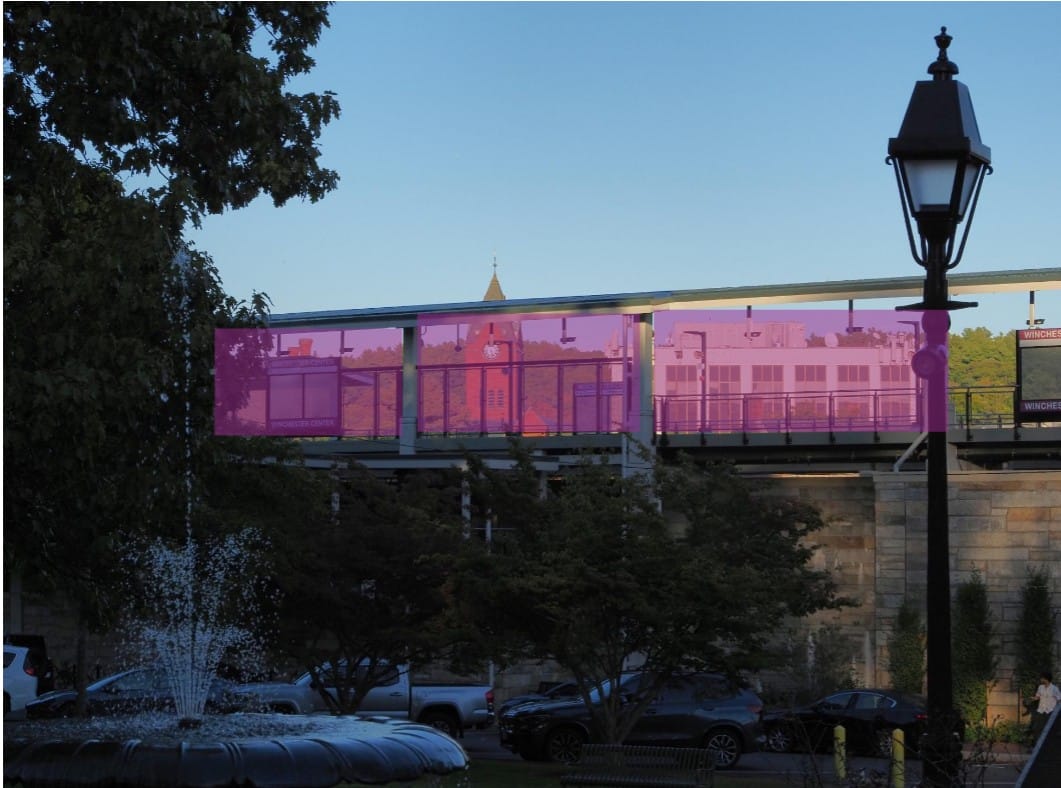
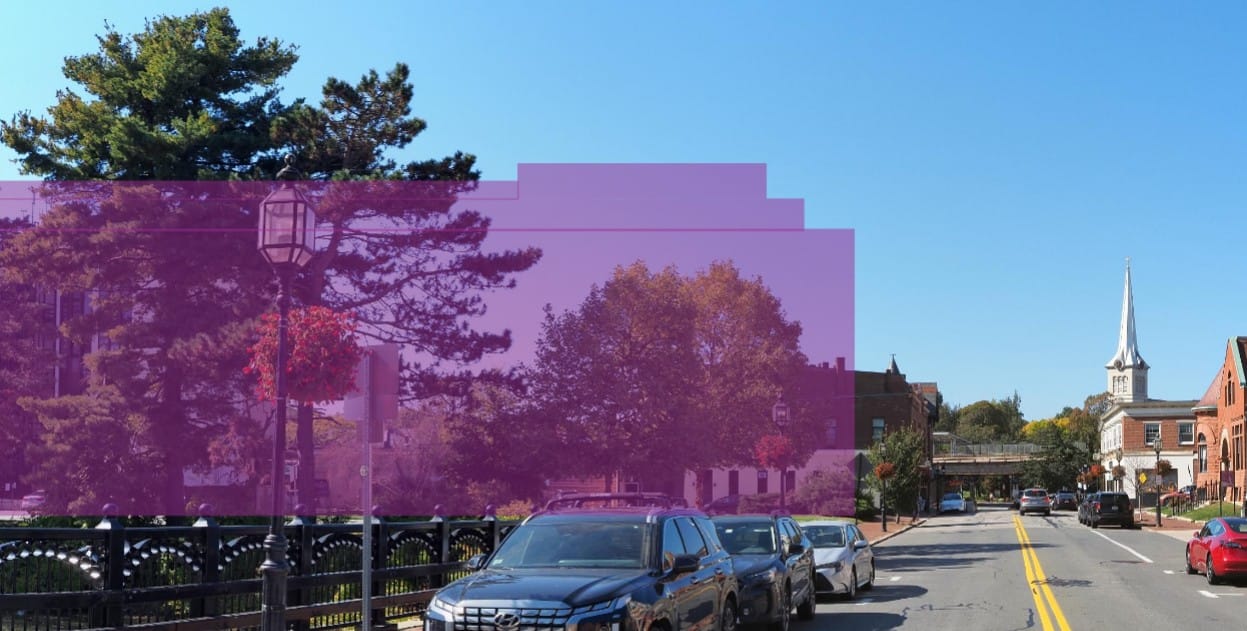
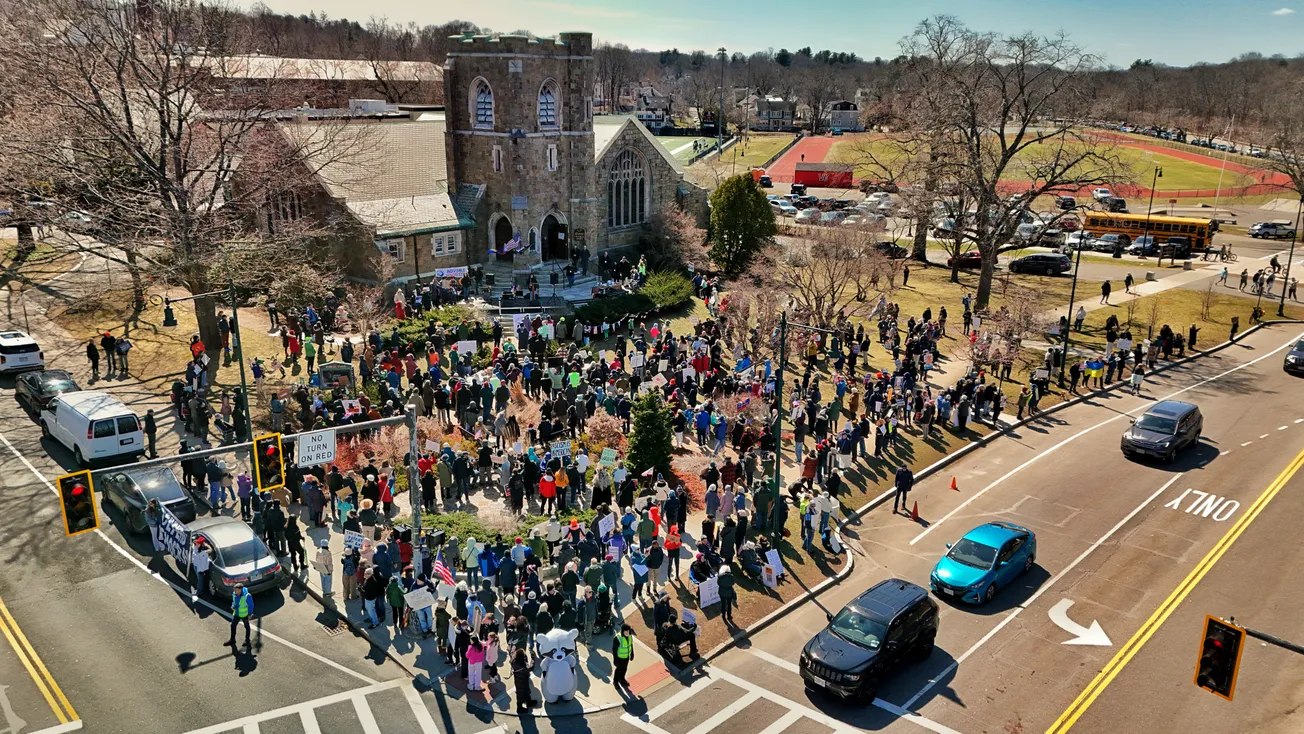
Some Winchester residents have spent several months expressing their opinion that a development at Converse Place/Mt. Vernon Street would be too large for the downtown area. COURTESY PHOTOS/TOWN OF WINCHESTER
How much for the in-lieu fee?
Ognibene offered $100,000 as a goodwill contribution to the town in addition to having affordable units in the building. He later offered $1.5 million, $1,745,000 and eventually $2 million once he determined, and it was confirmed, there could be no affordable housing.
Layton presented various calculations for the cost of three affordable units and two workforce units, ranging from $2.8-$3.1 million based on average costs all over town, costs in the downtown area only and costs excluding some recent developments like 200 Swanton St.
Layton said 200 Swanton is an old building which requires high condo fees and should be excluded. She added $1.5 million was too low and $3.1 was not feasible.
Vernaglia suggested $2 million as a compromise number.
Cortizas mentioned $2.2 million, but $2 million was approved.
“I think that’s the number,” member Nicholas Rossettos said.
Members added they felt they had no choice.
“If we don’t make a decision, this will be a white elephant in the middle of downtown,” Vernaglia said. “Punting is an option, but it’s not a risk free option.
LeMenager agreed.
“If we let it slide, there won’t be a shovel in the ground until at least 2030,” LeMenager said. “If we let it go, it’s not just what else might go there, we’d be losing tax revenues. We owe it to the town to make a decision.”
Layton conceded Ognibene “was willing to hold on through a nine-month process at his own expense.”
She also noted, “the amount of affordable housing is creeping up,” referring to plans for buildings at the corner of Swanton and Washington streets and 972 Main St.
The members also agreed to have another study group formed to determine the amount of a bonus payment if profits from sales of condominiums exceed expectations, while the board voted for a 15% contribution with a $1 million cap.
As the meeting wound down, Rossettos again expressed his opinion the design lacks gravitas and doesn’t reflect the character of downtown. He asked to be included in discussions on refining the design.
“Winchester is unique and special,” he said. “We need something that’s not like every other place.”
He also noted the height of the building could actually be as low as 57.4 feet.
“With the ‘trust me’ relationship we’ve developed, we will consult with you,” Ognibene said. “I don’t know if we’ll be able to meet all your requests, but we will meet with you. Hopefully, we’ll have a beautiful building.”
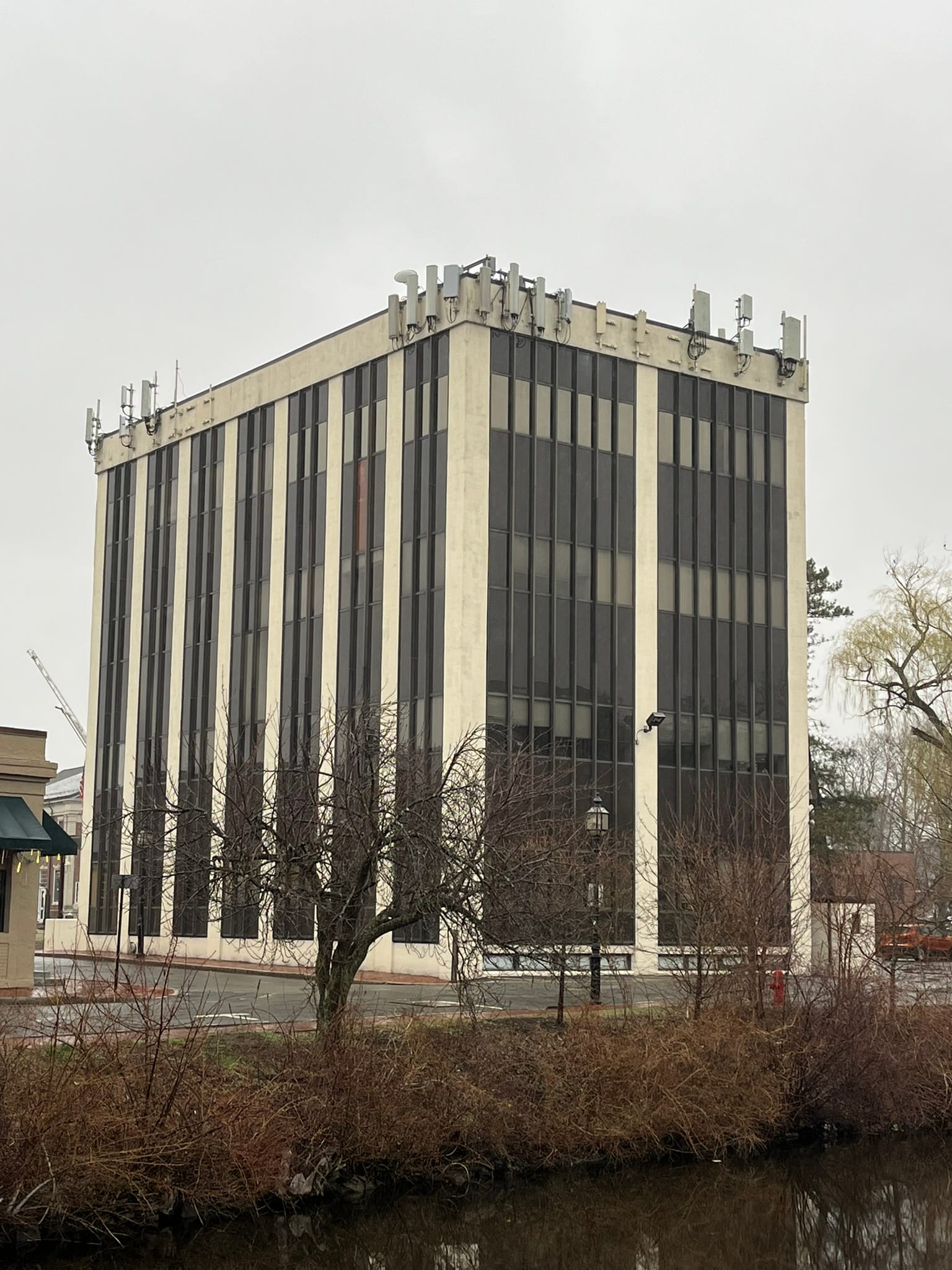
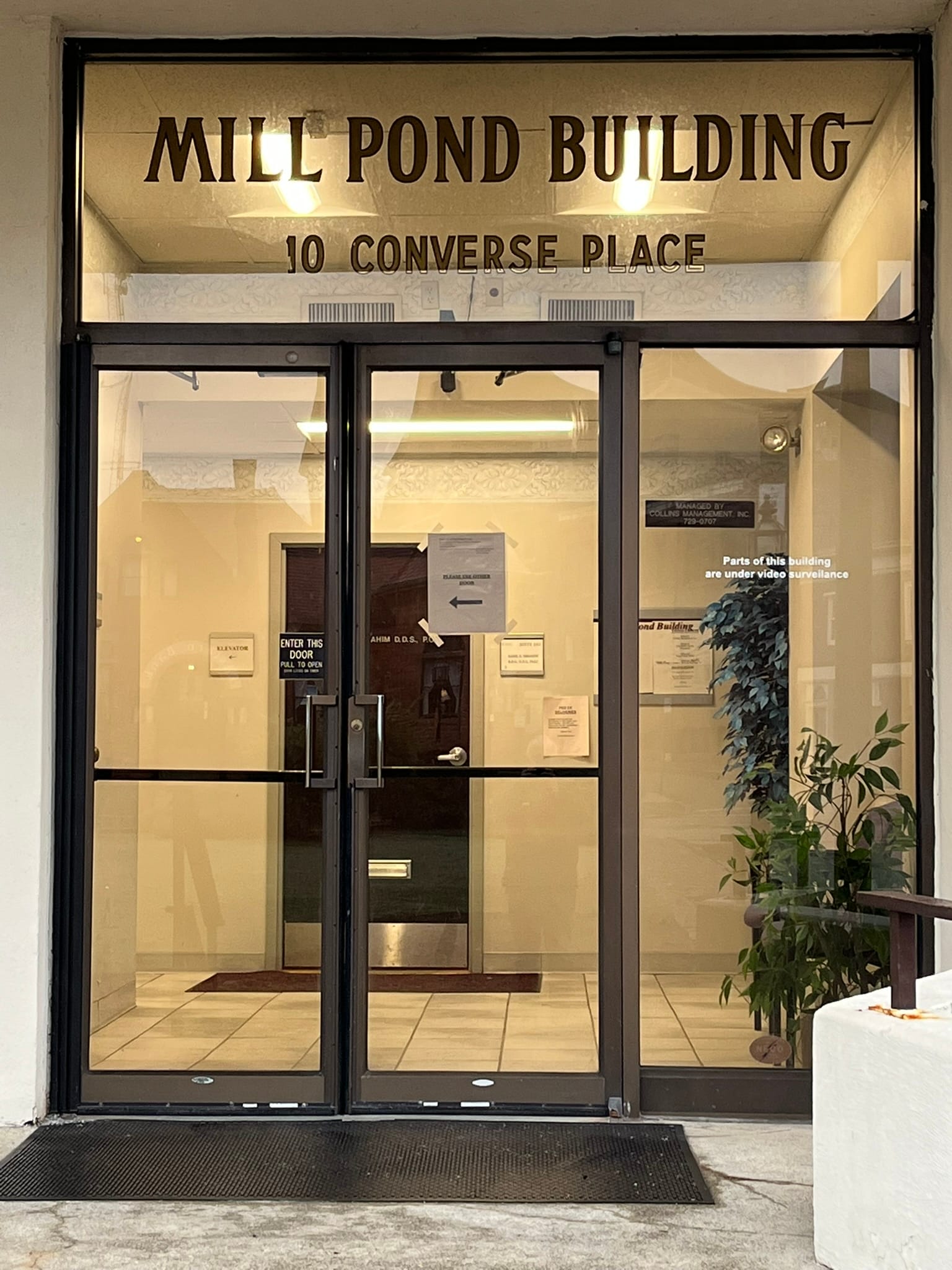
The building will replace the old 1912 laundry building that was converted to medical offices in 1974.
Neil Zolot has been a freelance journalist more than 40 years. He has worked for newspapers on the North Shore and in the Boston area.