Table of Contents
With Winchester’s Spring Town Meeting scheduled for April 27, the Select Board has spent weeks hashing out a slate of warrant articles that would commit the town to its most ambitious solar energy program yet, address long-standing drainage and dam infrastructure needs, bolster financial reserves and launch a new Human Rights Commission — all while navigating tight deadlines, competing funding sources and a still-unsettled override vote.
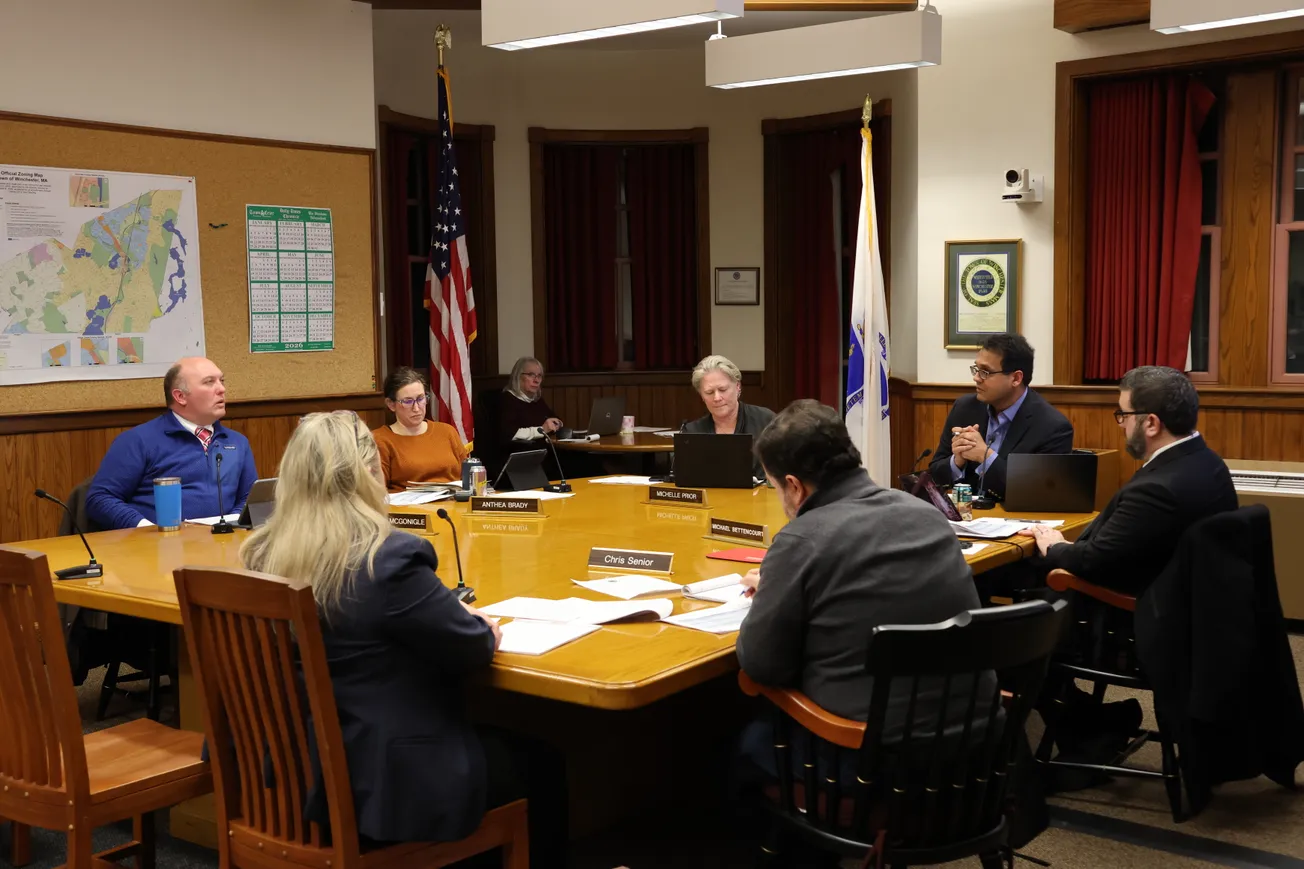
Board discussions, spread across multiple February and early March meetings, offer residents a window into what the board expects to bring to the auditorium floor at Winchester High School — and where significant questions remain unanswered.
A solar push with a deadline
The item that consumed the most board time is not yet a formal warrant article, but it may become the largest capital question voters face this spring.
Board members and a working group have been evaluating a multi-site solar installation program that would place panels on school and municipal rooftops and canopies — including at Winchester High School, McCall Middle School and several Department of Public Works shops.
The urgency is real. A federal law enacted July 4, 2025 eliminated or reduced many tax credits for solar installations. Getting an authorization through Town Meeting, and completing projects before those credits fully expire, is central to the board’s thinking.
The working group, which includes board members Michelle Prior and Paras Bhayani alongside School Committee members, Sustainability Director Ken Pruitt and others, presented financial modeling showing that a purchase of the panels — rather than a lease or power purchase agreement — would yield significantly better returns over 25 years.
In a power purchase agreement, the town essentially lets a private company own the equipment and buys the electricity it produces. With a purchase, the town owns the asset outright and captures all the savings.
Bhayani described the difference starkly: a municipality with top-tier bond ratings can borrow far more cheaply than the implied financing rate embedded in a long-term lease with a solar company.
The modeling showed the town could spend roughly $4.5 million net on a purchase scenario and recover that cost while generating roughly $2.85 million in net savings beyond the project’s cost over 25 years — a figure that would grow as energy costs rise.
Board members Michael Bettencourt and Prior both indicated a clear preference for purchase. Bettencourt said he was “100% purchase.”
Member Bill McGonigle said he expected ownership to be the right call once he reviewed the numbers in detail.
Only Select Board member Anthea Brady withheld a definitive position pending further review.
The board planned to meet with Finance Committee representatives before its March 16 meeting, and to potentially bring in Pruitt for a shorter session to walk members through the financial projections.
While the working group considered bringing both a purchase article and a power purchase agreement article to Town Meeting — leaving voters the choice — board members signaled that if consensus around purchase holds, a single article may suffice.
One complication: several of the proposed sites sit on school property. The School Committee must formally vote to co-sponsor any article covering those sites, and Prior said she planned to speak with the School Committee Chair Karen Maruyama Bolognese about co-sponsorship for both solar and the separately discussed Carriage House demolition project.
The town is also weighing a separate green energy grant of roughly $1 million that could be directed toward solar projects — with the clock running on that grant cycle as well.
Drainage and dam: infrastructure articles moving forward
Two capital articles tied to longstanding infrastructure needs appear headed to Town Meeting with board support, though in both cases details are still being finalized.
The Everett Avenue culvert flow study would authorize an engineering examination of drainage capacity along a corridor that has drawn community attention for years. The article is framed as a necessary first step: before the town can fix the problem, it needs to understand its scope.
Board members acknowledged that a prior attempt to advance related work in the fall ran into trouble partly because residents near the project area had not been adequately notified. Prior said the board needs to determine whether the engineering work would require access to private property and, if so, to communicate that clearly to neighbors before work begins.
There is also an open question about funding: Bhayani raised in a February meeting the possibility that the culvert work could potentially be financed using Chapter 110’s embedded debt exclusion, rather than requiring a direct appropriation.
Rebalancing the town’s financial cushion
The board is also likely to advance an article asking Town Meeting to transfer money into the General Stabilization Fund, the town’s rainy-day reserve for general operating purposes.
The stabilization fund is distinct from free cash — the unspent and uncollected revenue left over at the end of a fiscal year — though both serve as financial buffers.
Bhayani walked the board through a significant imbalance: free cash currently sits at roughly 14% of the town’s operating budget, while the General Stabilization Fund is at approximately 3%. Town policy and state guidance call for those two pools to be roughly equal in size.
The board discussed establishing a target range — moving from a 6-to-10% reserve posture toward an 8-to-12% range — and stepping up contributions to stabilization over time.
The article, which would require a two-thirds vote at Town Meeting both to move money in and later to move it out, is seen by the board as a long-overdue correction.
Prior said she planned to meet with Finance Committee Chair Derek Ross before the March 16 meeting to brief him on the proposal and potentially secure that committee’s co-sponsorship.
A new local tax on short-term rentals
Winchester would join most of its peer communities — including Concord, Lexington and Andover — in adopting a local option tax on short-term rentals such as those listed on Airbnb.
The state already collects a tax on these rentals; this article would allow the town to assess an additional 6% on top of that.
The board’s expectations are modest. Bhayani estimated the annual revenue at roughly $14,000 to $15,000. Still, the board’s view was that the town might as well capture the revenue, particularly since the enabling legal framework is already in place for similar taxes like the local meals tax the town adopted years ago.
The article was described as straightforward to draft, and the manager’s office was directed to model it on language from Belmont, which recently implemented the same option.
A Human Rights Commission takes shape
The board voted Feb. 9 to formally create a working group charged with drafting a bylaw to establish a Human Rights Commission in time for Town Meeting. The group will include community volunteers, a School Committee member and a designee from the town manager.
Board members debated the appropriate model for such a commission. Brady, who researched similar bodies in surrounding communities, noted Arlington has a commission oriented toward adjudicating complaints — a model board members agreed is probably not the right fit for Winchester. Lexington’s commission was described as more event-oriented and focused on community dialogue, which drew more interest.
The consensus leaning was toward a commission that would serve as a connector and resource — directing residents with concerns to appropriate local or state agencies — rather than acting as a quasi-judicial body.
The board asked members to review a draft bylaw, and the working group held its first meeting this week.
Bylaw housekeeping and citizen petitions
McGonigle is also advancing a proposal that would create a structured, recurring review of Winchester’s town bylaws — working through them systematically over time rather than allowing outdated provisions to accumulate.
Town counsel reviewed the concept and was described as generally supportive, though she suggested the reviews occur once a year — either at spring or fall Town Meeting — rather than at every session. The board agreed to keep the proposal on its list as a potential article, pending further review.
The board also devoted considerable discussion to how town counsel’s time should be allocated when residents file citizen petitions — articles submitted directly by voters rather than by a board or committee, requiring only 10 signatures to appear on the warrant.
Members said the town’s legal resources should be prioritized for articles brought by elected and appointed bodies, and that counsel’s role with citizen petitions should be limited to confirming whether an article is legally in order — “calling balls and strikes,” as Bhayani put it — rather than actively helping draft or revise them.
The board plans to develop written guidance for residents explaining what support the town will and will not provide and what proponents should consider before filing.
What comes next
The public warrant closes March 13, after which the board will finalize its sponsorships and any co-sponsorships it has lined up.
Several of the articles described above — solar panels, the stabilization fund transfer and the decennial bylaw review — had not been formally voted onto the warrant as of the meetings reviewed.
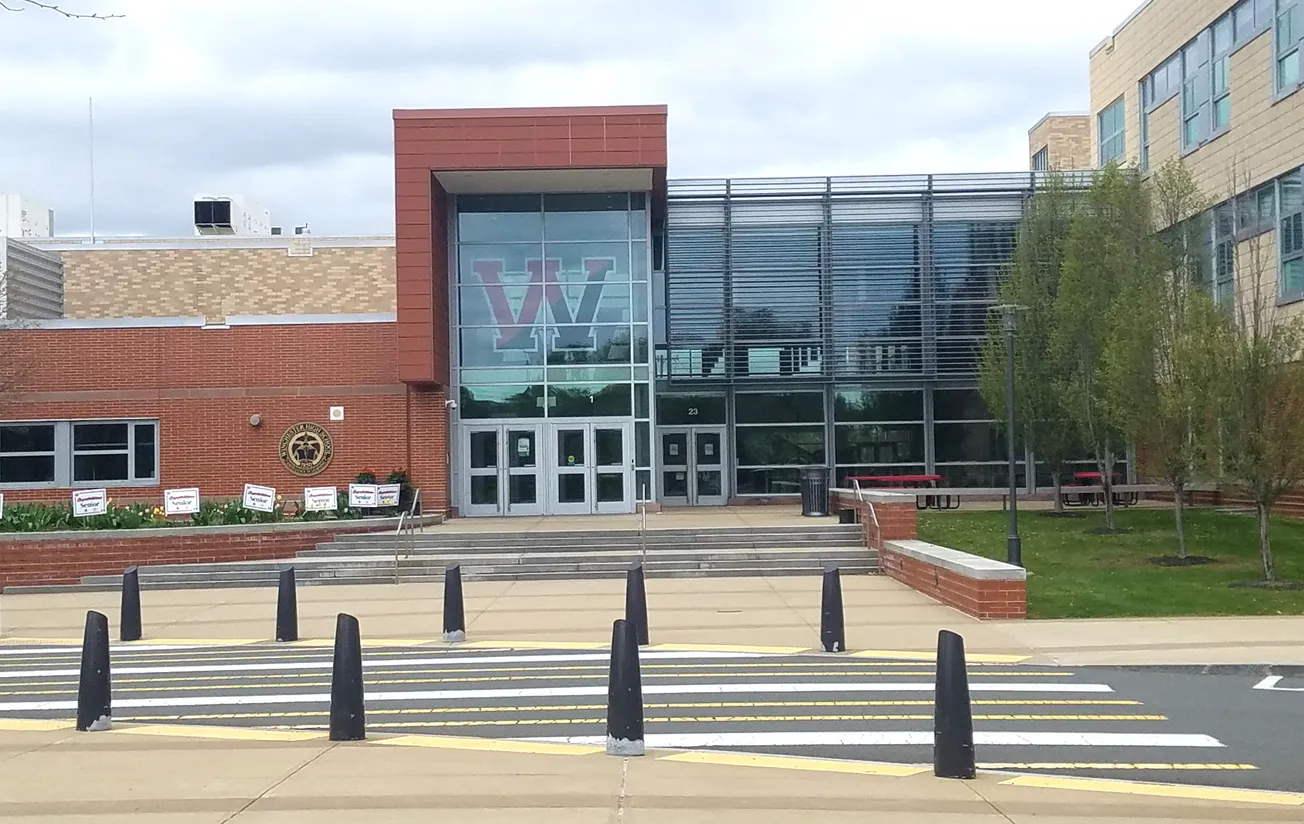
The Select Board is expected to act on those at its March 16 meeting. Town Meeting members will receive materials in advance of the April 27 opening session at Winchester High School, where the town manager and Select Board chair are each expected to deliver brief reports before articles are taken up.
Will Dowd is a Massachusetts journalist who covers municipal government and community life for Winchester News. He runs The Marblehead Independent, a reader-funded digital newsroom.