Table of Contents
You could blame the Muraco School for the fact that the Ambrose cafeteria became the site of a raucously rambunctious science fair on March 5.
“They were the inspiration,” said parent volunteer Karen Kinnaman, who spearheaded the event. “They put on a huge science fair every year.”
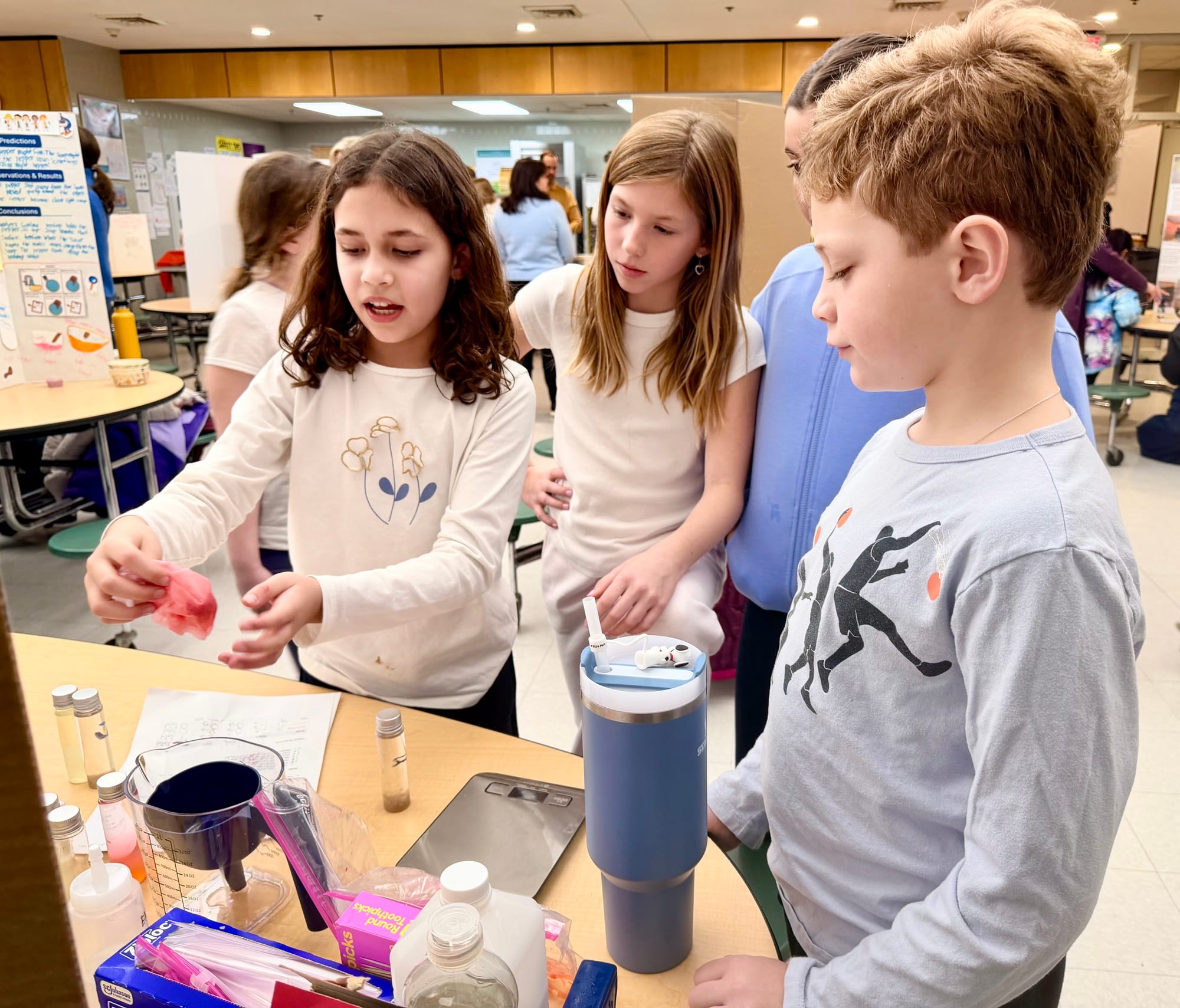
Kinnaman said it’s gotten so big, Muraco had to move their science fair to the high school, which got some parents to thinking, “Why aren’t we doing this?”
After a year of planning, dozens of students filled the Ambrose cafeteria on a drizzly Thursday evening, ready to defend their experiments to parents, peers and educators.
Isabelle Mancini was a tiny bundle of animated excitement as she explained why the Earth had layers. She brandished a graduated cylinder that had a layers of honey, maple syrup, colored water and hand sanitizer, each representing a layer of the earth. Mancini said the honey represented the densest layer and the hand sanitizer, which floated on top, the least dense layer.
“If you shook up the Earth, it would be all mixed up,” she said, shaking another cylinder that had been filled with the same graduated layers, turning the contents into an amber-colored concoction. “But you can’t shake the Earth up.”
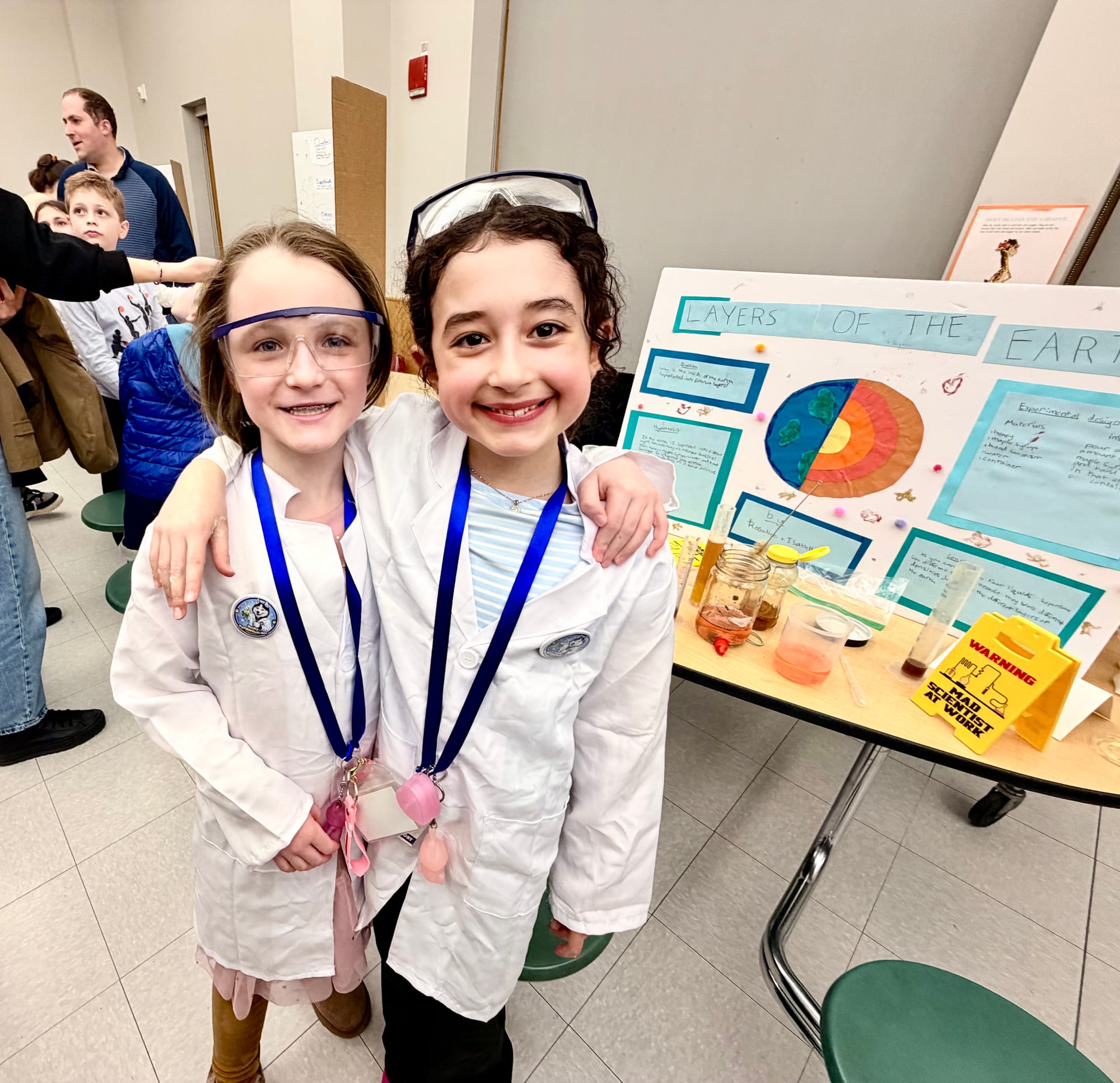
Therefore she and partner Rosaline Ready’s hypothesis was that since you can’t shake up the Earth, it settles into layers.
When asked where they came up with the idea for their project, Mancini said they learned about the Earth’s layers in science class “and we loved the idea so much we came up with an experiment.”
Kinnaman said one of the main goals behind the fair was to have it be completely student driven. They wanted the kids to ask age appropriate questions and find the answers themselves.
She added they made it non-competitive in an attempt to deter parents from helping too much with the projects.
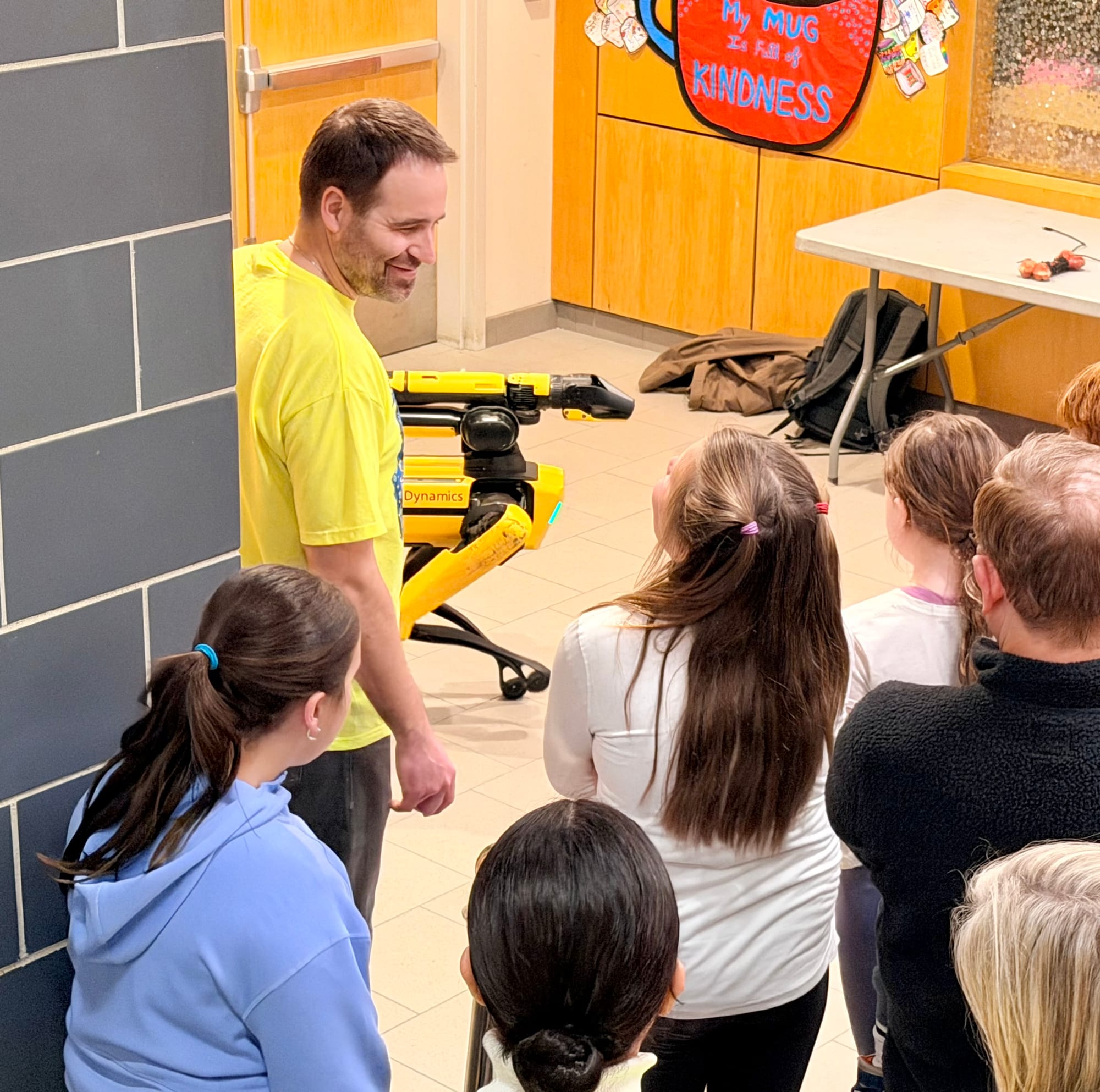
However, Principal Andrea Phelan said there was a prize involved. The class with the most participants would receive a visit from Boston Dynamics’ Robo Dog, who was on hand and doing demonstrations in the lobby.
Turns out there was a tie between the second grade and fourth grade and Phelan said Boston Dynamics would coordinate a visit to both classes.
What do kids know about science?
Turns out – quite a bit.
One student asked herself how she could learn to ski as fast as Olympic gold medalist Mikaela Schiffrin. Kinnaman said that led to a discussion and display on friction.
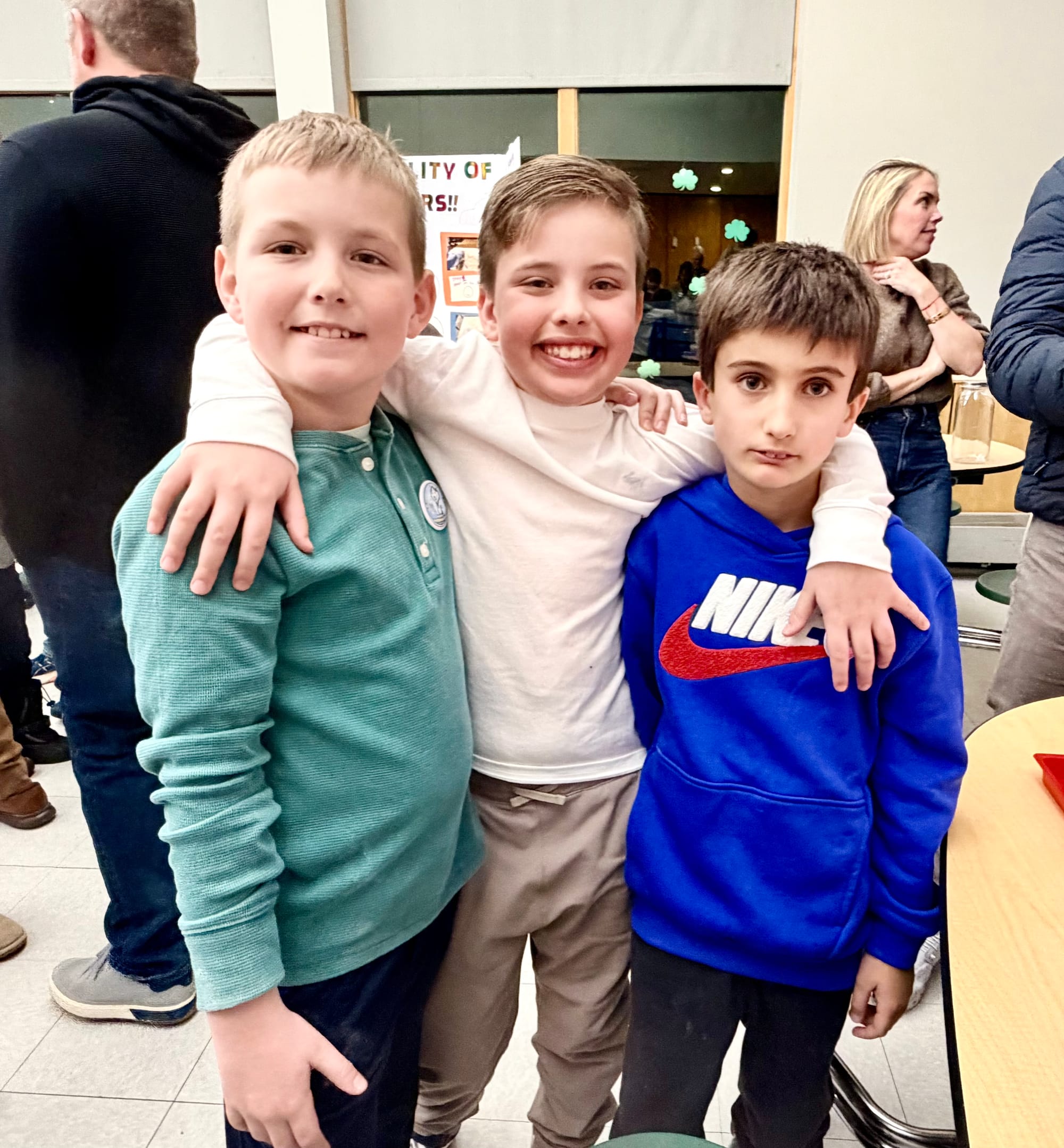
Third graders Matthew, Chance and Bobby wondered if temperature had an impact on the chemical reaction in a lava lamp.
Spoiler alert – it does.
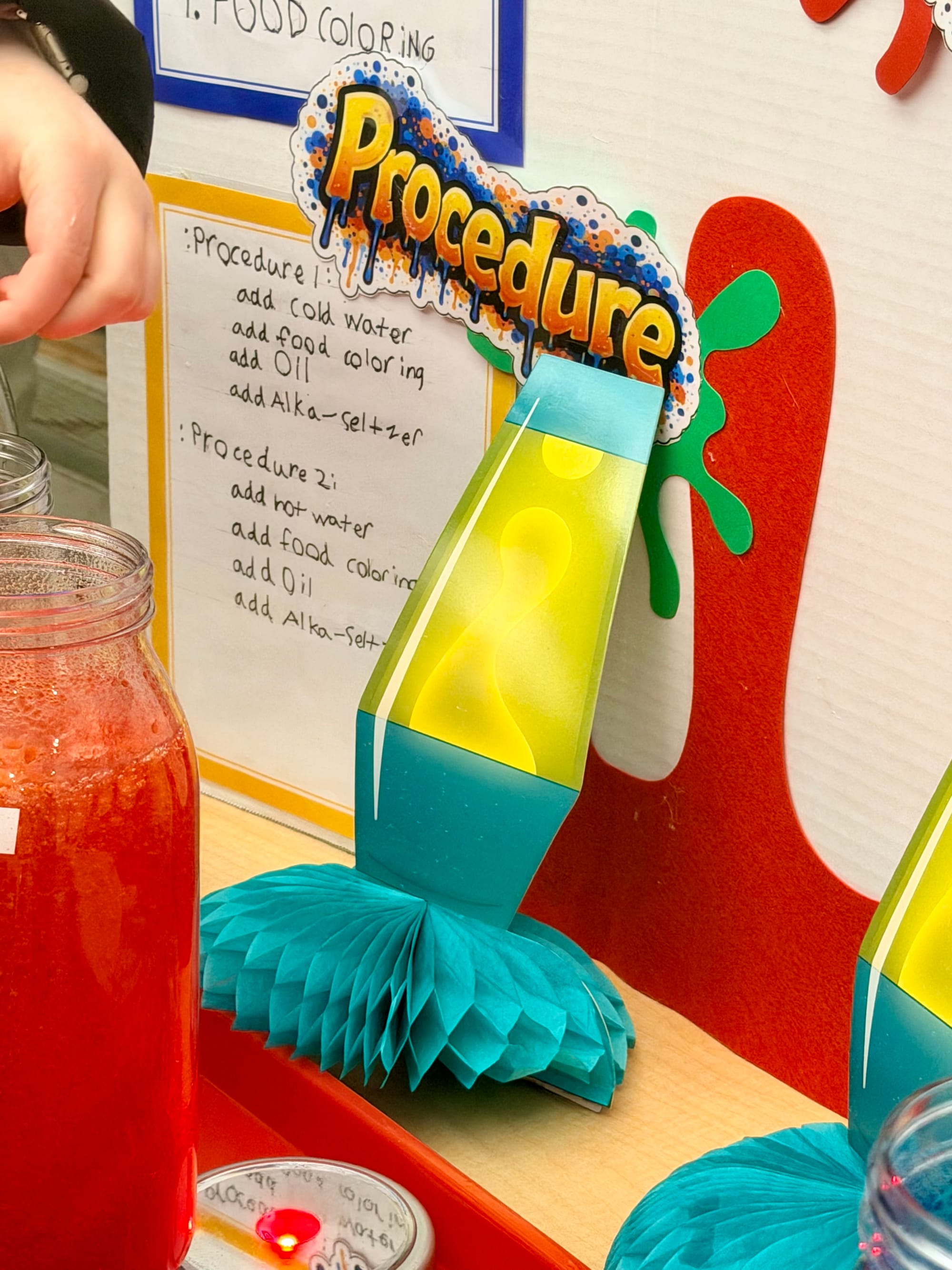
The boys dropped Alka-Seltzer tablets into a warm, red, water/oil mixture and also into a cold, blue, water/oil mixture to test their hypothesis.
“We figured out that cold water makes more bubbles,” said Bobby. “The cold doesn’t dissolve as fast so the result is the temperature does affect how the lava works.”
There were bridges built out of toothpicks and gumdrops, tests on the solubility of markers, graphs to show which liquids of a given set would freeze first and an experiment with elephant toothpaste, which might not be what you think it is.
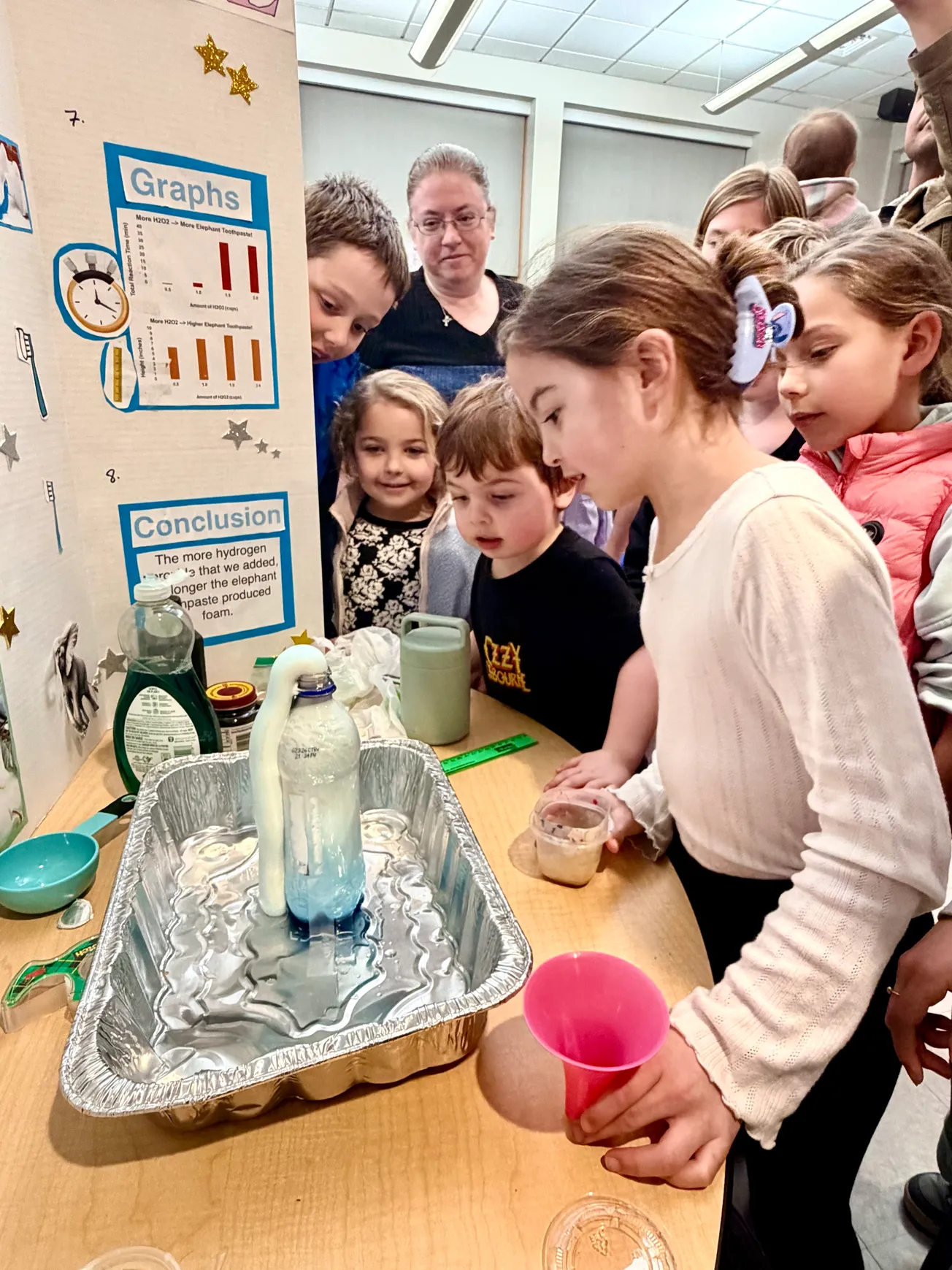
Vivienne Pallone and Laura Ramsey queried what would happen to elephant toothpaste, which is hydrogen peroxide, dish soap and yeast, activated with warm water, all mixed together in a water bottle, if more hydrogen peroxide was added. The pair measured the height and length of times of the reactions and charted them on a graph after each addition of more hydrogen peroxide.
“I like science,” declared Ramsey. “It’s just cool to watch things explode.”
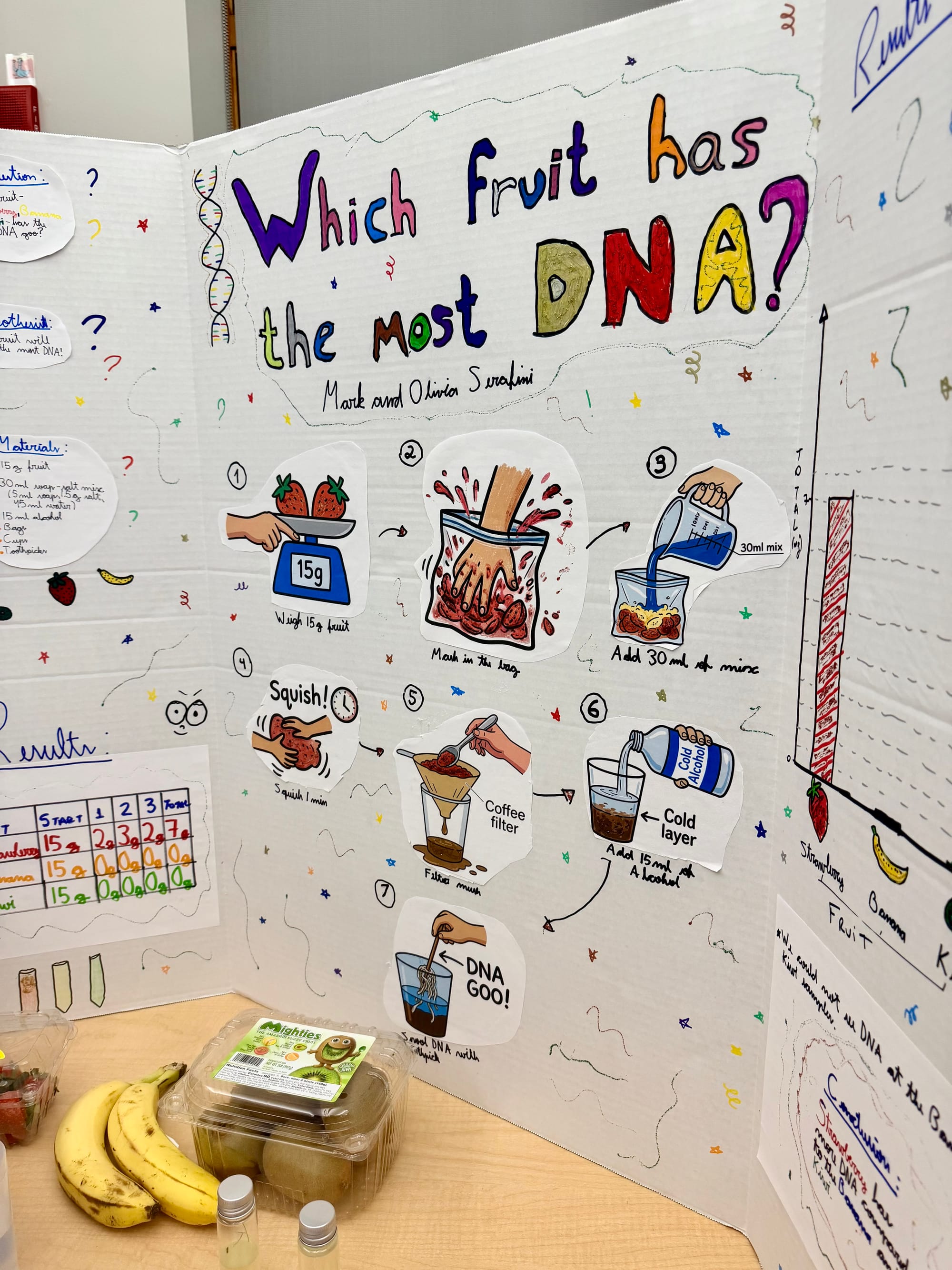
Mark and Olivia Serafina, in first and fourth grade respectively, teamed up to prove which fruit has the most DNA while fourth graders Remy Monchal and Andrew Paolino teamed up to discover which fruit was the dirtiest.
The strawberry had the most DNA, but Paolino said their experiment was “truly disgusting.”
Monchal said they took an orange, lime, banana, lemon, grapes and an apple then separated them into four categories; unwashed, vinegar wash, baking soda wash, and plain water wash. Then they swabbed each piece of fruit in each category and transferred them onto agar plates, put the plates in an incubator (a tote bag on top of a boiler) and observed the plates at 48 hours, 72 hours and 96 hours, he explained.
“The orange was the dirtiest,” Paolino said. “The apple was the cleanest.”
Their hypothesis was incorrect, however, in that they were sure the banana would be the dirtiest. But their second hypothesis, that the vinegar would do the best job cleaning the fruit, was correct, according to their charts.
When asked what they learned, Paolino said to always wash your fruit, especially your oranges. Then he pointed to the bottom of their conclusion where the boys asked: “Orange you glad we did this experiment?”
Phelan seemed thrilled with all of the experiments and level of participation. She called the night an amazing opportunity for students to pick something outside of school that they were interested in and see how they could turn it into an experiment.
“It’s exciting to see what they’re interested in,” she said.
Chris Stevens is an award-winning journalist who has spent 25 years chasing, editing and photographing stories on the North Shore. She is the co-founder and managing editor of Gotta Know Medford.