Table of Contents
The following was submitted by the Office of Sen. Jason Lewis:
State Reps. Michael S. Day and Michelle Ciccolo and state Sens. Jason Lewis and Pat Jehlen joined their colleagues in the Massachusetts Legislature to pass a $1.56 billion supplemental budget primarily using Fair Share revenue from the state’s wealthiest earners to ease pressure caused by strained local school budgets and invest in education and transportation projects across the state, alongside new policy to lower housing costs and support immigrants.
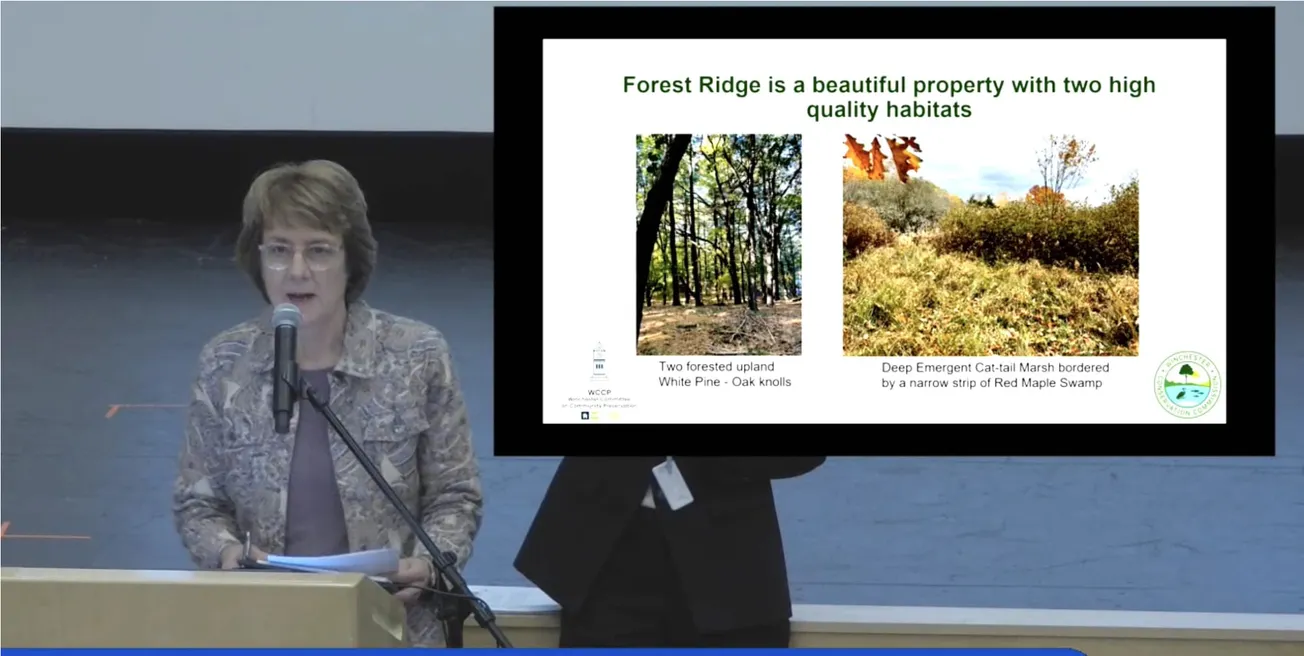
The Winchester delegation secured $300,000 for the Town of Winchester in this supplemental budget. Day filed and helped secure a $250,000 earmark to support the acquisition of Forest Ridge, preserving the property for conservation and nature-based educational opportunities. Lewis filed and helped secure a $50,000 earmark for local transportation infrastructure projects.
“This bill once again shows the amazing success of the Fair Share Amendment in action,” said Lewis. “The Legislature is providing cities and towns with increased funding to support their local budgets, equipping the MBTA with critical funds, and sending Winchester $300,000 for local projects.”
“I am proud to bring home $300,000 to Winchester to assist in its efforts to preserve the Forest Ridge property as a permanent conservation resource and outdoor educational asset for our community, while also supporting local transportation and infrastructure projects,” said Day. “Our united legislative delegation worked together to deliver these funds that will help preserve open space, expand education opportunities and strengthen the infrastructure of our town.”
“Revenue from the Fair Share Amendment is critical to invest in our communities and we could not advance funds like this without it,” said Jehlen. “I am so happy to see Winchester receive these funds for important improvements in critical road infrastructure.”
“This supplemental budget continues to build on the successes of the last several years, strategically investing funds to reshape our education and transportation systems,” said Ciccolo. “From assisting municipalities with the cost of special education services to supporting the low-income fare relief program, this bill demonstrates how important Fair Share revenues will continue to be going forward.”
The legislation increases local reimbursements for special education services, sends significant funding to cities and towns to help with the costs of major winter storms, cuts taxes to jumpstart housing construction, and supports the operation of the MBTA, including the low-income fare relief program.
State-wide highlights of the supplemental budget include:
- $595 million to the MBTA for operational funding, commuter rail improvements, and the low-income fare relief program.
- $152 million to municipalities to help with the cost of special education services.
- $150 million to support high-quality and accessible early education and care.
- $100 million to help towns and cities recover from an extraordinarily costly winter.
- $40 million for early literacy initiatives.
- $10 million to address Massachusetts’ shrinking primary care workforce through scholarships for UMass Chan Medical School students pursuing family medicine if they commit to remaining in Massachusetts and serving populations in need for five years after graduation.
- $10 million for the Tomorrow's Teachers program to encourage young educators to work in Massachusetts by investing in scholarships and loan forgiveness to educators who commit to teaching in Massachusetts public schools.
- $1 million to help public schools implement bell-to-bell cell-phone free school policies.
- $1 million for free legal defense services for immigrants (allocated from the state’s general funds), following the success of the legislature’s initial $5 million investment that created the Massachusetts Access to Counsel Initiative.
- Incentivizing new affordable, moderate-income, and middle-income housing construction through a new targeted sales tax exemption for building materials in areas with the greatest need, designed to help offset rising costs driven by tariffs imposed by the Trump Administration.
- Encouraging the use of sustainable aviation fuel through a new tax credit to help Massachusetts work toward its goal of achieving net zero carbon emissions by 2050.