Table of Contents
Eric Han cannot vote. He is 16, two years short of it. Yet he may track how Winchester actually runs more closely than most adults. This summer, the town will see a lot more of his byline.
A sophomore at Winchester High School, Han is entering his second summer reporting for Winchester News. He started with community events and new storefronts, and this year he is taking on more local government and public affairs — the meetings, budgets and elections that shape the town whether or not anyone is watching.
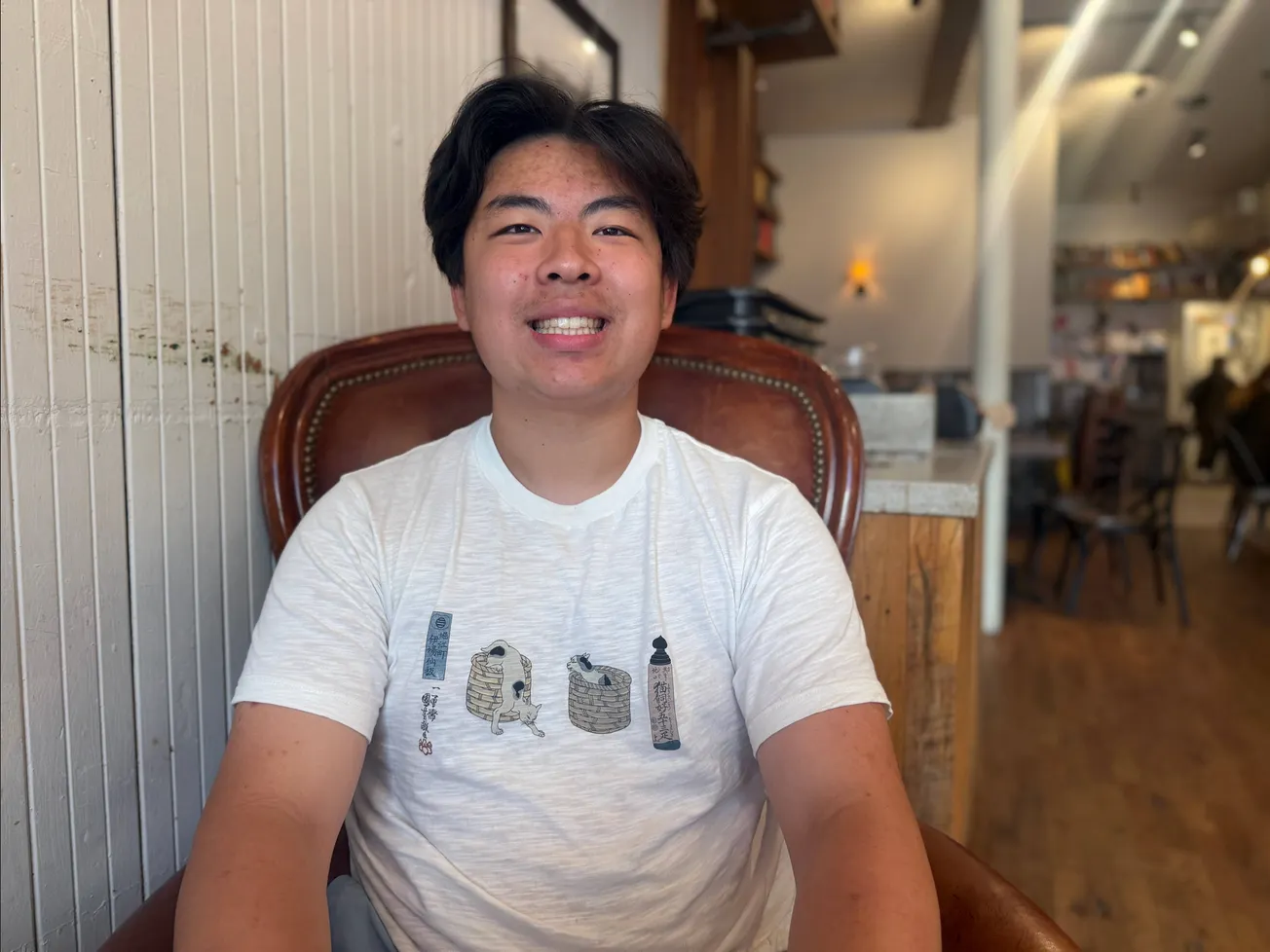
He did not begin comfortable with strangers. On a recent afternoon at Caffè Nero, seated in a leather wing-back chair, Han traced the change to a single assignment a year ago.
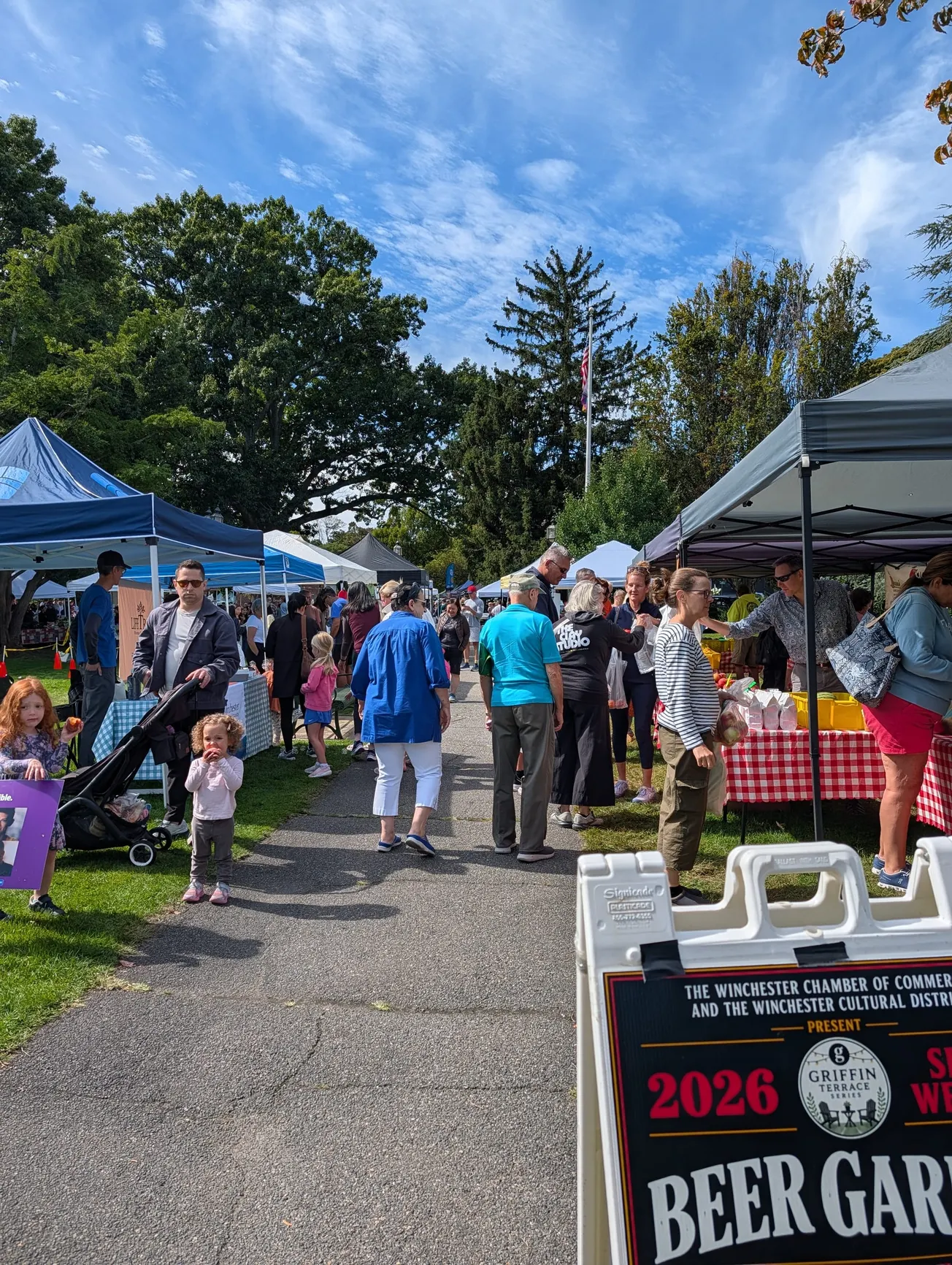
It was Winchester PRIDEfest, late last spring, and the job was supposed to be simple: find the organizer, ask a few questions, write it up. His editor couldn’t make it, so the whole thing fell to him.
For nearly 30 minutes he circled the event, a 15-year-old with a notebook and no idea what he was doing, while the organizer he needed — Rebecca Slisz — stood a few feet away.
“I was pretty much like a lost puppy,” Han said.
Then he made himself walk over. The conversation he had dreaded was easy within seconds.
“If I don’t do this, what am I even here for?” he remembered thinking. Afterward, a different thought: “Why did I spend 30 minutes being scared? It really wasn’t that important.”
The fear didn’t lift all at once. This past spring, nearly a year after PRIDEfest, his editor handed him something bigger than the events he had grown used to — a story on a state proposal to keep cellphones out of Massachusetts classrooms.
It meant chasing one source after another, a scale he had never worked at, and watching the threads pull together until the whole thing made sense.
Discovering his own town
He was not born in Winchester. Han moved from Andover at 9 — his parents immigrated from China and came to the United States for college — and seven years later, he still finds the town faintly unfinished, full of streets, storefronts and people he has never met.
“There are still parts of town I haven’t really discovered,” he said. “And that’s crazy to me.”
Journalism, he decided, was a way to close that gap. The interest turned specific in March, when local elections, including a School Committee race, pulled him into Winchester’s civic life.
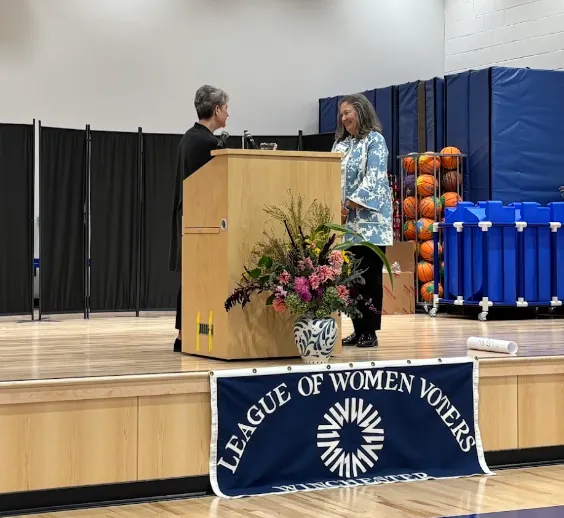
He canvassed, talked with candidates and grew close to School Committee member John Bellaire, whom he called “a great mentor.” He came away convinced the decisions made closest to home are the ones that matter most and draw the least notice.
On a typical street, he noted, only 20 to 30% of residents vote regularly.
What pulls him is not the fighting but the explaining. He likes history, reads Vox-style breakdowns of how institutions work and admires anyone who can make a tangled subject plain.
The pull predates journalism. When he was 7, a friend showed him a book of cartoonish stick-figure drawings — “Math With Bad Drawings” by Ben Orlin — and for years he flipped through it only for the jokes.
When he finally read the words, around 13, he found an author who could turn a forbidding idea like statistical significance into a picture of villagers and barbarians at a gate. The trick of making something hard feel obvious has fascinated him since.
“A lot of people have no idea how real politics works,” he said. “How do we actually get things done?”
That instinct shows up in what he counts as a story. He gets animated describing how the company that supplied pizza to the town’s elementary schools went out of business, pushing the district to a small local maker — a swap most people never noticed and he thought worth a few hundred words. The quiet mechanics of a town, he argues, are where the overlooked stories hide.
Off the page
There are things he keeps to himself. Han is an advanced pianist who rarely brings it up; his parents, whom he said know little about music, have never pushed him to practice or compete, and that absence of pressure is the reason he never quit. He plays hockey, too, and has a younger sister in sixth grade, but the piano is the part he guards.
“It feels so free,” he said. The instrument is private, a way to decompress — “a vessel,” he called it.
This summer he wants to sharpen two things: his analysis, so his stories explain instead of lean on quotes, and his conversations, particularly with people unlike himself.
“Someone who’s 80 and someone who’s 8 might have completely different views,” he said, “and that’s important to investigate.”
Asked for three words their friend might use to describe him, Han grabs the attention of a friend standing at a trash can in lthe coffee shop. The friend offered hardworking, friendly and authentic. The last one pleased him most.
Ask him where he would find three stories tomorrow and the answer comes fast: the high school, where a club or a team is always doing something; the downtown sidewalks, where a new business or a shuttered one is its own small item; and the State House, whose decisions land back home.
“It doesn’t have to be big,” he said, “as long as it’s interesting.”
Will Dowd is a Massachusetts journalist who covers municipal government and community life for Winchester News. He is also the founder and editor of The Marblehead Independent, a reader-funded digital newsroom.