
Table of Contents
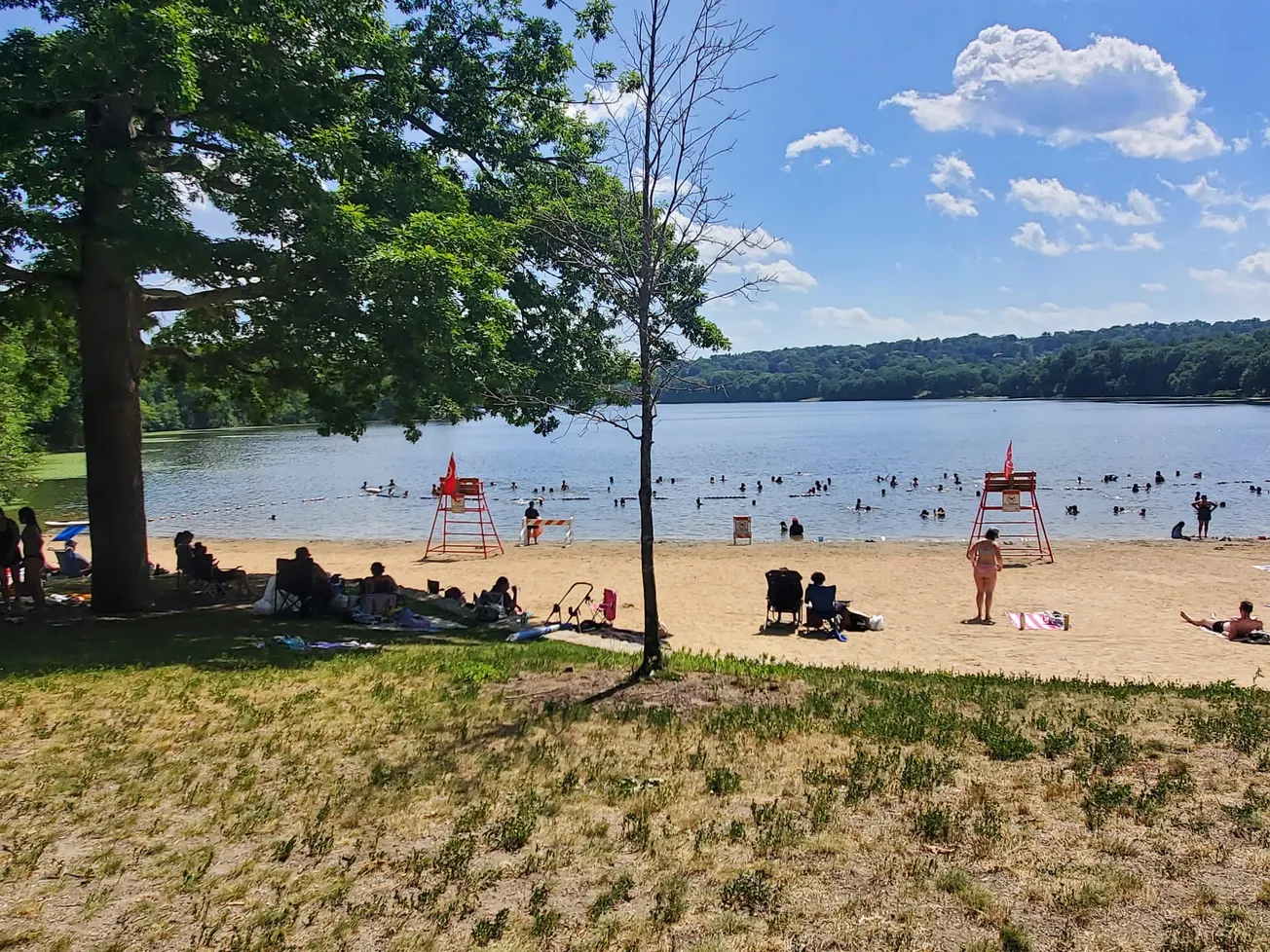
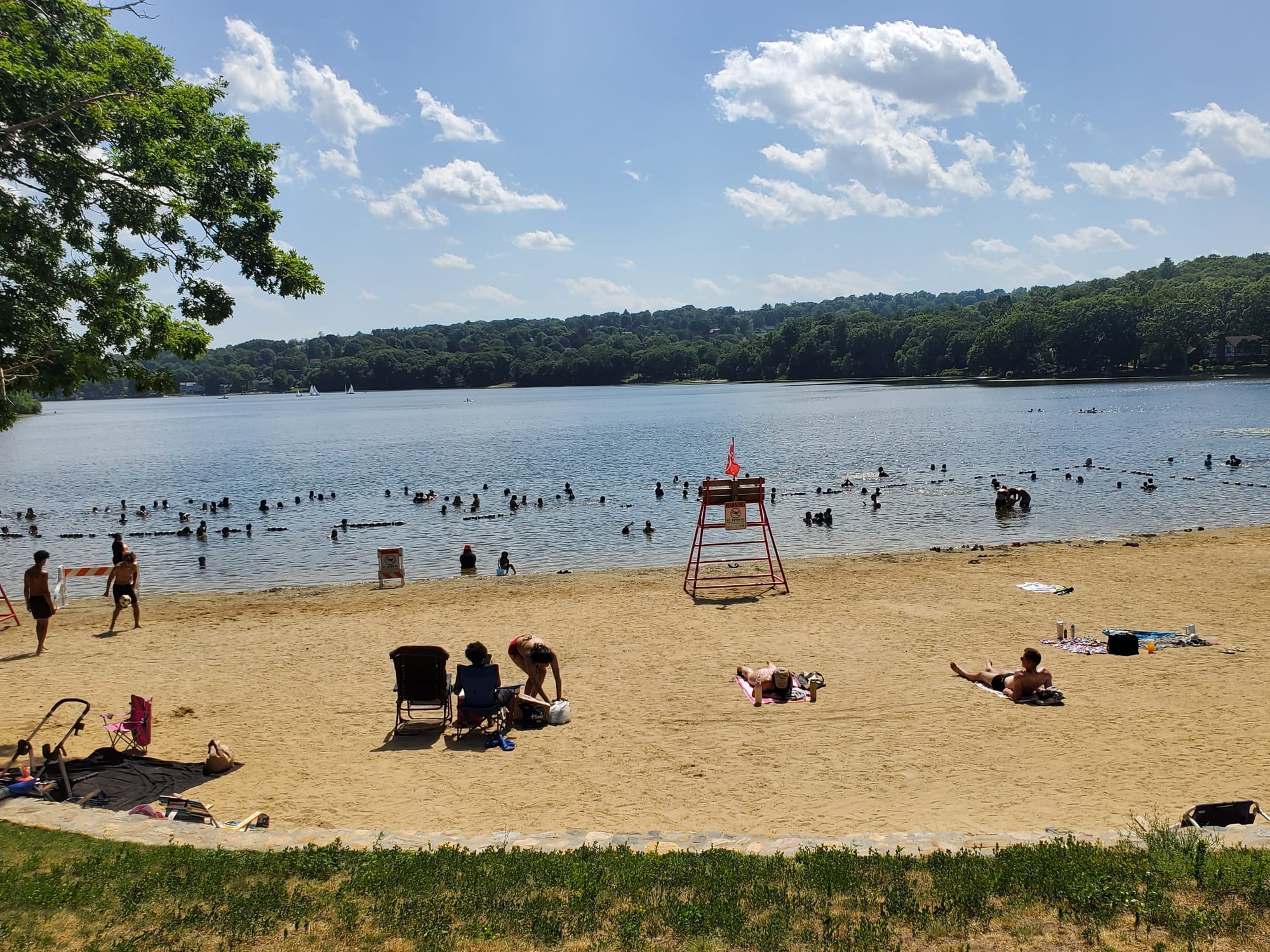
With temperatures reaching as high as 101 degrees on July 2, many Massachusetts residents were looking for ways to cool off. But bacteria levels at Shannon Beach were unsafe.
During the week of June 29, the Department of Public Health shut down between 30-40 beaches statewide, including Shannon Beach, due to high bacteria levels, sewage overflows, and harmful cyanobacteria blooms.
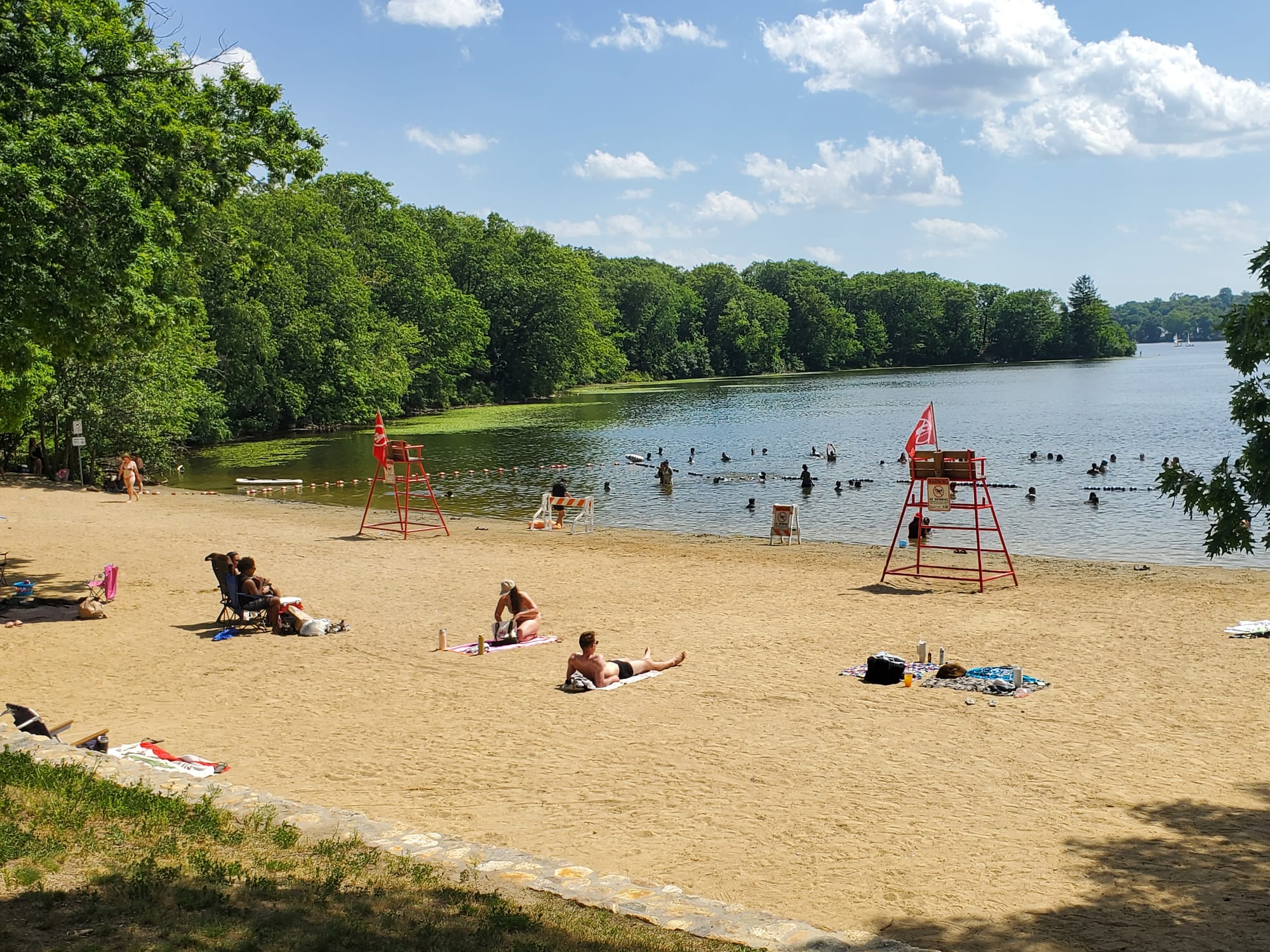
Shannon Beach is a freshwater beach located at the Mystic Lakes State Park in the Upper Mystic Lakes, 481 Mystic Valley Pkwy. Operated by the Department of Conservation and Recreation, the recreational area includes bathhouses, a playground and limited parking.
The beach is named for Sen. Charles E. Shannon Jr., who represented Somerville, Medford and Winchester from 1991 until his death in 2005. The beach, formerly known as Sandy Beach, was renamed in his honor in 2008.
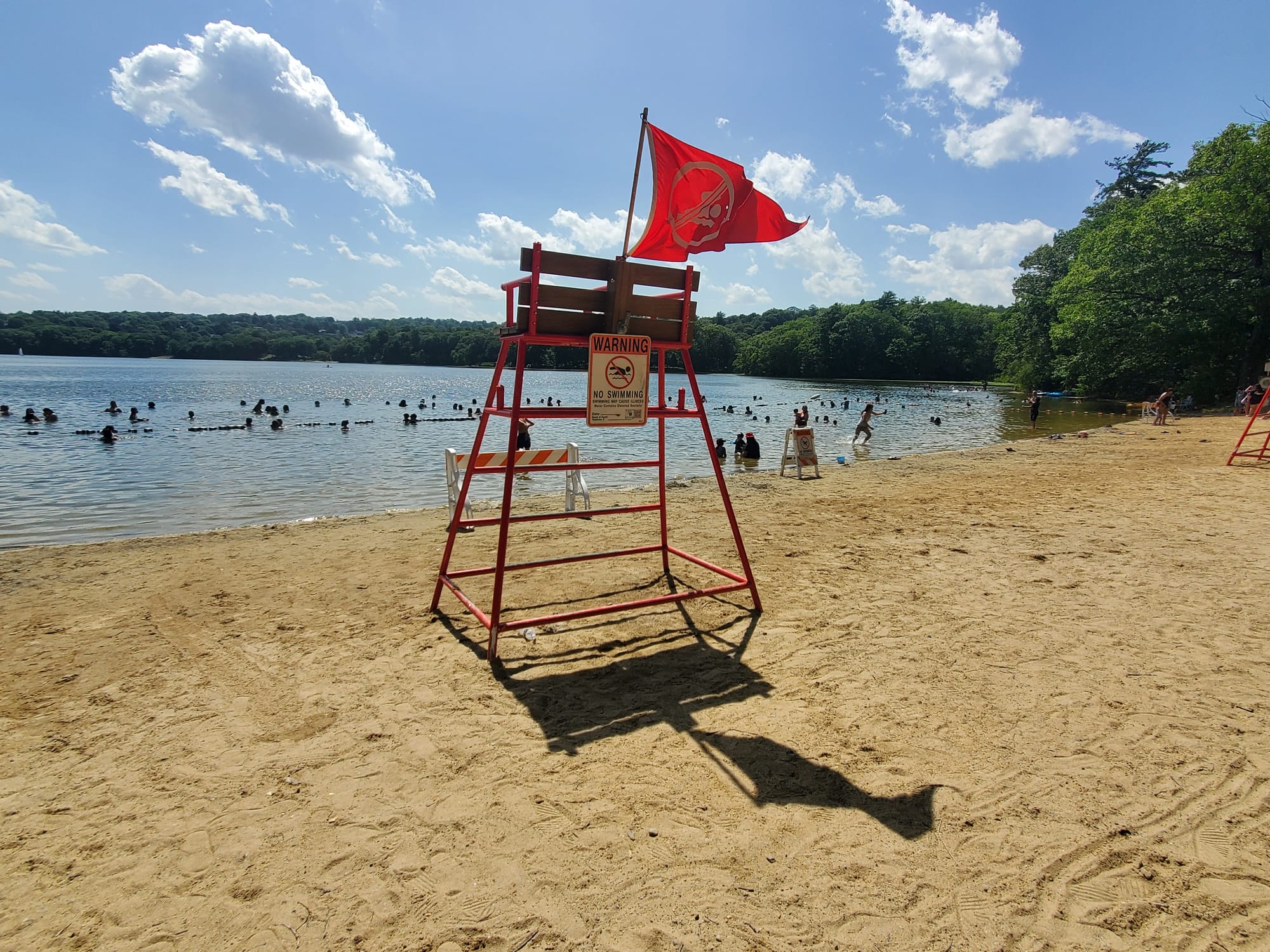
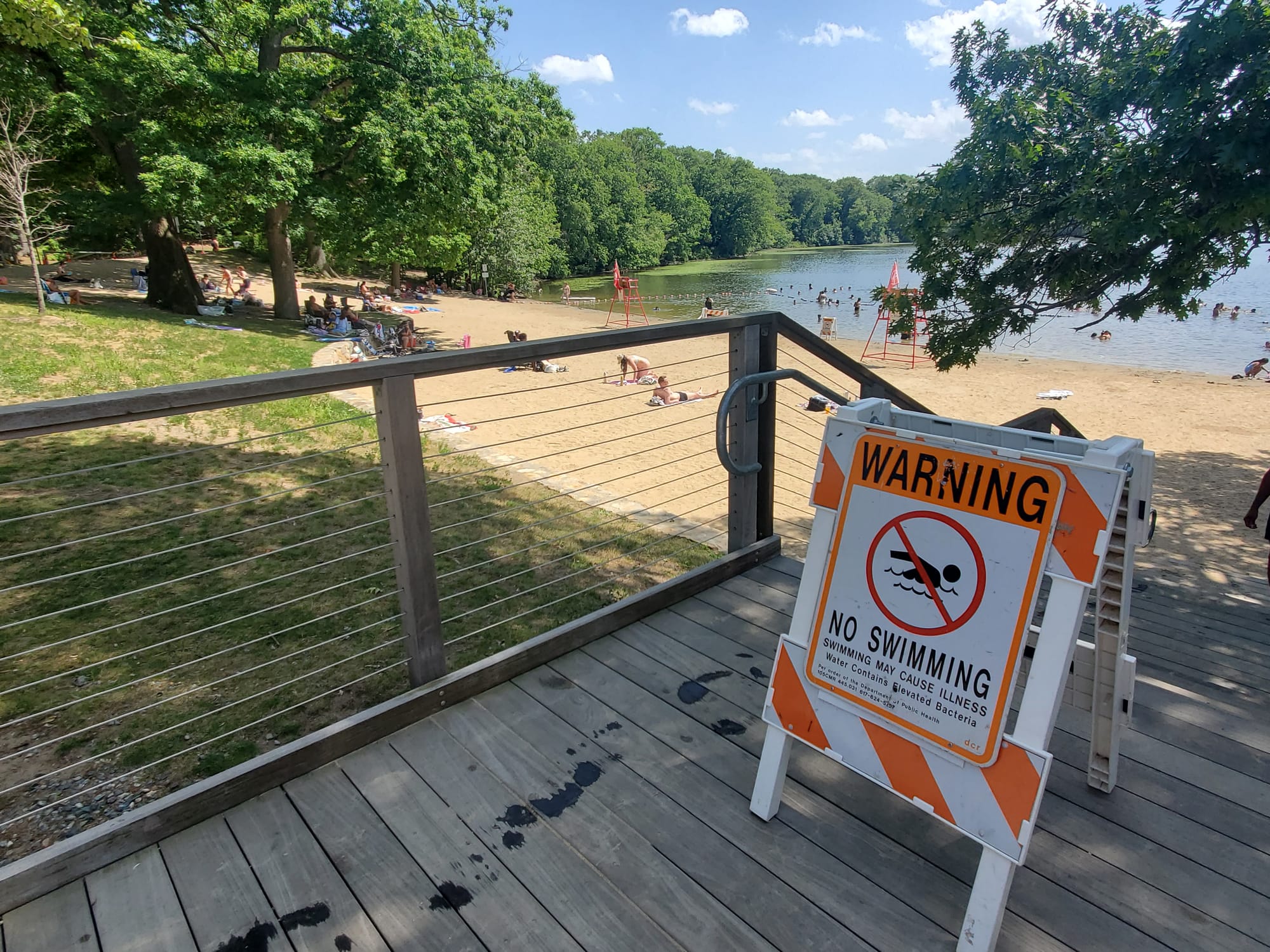
Shannon Beach has been closed at various points during the past two summers for the high levels of bacteria, but swimmers continued to use the facilities despite posted signs and lack of lifeguards at the DCR-run beach.
Those signs were back during the heatwave that hit just before the Fourth of July weekend. They remain in place.
Anyone swimming at Shannon Beach does so at their own risk.
Why was the beach closed?
Shannon Beach was closed due to high levels of enterococci bacteria. A water test by the state on June 26 put the levels at 118.7 CFU/100 mL or Colony-Forming Units per 100 milliliters of liquid. Another test on June 30 put the levels at 98.7 CFU/100 mL.
CFU/100 mL is a standard used to measure the concentration of bacteria or fungi in a liquid sample.
Other tests in June have measured the following levels of bacteria:
• June 9: 517.2 CFU/100 mL
• June 10: 10 CFU/100 mL
• June 16: 2,419.6 CFU/100 mL
• June 23: 8.5 CFU/100 mL
• June 24: 30.1 CFU/100 mL
According to Mass.gov, the acceptable level for a single sample of enterococci bacteria at marine beaches is 104 CFU/100 mL or below. At freshwater beaches, the level is 61 CFU/100 mL or below.
“The freshwater limit is stricter because elevated levels of bacteria within a smaller body of water (such as a lake versus the open ocean) can pose higher risks of illness,” the site explained.
You can check out the DPH Interactive Beach Water Quality Dashboard, which “provides water quality testing results for the current beach season. It will tell you which beaches are open or closed. If a beach is closed, do not swim or enter the water at that location to avoid risk of illness.
Testing for bacteria
The DPH tests more than 1,100 public and semi-public beaches statewide for bacteria before they are allowed to open.
“In the United States, most swim-related illnesses are associated with disease-causing organisms (pathogens) that are linked to fecal contamination,” the state website says of why beaches are tested. “To protect public health, the Massachusetts Department of Public Health (MDPH) requires that certain ‘indicator organisms,’ or specific microscopic bacteria that indicate harmful pathogens may be present. This monitoring data helps local health officials determine when to close a beach due to unsafe conditions and to notify the public so that beach visitors can make informed decisions about swimming at the beach.”
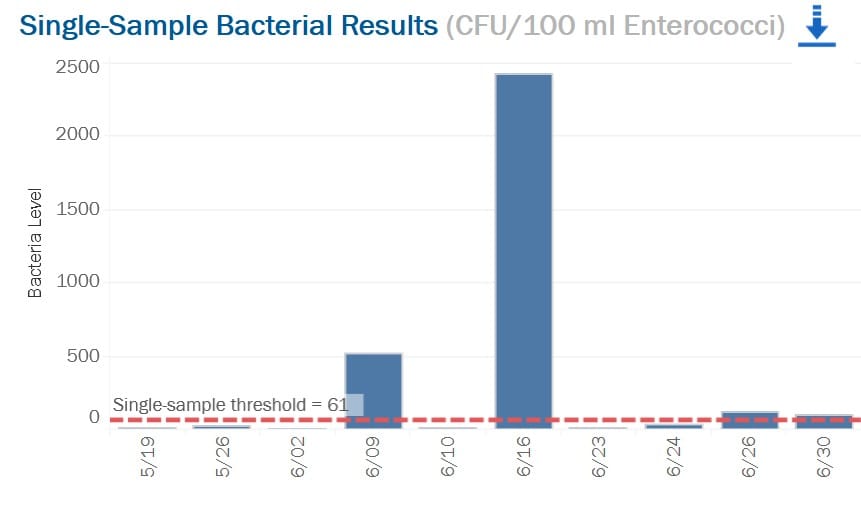
Test results by the state show different levels of enterococci bacteria at Shannon Beach throughout the month of June. Levels above 61 CFU/100 mL close down freshwater beaches to swimmers. COURTESY PHOTO/MASS.GOV
The DPH defines “indicator organisms” as those that “share similar characteristics and life cycles as pathogens, disease-causing organisms that can make humans sick,” including pathogens associated with fecal contamination.
“The bacteria used as indicator organisms to test the waters at beaches are Enterococci and E. coli,” the site says. “Marine beaches are tested for the presence of Enterococci. Freshwater beaches are tested either for the presence of E. coli or Enterococci.”
Bacteria in the water
Local health departments as well as the state Department of Conservation and Recreation collect the majority of water samples in Massachusetts. Samples are collected in 3 feet of water at a depth of 12 inches below the surface water and are typically collected anywhere from daily to monthly.
A majority of beaches are tested once a week, but the DCR report frequency depends on whether or not a beach has water quality issues.
Testing is done at accredited labs and take about 24 hours to perform. If E. coli levels exceed the limits set for beaches, the water is re-tested. If two tests fail, beaches are considered unsafe for swimming.
Beaches can remain closed until test results show the bacteria levels are back to within acceptable ranges for swimming safety.
So where does all this bacteria come from?
Both the DPH and DCR state that bacteria in the water can come from a variety of sources, including the following:
• Stormwater (rain) run-off
• Failing or malfunctioning septic systems
• Combined and sanitary sewer overflows
• Leaking sewer pipes
• Illegal sewer hookups
• Wildlife and pet waste
• Agricultural runoff
If you don’t feel well
State health officials say anyone exposed to contaminated water can experience the following symptoms:
• Gastrointestinal symptoms — nausea, vomiting, diarrhea, and abdominal pain
• Respiratory symptoms — sore throat, cough, runny nose, and sneezing
• Dermatological symptoms — skin rash and itching
• Eye and ear symptoms — irritation, earache, itching
• Flu-like symptoms — fever and chills
Although most symptoms are minor, more serious illness can occur.
“Children, the elderly, and those with weakened immune systems are at greater risk for illness,” the DPH says.
The DPH goes on to recommend that anyone swimming at a beach that has been closed to swimmers and feels ill after should see a medical professional.
Nell Escobar Coakley has been a journalist for more than 30 years. She is co-founder and editor-in-chief of Gotta Know Medford and editor of Winchester News. She can be reached at editor@winchesternews.org.