Table of Contents
Winchester’s state legislative delegation came to the Select Board meeting with a stack of good news — a 6.1% increase in school aid, earmarks for roads, drainage and public safety, and several newly passed state laws — but board members used the visit to press a harder question: whether Massachusetts gives towns like Winchester enough tools to manage costs climbing faster than state law lets them raise revenue.
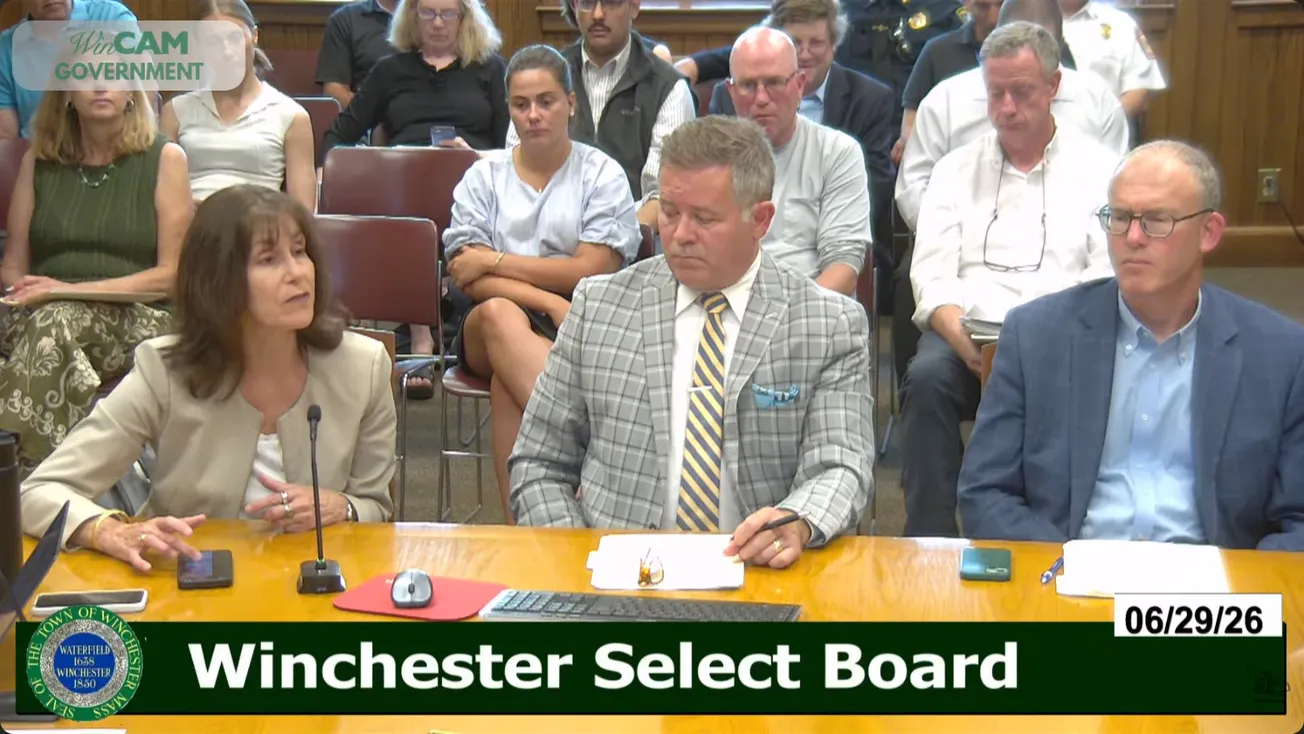
The June 29 update came a little more than three months after voters rejected an $11.5 million override in March, a defeat that left the Select Board, School Committee and town staff weighing difficult cuts.
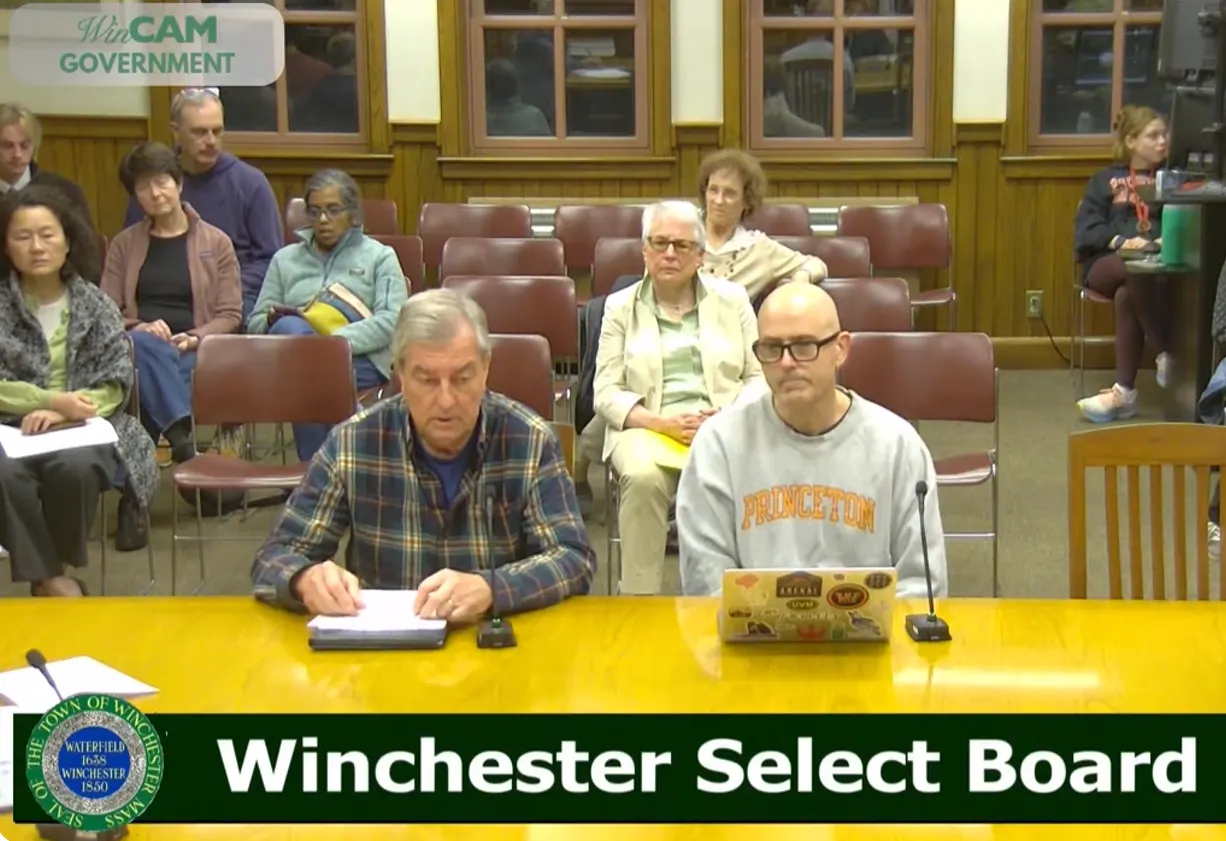
State Sen. Jason Lewis, state Rep. Michael S. Day and state Rep. Michelle L. Ciccolo delivered the update; state Sen. Patricia Jehlen was absent due to a health issue.
Lewis said the delegation understood the town’s fiscal condition and had made steering money to Winchester a priority in the state’s more than $60 billion budget.
But much of the help was one-time or still pending, and two board members argued the town needs structural change, not another round of earmarks.
The largest piece is Chapter 70, the state’s main school-aid program. Lewis said Winchester’s share is set at $12,084,323 for fiscal 2027, up about $696,000, or 6.1%, over fiscal 2026 — the 6.1% measures that year-over-year gain.
Because the House and Senate budgets carry the identical figure, the number is unlikely to change even with the overall budget still in a conference committee as of June 29.
The increase is driven by minimum per-pupil aid, a floor that lifts every district when the formula otherwise would not. Lewis put it at $160 per pupil, above the $75 Gov. Maura Healey proposed and the highest he could recall. The precise figure will be confirmed in the final budget.
Winchester’s unrestricted local aid — flexible money for police, fire, public works, libraries and senior services — is likely to land close to $2 million, Lewis said, though the House and Senate had not settled on a final figure.
Unlike Chapter 70, this is the one large state source the town can direct as it chooses, which is why its formula draws local scrutiny.
Direct aid tops $14 million
Day put Winchester’s total direct state funding at a little more than $14.1 million for the year and said state aid has grown about 46% since fiscal year 2015 — the increase over that span, though the base dollar amount needed to translate it was not provided.
Day said the delegation secured a series of earmarks: $150,000 for first responder and dispatch communications; $50,000 to help Winchester Public Schools with literacy programming changes; a little more than $750,000 in Chapter 90 road funding; $200,000 in supplemental Chapter 90 money for roads, bridges and infrastructure; $50,000 for local infrastructure improvements; $125,000 for drainage improvements; and $250,000 tied to a possible acquisition of the Forest Ridge property, which Town Meeting is expected to revisit.
The road and bridge money is capital relief, not operating help, and Day said much of the supplemental funding came from stronger-than-expected Fair Share surtax revenue, the so-called millionaires tax.
Earmarks must be spent quickly, he warned: “If you don’t use it, you lose it.” A Wedge Pond earmark took almost a full year to come back, he said.
Day also cautioned that federal cuts could force the state to reopen the budget midyear. Chapter 70 is shielded from so-called 9C cuts, he said, but other streams — Chapter 90, school meals and social programs — could be squeezed later. Both chambers left the rainy day fund untouched in case major federal cuts materialize.
Lewis said he is still pushing the Massachusetts Bay Transportation Authority to finish a punch list at the renovated Winchester Center commuter rail station, including repainting concrete abutments at the Waterfield Road bridge and Quill Rotary.
The Muraco School project, invited into Massachusetts School Building Authority eligibility last September, is now in its feasibility phase.
New laws reach Winchester classrooms
On policy, Lewis said Healey signed an early literacy law on June 26 requiring evidence-based reading instruction in Kindergarten through 3rd grade.
He and Ciccolo said it responds to Massachusetts students slipping against national reading standards, and both said Winchester is already aligned after moving toward an evidence-based curriculum that Town Meeting funded.
Select Board member Michelle Prior asked how the law would affect the curriculum money Town Meeting approved this spring.
Lewis said the state will keep a list of approved curricula and develop a free option, but that Winchester had already chosen a highly regarded curriculum and would stay the course.
The House and Senate have each passed bills restricting student cellphone access during the school day, and the legislation is now in conference, Lewis said.
If it becomes law, Winchester High School would have to change because it was not then under a full bell-to-bell ban. Students were allowed to use their phones when not in classes or during free time.
The sticking point, he said, is that the House version also covers youth social media use while the Senate bill is limited to phones in schools.
Lewis also described a municipal procurement bill he filed with the Massachusetts Municipal Association to extend to town departments the higher purchasing thresholds already granted to schools.
It had a public hearing, but has not cleared committee, and its deadline was extended to July 31 — the kind of tool board members would press for minutes later.
Ciccolo walked the board through the Environmental Bond Bill, filed by the governor as the Mass Ready Act and now in conference as a five-year measure.
A bond bill authorizes spending over time rather than guaranteeing cash, she noted, with release depending on the final bill and the governor’s capital plans. Its programs include municipal vulnerability preparedness, clean water, PFAS remediation and inland flood and dam control.
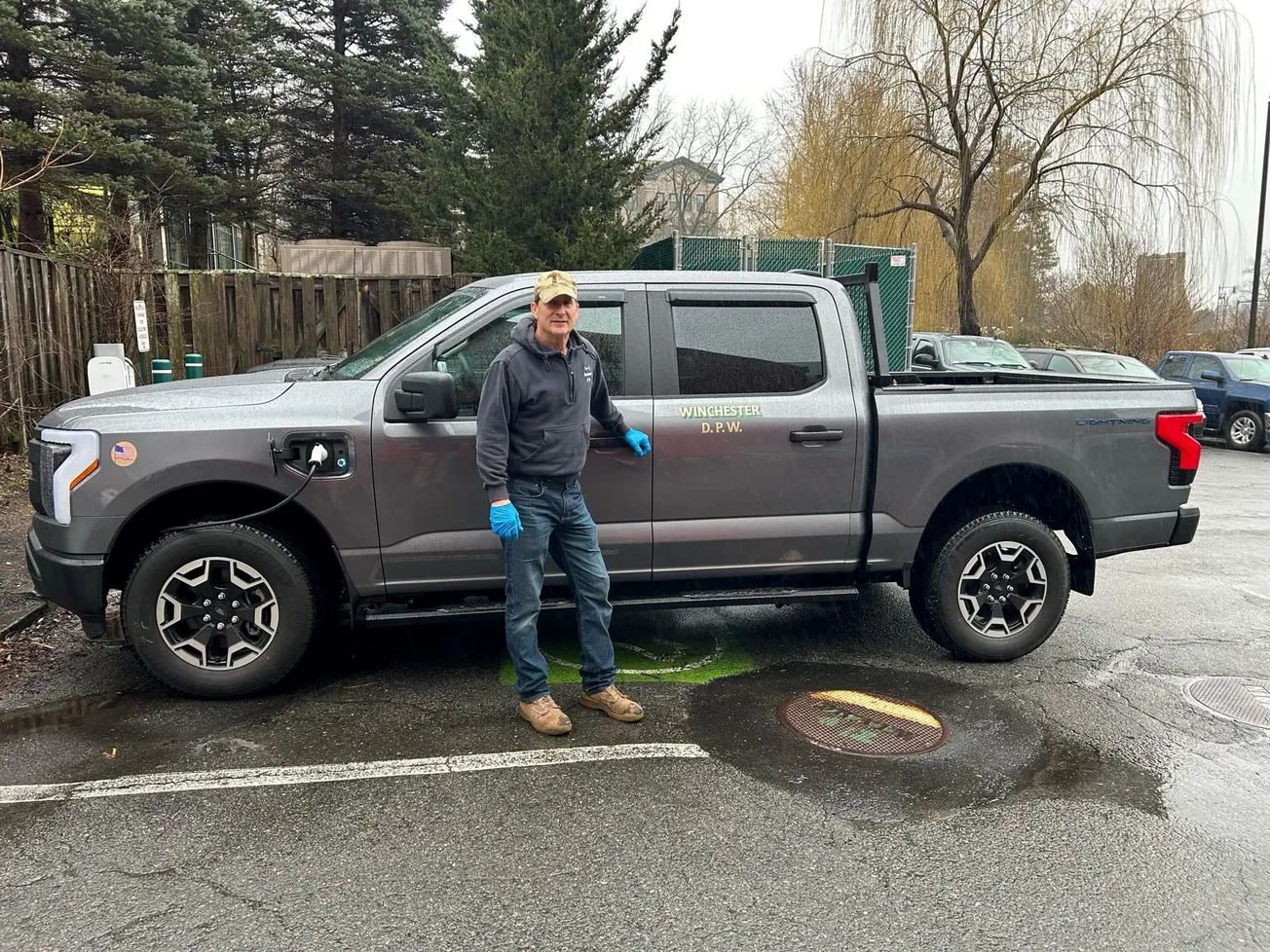
For Winchester, it carries $752,000 for HVAC improvements in the public schools and $600,000 for vehicle charging stations for municipal and public use.
Board presses for tools beyond aid
The sharpest exchange came when Select Board member Paras Bhayani told the delegation that more unrestricted local aid would not be enough.
He asked whether the state was weighing broader municipal tools for cost increases that outrun Proposition 2½ plus new growth, urging the lawmakers to “give us more tools to solve some of this on our own.”
Bill McGonigle echoed the point, crediting the delegation with bringing home extra money, but warning that the pool of state dollars is not growing as federal support wanes and competition among communities intensifies. Towns, he said, need the state’s help to take care of themselves.
Both were describing the squeeze from Proposition 2½, adopted statewide in 1980, which caps annual growth in a community’s tax levy at 2.5% plus new growth unless voters approve an override or exclusion.
Winchester has used that route before — voters approved seven override questions before the 2026 vote — but officials say the town faces a structural operating deficit of about $5 million as union contracts and employee health insurance rise faster than the cap allows.
The March request, $9 million for operating costs and $2.5 million for capital, was rejected.
Lewis said he agreed, pointing to a Senate bill passed two weeks earlier expanding access to primary care as one attempt to attack cost drivers like health care.
Day went further, noting Proposition 2½ has not been revisited since the 1980s and that inflation has sharpened its bite.
“It’s certainly time to have another hard examination about whether it’s really doing what we want it to,” he said, floating circuit breakers or a return to the ballot.
The conference committee’s budget was due to reach the House and Senate floors July 1, with a one-twelfth stopgap filed to keep cities and towns funded if the governor needs the full review period after Wednesday.
For Lewis, who is not seeking re-election, the meeting doubled as a farewell; he reflected on the Tri-Community Greenway, the commuter rail station, school projects and the town’s flood mitigation work.
Will Dowd is a Massachusetts journalist who covers municipal government and community life for Winchester News. He is also the founder and editor of The Marblehead Independent, a reader-funded digital newsroom.