Table of Contents
The Griffin Museum of Photography is hosting its sixth installment of the Vision(ary) exhibit, with the theme this year focusing on advocacy and social activism in light of the 250th anniversary of the U.S.
The exhibit runs until Sep 27 and features 28 photographers’ takes on the theme of past and present advocacy, social justice and activism within the U.S., which is articulated through the title “Raising Our Voices.”
Vision(ary) has had a multitude of themes in the past, mostly surrounding community, culture and the environment.
Crista Dix, the executive director of the museum, said the exhibit is part of a larger year-long program called the “State of Our Union,” which was created in response to Robert Frank’s series called “The Americans,” which examined American culture in the late 1950s.
The “State of the Union” looks at the U.S. through five different lenses: landscape, labor, music, community and activism. Each lens is an exhibit with Vision(ary) looking at the activism lens. It was curated by Elizabeth Krist, who was a photo editor for National Geographic
The exhibit features different issues ranging from women’s rights and immigrant rights to the evolution of protesting and wealth disparities within the nation.
“I want it to be a conversation with the Winchester community,” Dix said. “This is a reminder of what is happening outside our doors and how we participate in democracy.”
All of the photos are displayed between eight cubes and 12 banners that will be hung around Winchester.
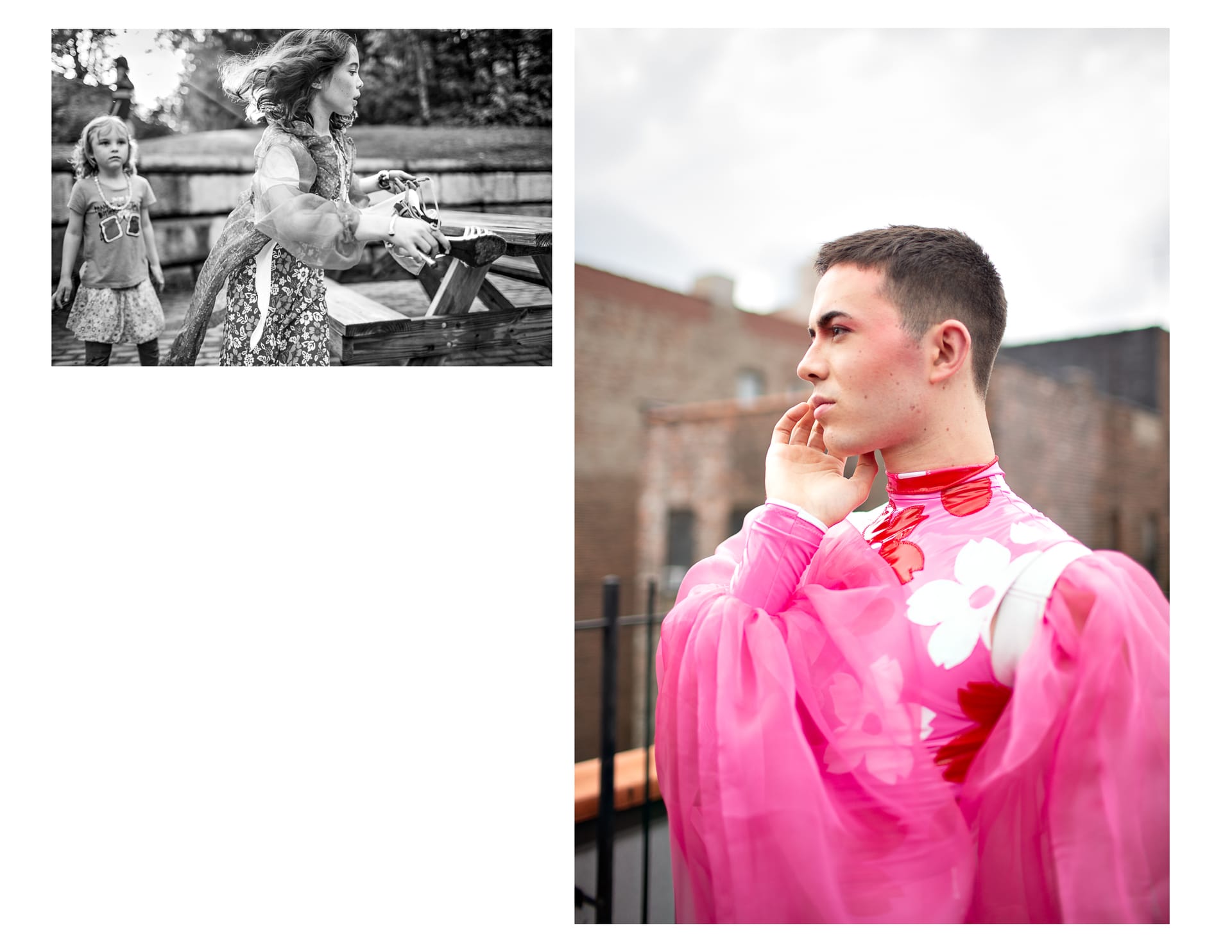
“I love that you could be walking your dog and come across this story,” said Lindsay Morris, a photographer whose photos showcase transgender and gender-expansive children as they grow up.
Some of the pieces hope to capture communities thriving, like Angela Rowlings’ pieces, a Boston and Canada-based photojournalist.
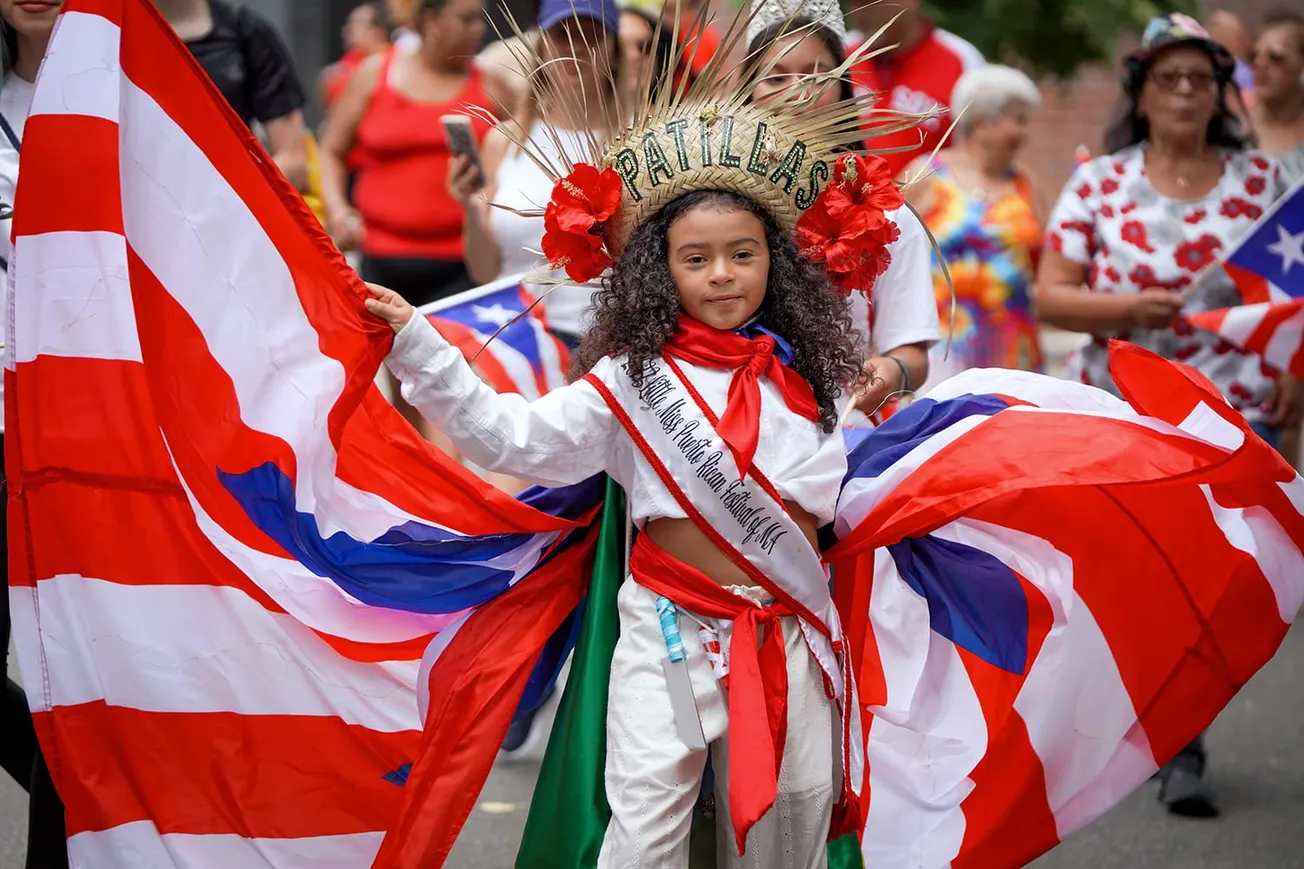
Rowlings has always been drawn to Boston’s South End. It’s where she embedded with Villa Victoria, a Puerto Rican community spanning across several blocks of the neighborhood, for 20 years.
Her photos follow the development of the community’s annual Festival Betances as it transformed from an effort to combat gentrification to a celebration of culture.
“I want people to see the vibrancy of the Victoria community, that there’s a strong bond within the community,” Rowlings said.
Other photos hope to enact change.
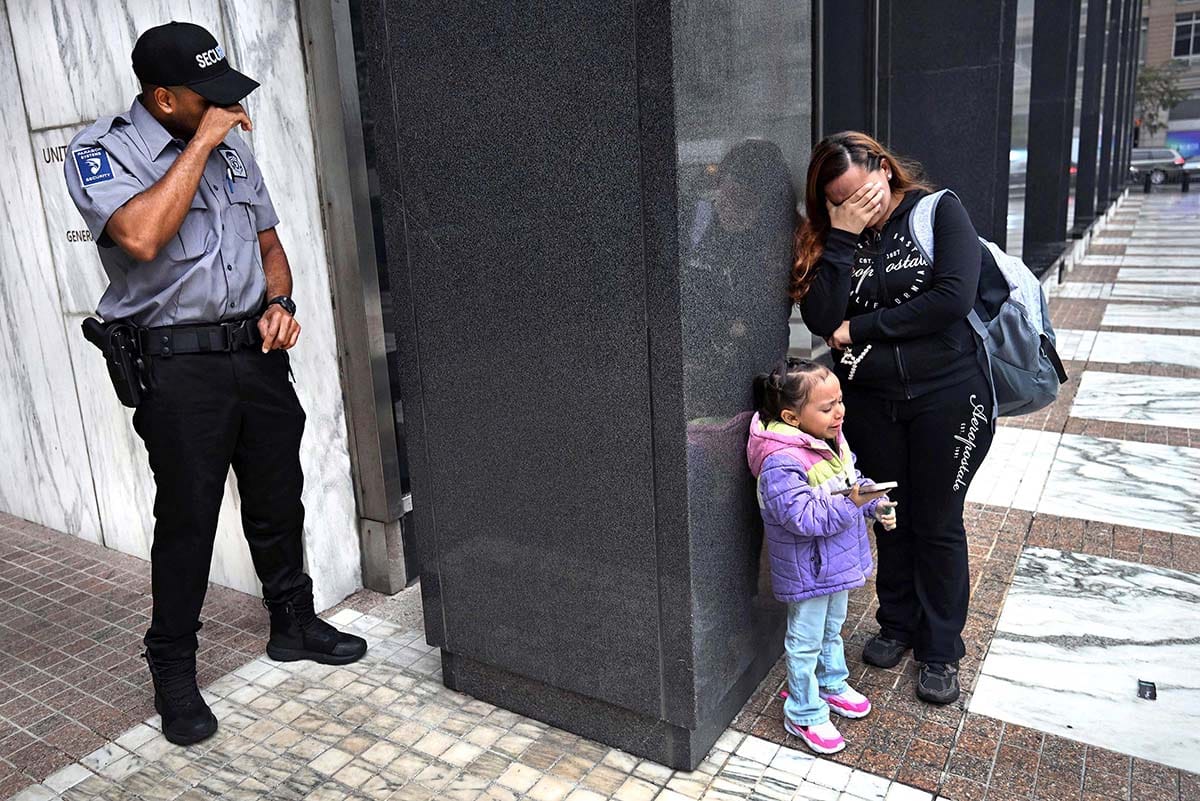
Carol Guzy’s photos, which share a cube with Rowlings’, show what she says is becoming the “tragic new normal.” Her photos show asylum seekers being detained by Immigration and Customs Enforcement officers outside of an immigration court.
“It’s my job to open eyes, and I hope it just stirs the complacency out of people,” Guzy said.
“Huq: I Seek No Favor” is one of the projects showcased in Vision(ary) this year. It’s a collaborative project facilitated by Ashima Yadava that was created in response to the anger she and other women felt after Roe v. Wade was overturned.
For Yaradav, the pieces being displayed to the public are one of the biggest draws of the exhibit.
“I love when there are public arts projects because that means there’s an audience that isn’t intimidated by the arts and can approach it,” Yadava said. “There’s no excuse not to engage with it.”
The project’s name draws on the Urdu word for rights, “Huq,” and Audre Lord’s poem “A Woman Speaks.” Yadava said the multicultural identity of the name reflects not only the diversity of identity this issue impacts, but also the statement that abortion is women’s right.
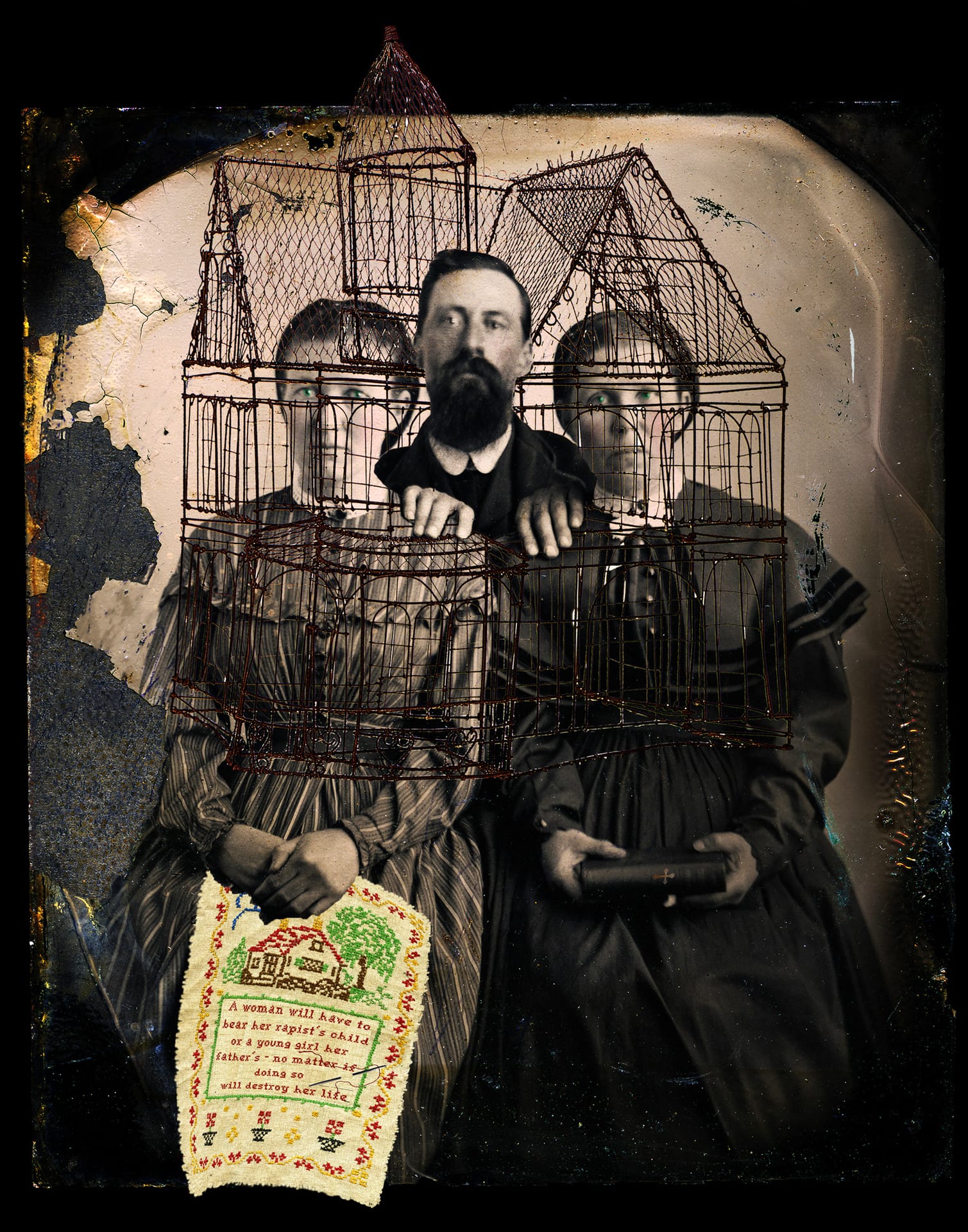
The four pieces from “Huq: I Seek No Favor” each explore different facets of abortion and women’s rights.
There is a black and white photo from Susan Marie White of a woman’s legs upright in the air with flowers between them. It looks into the body being a vessel and questions what that means in the context of being a woman.
Similarly, Jackie Neal’s photo of abortion pills touches on the idea of being more than your body, said Yaradav.
Aline Smithson’s photo of women from different eras encased in red comments on the things that people carry with them that are hidden in plain sight. The photo of a family from Leslie Sheryll, a family with both women encased in a house, talks about how women have been fighting for the same rights for 100 years.
While the exhibit acts as both a call to action and a way to document injustice, Dix also hopes that it inspires a new generation of photographers.
Anyone with a camera, anyone with a phone, can be a photographer,” Dix said. “[They] can document their community and can highlight injustice.”
Tavishi Chattopadhyay is a journalism student at Boston University.