Table of Contents
Musicologist, reporter and researcher, she spent four decades learning how scattered records fit together — and sees nobody coming up behind her.
The names on Winchester’s veterans memorial had been spelled out in plastic push-in letters, and by the time Ellen Knight got to them, letters had broken or fallen out. Korean War names had been tacked onto the World War II list because nobody had built a wing for Korea yet.
Men who served in two wars were counted in one. One man appeared three times, under three spellings of the same Italian surname.
Knight, the town’s reference archivist, rebuilt the rolls name by name, sometimes asking the veterans agent to pull a service record to settle whether two similar names were two men or one.
The town would not let her strike anyone, even when she could show a man had never lived in Winchester. She could only move him to the right war.
The World War II list, she said, still isn’t entirely right.
Nobody else in town was doing that
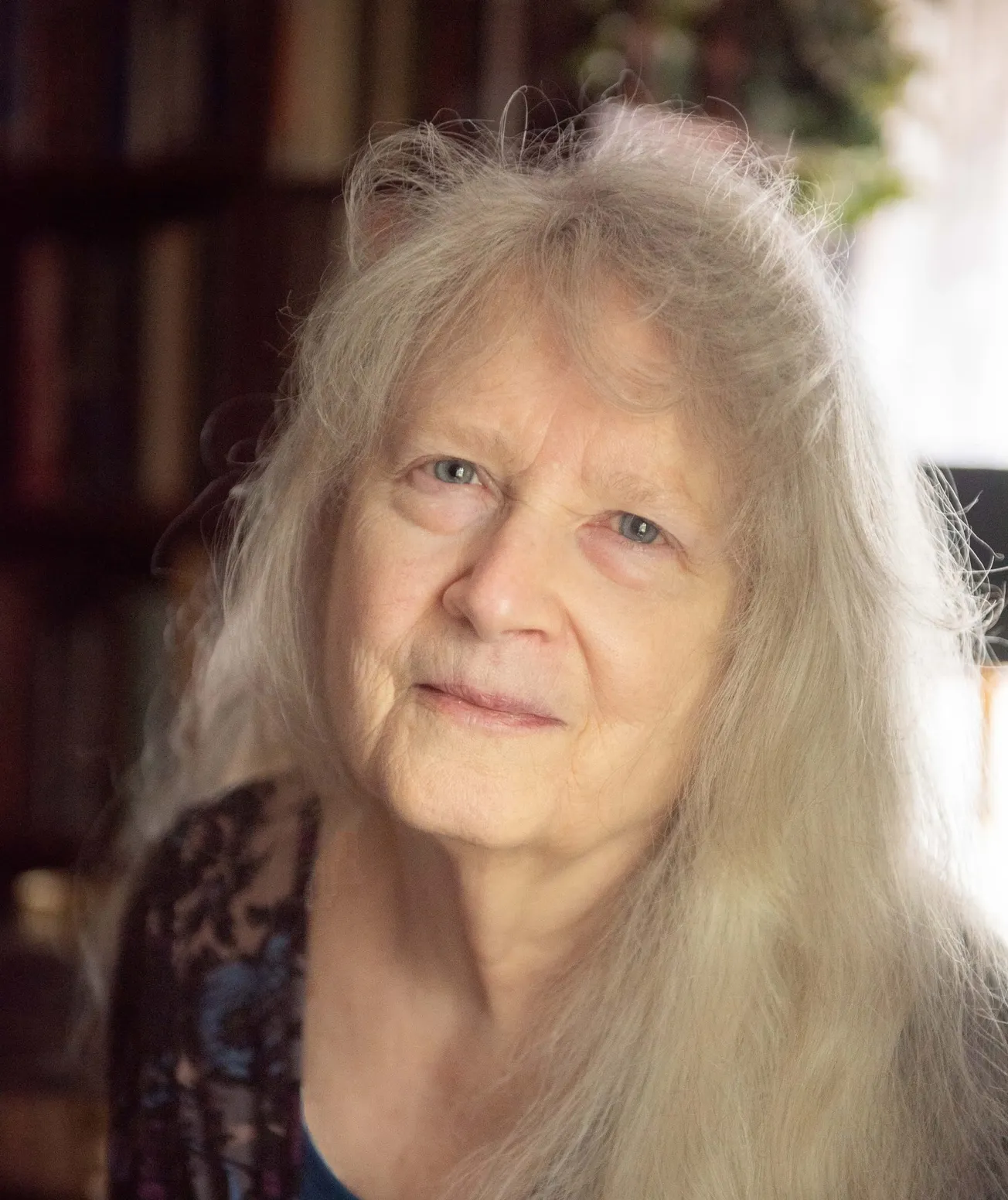
Knight, 78, has retired as Winchester’s reference archivist, the paid position she held from 2011 to 2026 after roughly 15 years volunteering in the collection and seven on the Winchester Archives Advisory Committee.
The records stay in the lower level of Town Hall. What leaves with her is the part that was never processed: which name belongs to which war, which wagon belonged to which barn, which scrap in an old newspaper is worth an afternoon.
A donor once brought in a photograph she couldn’t place. Maybe Winchester, she thought.
Knight saw a horse-drawn wagon with lettering along the side — furniture and piano moving, Kelley and Hewes — and knew the company had kept a barn on what is now Shore Road. The barn is gone. The company has been gone for generations. Knight knew the name anyway, so she knew the answer.
“I knew the town,” Knight said. “I knew the history of the town. I knew the current town.”
Four hours a week, then six
She came to this sideways. Knight moved to Winchester in the early 1980s, after her mother bought an old house on Cambridge Street, and got curious about it.
The deeds were no help — they conveyed the land and the buildings thereon without saying when anything was built. Looking anyway led her to the Winchester Historical Society, where she handled publicity, joined the board and eventually served as co-president.
She already had a doctorate in music from Brigham Young University and about nine years of work behind a biography of Boston composer Charles Martin Loeffler, published in 1993.
She never quit musicology. She added Winchester to it.
Journalism arrived by accident. Knight wanted a local history column, not a reporting job, until an editor at the Daily Times Chronicle asked whether she was free Saturday to cover a parenting conference.
“I never married or had children,” she said. “Me go to a parenting conference?”
She went, and kept going, through roughly 350 local history articles and years of news assignments.
The reporting changed how she wrote history.
“You have to grab the reader’s attention at the beginning,” she said, and a reporter cannot wait for inspiration. “You’ve got to turn it out. So you learn to write.”
When she started volunteering, the archives sat in the carriage house at the Sanborn House. The volunteers were not amateurs — the group included a librarian, a curator and a historian, she said — but all of them had other lives.
Making the case for a paid archivist took years. The job began at four hours a week, then six, then 10, then 12.
Clues on the backs of photographs
Four photograph albums from the Ayer family sit in the collection. One was a Christmas present to Fanny Ayer from her mother, and much of it is her Winchester High School classmates in 1875.
Almost nothing was labeled on the front. The backs carried fragments: married so-and-so, married and moved away.
Knight worked the fragments until the strangers had names.
“I didn’t get every single one, but I got most of them,” she said. “I felt like I got really close to the people in the photograph.”
The other half of the job was the door.
“I was like a reference librarian, the person who answers people’s questions,” she said, and that was the part she liked.
Residents wanted house histories, then genealogy. Staff came down too, conservation studying a parcel or engineering planning work on a bridge.
The center holds about 250 collections, by an inventory Knight built because none existed.
“We just had a bunch of boxes of stuff,” she said. Photographs get used most. “We don’t just keep stuff.”
Years earlier, during an argument over opening an unused section of the cemetery, a Winchester Select Board member said a piece of land had been taken for unpaid taxes. Knight knew it hadn’t. The parcel had simply been worth very little then.
She complained about it to her editor, who told her that people from the past seemed as real to her as people in the present. She agreed. The man had paid his taxes, the town owed him a great deal and he was not around to say so.
She fed the town’s flood team historical material for more than 20 years. When an assistant town manager called about a proposal to name the Main Street bridge for someone, Knight told him it was the Converse Bridge, named for the settler who built the dam and mill beside it, and that the name was part of a state structure.
“It already has a name,” she said. “They didn’t know it already had a name.”
She claims nothing more for that.
“Sometimes the historical background helps just by informing people,” she said.
Now the job is records management
The town is converting her position into a records management clerk job with the archives attached. Knight said a previous administration agreed to keep her under contract for questions that take real research,
About what comes after that, she is blunt.
“I don’t see anybody coming up the next Winchester historian,” she said.
She thinks the work fit her because of the combination she brought to it.
“I’m happy I was Winchester’s archivist,” she said.
The center needed a historian, she said, and pairing that with newspaper writing let her revive forgotten stories, some useful and some just interesting.
Asked what she knows about the town that nobody else does, she said those people aren’t reading what she writes.
She is going back to Loeffler. The 1993 biography is out of print, and she built it on microfilm reels at the Boston Public Library, before anyone could search a century of newspapers from a kitchen table. She has been collecting on him ever since, and now she has the hours.
She will do it on the computer she refuses to replace, because it still runs Windows 10.
Will Dowd is a Massachusetts journalist who covers municipal government and community life for Winchester News. He is also the founder and editor of The Marblehead Independent, a reader-funded digital newsroom.