Table of Contents
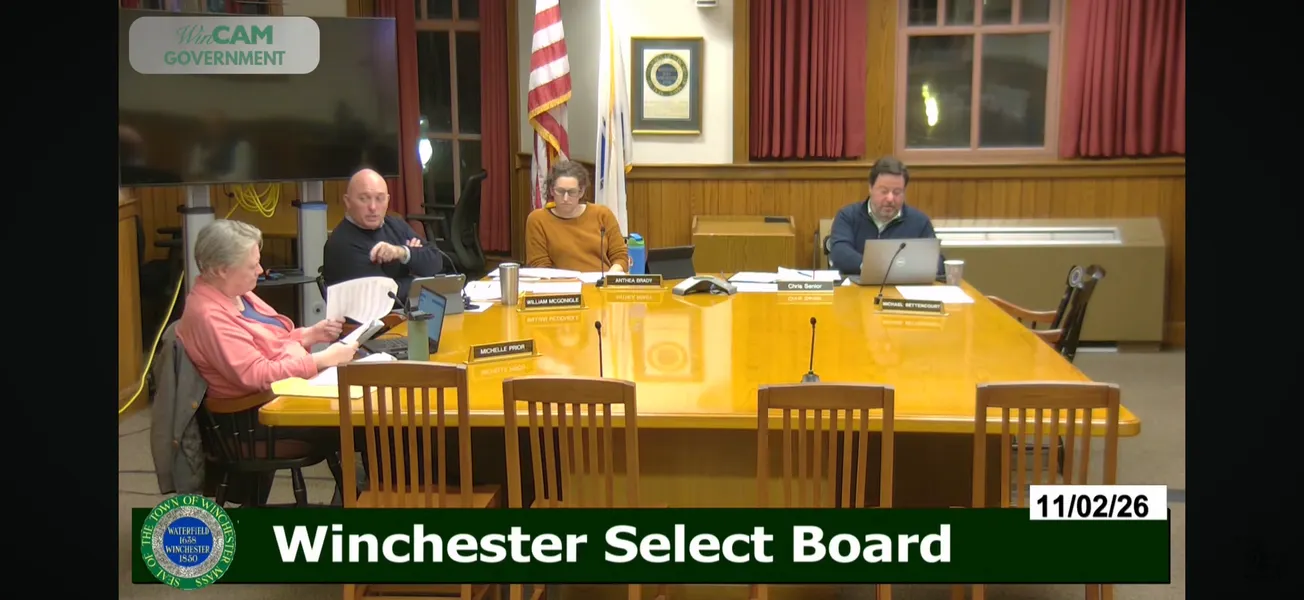
When the Winchester Select Board reached Article 29 on Nov. 2, the dispute was not over what the special education reserve is for. It was over how much one-time money should go into it now, three days before Fall Town Meeting and months before anyone sees a fiscal 2028 budget.
The board voted 3-1 to recommend that Town Meeting move $400,000 from free cash into the reserve, which held $3,659. Select Board Chair Anthea Brady, Vice Chair Bill McGonigle and member Michael Bettencourt voted yes. Member Michelle Prior voted no.
“I’m only a no because of the amount,” Prior said. “I’d be a yes at $200,000.”
A town schedule lists eight Fall Town Meeting articles that would spend about $1.3 million in free cash, the state-certified surplus left from prior years. The board recommended three, worth about $576,000 combined, opposed one, let two motions die without a second and put off the rest.
Town Meeting, which opens Thursday, Nov. 5, at 7 p.m. at Winchester High School, makes the final decisions.
Prior laid out her objection on Article 19, which would put $350,000 into the trust for other post-employment benefits (OPEB), mainly retiree health insurance.
Town Manager Christopher Senior has not yet produced a fiscal 2028 budget, and no one knows whether an override will reach voters in March or pass, she noted. She proposed splitting the OPEB deposit between fall and Spring Town Meeting.
It was “too early to take out that much money before we know what’s going on with [fiscal year 2028],” Prior said.
Brady countered the town had committed to funding the trust year after year and that the deposit restored money cut from the budget in the spring. McGonigle moved a favorable recommendation. No one seconded it, so the board took no position.
The same happened on Article 16, fiscal 2027 budget adjustments drawing about $199,000 from free cash for technology, retirement, the reserve fund and borrowing interest.
On Article 29, Prior said the reserve exists for unanticipated costs and could be topped up in the spring if a need surfaced.
Senior said he knew of no special education bill outside the adopted budget.
Brady said the fund covers costs the district cannot control, such as a student who moves to town midyear already placed in an out-of-district residential program.
“I think the schools need to be prepared to handle these sort of issues,” McGonigle said.
The board voted 4-0 to recommend Article 21, returning $148,000 that Brady described as health insurance turnbacks to a stabilization fund holding about $1,500, and Article 23, paying $28,392 in fiscal 2021 special education tuition bills. It voted 4-0 against Article 30, a Sanborn Carriage House study using about $30,500 in free cash.
Paying for platforms
The sharpest exchange came on Article 33, which would fund OpenGov, putting the town’s permitting and licensing offices on one platform, and ClearGov, for budget management and reporting.
Leftover money from completed projects would cover OpenGov, Brady said. ClearGov would draw about $92,000 from free cash.
NewsMatch is our biggest fundraising campaign of the year. Your donation could be doubled, or even tripled. To make the most of your donation, hit the button now. Thank you for supporting local news.
Prior, who said she tallied about $300,000 in costs for both systems over the next 18 months, supported the software and favored using all available closeout money, which she put at about $233,000. She objected to spending current free cash on what she called fiscal 2028 costs before Senior’s budget exists, and said the free cash share surfaced only in the motion book.
She called the $92,000 “fiscally irresponsible.”
Senior said the town would not prepay subscriptions, but wanted funding secured, because paying onboarding costs and dropping a platform six months later “would be a waste.” He called OpenGov “critically important to our efficiency operations.”
McGonigle, who said a staff memo on the software arrived only that afternoon, asked for both sides’ arguments in writing.
“This just might be, like many of the choices we have to make, something where two very earnest and good principles are in competition with one another,” he said.
Senior agreed to look for other funding. The board plans to revisit Article 33 on Nov. 5 at 6 p.m.
Revenue versus costs
Public Works Director Robert LaBossiere told the board transfer station revenue rose about $140,000 from fiscal 2025 to fiscal 2026. Commercial mattress revenue grew by more than $50,000, a jump staff linked to a $10 fee increase and to bookkeeping that now separates commercial from residential mattresses.
The town has largely lost 1-800-GOT-JUNK?, once a five-truck-a-day customer, to a new construction and demolition rail facility in Wilmington, staff said. This summer, with two trucks down and a driver out, the town hired a truck to haul its waste to North Andover for nearly a month.
Prior said the station appeared to be running about $66,000 to $67,000 short in the first quarter of fiscal 2027. She asked for a full-year picture of costs before fees are set.
Public works officials said they expected the station to make money this year; Senior said it should break even once all costs are counted.
Staff again floated a late fee for residents who buy permits after the deadline and a per-tote charge for a commercial hauler seeking to drop off food waste.
Bettencourt asked about pay-as-you-throw; Senior said he would restart that conversation with the state after Town Meeting. None was adopted.
Brady said the board expects to set 2027 permit fees Nov. 23, after staff consult the Transfer Station Advisory Committee.
A longer horizon
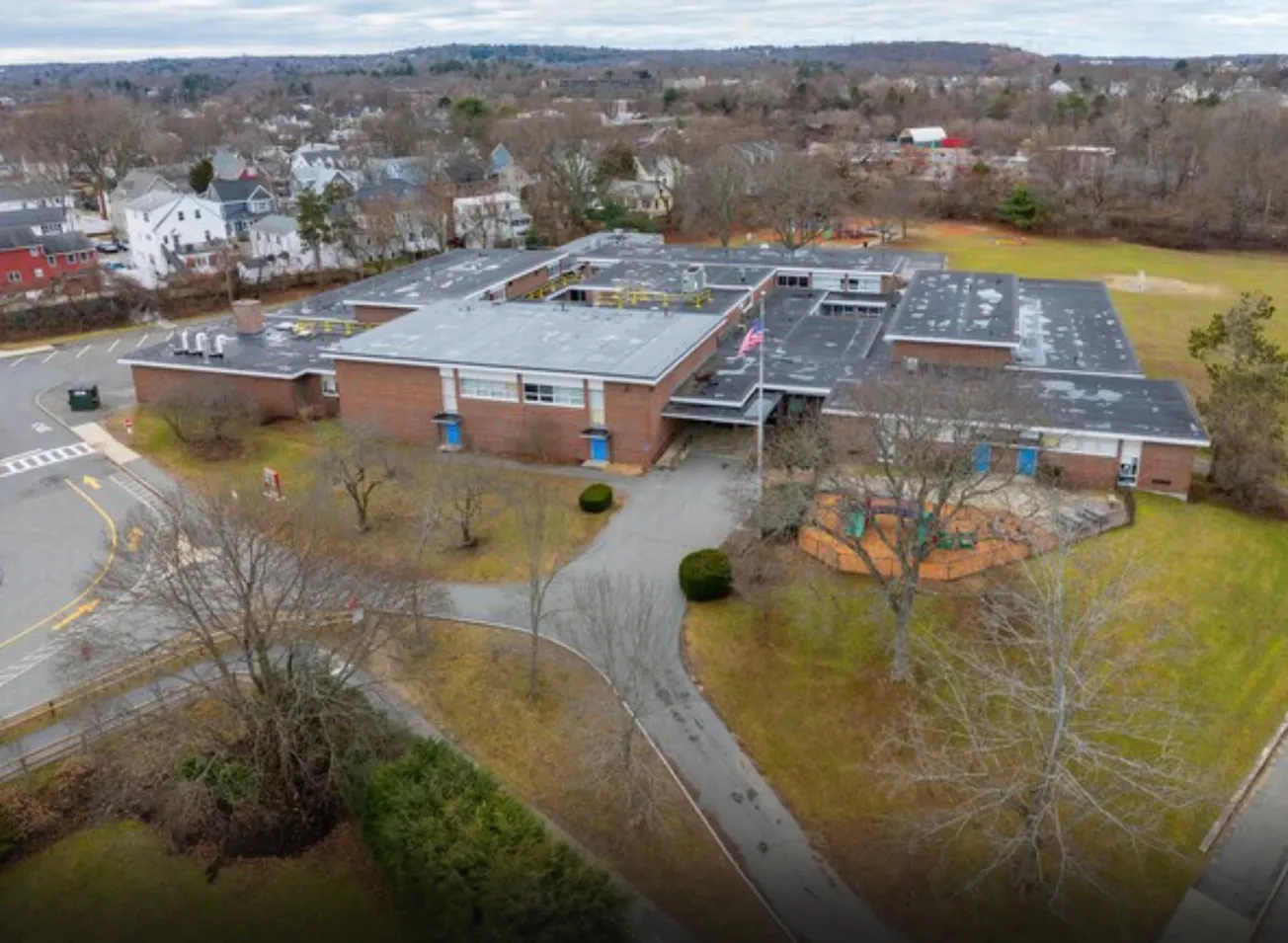
Senior reported the Massachusetts School Building Authority (MSBA) voted Oct. 28 to invite Winchester into a feasibility study for Francis J. Muraco Elementary School.
Spring Town Meeting appropriated $1.5 million for the study in April, and Senior said almost $500,000 could be reimbursable, depending on what the state deems eligible.
The MSBA’s letter says the invitation is not approval of a project.
An agreement must be authorized and town counsel must complete a certification before entry is formal, Senior said. He expects the matter back before the board, probably Nov. 23. Asked by McGonigle how long until a potential design emerges, Senior estimated 12 to 18 months.
That leaves the Nov. 23 agenda carrying transfer station permit rates, the Muraco paperwork and the tax classification hearing.
Will Dowd is a Massachusetts journalist who covers municipal government and community life for Winchester News. He is also the founder and editor of The Marblehead Independent, a reader-funded digital newsroom.