Table of Contents
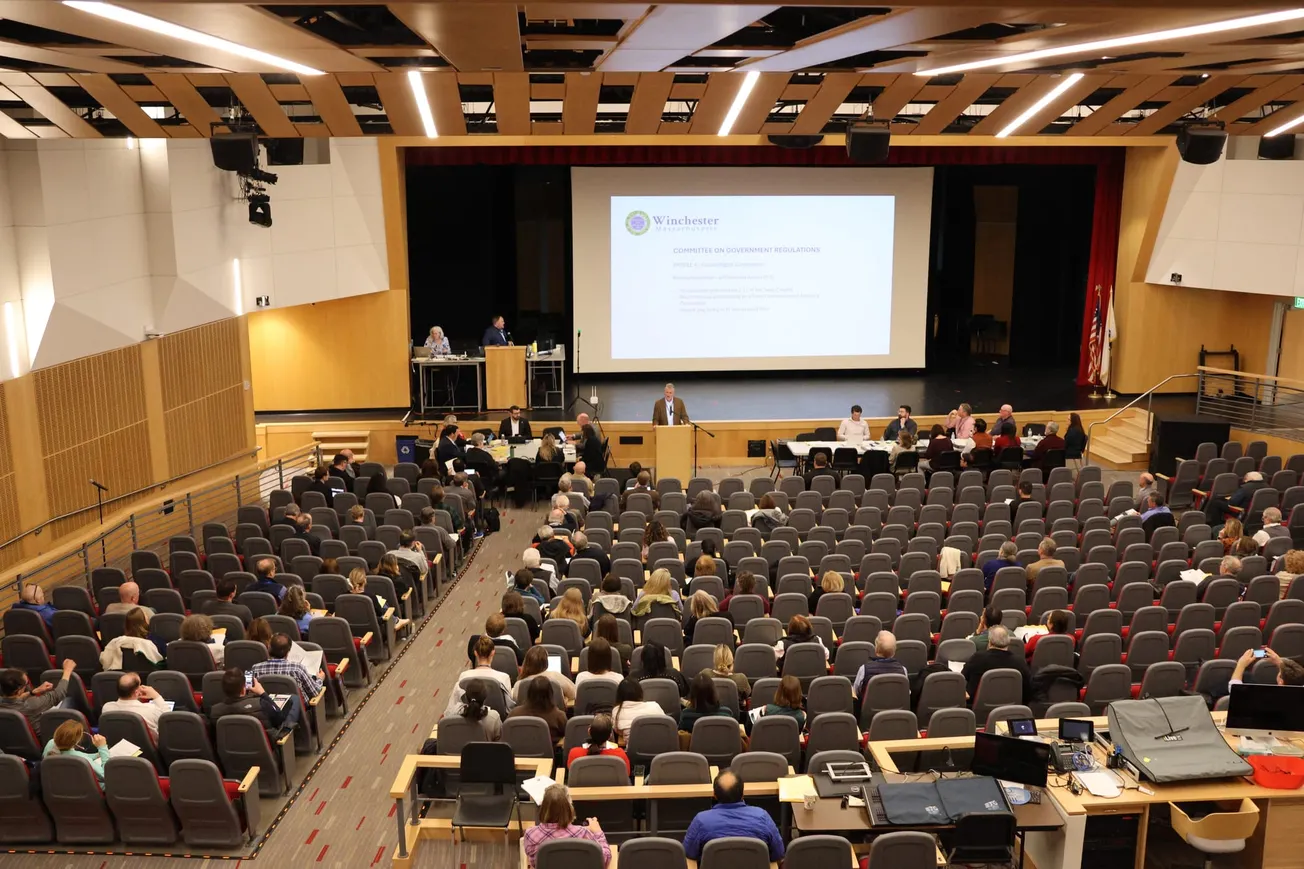
Winchester Town Meeting closed on May 7 after four sessions shaped almost entirely by the $11.5 million operating override voters rejected on March 21.
Members adopted a one-year “bridge budget” that cuts 32.5 school positions and freezes town hires, but they also unanimously authorized $1.5 million to start the Muraco Elementary feasibility study, defeated two of the warrant’s biggest preservation and conservation asks at the two-thirds threshold and gave citizen petitioners their best year in recent memory.
1) The failed March override defined every conversation — and finally pulled the boards into the same room.
Town Meeting adopted the fiscal year 2027 budget as a one-year “bridge budget” after voters rejected the $11.5 million operating override on March 21.
The schools cut 32.5 full-time-equivalent positions; only about 10 are enrollment-related, while the rest include math specialists and literacy interventionists Town Meeting had funded in recent years. The town absorbed Fire Department hiring freezes, a delayed police cruiser and DPW cuts.
What was new was the alignment: Finance Committee Chair Derek Ross, Select Board Chair Anthea Brady and School Committee Chair Tim Matthews spoke with one voice after two tri-board meetings ahead of the warrant.
“This budget only staunches the bleeding,” Brady said. “We have town employees who will lose their jobs, students who will lose the trusted aides who they thrive under.”
2) Big preservation and conservation asks failed at the two-thirds threshold.
Two of the warrants marquee spending votes collapsed under the supermajority bar.
Article 25, the $300,000 demolition of the Sanborn carriage house at 21 High St., went down 61-89 after the Winchester Historical Society asked for time to raise private money.
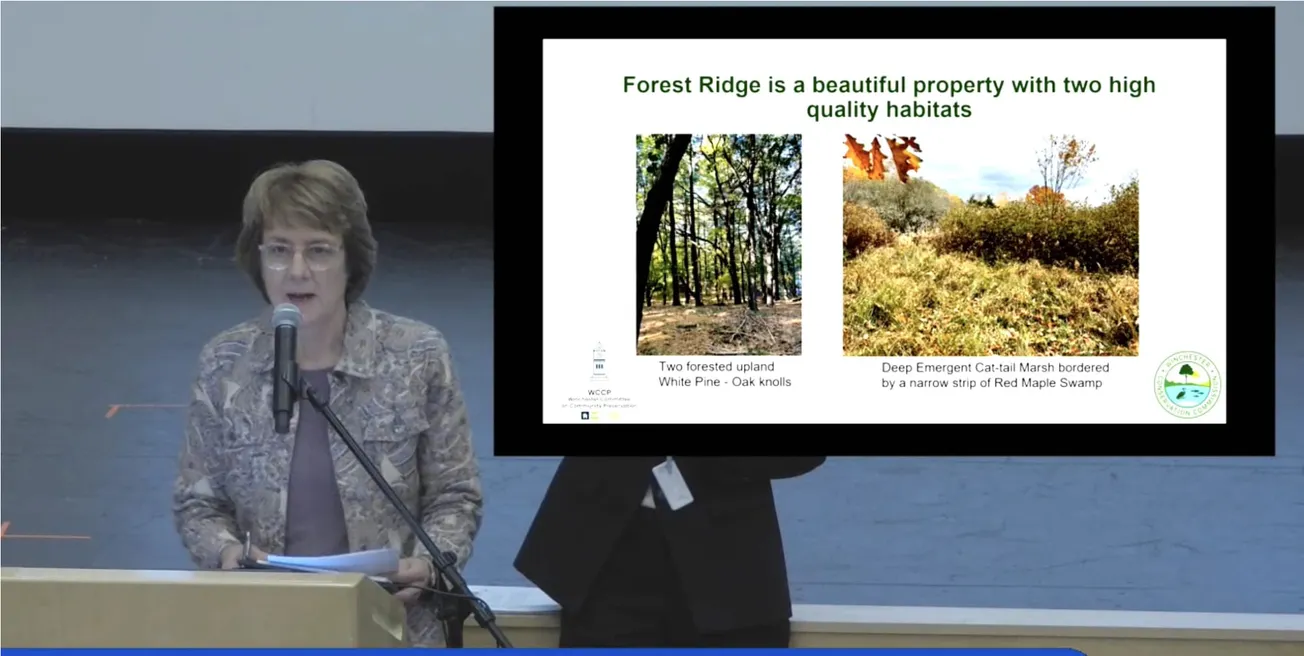
A week later, Article 35, the $3 million Community Preservation Act borrowing to buy 13.5 acres at Forest Circle, was defeated 53-105.
The carriage house resurfaced on closing night under Article 46 — a proposal for a study committee with fundraising benchmarks — but Town Meeting indefinitely postponed that, too.
3) The town side built revenue and structure for the leaner years ahead.
The fiscal story was not all retreat. Town Manager Chris Senior, attending his first Spring Town Meeting in the role, told members Moody’s reaffirmed Winchester’s AAA rating in February.
Article 7 imposed Winchester’s first 6% local occupancy excise on hotels, bed-and-breakfasts and short-term rentals like Airbnb and VRBO.
Article 8 set a five-year path of 7% annual water and sewer rate increases through fiscal year 2031, lifting the average residential quarterly bill from $267.61 to $283.89, mostly to keep pace with rising Massachusetts Water Resources Authority assessments.
Article 24 doubled the Strategic Capital Maintenance Fund’s annual deposit from $100,000 to $200,000, the first change since the fund’s 2015 creation.
4) The infrastructure backlog was the meeting’s quiet through-line.
Capital Planning’s Session 2 slate told a story that doesn’t fit on a placard.
Article 21 added $830,000 for repair work at the South Reservoir Dam, a state-regulated structure. Article 22 put $2.4 million toward roof work and bell-tower renovation at Town Hall and the library.
Brian Vernaglia, of Precinct 4, told Town Meeting the ADA Transition Plan dates back 16 years and that more than $3 million in accessibility projects remain, with prices rising every year.
Article 19 funded a $125,000 ADA installment alongside $50,000 for an Everett Avenue area drainage assessment after residents shared videos of street-level flooding near the boat-club culvert.
5) Citizen petitioners had their best year in a long time.
Five citizen petitions reached the floor, and four got real attention.
Katherine Valone’s anticoagulant rodenticide ban on town property passed unanimously by voice vote.
George Nowell Jr.’s one-year Transfer Station Data and Resource Committee passed 84-65 over the Select Board’s objections.
Shamus Brady’s sidewalk snow-clearing bylaw was referred to the Select Board rather than voted up or down.
The night’s longest debate of Session 4 belonged to John Healey’s ranked-choice-voting study committee, which failed 72-75 — the closest tally of the meeting and the only vote that sent Town Meeting briefly silent as the precinct count appeared on the projection screen.
6) Town Meeting modernized its own playbook.
Article 5 retired Robert’s Rules of Order in favor of “Town Meeting Time, A Handbook of Parliamentary Law, 4th edition,” and codified Winchester’s “Move the Vote” practice and consent agenda.
Article 4 wrote a nine-member Human Rights Commission into the Code of Bylaws on a 124-29 electronic vote.
“I think it is a material and egregious omission that our town does not have this,” Matthews said of the Human Rights Commission, after telling members his then-6-year-old son was the target of an anti-LGBTQ+ slur three years ago after a PRIDEfest.
Article 45, after the longest debate of the closing session, added two permanent seats to the Educational Facilities Planning and Building Committee — a sitting School Committee member and the schools’ director of finance — to bring the body into Massachusetts School Building Authority compliance for the Muraco rebuild.
7) A young voice sets the meeting’s emotional register
Lilly Ryan, a McCall eighth-grader, went to the microphone in Session 4 after Town Meeting granted unanimous consent for her to speak.
She told members her brother is in special education and is not getting the services he needs, and that a survey she helped run captured more than 90 McCall Middle School students’ responses, with the physical condition of McCall’s building rated 2.1 out of 5.
Will Dowd is a Massachusetts journalist who covers municipal government and community life for Winchester News. He runs The Marblehead Independent, a reader-funded digital newsroom.