
Table of Contents
The following was submitted by the Office of Sen. Jason Lewis:
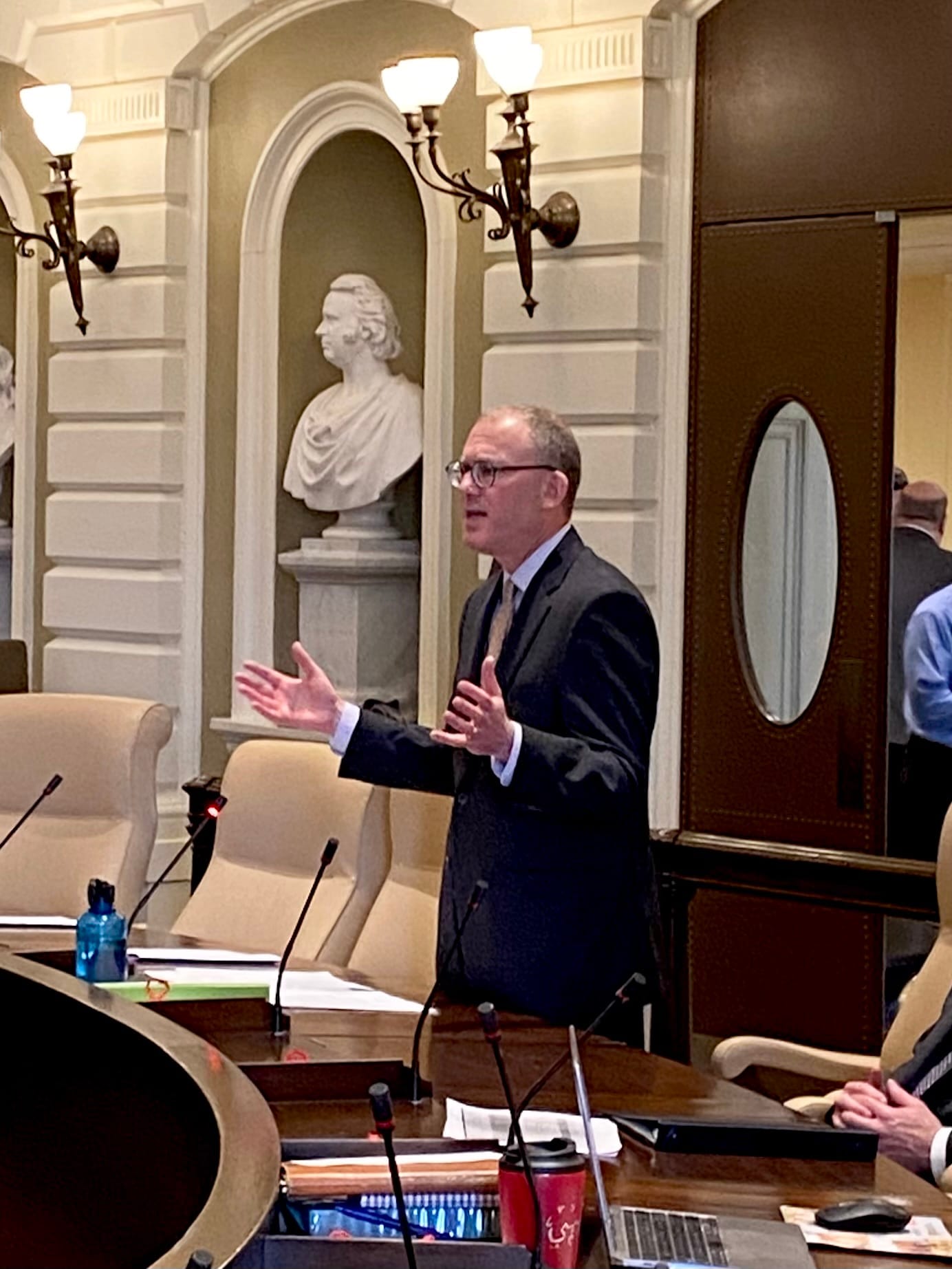
As the Senate Chair of the Joint Committee on Education, state Sen. Jason Lewis led his colleagues in the Massachusetts Senate to pass legislation that supports young learners by ensuring reading instruction is rooted in proven, evidence-based practices.
Despite Massachusetts being ranked best-in-the-nation for grade 4 reading on the 2024 National Assessment of Educational Progress assessment — known as The Nation’s Report Card — only 40% of students scored proficient or advanced.
An act relative to teacher preparation and student literacy ensures that every Massachusetts student from kindergarten to 3rd grade learns to read using phonics, fluency, vocabulary, comprehension, and phonemic awareness, also known as the Science of Reading, which is widely viewed as providing the best building blocks for all students for lifelong learning.
“It is unacceptable that less than half of young students in Massachusetts are proficient in reading at their grade level. This important legislation ensures that educators use evidence-based early literacy curricula that are backed by science while leaving schools flexibility to decide what curriculum is best for their students and teachers,” said Lewis, Senate Chair of the Joint Committee on Education. “Strengthening student literacy through evidence-based instruction has decades of scientific research and improved outcomes backing it up. With the passage of this bill, the Massachusetts Senate continues its commitment to providing a high-quality education for all students across the Commonwealth.”
The bill creates new statewide standards for early literacy education and assessment, recognizes the importance of professional development resources for educators, and offers flexible options and supplemental funding for public schools to implement evidence-based curricula.
The legislation directs the Department of Elementary and Secondary Education (DESE) to create and maintain a list of high-quality early literacy curricula for school districts to select from. This ensures educators use effective curricula, while leaving schools the flexibility (including a temporary waiver process) to select the curriculum best suited for their community’s needs.
The bill also requires DESE to develop a high-quality, comprehensive K-3 early literacy curriculum to be made available to school districts at no charge, and to publish regulations to ensure that high-quality curricula meet the needs of all students, including students with disabilities and English language learners.
To support school districts and educators with implementation, the legislation establishes a new Early Literacy Fund and allocates $25 million (of Fair Share revenue) which will help districts with the costs of purchasing curriculum (if they choose not to use DESE’s free option) and professional development for teachers and other staff.
It requires at least twice-yearly assessments to gauge every young learner’s reading progress, and requires schools to contact a parent or guardian within 30 days if a student has fallen significantly behind benchmarks and to propose a plan to support the student.
The Senate passed the bill with bipartisan support on Jan. 29, 2026. A similar version was previously approved by the House of Representatives, and so a Conference Committee will now be formed to reconcile differences before the bill is sent to Gov. Maura Healey for her signature.