Table of Contents
Every budget season is tricky when it comes to School Department funding, but this year Winchester School Committee’s proposed budget comes with the added twist of a potential override and a will-it-or-won’t-it pass scenario.
“This is a very unique budget year, and we spent a lot of time trying to think about how to approach this,” said Superintendent Dr. Frank Hackett.
The State of the Town Committee has recommended there be a Prop. 2 ½ override that, if approved, would provide additional funding for the schools, Hackett explained.
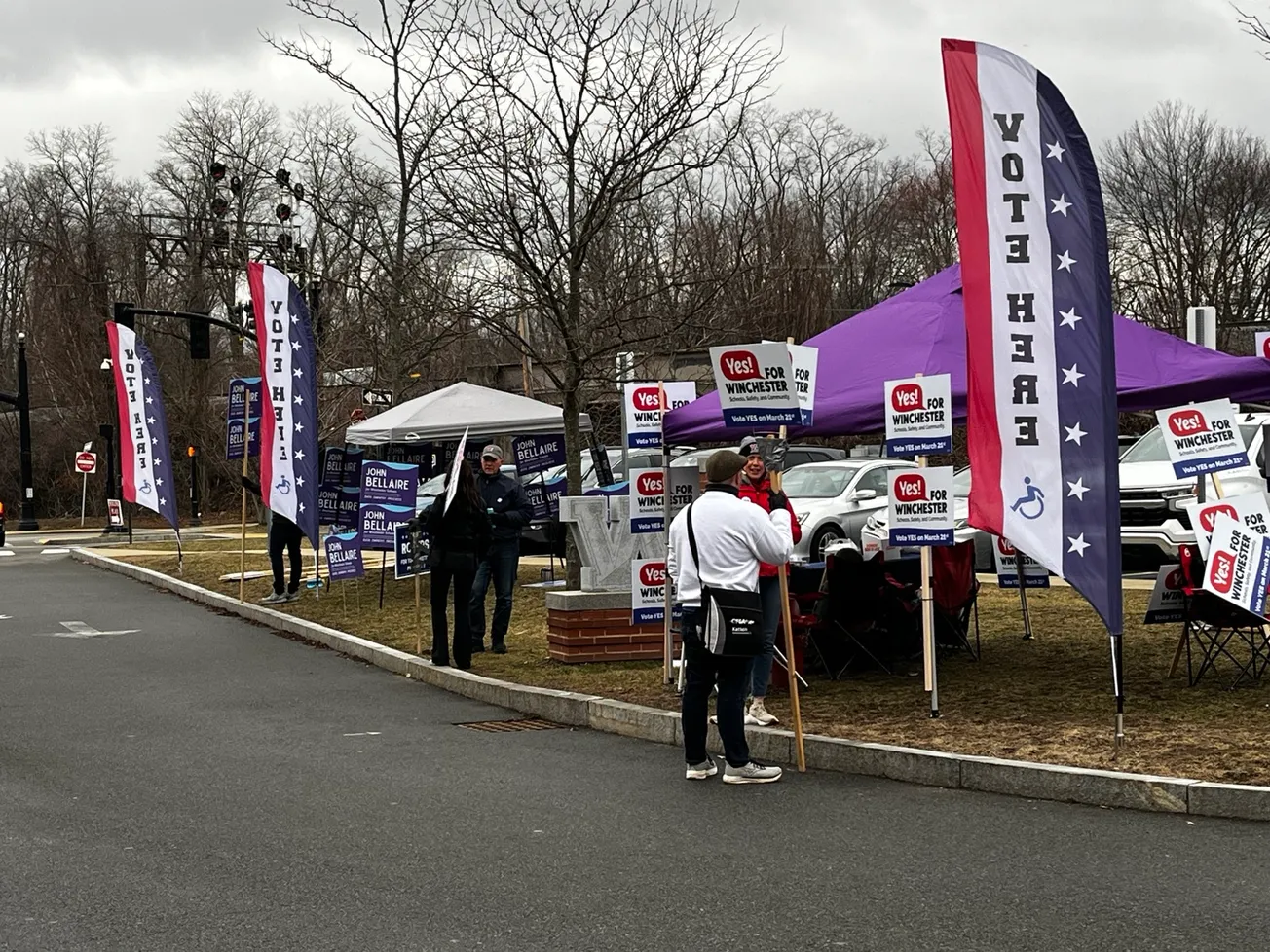
“That vote doesn’t happen until March 21,” he said. “So we’re kind of in a weird place.”
That’s because the School Committee had to vote Feb. 5 on a budget to deliver to Town Manager Christopher Senior before the Select Board decides whether to place a Proposition 2½ override on the ballot.
Hackett said they are hopeful the override will pass, but in the meantime they have to build a budget in case it doesn’t.
“So what we’ve tried to do is be centered, be grounded, and think about what is the easiest way for us to be able to adapt to whatever particular change can happen to us, and try to land on something that we can say that this budget, [Finance Committee], town manager, Select Board, is the budget that you should spend your time on, because they do spend a lot of time on it,” Hackett said.
Long story short
The School Committee voted Feb. 5 to send Hackett’s recommended budget of $76,270,570, along with essentially a memo of how they got to that number to the town manager and the Select Board. The budget represents an 8.31% increase over the fiscal year 2026 (FY26) budget and its success is likely dependent on the passage of the Prop. 2 ½% override vote.
They also developed a second budget with a 5% increase over FY26, or $73,936,504 because that is the scenario State of the Town Committee requested. However, the State of the Town budget scenario has inflation built in.
Hackett said if the override is approved the School Department would see a 5% increase in funding in fiscal year 2027, but also a 4% increase in fiscal year 2028, fiscal year 2029 and fiscal year 2030.
“So it really is an insurance policy,” Hackett said. “Whether it’s going to be enough or not depends on how the economy does, but we’re committed to the 5% in a successful override.”
And Hackett said he thought that was a good place to start.
Hackett felt they should send Senior the 5% budget because if the override failed, it would be the best place for Senior to start in terms of building the School Department budget.
And just in case, there is also a third scenario that shows a 3.1% increase over FY26 funding. Hackett said that represents a failed override but the addition of $4 million from the town’s free cash coffers.
What does all this mean for students?
If a 5% budget is approved, Hackett said the schools are looking at a range of possible budget cuts that could include: 12-16 full-time employees (and that takes into account all known retirees), reduction in co/extracurricular activities and athletic opportunities plus increased fees, increased class sizes (potentially surpassing contractual maximums), reduction in Tier II supports, no course expansion at the middle or high schools and increased transportation costs with reduced services.
And it only gets worse with a 3.81% budget. Hackett said that range of cuts could include the loss of 25-30 employees, increased class sizes beyond guidelines (possibly 30+ students), no math intervention or other tiered supports, no course expansion at the middle and high schools, delay in the Muraco feasibility study - which would delay construction, increased transportation fees with reduced service, significant reduction in co/extracurricular activities and athletic programs or going to a fully self-funded through fees model, at risk for non-compliance of contractual obligations.
School Committee member Stefanie Mnayarji said the latter is not just about employment contracts “but our student services that are required by law.”
Committee member Tom Hopcroft said it was good to “show all these dystopian realities” to let the community know what will happen depending on what path they chose.
Committee member Tim Matthews also noted that of the budgets presented, none included anything crazy. He said it’s about addressing “specific pain points” that have been raised by stakeholders, educators, families and students, and trying to bring them into the budget or into one time cost asks.
It’s about wanting to provide the best program they can for the kids, said committee member Michelle Bergstrom.
“These are essential needs,” said School Committee Chair Karen Maruyama Bolognese. “These are things that are just very basic, fundamental needs in our community that our community has expressed and that we as a committee have talked about for months … I don’t think there’s anything extravagant in here.”
Chris Stevens is an award-winning journalist who has spent 25 years chasing, editing and photographing stories on the North Shore. She is the co-founder and managing editor of Gotta Know Medford.