Table of Contents
Two months after Winchester voters rejected a $11.5 million Proposition 2 1/2 override, most Select Board members appear wary of asking them again this fall — even as an August deadline closes in and one member presses to keep the November option alive.
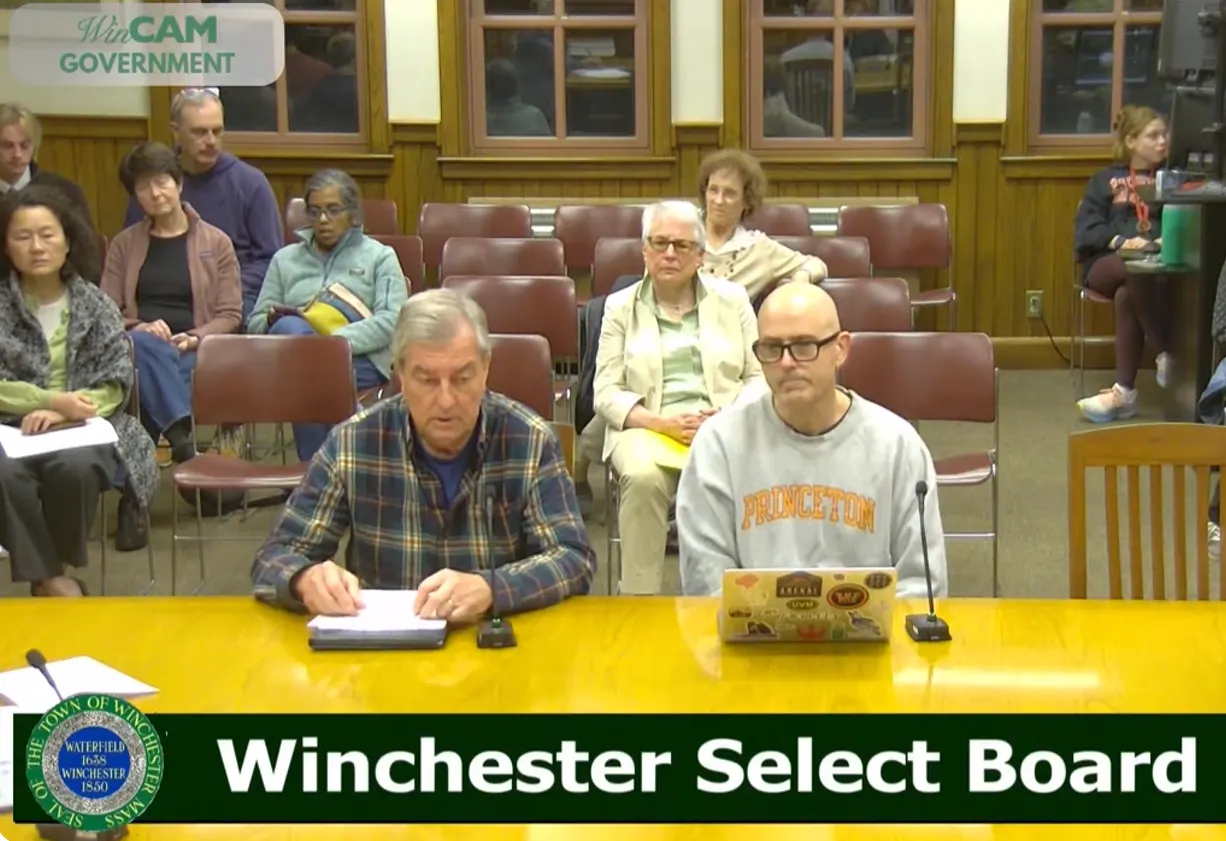
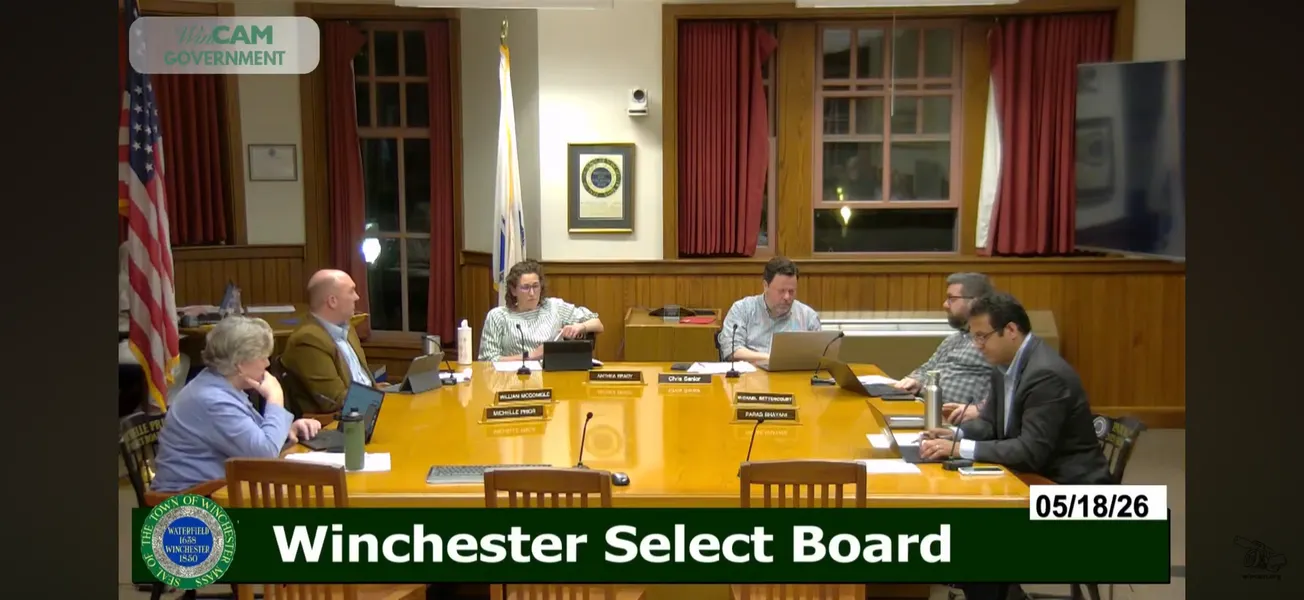
The question surfaced at the board’s May 18 meeting, listed on the agenda as a 20-minute override discussion.
The March 21 measure, which paired $9 million for operations with $2.5 million for capital stabilization in a single question, failed 2,558 to 2,265, a margin of 293 votes.
Members are now reviewing how voters understood the question, weighing a voter survey and focus groups to gather feedback, and facing an Aug. 5 deadline to submit any local question to the state for the Nov. 3 election.
The defeat broke a streak. Winchester voters had approved every Proposition 2 1/2 question put to them since 2017, including the 2023 Lynch Elementary School project with 82.4% support.
Under state law, a local Proposition 2 1/2 question can join the Nov. 3 state ballot only by a two-thirds vote of the Select Board, and only if the town submits it by Aug. 5, Town Clerk MaryEllen Marshall wrote in a May 14 memo.
A Winchester question would appear last on that ballot, after more than 13 statewide questions already being weighed for certification — a ballot Marshall warned could run two or more pages. A dual election would also force the town to offer vote by mail and absorb added staffing costs.
Select Board Chair Anthea Brady opened the discussion by noting the budget problem remains unresolved.
“By no means did we solve the problem we were looking to solve,” she said, citing continuing pressure from health insurance costs.
Of the five members, only Bill McGonigle pushed clearly for a November vote. McGonigle, who served on the Yes for Winchester campaign, cited better turnout and momentum from State of the Town research already completed.
“We were all unanimous on the 11.5 number,” he reminded the board, and he pushed for placing three questions on the ballot — the agreed figure plus a higher and a lower option.
“I don’t want to lose the opportunity to pass an override in November,” he said.
Select Board member Michael Bettencourt was more cautious. The board committed after March, he said, “to do more listening and not rush another override,” and called it risky to stack multiple override questions on a long November ballot.
“It’s on the back of the ballot,” he said, while March is “tied into our political cycle, where there’s people talking about it.”
He pointed to 2019, when the town also published a parallel budget showing the cuts a defeat would force; this year, he said, residents and Town Meeting members were “surprised at the cuts that we had to make.”
Select Board member Michelle Prior, who helped steer the State of the Town effort, said she is not sure Winchester is ready for November. She cited commitments made after March — tri-board meetings with the Finance Committee and School Committee, and a multiyear financial plan modeled on Andover, Arlington and Shrewsbury — that have not begun.
“I don’t know that we should rush it to just meet a November deadline,” she said. She also expects the question's price tag to change as pending health insurance decisions flow through the numbers: “I expect the number will not be 11.5.”
Select Board member Paras Bhayani, who led the State of the Town effort, said he had no firm position yet, but argued for building the kind of long-range financial planning infrastructure that helped Arlington and Brookline pass their overrides.
“I think this is an infrastructure we need. Period,” he said.
He also asked that town counsel confirm the Aug. 5 deadline and advise on what the town can actively say about a future ballot question.
Brady said there is “a pathway” to a November vote, citing the town’s Community Preservation Act campaign as a model for using a higher-turnout election to expand outreach.
All five members agreed the town needs better feedback before deciding. Prior is preparing a draft voter survey, dated May 14, that asks residents whether they knew about the March 21 election, how they got information about the override and found it understandable, what drove their support or opposition, what might have changed their vote and whether they prefer one combined question or several.
Brady and Bhayani said the survey’s ballot-structure question is poorly designed, and both members favored focus groups. One or two in-person sessions and a virtual session are planned for June.
Ballot structure itself is unresolved. The March measure combined operating funds with stabilization money in a single question.
Bettencourt said his preference is a school-focused operating override paired with a separate debt exclusion for a town building, a structure he predicted “gets passed pretty easily.”
Prior said she has heard from voters who would have split their support between operating and capital.
No vote was taken. Any November question would need a two-thirds vote by late July to clear the Aug. 5 deadline. If the board waits, Marshall’s memo points to the March 2027 town election or a winter special election as the remaining paths.
Will Dowd is a Massachusetts journalist who covers municipal government and community life for Winchester News. He runs The Marblehead Independent, a reader-funded digital newsroom.