Table of Contents
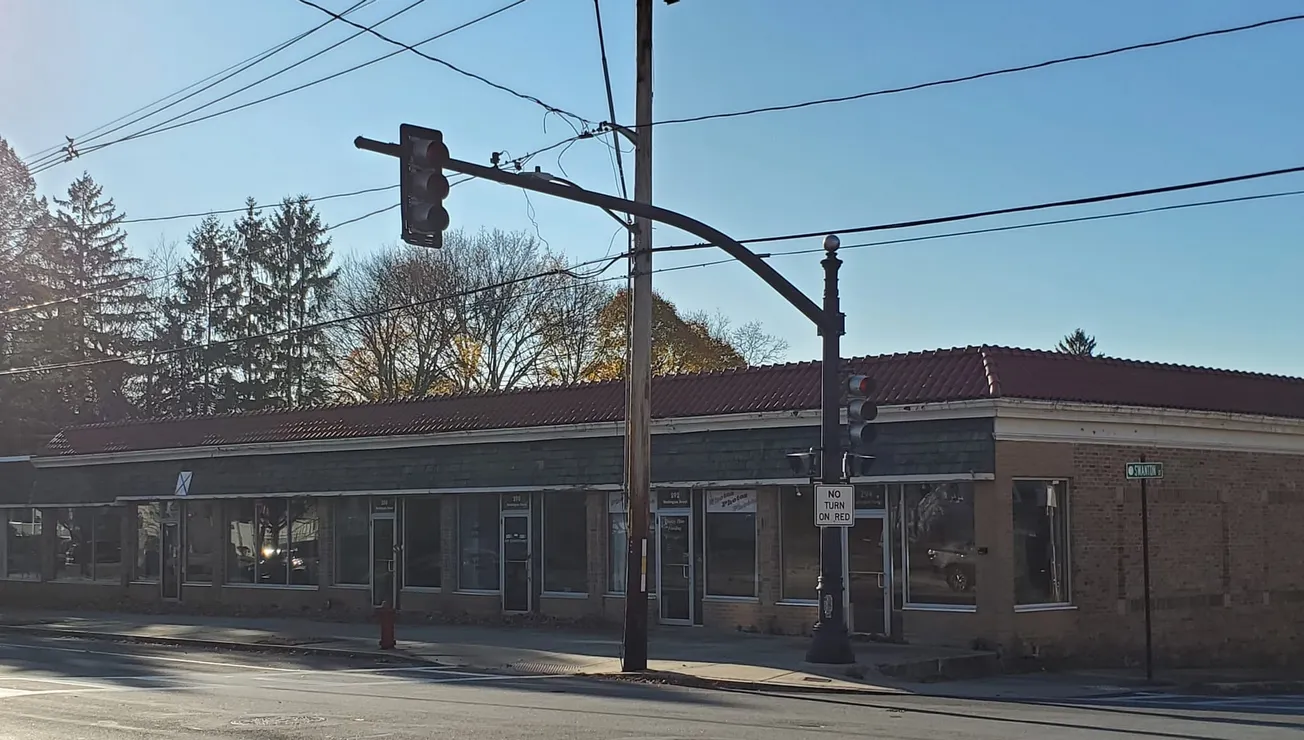
The Winchester Zoning Board of Appeals (ZBA) has approved a comprehensive permit for a proposed residential/commercial development at 278-292 Washington St./12-16 Swanton St.
“The Board grants the application a 40B comprehensive permit to build one three-story apartment building containing 64 dwelling units, with a lobby, courtyard and commercial space,” reads an April 28 letter from ZBA coordinator Carla McGrath to Mark Vaughn, attorney for developer Bryan Melanson, owner of Melanson Development Group (MDG).
The official address of the new development will be 292 Washington St.
The letter also specifies, “Approximately 75,000 square feet will be for residential use and approximately 38,000 square feet for commercial use. The Project will provide 96 parking spaces on the Site, in a combination of 11 exterior spaces and 85 garage spaces under the building The proposed mix of dwellings will consist of 45 one-bedroom units, 12 two-bedroom units and 7 three-bedroom units.”
Sixteen of those units have been designated as affordable.
The letter represents a formal approval after the ZBA granted various waivers to Melanson at its meeting March 19.
Massachusetts General Law (MGL) Chapter 40B is the so-called “Comprehensive Permit Act” or anti-snob zoning, which eliminates separate permits for developers from various boards in favor of one permit from a community ZBA in order to promote affordable housing. In exchange for 20-25% affordable housing, a 40B development is able to sidestep zoning ordinances and municipal requirements.
Developers are not required to comply with height limitations, required distances from property boundaries, green space requirements, parking spaces minimums, and other criteria. They are even allowed certain latitudes with building ordinances such as solar and net zero requirements.
The state has imposed a 10% threshold of affordable housing for communities to avoid 40B. Safe Harbor is a term to describe the protections a community enjoys when in compliance with the state requirement of affordable housing.
An incentive to communities is that all units in a 40B, regardless of their affordability, count as affordable units in calculations as to whether it meets the threshold for Safe Harbor.
What waivers is the project getting?
Given the nature of 40B, most of this project waivers were broad in nature.
“A waiver is sought to permit the project as defined and as detailed on project plans as it is not permitted under the bylaws,” read many.
Another read, “The applicant seeks a waiver from all future amendments to the Code of Bylaws and requested the project be subject to the language in effect as of the date of filing, with exceptions to the waiver be listed.”
“We want to make sure in getting a 40B, we’re not going through a site plan process,” Vaughan explained.
There will be reviews by the Massachusetts Housing Partnership Board about affordable units, however.
ZBA member Mark Anderson called it a belt and suspenders action “so we’re not leaving anything out.”
Some waivers were specific, including those waiving the local stormwater regulations, but mentioning compliance with state regulations and calling for consistency with the 2022 town Land Development Agreement (LDA) with Melanson, specifically its transferability or lack thereof.
“He can’t sell the permit to someone else,” Town Counsel Karis North explained.
The site once had dry cleaners and a Mexican grille on it, among other businesses. The town bought the property for $5.27 million in 2021, issued a Request for Proposals in June 2022, sold and entered into a Land Development Agreement (LDA) with Melanson in November 2022.
In May 2023, MDG received an eligibility letter from the Massachusetts Housing Partnership, in part due to supportive remarks submitted by the Select Board citing the lot being unused and being close to the center of town and transportation facilities.
A Jan. 6 memo from the Planning Board to the ZBA urged, “retail uses for the commercial space over office space to better serve the needs of the building tenants and immediate neighborhood.”
That’s consistent with uses they envision for commercial space in the 10 Converse Place/33 Mt. Vernon St. development they are monitoring, specifically some type of food based use like a coffee shop or ice cream parlor that would dovetail with use of open space between the building and Mill Pond.
“We’d like to see retail; it would enhance the building, but it could be offices,” Vaughan said. “We’re open to whoever would be paying the rent. We need to be responsive to the market and can’t be limited to something we may not be able to do. If there are hurdles, it’s problematic. There were a whole range of uses there before,” a reference to a convenient store, dry cleaners, a photo shop and restaurants that once occupied spaces on the lots.
Melanson seemed to negate the idea of a restaurant instead of a coffee shop because it would require long-term parking.
The idea of a coffee shop or ice cream parlor is popular with some, but may not be with potential residents. Unlike a professional office or another business that attracts customers during business hours, a food based establishment operates at night and on weekends and becomes a social gathering place, with people in the vicinity of the building at hours when other areas of town are quiet.
It also may attract insects or rodents.
Neil Zolot has been a freelance journalist more than 40 years. He has worked for newspapers on the North Shore and in the Boston area.