Table of Contents
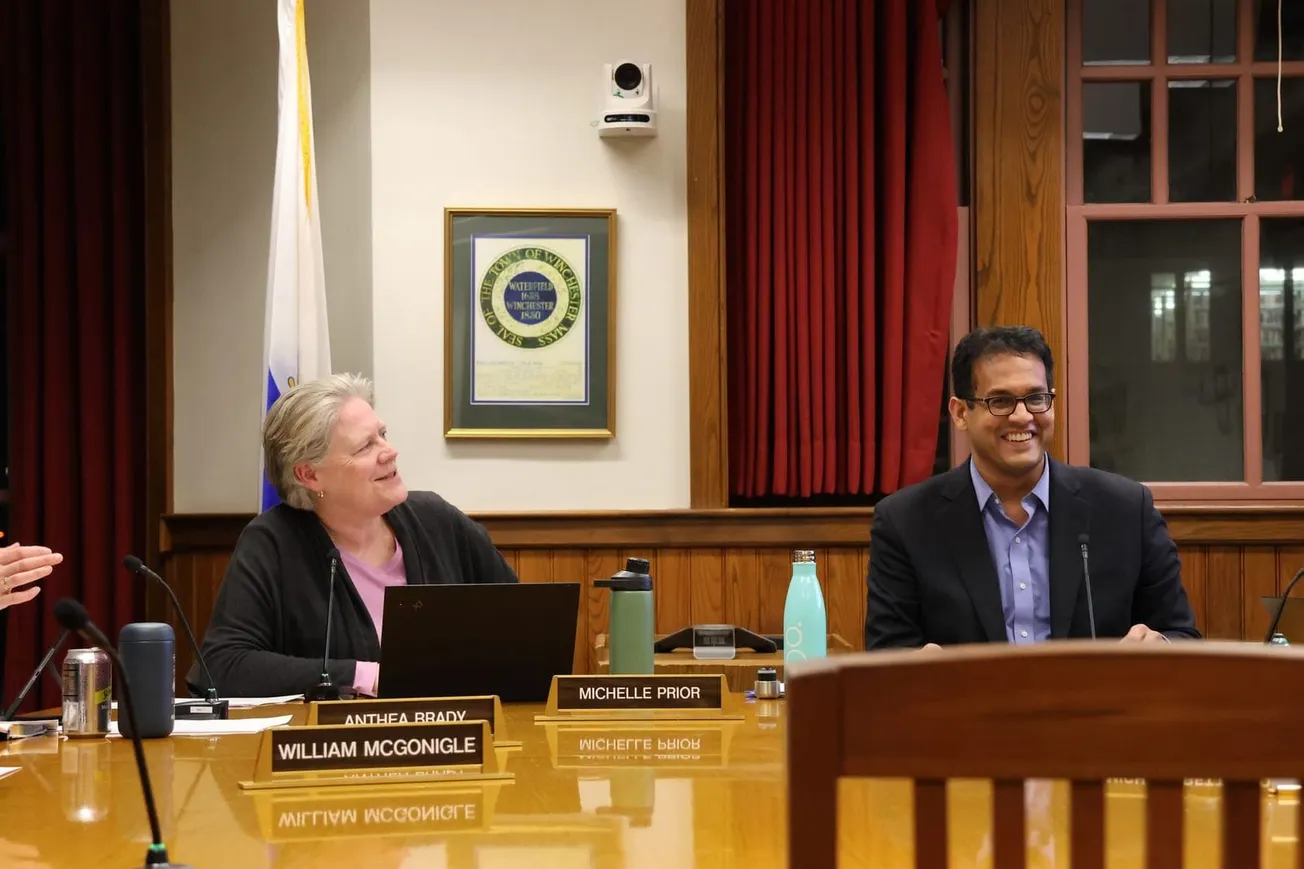
Paras Bhayani will step down from the Select Board effective July 14, ending a 16-month tenure.
Bhayani told the Winchester News he has sent a letter of resignation to Select Board Chair Anthea Brady. In an interview, he said the decision was driven by personal and family circumstances, which he declined to detail, and was unrelated to the work of the board or the direction of town government.
“It’s really a personal and family decision, and it’s no commentary at all on where the town is today,” Bhayani said.
His departure leaves an open seat on the five-member board with more than a year and a half remaining on the term, which was set to expire in March 2028.
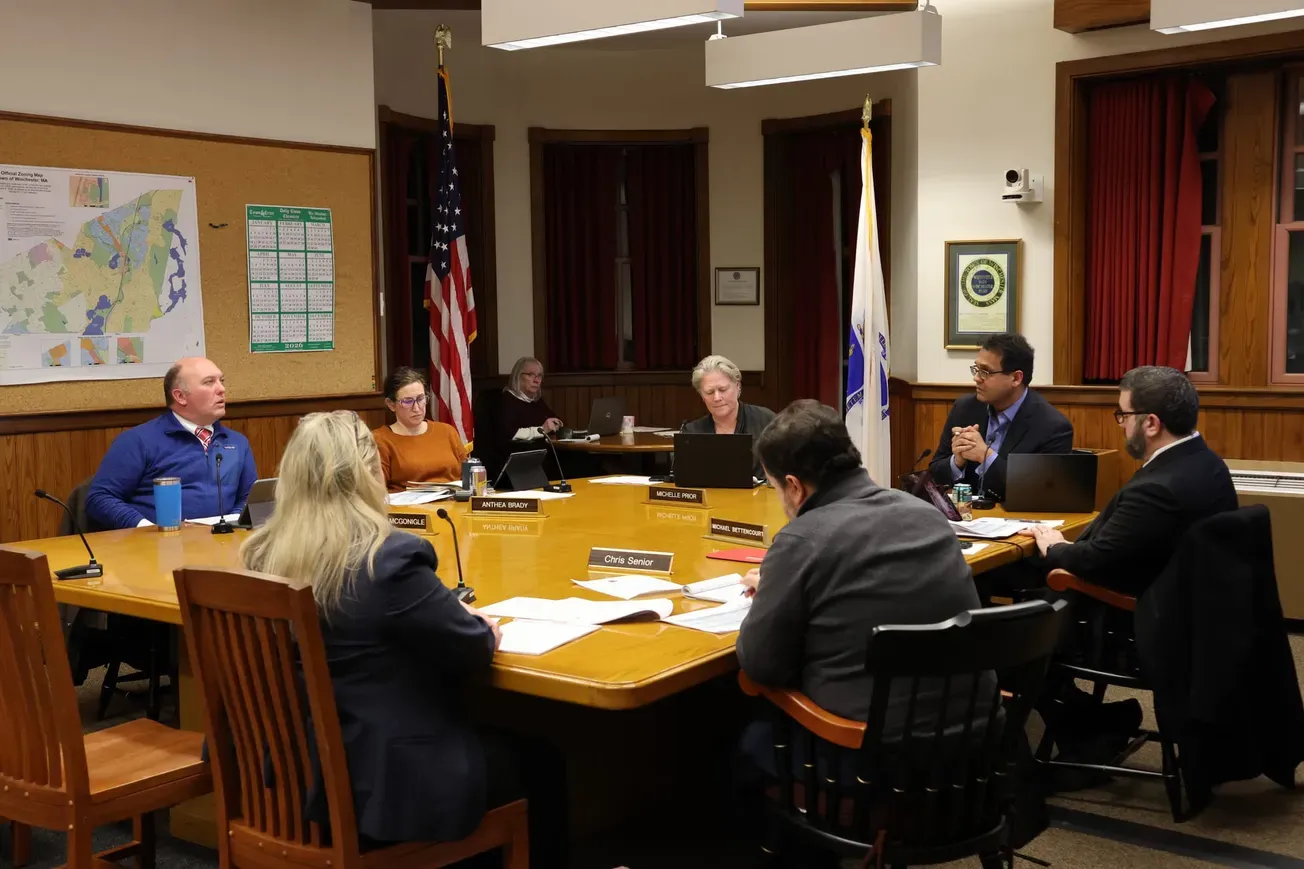
Under state law governing Select Board vacancies, the four remaining members choose a date for a special election rather than appoint a successor.
Bhayani said vacancies on most other Winchester boards, including the School Committee and Planning Board, are filled jointly by the Select Board and the affected body sitting as a single panel of nine, but the Select Board itself goes “straight to the voters.”
Bhayani, a Harvard Business School graduate and managing director in financial services, finished first in a four-way field in March 2025 with 1,945 votes, winning the open seat vacated by John Fallon.
He arrived on the board promising a sharper focus on long-range financial planning, capital strategy and revenue, and was quickly tapped to chair the State of the Town Committee, a 25-member fiscal-planning body the board reconstituted in May 2025.
That committee’s work culminated in the $11.5 million Proposition 2½ override that voters rejected 2,558-2,265 on March 21, the town’s first failed override since 2017.
The package, which Bhayani helped negotiate from a modeled range of $11.5 million to $15 million, including $9 million in operating funds and $2.5 million for capital and building stabilization.
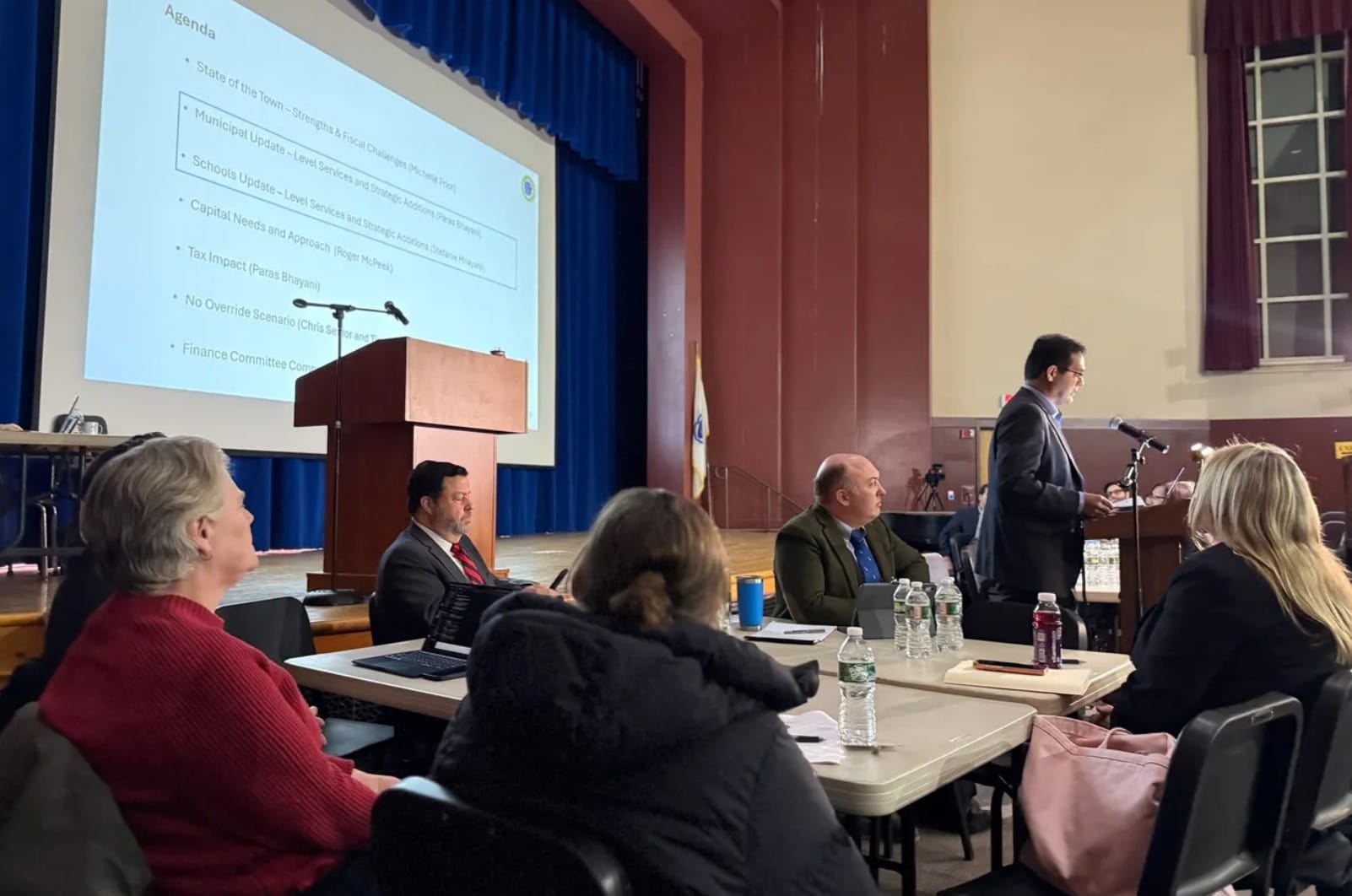
He has continued to argue, even after the defeat, that the town’s fiscal 2027 budget is unsustainable and that Winchester cannot cut its way out of a structural deficit driven by health insurance costs, pension obligations and revenue growth capped under Proposition 2½.
“There’s a tremendous amount, I believe, that the Select Board, working with the other boards, has done,” he said. “Obviously, there’s work remaining to do, but a lot of progress on financial planning and the process. We got a town manager in place, which is terrific.”
The town manager transition was the other defining project of his tenure, and one he said he had not anticipated when he ran.
Town Manager Beth Rudolph resigned in July 2025 without public explanation. Two internal interims followed before the board hired Christopher Senior in December on a two-year contract.
Bhayani, who conducted Senior’s public reference check, said Winchester would cycle through five people in the town manager’s chair, including the interims, before Senior’s swearing-in on Jan. 14.
“We’re a strong manager, town government form of government,” Bhayani said. “One of the most important jobs Select Board does is to hire and work with the chief executive of the town.”
He described the five-member executive structure as the hardest adjustment from his earlier service in appointed budget and finance roles in Chicago city government, where the work was about persuading a single mayor.
On the Select Board, he said, every idea has to be work shopped in public.
“You have to come up with ideas, put them in front of your colleagues in public session and discuss it with them,” he said. “You’re acting as a collective, but you kind of have to do that at the front end and get everybody on board. You have to do it in public because the nature of our system is such that for us to collaborate on anything, we’re doing that at the table with anybody who’s interested.”
Bhayani said he intends to use his remaining seven weeks to close out pending matters with his colleagues. He framed his exit not as a verdict on the work, but as an argument for more people to take it on.
“There is a tremendous amount of joy and value that comes from serving your community, particularly a community where you can see the beneficiaries of it very directly,” he said. “Our system really relies on that.”
Will Dowd is a Massachusetts journalist who covers municipal government and community life for Winchester News. He runs The Marblehead Independent, a reader-funded digital newsroom.