Table of Contents
The following was submitted by the Network for Social Justice:
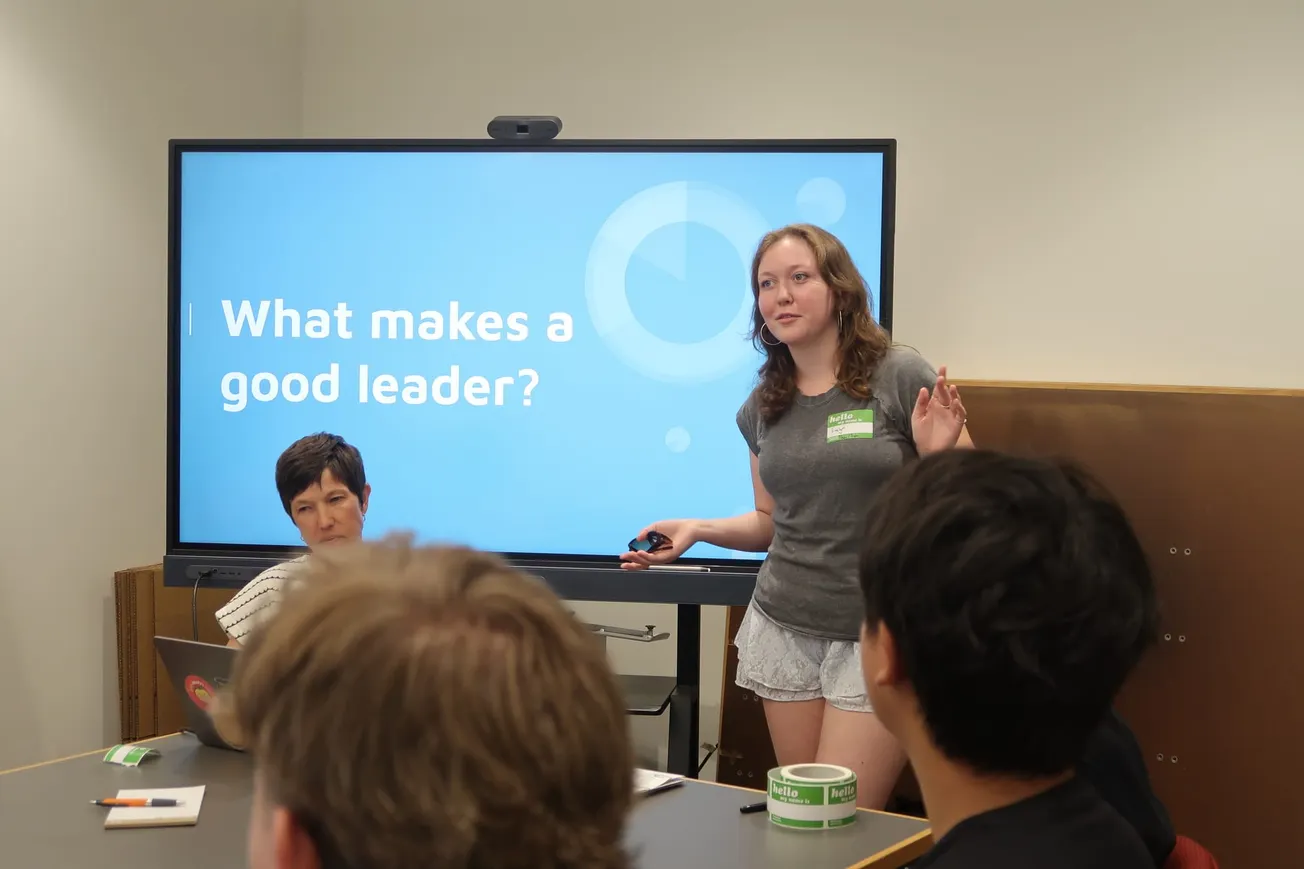
In the last week of July, 12 high school students from Winchester and Woburn gathered for a summer program focused on youth leadership.
The program was developed and delivered by a team of people including staff of the Network for Social Justice and Social Capital Inc. (SCI), a Tufts University student, and recent Winchester High School graduates.
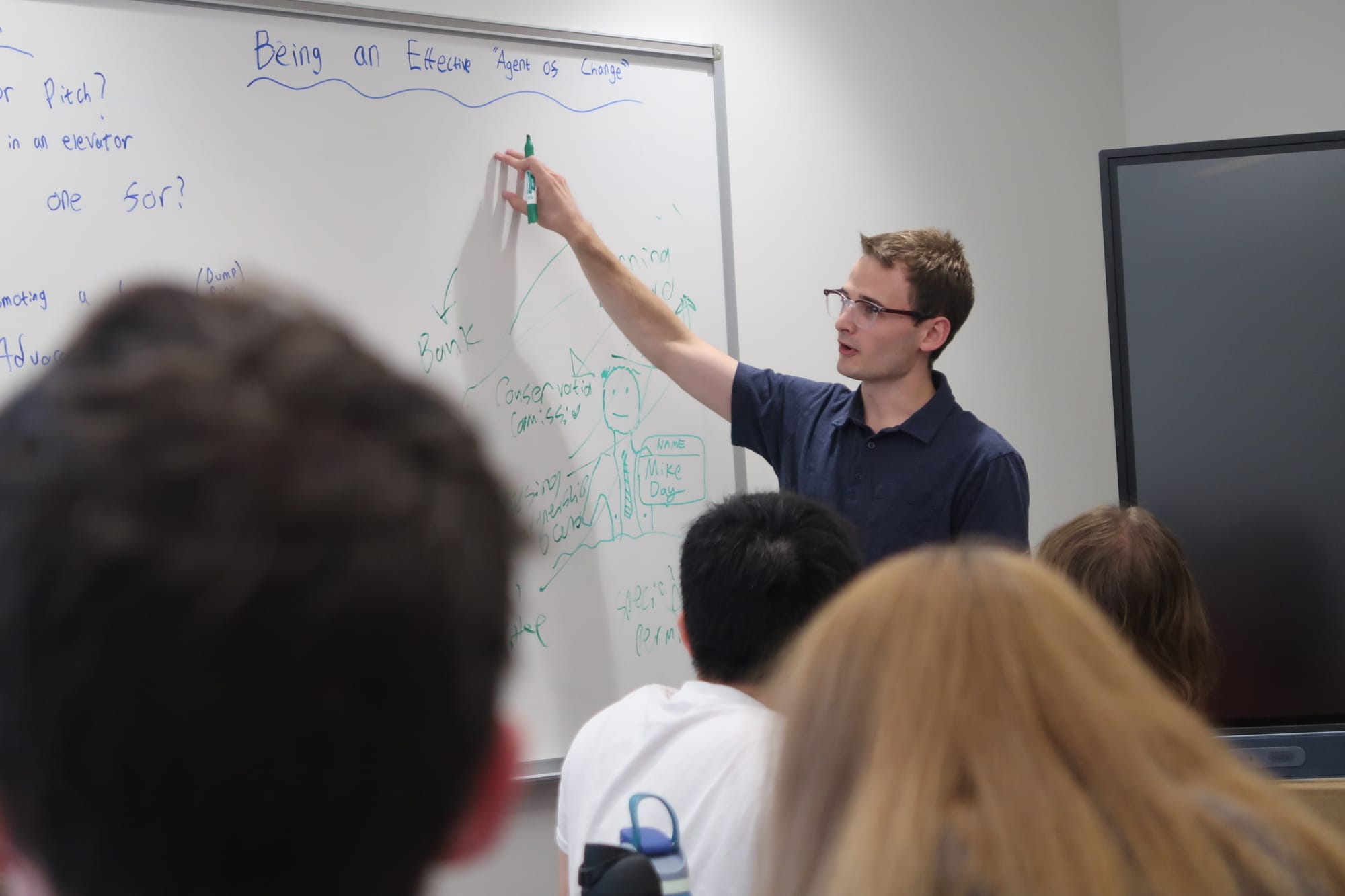
Winchester School Committee member John Bellaire was a guest speaker on Day 1 and led the students through an exercise on elevator pitches.
The program was funded in part by Winchester Hospital Community Benefits Program, Winchester Cooperative Bank, and the Cummings Foundation.
Want to hear about the program from a student's perspective? Below is a retrospective by rising WHS junior Constantin de Labarthe.
*****
Finding My Voice
By Constantin de Labarthe
It’s not often that you get to connect with a group to make a change. From July 27-31, I had this wonderful opportunity.
The Network For Social Justice (NFSJ for short) ran a program for youth of Winchester and Woburn to learn about finding their voice at a young age. I initially wasn’t sure I wanted to join and give up a week of my already semi-packed summer, but overall I gained more than I thought I would.
I should first explain how I found this program. I am Constantin, a rising junior at Winchester High School, and this week-long leadership program was advertised in our school’s daily newsletter. In the application, you had the opportunity to write a little bit about why you were committed to social justice, especially racial justice and mental health.
I am not going to disclose what I wrote exactly, but I chose to write a story dear to my heart, and I was accepted!
I was anxious on Monday, as I did not recognize anyone, but I quickly made friends, as we all had similar ideas and things we were looking forward to; we easily connected after a brief introduction.
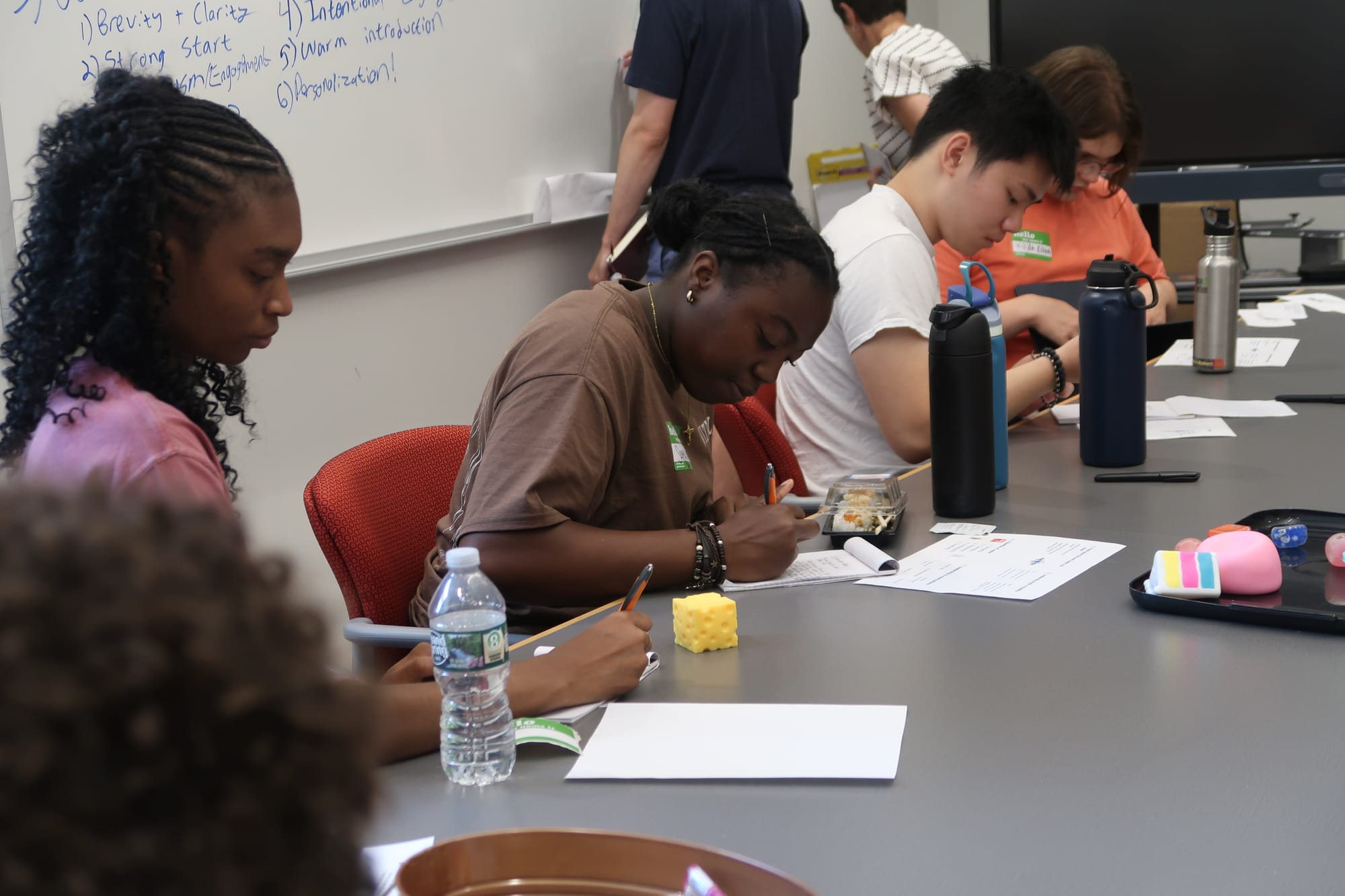
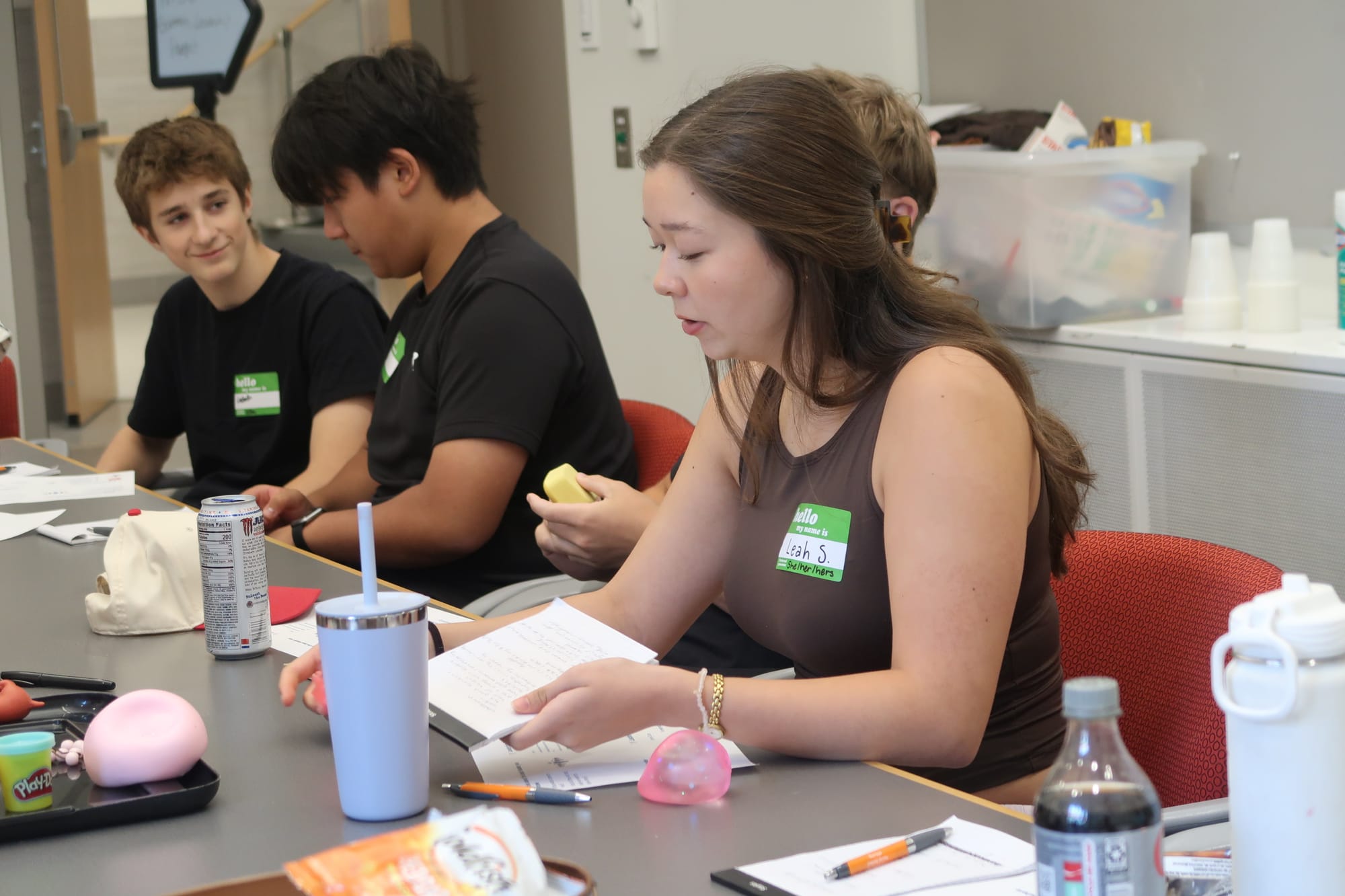
On Day 1, students at the Summer Leadership Program meet one another. COURTESY PHOTOS/NETWORK FOR SOCIAL JUSTICE
We met at Winchester High School and spent some time as a large group of 12 students. We also had small group discussions about situations requiring leadership, such as, “A student with different opinions wants to change parts of your club, but other members oppose the changes. What do you do?” We brainstormed possible answers.
Around this time, I noticed the squishy fidget toys at our disposal, which I found helpful; they relieved my stress because although I doubt I have too much social anxiety, sometimes it is difficult to speak, especially about your opinions or something near and dear to your heart, in front of a group of people you have just met.
Later that day, around lunchtime, Winchester School Committee member John Bellaire came to speak with us about our representatives at the town and state levels. I particularly enjoyed his visit as you don’t often meet people close to your age involved in politics.
Interacting with the youngest member of the School Committee showed me the impact I could have at my age, and that anyone passionate enough can get involved in their community.
We next met on Wednesday, and I’m glad I had been able to make some friends on day 1 because we were going to travel together to Boston. We attended the “Our Transformative Power” event hosted by YW Boston and located at More Than Words, a nonprofit youth-run business.
The highlight was a panel discussion featuring young people sharing personal stories about speaking up to make a change.
I asked the panelists: “How can someone who already is a leader help teach others to be leaders?” The answers were inspiring, and the panelists helped me see some common leadership skills, like being a good listener. They also shared examples of their own leaders and mentors; guidance counselors, teachers, parents, and older friends all helped them find their voice, and land them where they are now.
On the car ride back, we discussed the panelists and the event in a “Plus-Delta” format. “Plus” meant the positive things you enjoyed, and “delta,” like the symbol, meant things you would want to change.
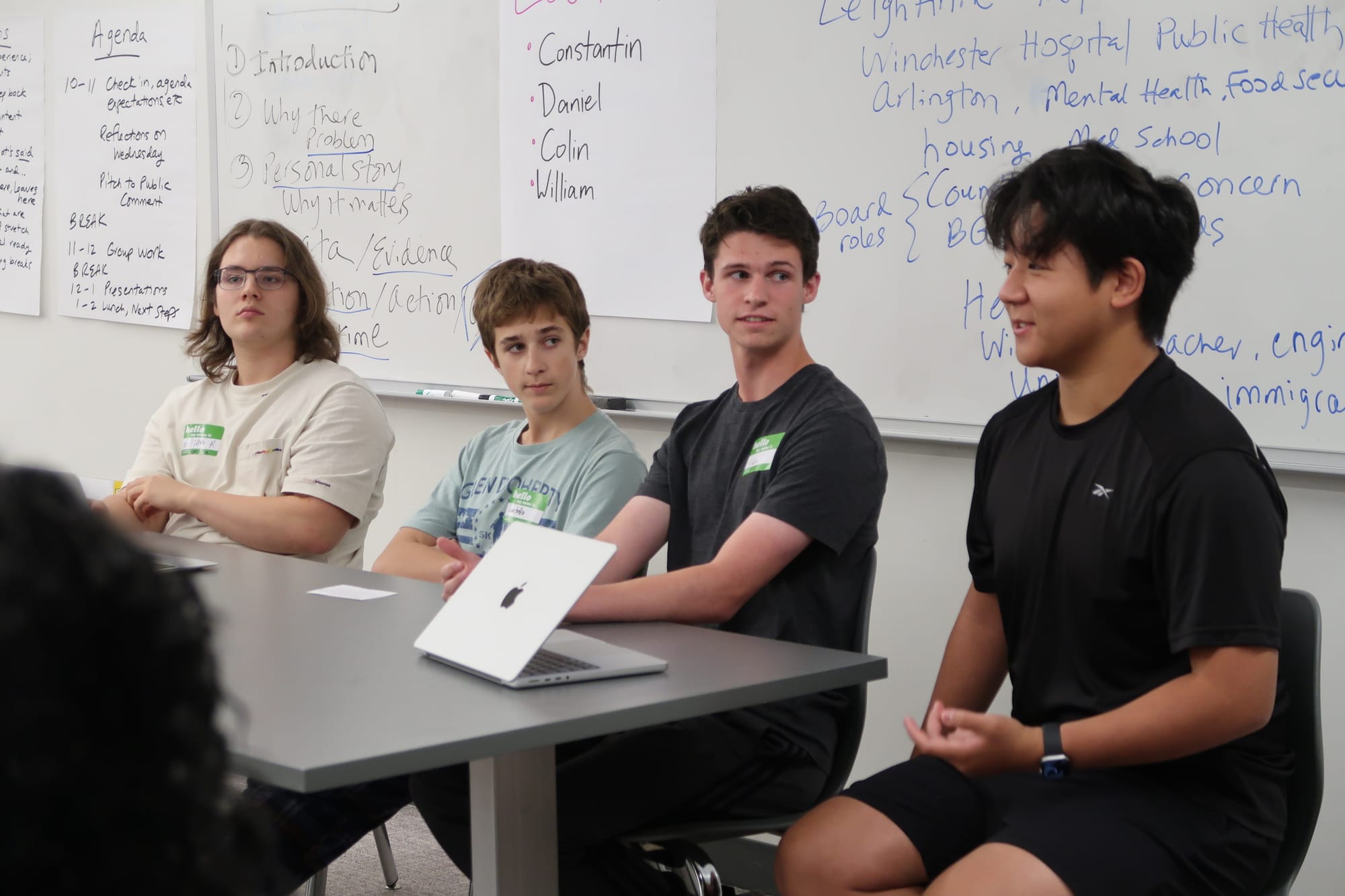
In my case, for example, a plus was asking the panelists questions, and a delta was that some parts of the day were too long or unstructured. We all noticed we had bonded over this program, and we went from being participants in a program to becoming friends, some of whom I’ve stayed in touch with beyond the week.
Thursday was the most eventful day of the program. We took the T to the Massachusetts State House to support a Youth Day on the Hill organized by the MA Commission on LGBTQ Youth.
In the Great Hall of Flags, there were beautiful rows of flags for all 351 municipalities (though to my dismay, I couldn’t find the flag of Winchester!).
We visited tables of organizations like Hey Sam and Progressive Mass which support and advocate with and for LGBTQ+ youth. I learned about ways for allies and LGBTQ+ people to get involved, some with high demand and building capacity (for example, Hey Sam has a list of people waiting to volunteer).
Then, several legislators who are members of the LGBTQ+ Legislative Caucus spoke about the importance of civic involvement, an issue about which I am very passionate. The program also included some powerful performers, who used their voices as artists to express their activism.
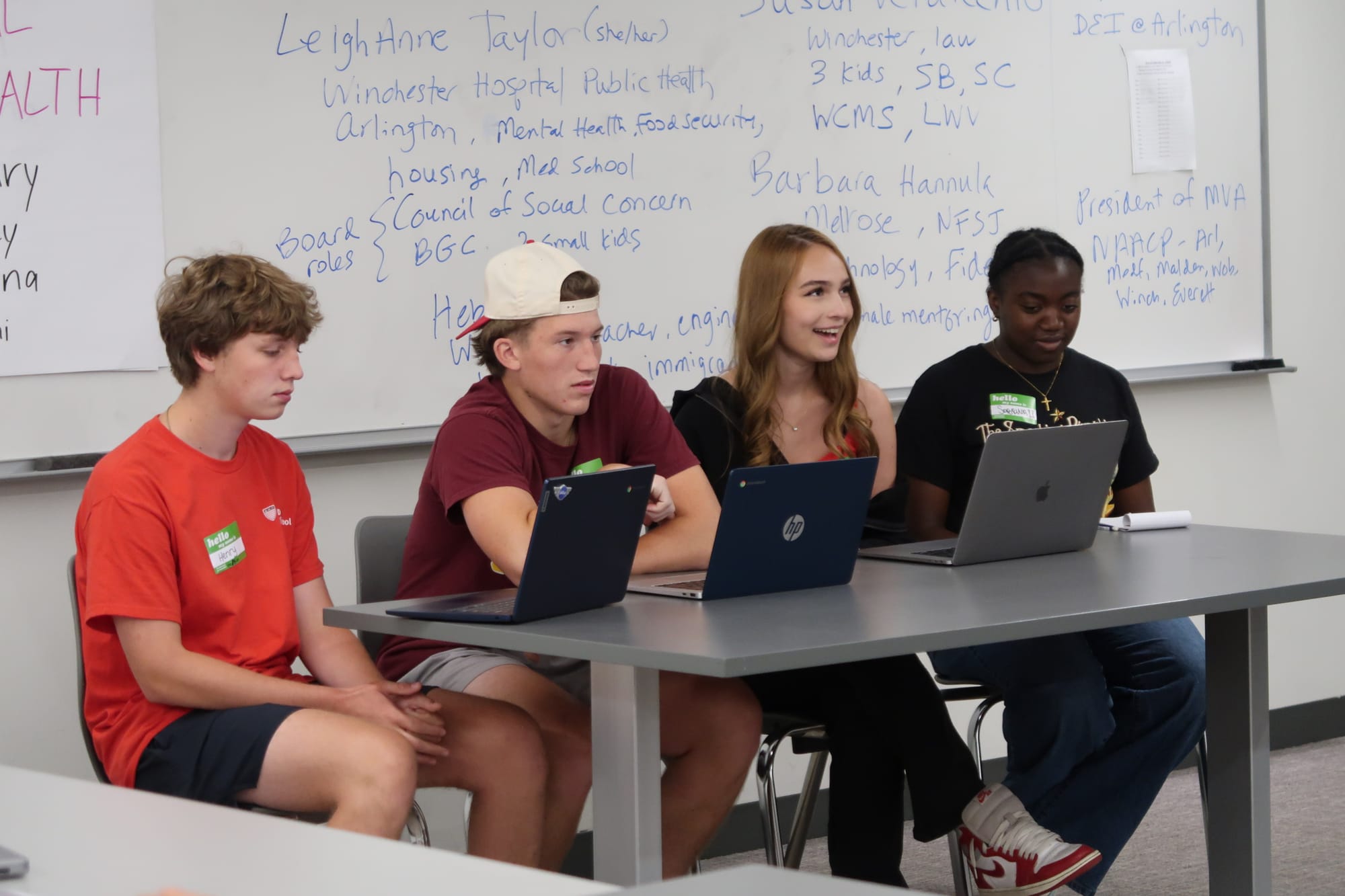
Our group had the pleasure of meeting with our current state representatives and their staff members. I think it is crucial to get to know your representatives, or at least a little more about who they are. Our legislators stressed the importance of getting involved as much as we can, now.
You can start by visiting the State House, if you haven’t been there. My friend and I walked around and it is truly beautiful and holds a lot of history. Did you know that the decoration at the top of the golden dome is a pine cone, representing Maine which was part of Massachusetts until 1820? And who could forget the library? It serves primarily as a study room, but also is full of artwork. There are a lot of ornate rooms, and you may even meet a legislator as you wander around the building.
Our day wasn’t over yet. Outside the State House, we met up with youth civic storytellers from Embrace Boston. They led us through the Boston Common to the 2023 monument known as The Embrace. This memorial to Coretta Scott King and Martin Luther King Jr. has a lot of hidden symbolism that I hadn’t learned or understood on my previous visits.
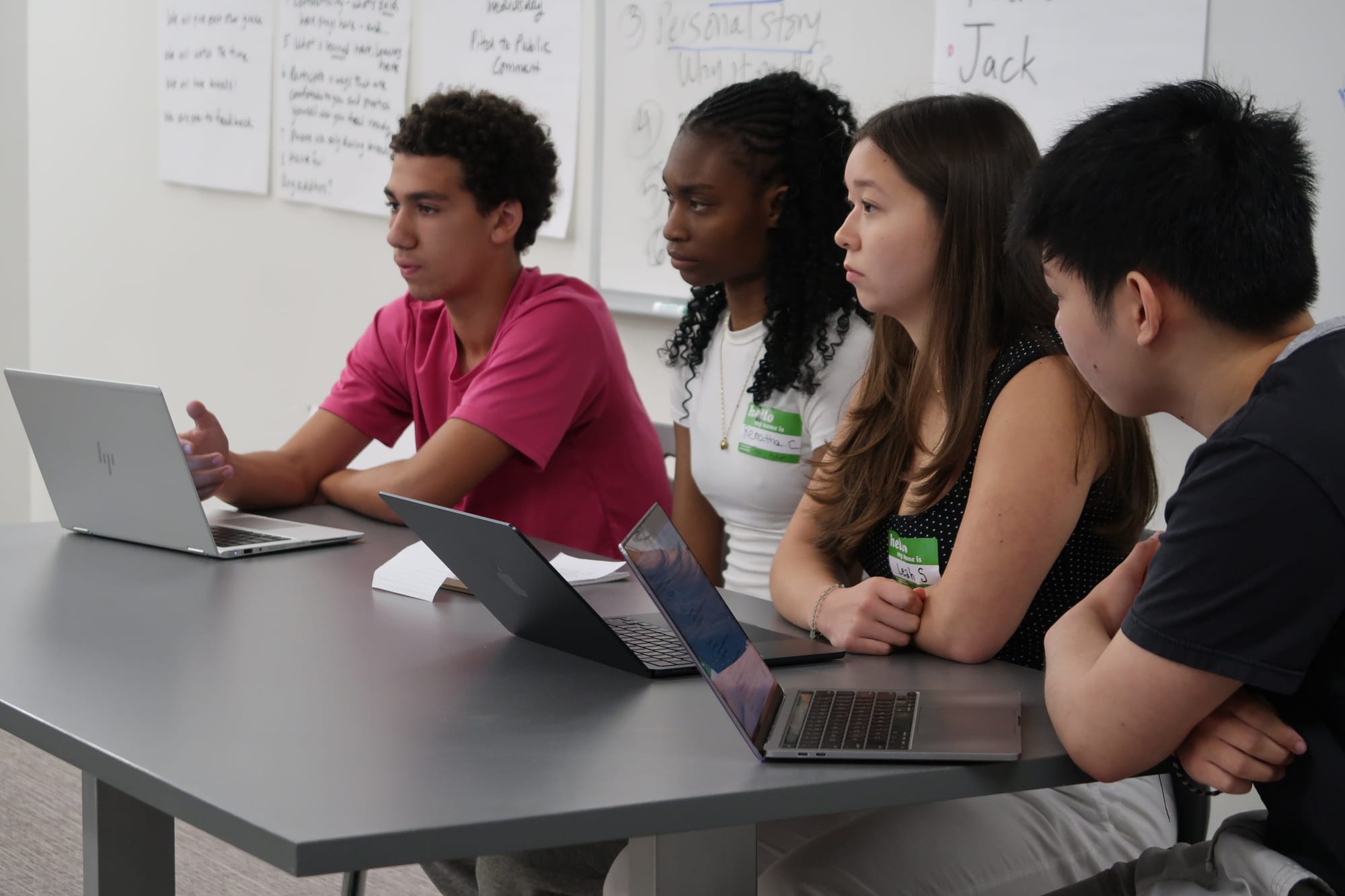
I appreciate that Embrace Boston has an initiative to support young residents of Boston to use their voices to tell stories of history from their perspectives. The youth storytellers looked confident and gave insightful descriptions of everything we saw.
After all the emotions and experiences I shared with my newfound friends, I was sad when we reached the last day, Friday. We split up into three groups to prepare presentations about issues we had identified earlier in the week: education, mental health, and racial justice.
My group focused on the benefits and drawbacks of AI use in schools. We presented to an audience that included adults from different fields (education, healthcare, nonprofit leadership, etc), who were all interested in listening to young people share their experiences and concerns.
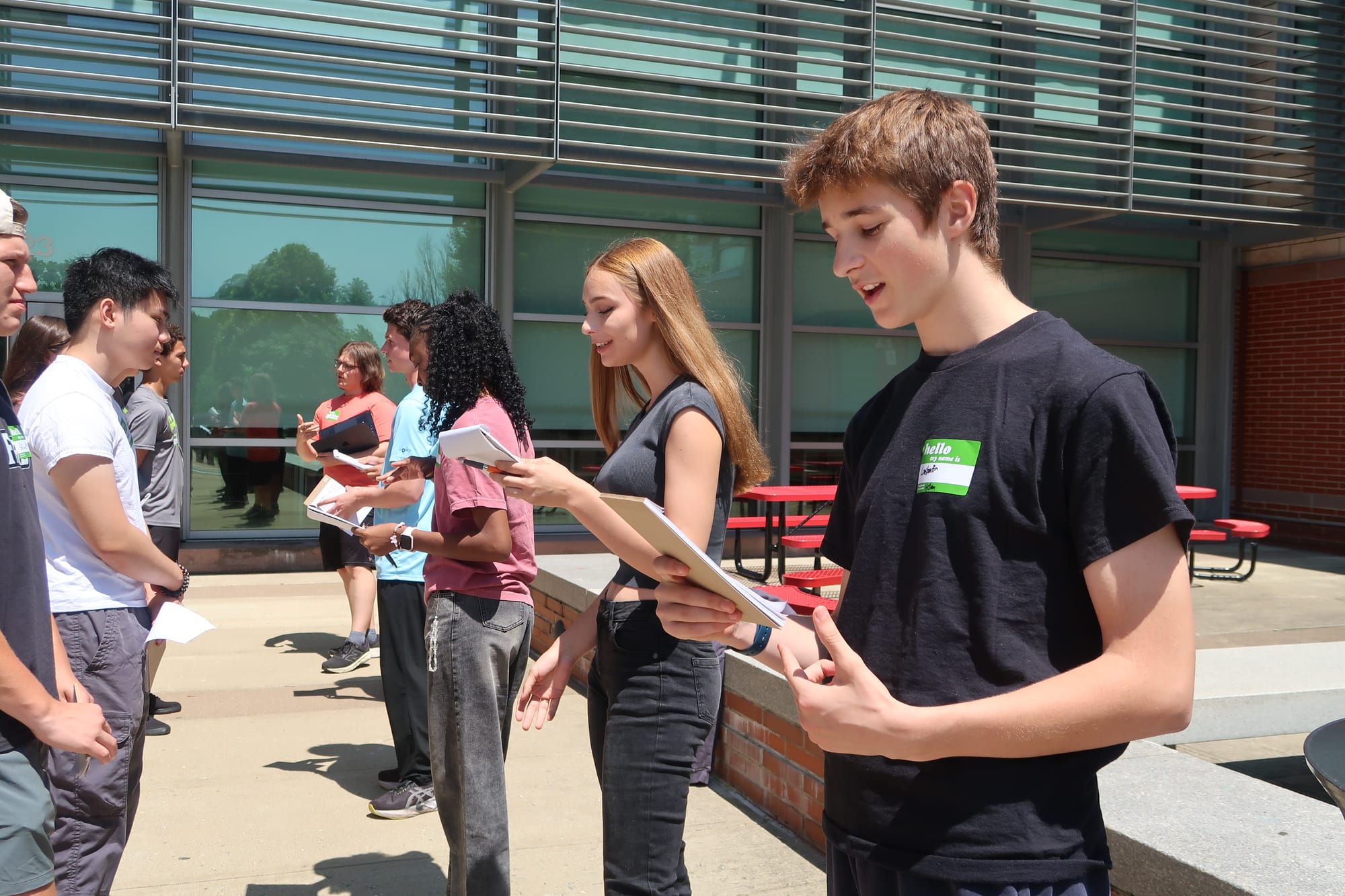
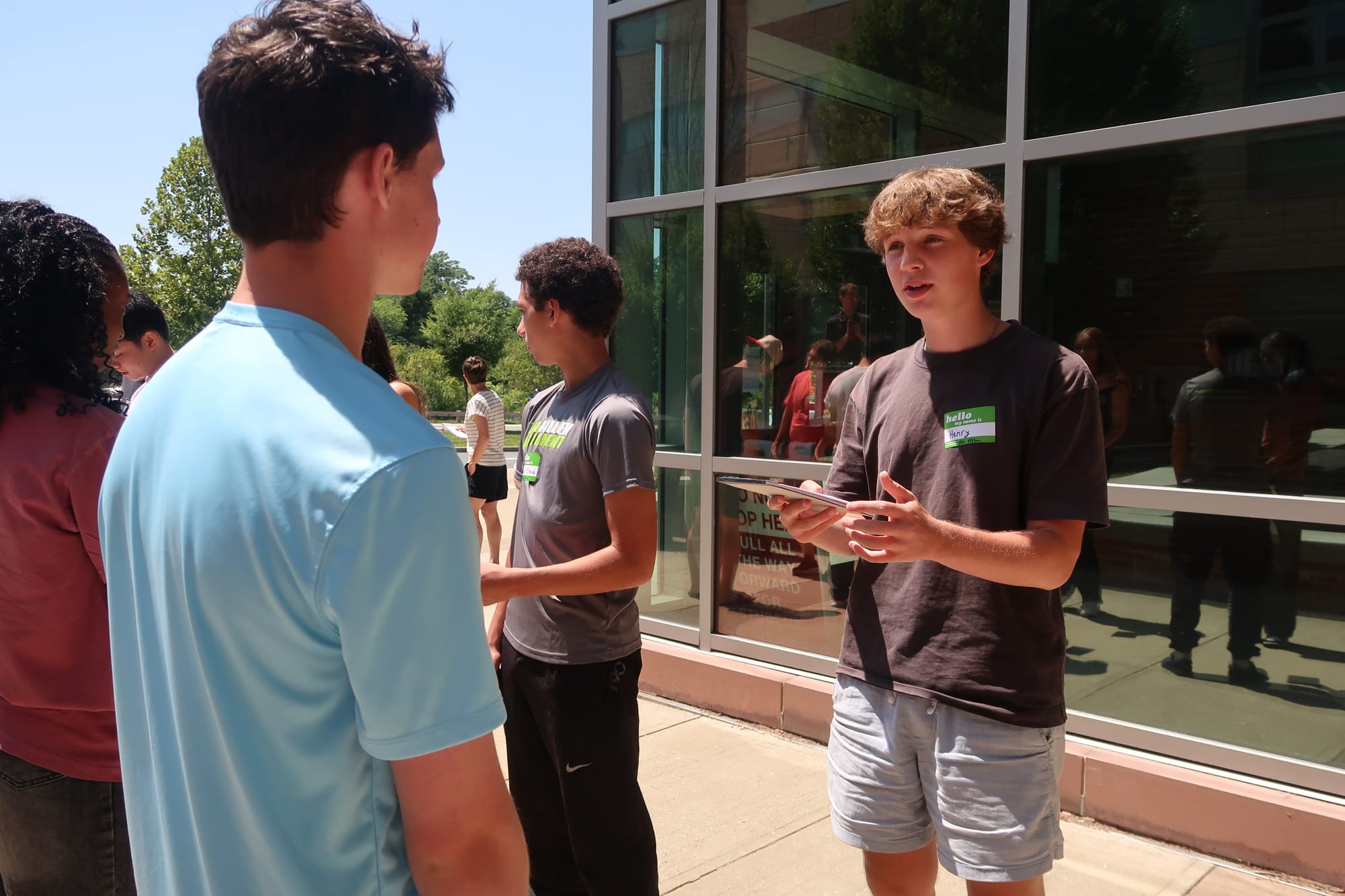
Summer Leadership Program students work on elevator pitches. COURTESY PHOTOS/NETWORK FOR SOCIAL JUSTICE
Over this week long program, I made friends and learned to be more confident. This program carefully helped me step outside my comfort zone while being in a safe space. One of the ways that NFSJ helps create a safe space is by setting expectations like “what’s said here, stays here, and what’s learned here, leaves here.”
Overall, this program provided a great opportunity for me to learn about others, to understand my power as a member of the youth community, and to see others become leaders.