Table of Contents
Editor’s Note: Earlier this summer, we sent our intern Xiyue Eric Han out to meet public officials in Winchester and ask them what they do when it comes to town government. Here’s what he found out.
Winchester has no mayor. While the Select Board holds the executive power and Town Meeting holds the legislative responsibilities, the person running the town on a normal Tuesday morning is the town manager.
Their job? Make sure everything runs smoothly, so the other committees and boards can do their job.
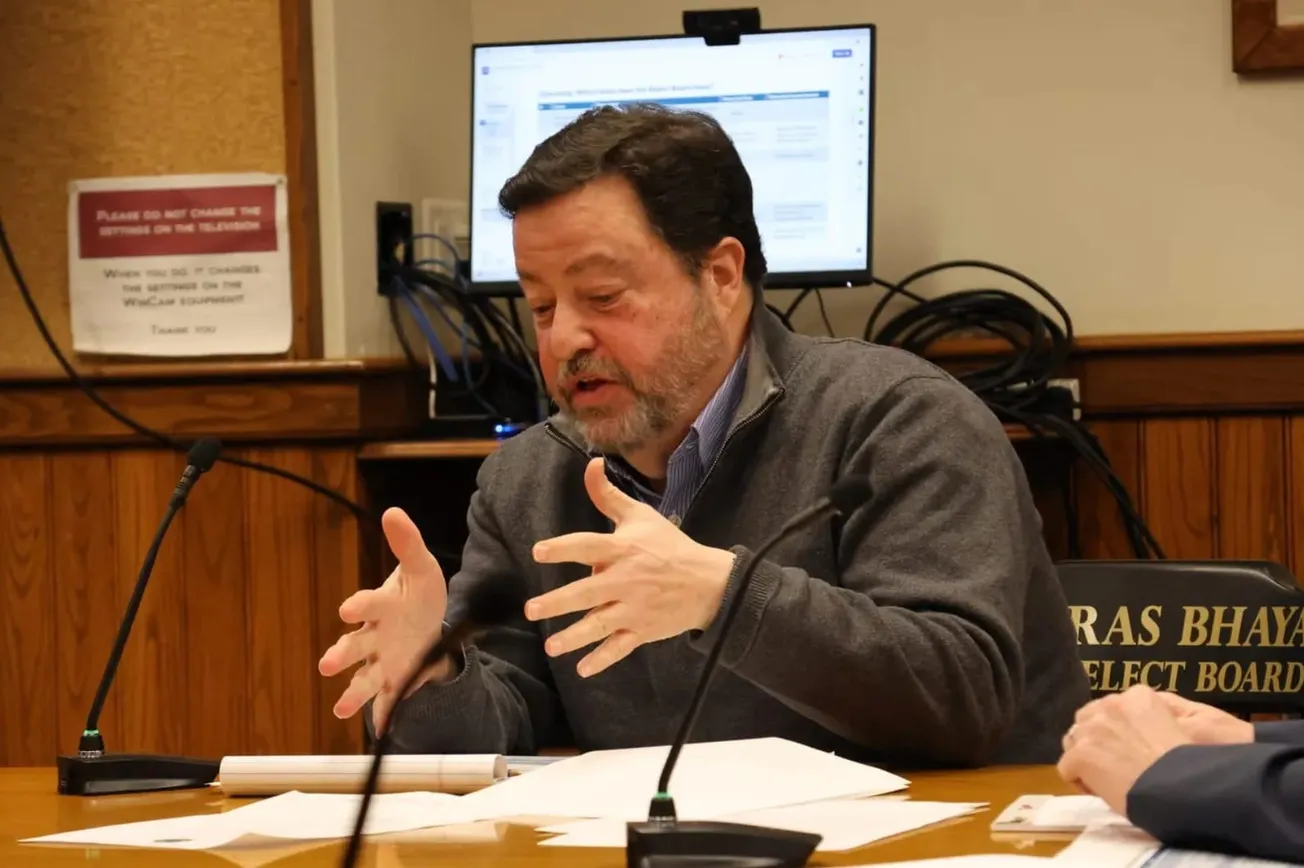
Chris Senior has had this position since January. Counting the two interim town managers who filled the gap, he is the fifth person in the chair in about a year and a half.
Senior previously served 12 years as town manager in Cohasset and a decade as deputy town supervisor in North Hempstead, N.Y.
“The town manager is the chief administrative officer, or the chief operating officer,” he explained.
In practice that means he hires and fires department heads, sets their pay, buys everything the town buys, awards the contracts, decides who uses which town building, and writes the first draft of the budget. In the winter, he hands the Finance Committee line items for every municipal department and one lump sum for the schools.
Of the $171 million fiscal year 2027 budget, the $49.6 million for municipal departments runs through people who report to Senior.
Where the position’s power ends
The town manager can’t spend money as that power falls under Town Meeting, and can’t raise any, because Proposition 2½ caps the levy and voters decide overrides. He also has no authority over the schools as the School Committee hires the superintendent and everyone under him.
“We collaborate all the time,” Senior continued, “but they work in parallel with us.”
The town manager doesn’t even control the town’s books. The comptroller, who manages the books and pays the bills, is appointed by the Select Board and is supervised by the board and not by the town manager.
The library belongs to its elected trustees, public health to the elected Board of Health, valuations to the elected assessors. Senior said the town planner is appointed by the Planning Board and the health agent answers to the Board of Health, though he works with both constantly.
“I can’t order things to happen,” Senior said. “I can’t just point my finger and have a tree removed. It’s a whole process.”
Who does the position work for?
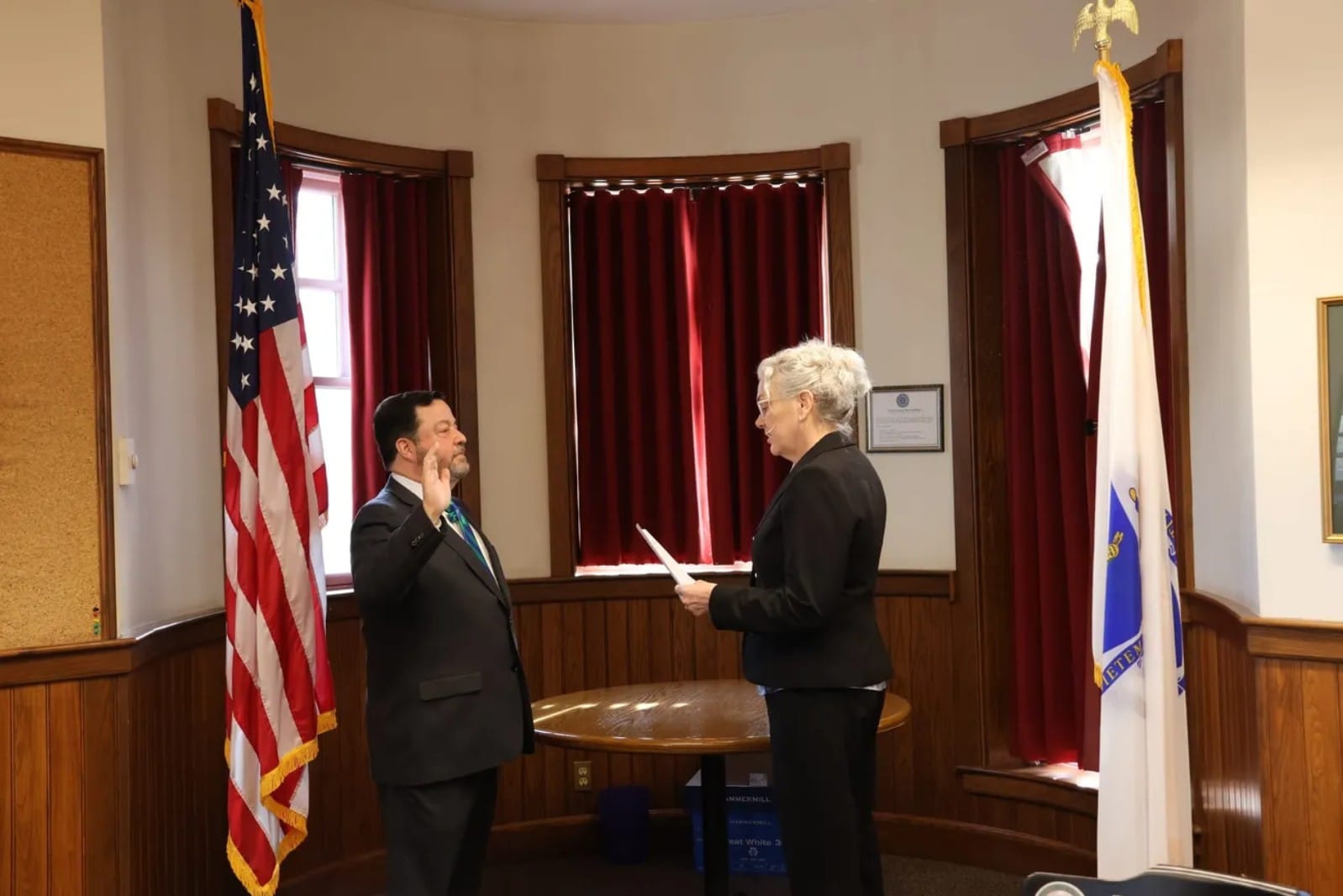
The town manager serves the five members of the Select Board. (The current board has been down to four since the resignation of Paras Bhayani back in July.) The board hires the town manager, set their pay and can remove them.
To do so takes a preliminary resolution, a suspension of up to 45 days, a public hearing if he asks for one, then a final vote. The manager’s contract runs two years with a review at nine to 12 months.
In February, the board settled on the three things it will judge Senior against, one of which is supporting the board.
Senior sits at every Select Board meeting with a voice and no vote. He attends every session of Town Meeting and has to answer anything directed at his office.
“I’m not the mayor of Winchester,” he said. “I’m the town manager of Winchester.”
Most of the work is making sure nobody has to vote on something they haven’t read yet. This ensures that meetings are efficient and voting members are informed on all of the details.
Senior puts it simply: “You’ve got to be prepared.”
Two months in
With a final vote of 2,558 against to 2,265 for back in March, an $11.5 million override failed. Thus, Senior spent the following two months helping to rebuild a budget constructed under the assumption that the override would pass.
The schools cut 32.5 positions while the Fire Department froze hiring. A police cruiser was deferred, Public Works took cuts and Town Hall stopped hiring.
Senior says it was the hardest part of the year.
“That's hard, to have to come right in and start making cuts,” he said.
The hunting happens at the margins: fees, reimbursements, thermostats, keeping vehicles running a few years longer. Senior gestures at the chairs in his own office, none of which match.
“I don’t need fancy stuff,” he explained. “They’re functional, people sit in them.”
The rest of the job
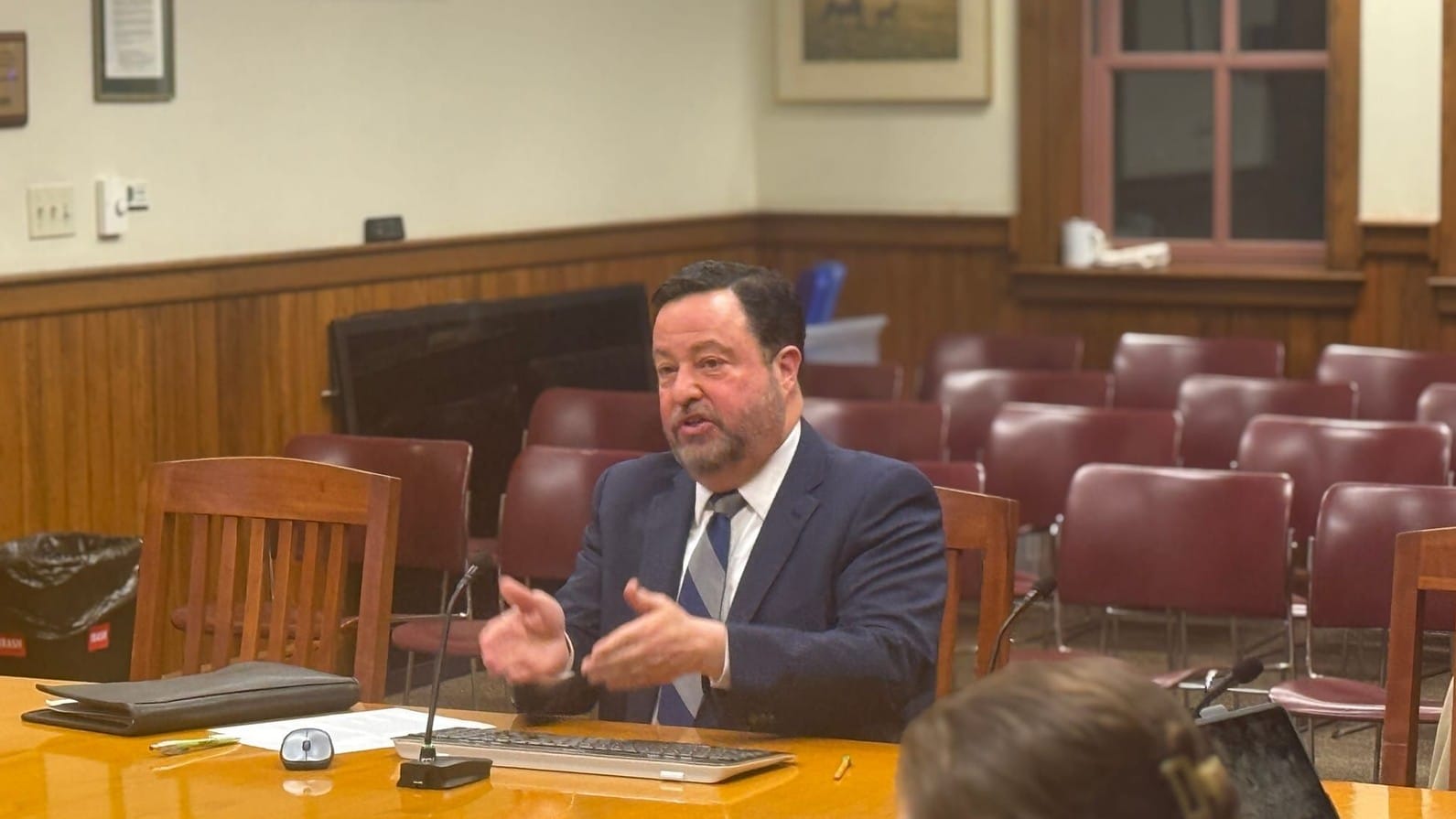
The town manager appoints the Conservation Commission and the Historical Commission, seven seats each, subject to Select Board approval. He has never had to turn an applicant away.
“There hasn’t been a really long lineup of people,” explained the town manager. “If people want to apply for the Conservation Commission or the Historical Commission, come on in.”
Senior meets every new full-time employee one at a time, a habit that started on his first day, when the fire chief mentioned some recent hires and he asked to meet them. He routinely meets and talks with folks around town on a day-to-day basis.
The thing he actually wants to build is a single point of contact for all types of problems.
“If there’s a rat problem, you don’t necessarily know you’re going to the Board of Health,” he said.
Senior wants to make it easier for residents to know exactly who to ask if they have a problem. Instead of being redirected constantly, this would connect them with the right person the first time.
Ask why he does this and he stays deliberately small. It’s about a backstop and some fencing replaced so the softball games happened. Classrooms repaired. Roads being plowed so kids can get to school.
“So much of it goes unnoticed,” he said. “But it’s critical.”
The other thing he keeps asking for is a lower temperature. Disagree, vote, move on.
“The world sends us enough drama,” he said. “We don’t need to create our own.”
Xiyue Eric Han is a student at Winchester High School. He has been an intern with Winchester News since summer 2025.