
Table of Contents
Editor’s Note: Earlier this summer, we sent our intern Xiyue Eric Han out to meet public officials in Winchester and ask them what they do when it comes to town government. Here’s what he found out.
Try to build a patio extension in the wrong backyard and a seven-member volunteer board can make you tear it out. Try landscaping around the wrong area of Wedge Pond, the commission can deny your permit.
Winchester residents often meet the Conservation Commission at a bad moment, and leave with the wrong idea about what this board does. Some think the committee can block any project it doesn’t like, while others believe it to be only a rubber stamp. The difference between the two is determined almost entirely by geography.
What is this board?
In March 1964, Town Meeting created the Conservation Commission under M.G.L. Chapter 40, Section 8C. Among the group are seven appointed volunteers, one paid Conservation Administrator, the role currently held by Elaine Vreeland. Meetings are held on the second and fourth Tuesdays, every month, at 7:30 p.m.
“The Conservation Commission establishes policy, they vote on the applications, and my job as administrator is to provide the information that they need to make an informed decision,” explained Vreeland.
What does it control?
The first is permits near water. The commission administers Massachusetts’ Wetlands Protection Act, which prohibits the removal, filling, dredging, or alteration of wetlands, floodplains, riverfront areas, and buffer zones without a permit. They also ensure Chapter 13 of the Winchester Code of Bylaws, the local wetlands bylaw Town Meeting adopted back in 1987.
The Conservation Commission’s jurisdiction is not a judgement call on a case-by-case basis, but rather a definitive one, determined by a clear map. Under the town bylaw, you need permission to fill, dredge, alter or build within 100 feet of a wetland, bog, swamp, bank, lake, pond or stream, on land under those waters, or on land subject to flooding. State law adds a 200-foot riverfront area along the Aberjona and perennial streams such as Horn Pond Brook.
“If you’re outside those limitations, you do not need to consult with us in order to develop your property,” Vreeland elaborated.
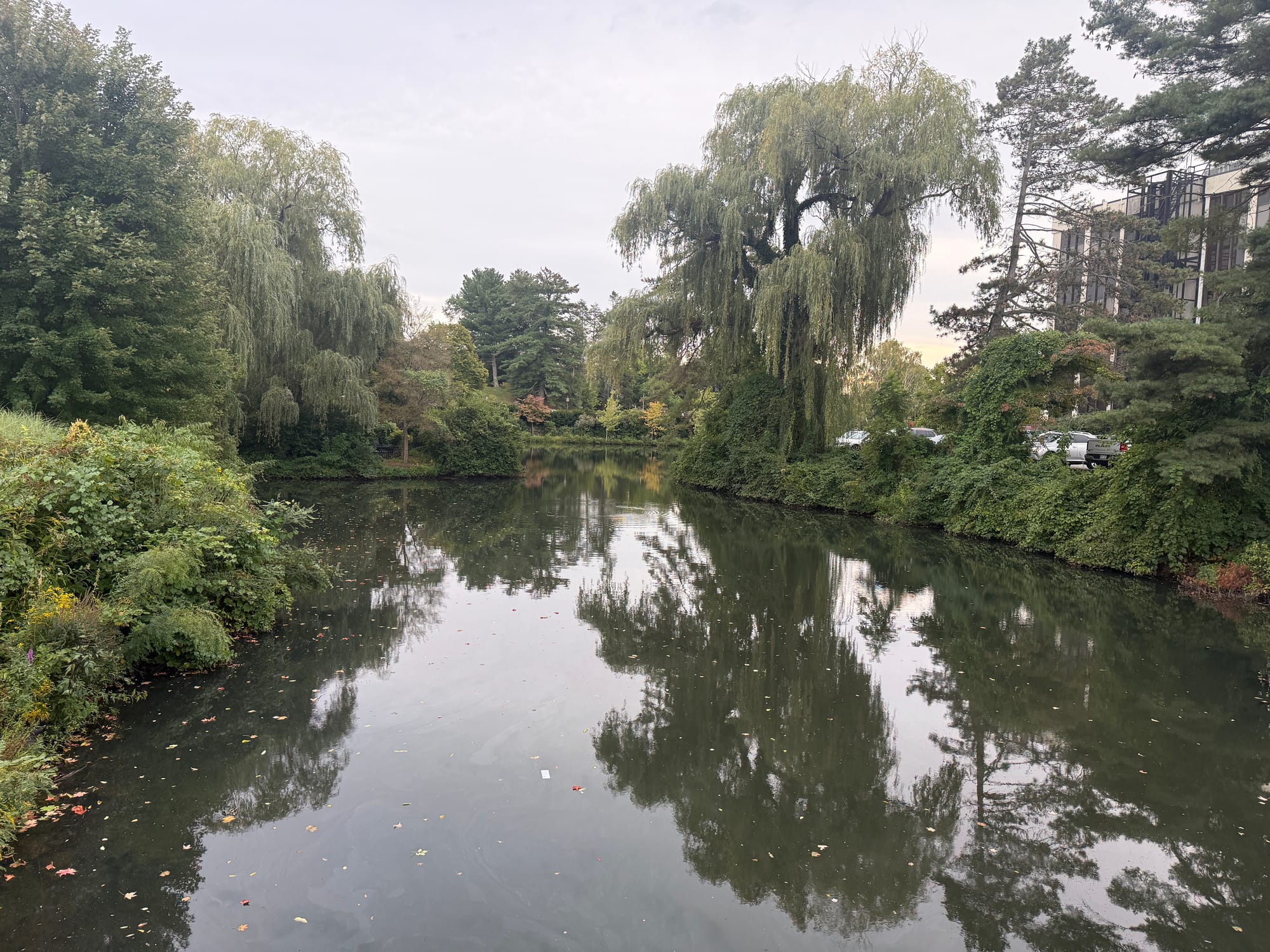
If you are inside the line, the project gets measured against a fixed list: water supply, groundwater, flood control, storm damage prevention, pollution, fisheries, shellfish and wildlife habitat. Winchester’s bylaw adds erosion control, recreation and aesthetics, and names eight water bodies a project may not block from public view: Wedge Pond, Winter Pond, Upper and Lower Mystic Lakes, Aberjona River, Horn Pond Brook, Sawmill Brook and Russell Brook.
The burden of proof that your project will not cause environmental harm falls on the applicants, not the board. You have to show your work will not cause harm. If evidence cannot be provided, that by itself is justification for a denial.
Although the tools behind that are strong, the penalty is small.
The commission has the power to condition permits, make conditions run with the land, bill applicants for outside peer review, walk onto private property, issue stop-work orders and order land restored. The maximum fine is $300 a day, though this has been amended back in 2007 and 2012.
The second job is land. Winchester holds close to 150 acres across nine conservation areas: Brooks-Parkhurst Town Forest, 29 acres; Winning Farm, 29 acres; Wright-Locke / Locke Farm, 20 acres ; Sucker Brook, 14 acres; Mount Pisgah, 11 acres; Smith Pond, 6.5 acres; Sachem Swamp, roughly 5 acres; The Gables, 3 acres; and Glen Green, 2 acres.
What it does not control?
The Conservation Commission has no authority over zoning. Things like density, height, setbacks or what a building looks like belong to the Planning Board, the Zoning Board of Appeals and Town Meeting.
Nor does the group have power over land outside the buffers. When residents call about clear-cutting and paving, and are outside the line there is no authority to act.
Winchester’s Chapter 40B establishes that all comprehensive permits go to the Zoning Board.
Storm drains and flooded streets belong to engineering and the Department of Public Works. The commission works upstream of that: new construction inside its jurisdiction has to soak stormwater into the ground instead of piping it toward the river.
“We’re trying to keep that water up in the watershed and let it slowly drain through the soil,” Vreeland continued.
Fields, beaches and some town green space are also areas that the commission has little control over.
Winchester Recreation runs the fields. Glen Green, which the commission took up twice this spring after neighbors did unpermitted cleanup and planting, answers to the Select Board. Members who visited decided it did not warrant an enforcement order.
The money that goes to the Conservation Commission is determined by Town Meeting, which appropriates all of the town’s funds. The commission is able to recommend a budget, but that final decision goes to the 192 members of Winchester’s legislative branch.
Luckily, the damage the failed override has done to the commission has been mitigated.
“We have not been as impacted as some of the larger departments,” explains the administrator.
Who serves on it?
The group is made up of seven volunteers appointed by the town manager with Select Board approval, with staggered three-year terms. The current chair is Tracy Olson.
The staff is one person, covering every application, site visit, conservation area, and making sure the members have what they need to make an accurate decision.
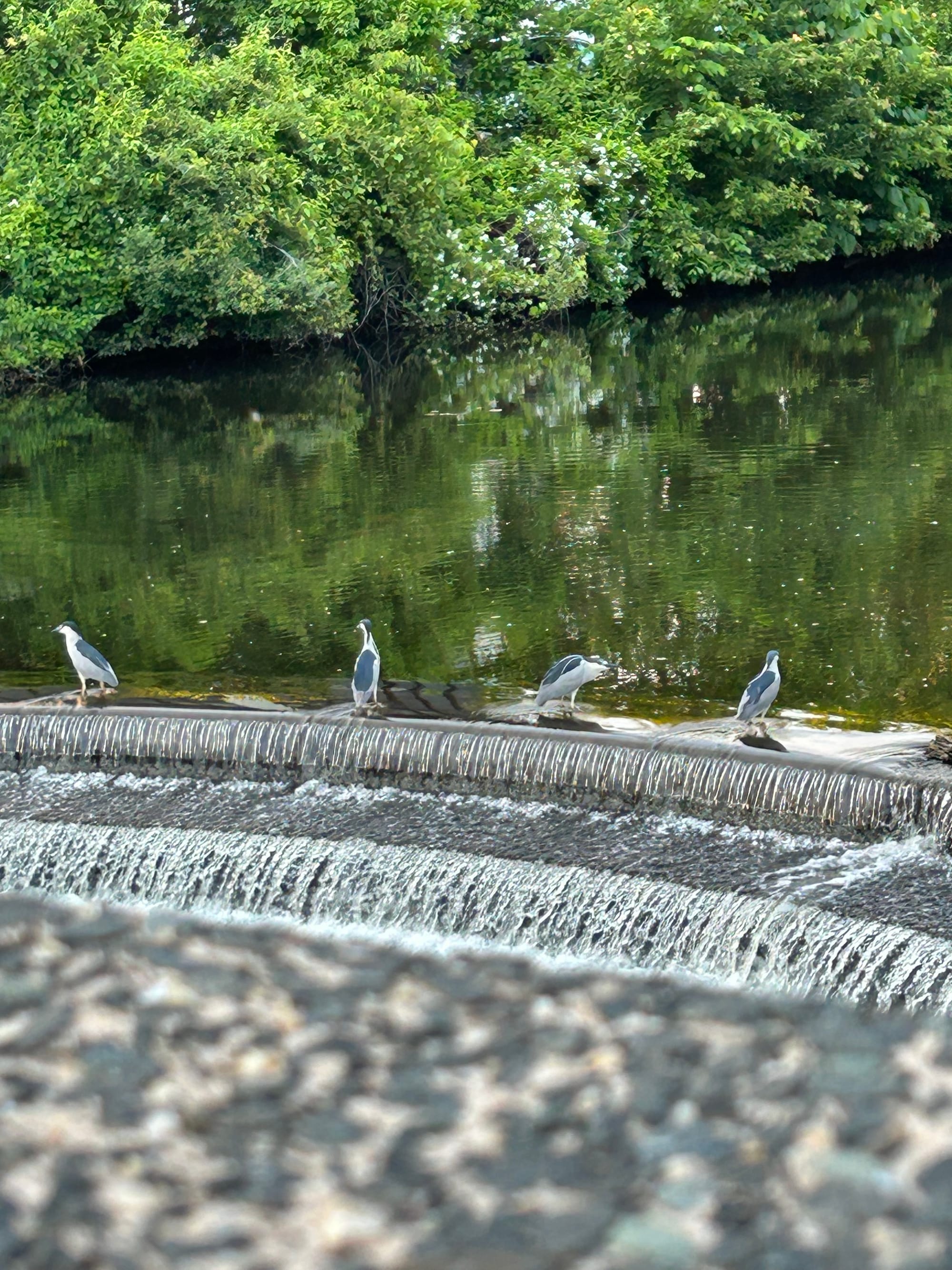
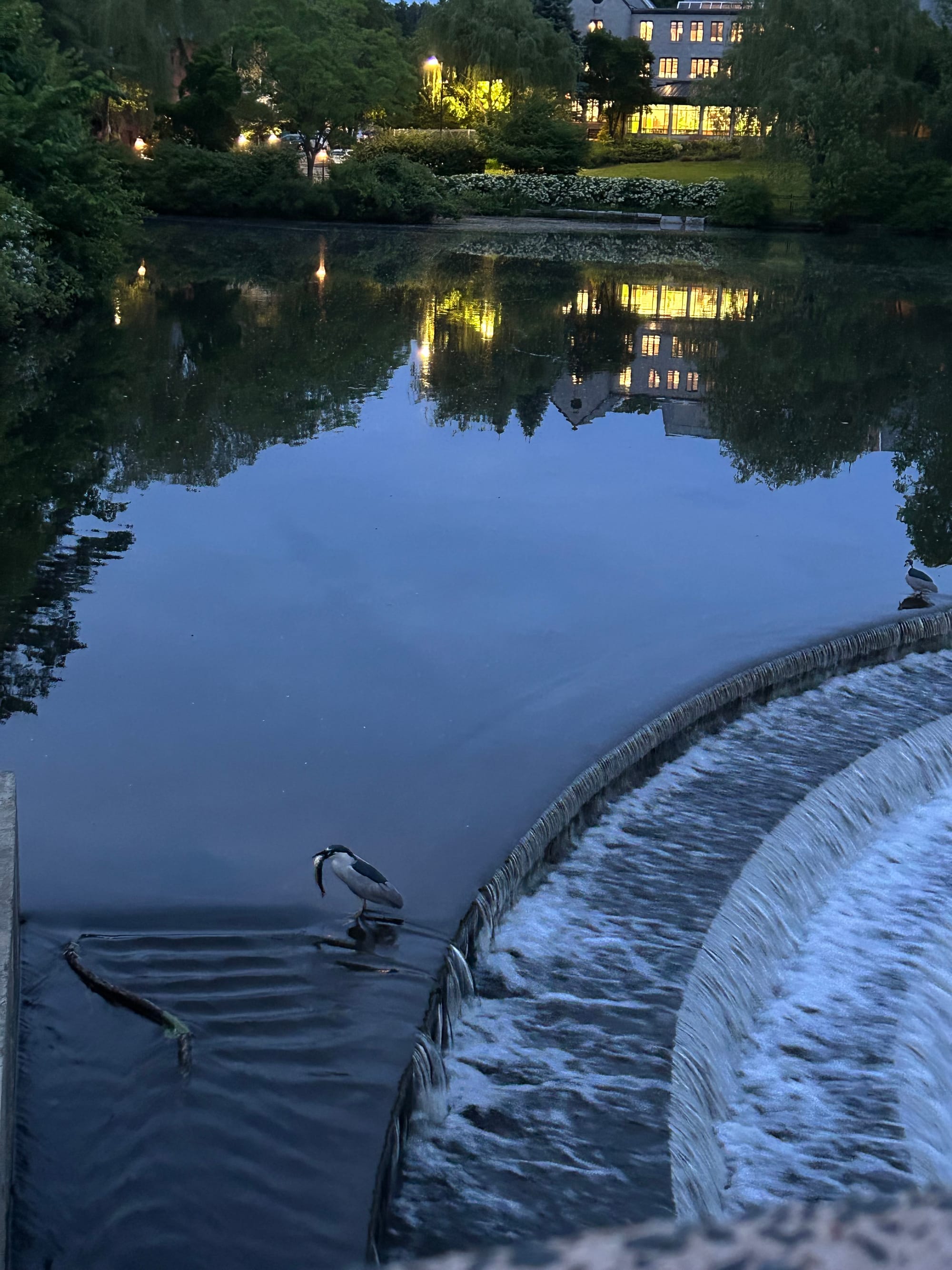
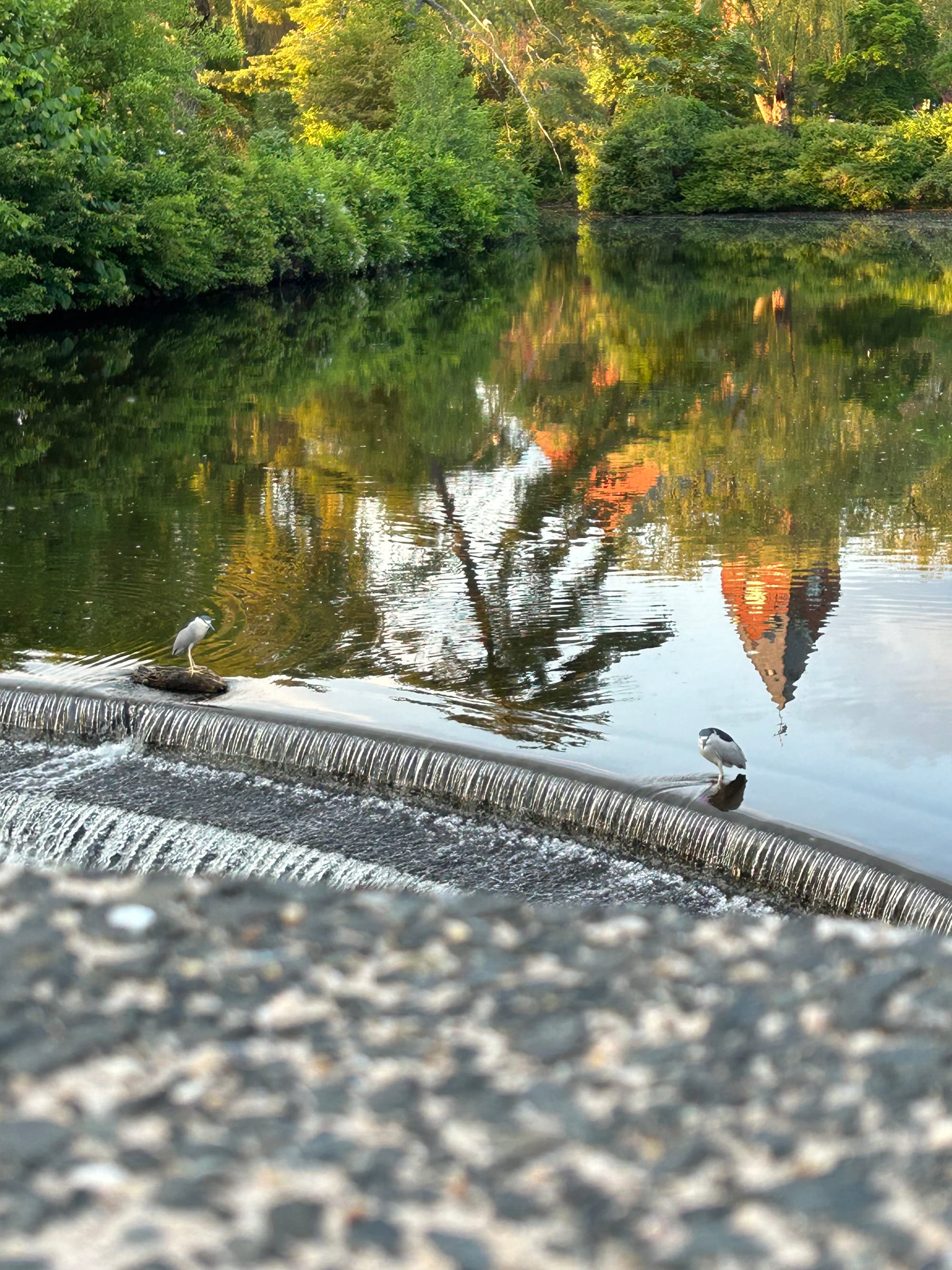
Mill Pond and its herring ladder are part of the waterways the Conservation Commission takes care of. WINCHESTER NEWS STAFF PHOTO/TARA HUGHES
Why does this commission matter?
Wedge Pond has been closed to swimming for long stretches over bacteria counts and algae blooms, and this is the board doing something about it.
“We’re putting an awful lot of time and effort into improving water quality,” continues Vreeland.
Fall Town Meeting was asked for $59,000 in Community Preservation money for an aerator to mix the water column, plus $50,000 toward Borggaard Beach. The state put $150,000 for the pond in its fiscal year 2026 budget.
Vreeland has been at this long enough to see progress.
“I’ve watched the herring come back in the spring with the migration. That didn’t happen when I first started this job,” she explained. “I see bird life I didn’t see when I first started. I see fish life that I didn’t see when I first started.”
The fish ladder at Center Falls Dam is also part of the why. The Mystic and Aberjona now carry one of the largest river herring runs in Massachusetts.
More people have become concerned about the health of Winchester’s environment, and as a result, the wildlife and the local habitats have improved.
“It’s very rewarding to see results from your efforts,” said Vreeland.
Forest Ridge
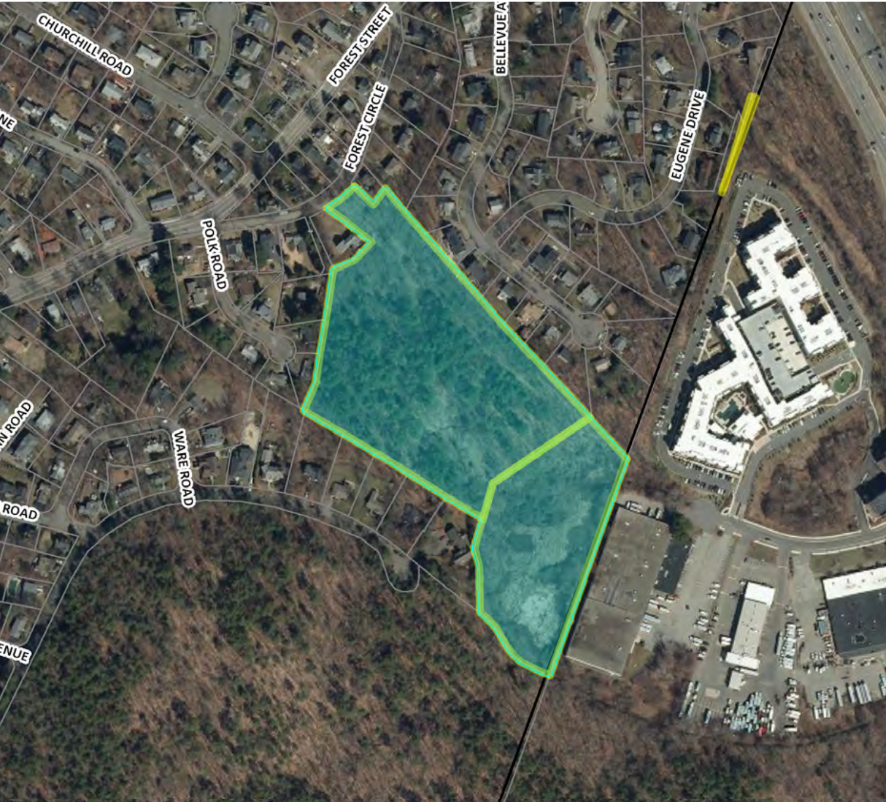
Forest Ridge is the biggest issue that the commission has faced this year. The group wants the town to buy the 13.4 acres off Forest Circle, adjacent the Middlesex Fells and running into Stoneham.
It contains a forested upland, a cat-tail marsh, a wildlife corridor to the Aberjona, and wetlands that feed the drinking water supply. Currently, the property belongs to Shannon Investment Trust and is closed to the public.
Spring Town Meeting killed the property’s purchase, by a vote of 59-105, mere weeks after voters rejected an $11.5 million override on March 21 by a slim 293 votes. The Finance Committee opposed the article, estimating the town would forgo $3-4 million in future property tax revenue.
Vreeland read the room the same way.
“I sense that Town Meeting may have been concerned about the budget more so than perhaps if it had passed,” she said.
A real issue for the town in the last couple of fiscal years has been balancing the budget.
June brought a new financing pitch: pay the debt with Community Preservation Act (CPA) revenue rather than the operating budget or another override. A $2.75 million request sits with the Community Preservation Committee.
On Beacon Hill, Rep. Michael Day secured a $250,000 earmark, and the commission has identified as much as $1.45 million in state and federal grants that they could apply for, although none of them were awarded. Word is expected in October or November.
After, a Town Meeting vote in November and a short-term bond to close in early 2027.
Olson has told residents the debt service would run 4% to 8% of the annual CPA fund. Winchester budgeted $1.6 million in surcharge revenue for FY26, which puts the yearly payment between $64,000 to $128,000, set against the roughly $1 million in requests the committee handled last fall alone.
The group’s own CPA application put the purchase price between $3-3.6 million. There is yet to be an agreement for the purchase.
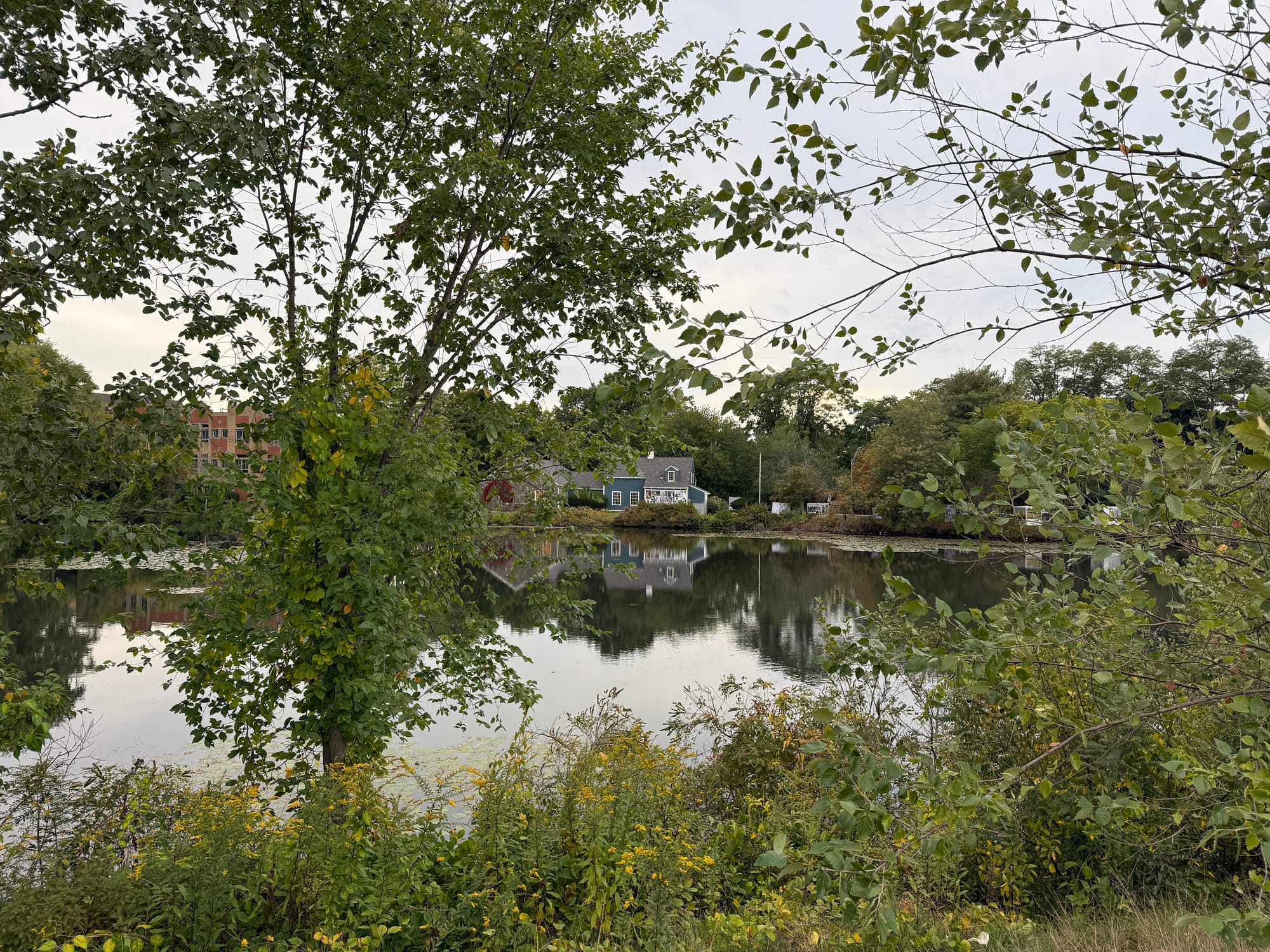
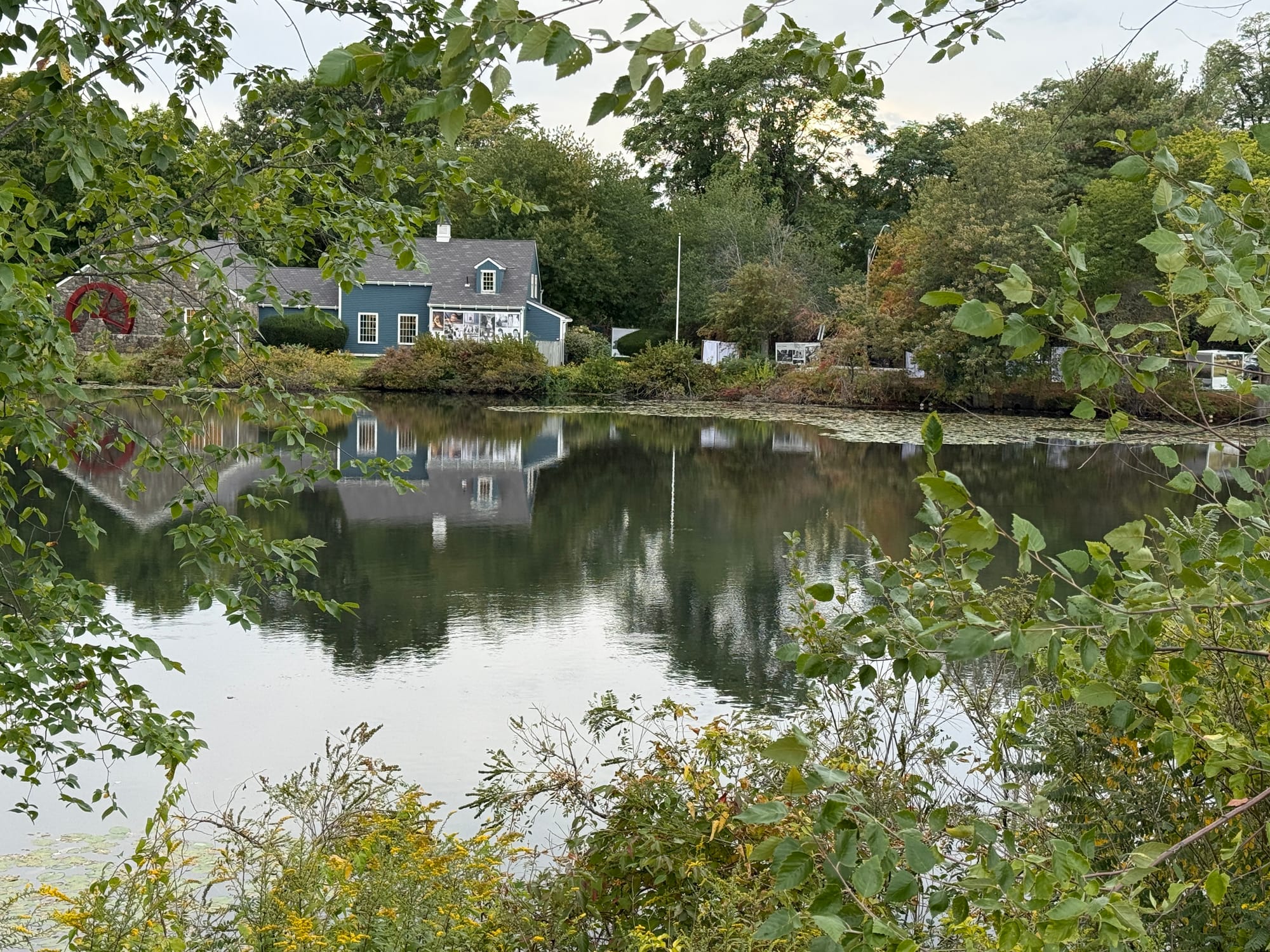
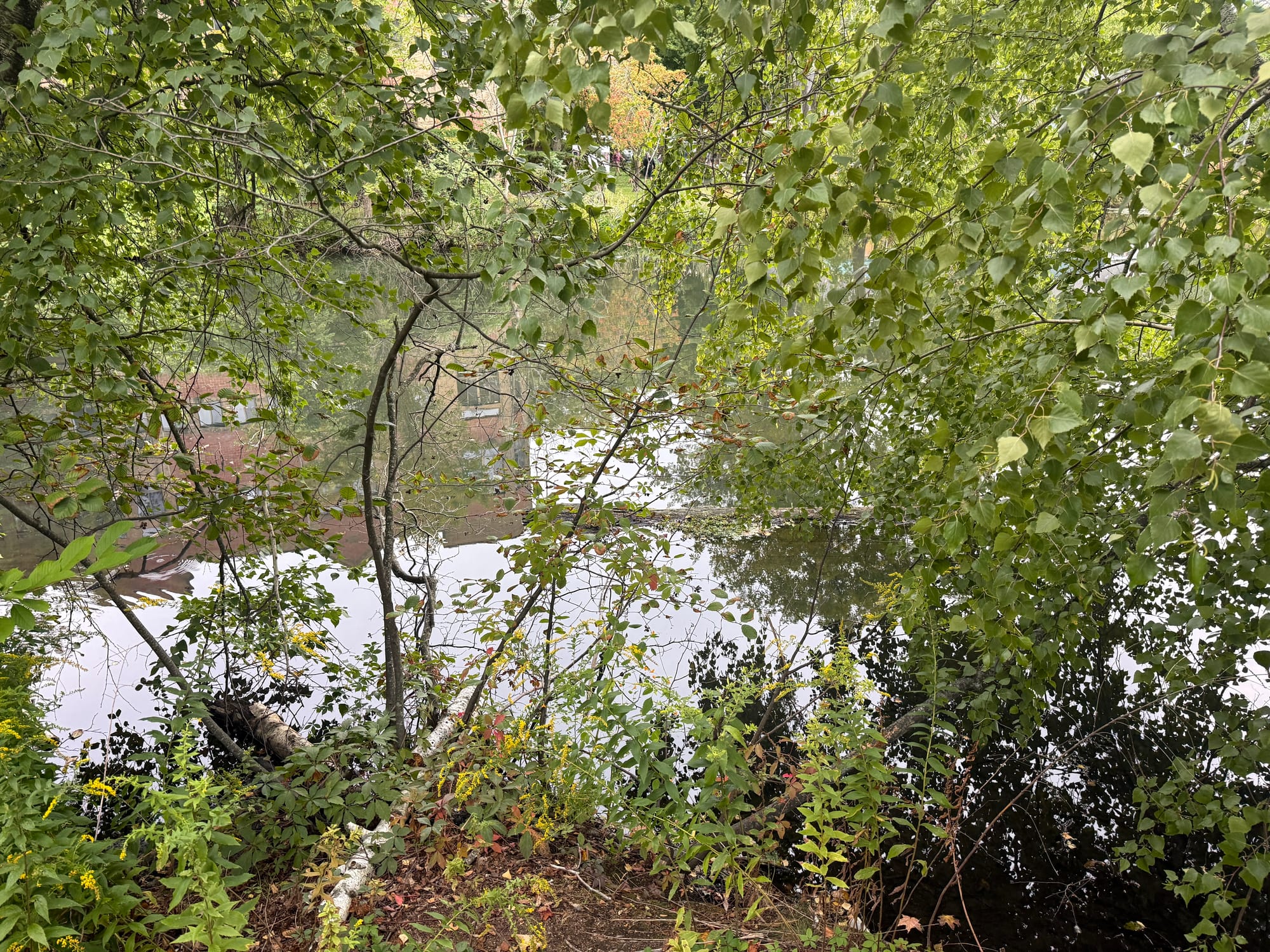
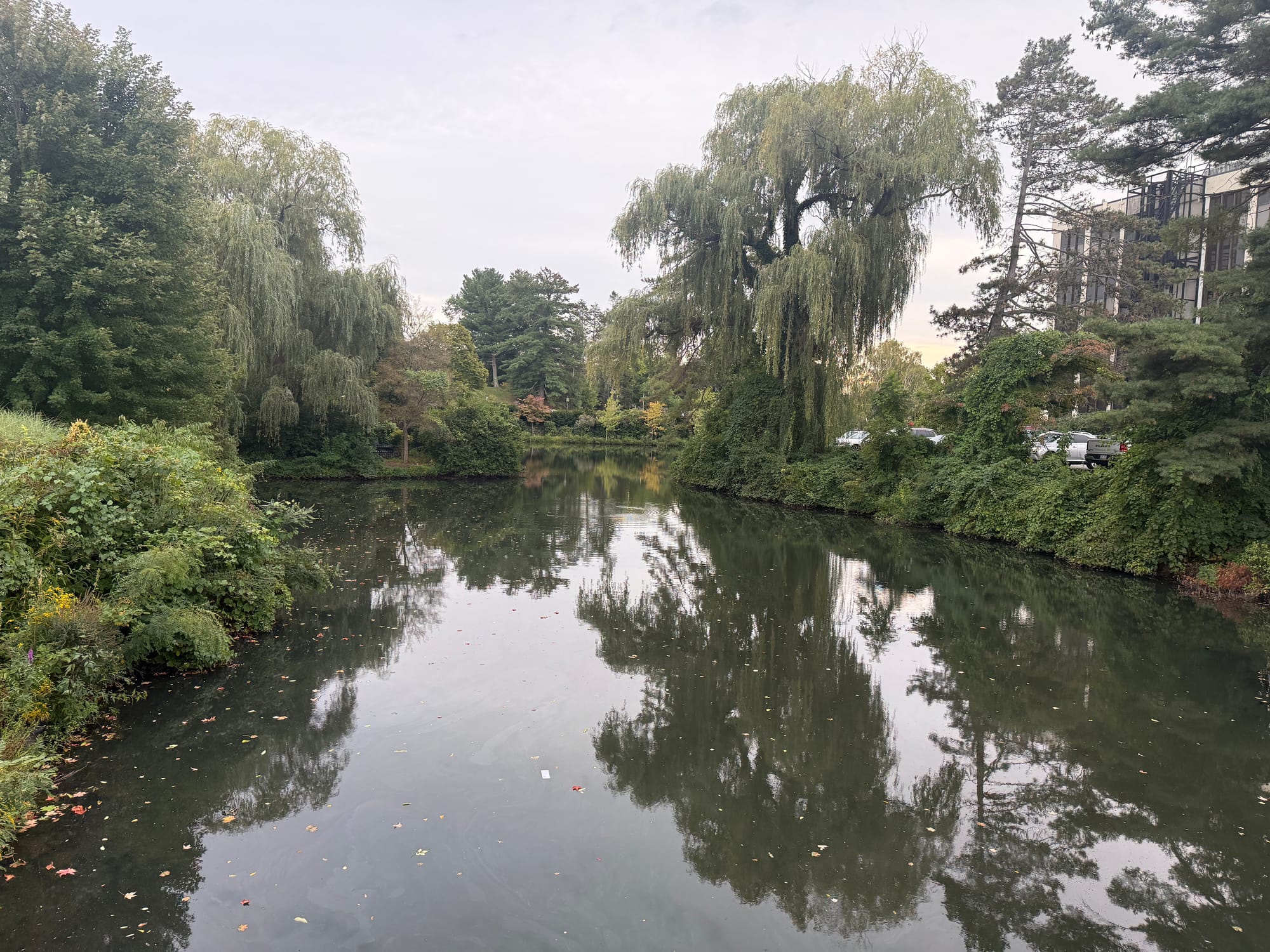
Judkins Pond and the Abjerona River are part of the waterways overseen by the Conservation Commission. WINCHESTER NEWS STAFF PHOTOS/SHUKONG OU
Some common misconceptions
The commission is not an environmental veto on any project it doesn’t like. It cannot block due to general ecological grounds, and outside its strict jurisdiction area, it has no say at all, no matter what happens there.
Nor does a denial end things. In Massachusetts, the applicants can appeal to the Department of Environmental Protection, which can issue a superseding order and override the town. The local bylaw is not affected by the order, and only where it is stricter than state law.
How to follow the commission
Agendas and minutes are posted in the Agenda Center at winchester.us/AgendaCenter/Conservation-Commission-Town-Clerks-offi-19, meetings are on WinCAM, and Chapter 13 is on eCode360.
Elaine Vreeland takes calls at 781-721-7152 or email evreeland@winchester.us and she can put you on the agenda, though walk-ins are welcome too.
“You can come in that evening and raise your hand and say, ‘I have something I’d like the commission to discuss,’ and the commission will hear it,” Vreeland said.
Xiyue Eric Han is a student at Winchester High School. He has been an intern with Winchester News since summer 2025.