
Table of Contents
Editor’s Note: Earlier this summer, we sent our intern Xiyue Eric Han out to meet public officials in Winchester and ask them what they do when it comes to town government. Here’s what he found out.
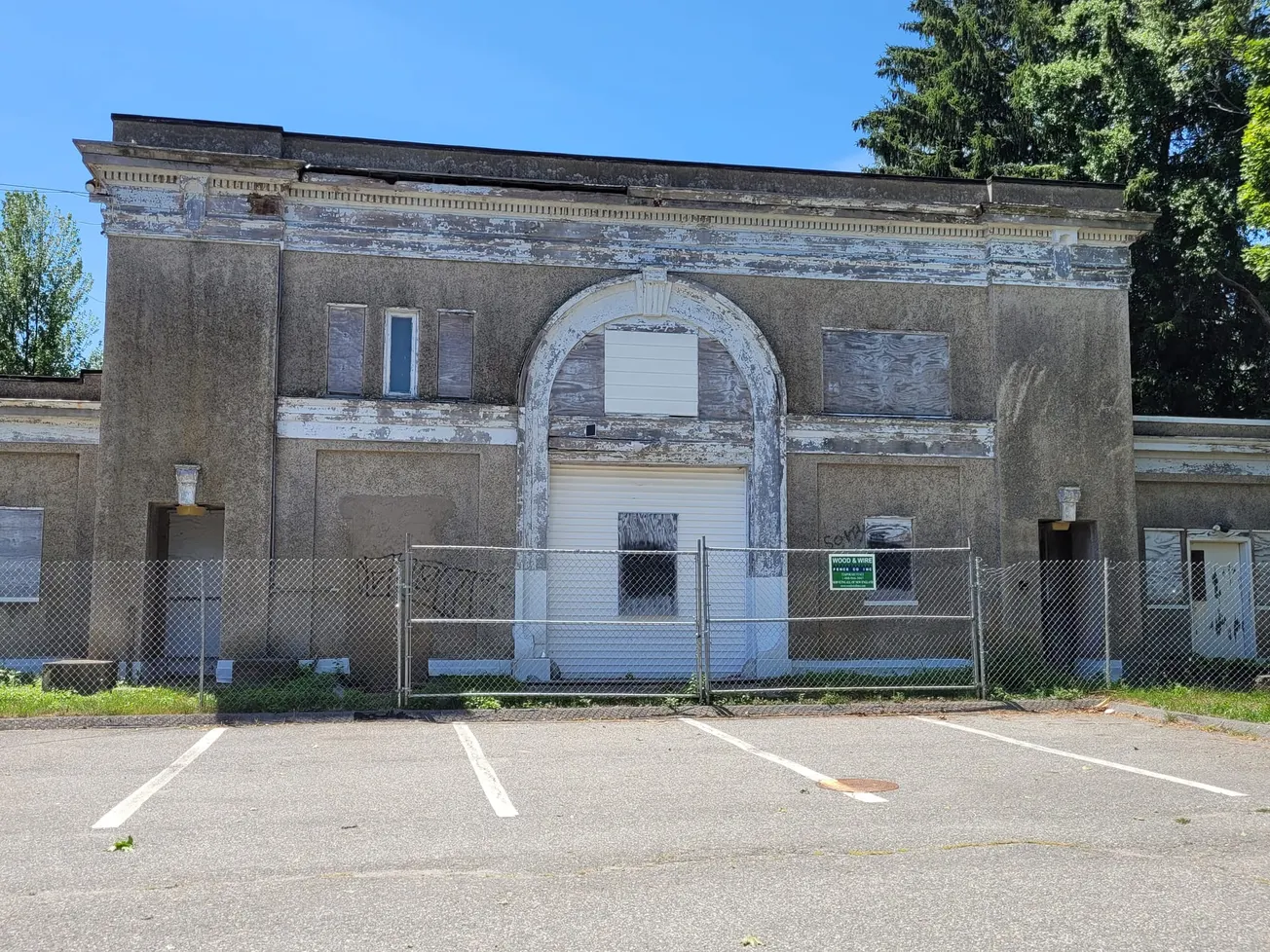
Double digit public hearings over one downtown building ended back in February with a 5-0 vote. No one was fully satisfied with the result. Later, two town boards sued the board that took it.
The fight over 10 Converse Place is the latest Planning Board controversy for Winchester residents. It is a decent representation of what the board is assumed to control and what it actually controls.
“People who follow it probably think we have more power than we actually do,” explained Jack LeMenager, who joined the board back in 2025 and has chaired it since spring.
What the board can do
The Planning Board has the authority over granting special permits in three main parts of town: the Center Business District downtown, the Main Street Mixed-Use District along North Main, and the MBTA overlay district created under Massachusetts’s zoning laws. In all other places, the power lies with the Zoning Board of Appeals (ZBA).
The other work draws less of a crowd and is far more mundane. The group drafts the zoning changes Town Meeting votes on, administers the rules for subdividing land, and advises the ZBA on a variety of cases the board itself doesn’t decide.
Currently, the board is rewriting a chunk of the zoning bylaw, which could be argued as the most consequential and yet least attended to issue the body has worked on all year.
What the board cannot do
The board doesn’t get to decide what exactly it would like to see built across town.
For applications, the question is simple: does it meet the bylaw? If it does, the board’s leverage is limited to conditions and design details. If it doesn’t, the applicant walks or comes back with something smaller.
LeMenager draws the clear line for the bylaws. Important and limiting at the same time.
“I frequently learn and for good reason,” he said, “the bylaws are there for a reason.”
Yet, the chair is blunt to say those same rules can “constrain much needed development.”
The board can often find itself wanting a project to happen while also wanting affordable units in it. But, the rules can make those things nearly impossible to coexist. That is roughly what happened on the Converse Place/33 Mount Vernon St. development this year and what the discussion around the project revolved.
One project, 10 separate hearings
The approved plan for Converse Place/Mt. Vernon Street development is a five-story mixed-used building. Inside contains 34 units on, what LeMenager calls, the most valuable parcel in the area.
Urban Spaces, the developer for the plans, first requested six stories. Residents pushed back across 10 public hearings between September and February.
Ultimately, with petitions and testimony that six floors was too big for a historical town, no was the final answer.
So the Planning Board pushed back with five, and hit the bylaw. At five stories, Urban Spaces developer Paul Ognibene said he couldn’t afford the affordable units the inclusionary housing rules required.
The board wanted to see the math, but the developer declined to open his books in public. A subcommittee reviewed the financials in private and came away, ultimately, convinced.
By February, the board approved the permit with no affordable units in the building, and a $2 million payment to the Affordable Housing Trust instead, plus profit sharing reaching up to another million dollars.
LeMenager didn’t like it.
“It pained me that we were not going to get affordable units in there, because it’s so critical,” he elaborated.
However, he acknowledged the alternative would’ve been worse: if the board held out for the full requirement at five stories, it would be possible that the developer would simply walk away and nothing would be constructed.
In April, the Affordable Housing Trust and three members of the Housing Partnership Board sued all five board members and the developer, asking a judge to annul the permit.
“We were a little blindsided by the appeal,” continued LeMenager.
Yet, the chair of the Planning Board doesn’t blame them.
“Their passion and their primary interest is affordable housing, and to have more of it,” he said. “So I respect that.”
The case was settled back in late May, after the plaintiffs negotiated directly with the developer and spent $1.685 million of the $2 million to buy three one-bedroom units inside of the building and deed-restrict them at 80% of area median income.
Although the Planning Board accepted the revised plans back in early June, nothing has broken ground yet.
Chasing the critical number
Massachusetts towns are supposed to have 10% of their housing be on Massachusetts’s Subsidized Housing Inventory. Fall below that and developers now have the ability to use Chapter 40B to override local zoning.
Winchester is close to half of that critical number at 4.89%, with 395 qualifying units out of 8,073 total units. Ten percent requires roughly 807 units.
LeMenager is pessimistic.
“I have a hard time believing that we'll ever get to 10% in this town. And that’s not a criticism of anyone,” he said. “It’s just the nature of arithmetic.”
It is a moving target, because every time a new house is built or a new apartment building constructed, the denominator of the equation shifts. Every normal market-rate unit added raises the bar.
Furthermore, in Winchester, most new construction means tear downs and subdivided lots producing houses that sell for a million and a half or more. So little contributes to that 10% number.
In addition, the chair believes the thresholds in the bylaw work against the town. As he describes, a five-unit building owes nothing, yet a six unit one owes one affordable unit. Fifteen equates to just one while 16 is two. Developers can read.
“What happens is that the developers, knowing the bylaw, will come in with 34, 24, 14, just to stay under that threshold,” continued LeMenager.
Two previous Main Street projects fit that model: 972 Main St., approved in October 2025 is 13 units with one affordable. A development at 910 Main St. is the exact same.
Rental housing built under Chapter 40B moves the number faster, because every unit counts toward the total and not just the restricted ones.
For example, the Waterfield Commons by the Winchester Center commuter rail station has 40 affordable units out of a total of 56. A 64-unit building has been approved at Washington and Swanton streets. Sanctuary West and Sanctuary North, already open, count in full.
“But there’s only so many of those that you can build in a town that has basically no open land,” LeMenager clarified.
Rewriting the rules
The bylaw in force today dates back to 2010 and has been amended bit-by-bit since, leaving contradictions in the text and three different versions of site plan review, depending on which district a property sits in.
This spring the board hired the firm CommunityScale, with attorney Jonathan Silverstein, to make some repairs.
The proposal narrows site plan review to larger commercial and higher-traffic projects, replaces a vague trigger about grade changes with a measurable standard, and folds two hearings into one for projects that need both a special permit and site plan review. Hearings have run through the summer, and the package goes to the Fall Town Meeting.
“This is just our first stab at it,” LeMenager explained. “More of a first pass rather than a fix.”
Whoever finishes the job, it probably won’t be him. Keri Layton, at four years, is the board’s most senior member. The previous chair, Diab Jerius, served three terms and chose not to run again.
Members now rotate the chairmanship rather than hold it two years running, which LeMenager puts down to the workload. He’s fairly sure the Converse Place building won’t be done by the time his term is up.
So the board leans on the people who came before it. Jerius still shows up to remind members what they promised residents when the board wrote the North Main Street bylaw.
“What we do today will outlive us,” LeMenager said. “The decisions that we make, we may never live to see their full implementation.”
Xiyue Eric Han is a student at Winchester High School. He has been an intern with Winchester News since summer 2025.