Table of Contents
Winchester officials spent the night trying to close a fiscal year 2027 budget still running millions short while laying the groundwork for a more disciplined, multi-year budgeting process some argue the town has lacked for years.
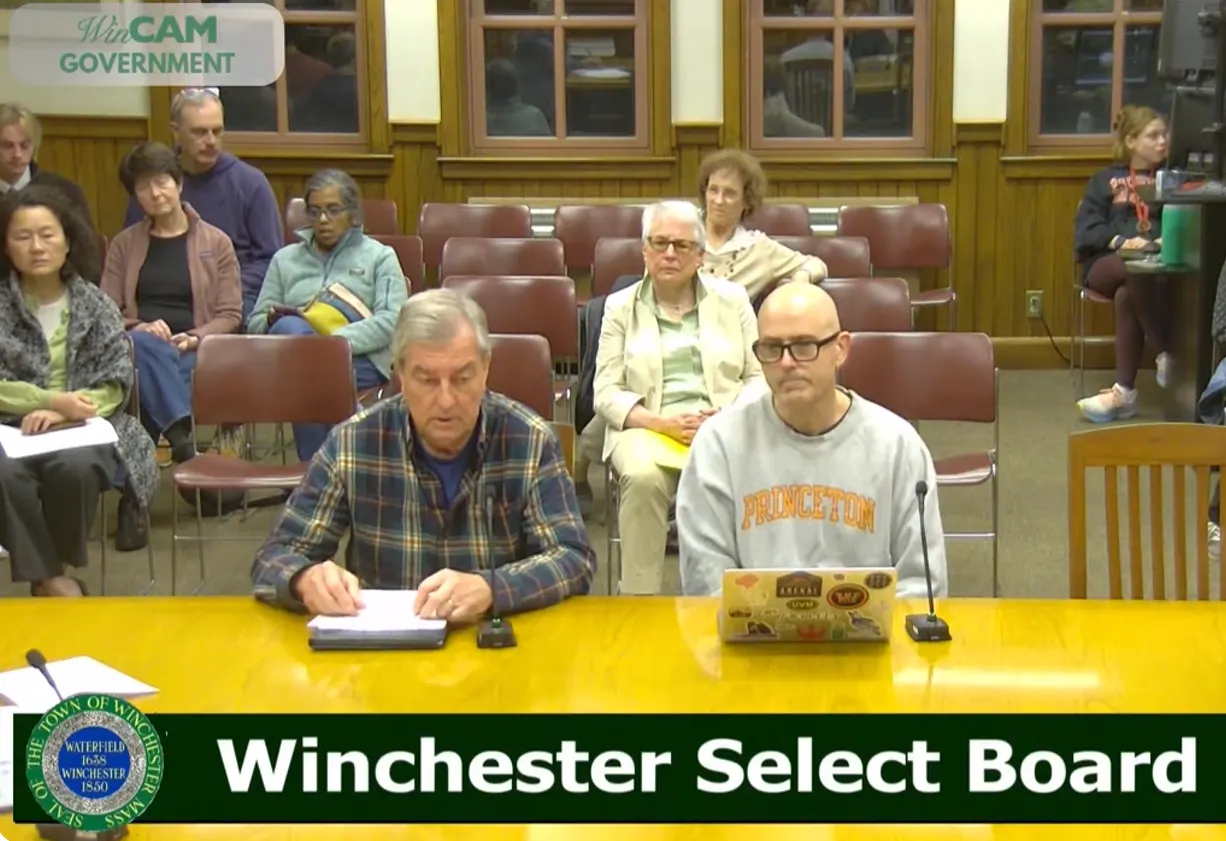
The April 13 Select Board meeting mixed immediate deadline pressure — Town Meeting opens April 27 — with a memo outlining how peer communities such as Arlington and Andover structure their finances.
In between, Town Manager Chris Senior reported a hiring freeze imposed after the failed $11.5 million override in March is now leaving specific Department of Public Works and fire positions unfilled, even as police dispatcher vacancies were treated as too critical to delay.
The 3.8% path
Finance Committee Chair Derek Ross, arriving from his own committee’s meeting, said the “lowest path” currently being modeled would use about $3 million in free cash to close a gap pegged at roughly $5.1 million.
That path, he said, requires holding school operating budget growth to 3.8% over fiscal 2026 — the figure sent by the Superintendent and School Committee on February 12 to the Town Manager and included in the FY27 Town Manager Budget — rather than the 5% the School Committee most recently approved.
Under the working math, landing at 3.8% leans on roughly $1 million to $1.2 million in new revenue from interest, fees and transfer station activity; about $400,000 in health insurance savings tied to school-side staffing cuts; about $300,000 in additional municipal reductions; and the $3 million free cash draw.
Select Board member Paras Bhayani said the 1.2-percentage-point gap between a 5% and 3.8% school budget amounts to about $900,000 — a figure officials at the table said now translates to roughly eight to 10 additional school positions on top of the 33 to 36 reductions already needed to land at 5%.
Classroom consequences
For Select Board Chair Anthea Brady, the conversation has shifted from percentages to classrooms.
“Where the 30 FTE is coming from now is things like the two-and-a-half math specialist. It’s kindergarten aides. It’s things that actually have a pretty big impact,” Brady said, warning that cuts at that depth are “really hard to come back from in the future … because you’re compounding issues with actual education.”
Ross, asked whether there was any appetite to draw more heavily on reserves, was blunt.
“You start getting into $6, $7 million in terms of reducing free cash two years in a row,” Ross said. “So then in 2028 … you’re quickly at 10. We’re at $21 million. You’re quickly at that floor.”
Bhayani, who has been pushing for a more structured conversation among the Select Board, Finance Committee and School Committee before the warrant reaches the floor, said the board risks being boxed in at Town Meeting if the three bodies cannot align in advance.
The School Committee, he said, has signaled it is prepared to file a floor amendment if no agreement is reached.
“I wouldn’t feel comfortable even making a decision about something on the yellow sheets if there’s not an agreement,” Bhayani said. “School Committee is going to have somebody ready to make an amendment … we’re going to be doing that on the floor of Town Meeting, and I would not feel at that moment like I had sufficient information.”
Hiring freeze takes shape
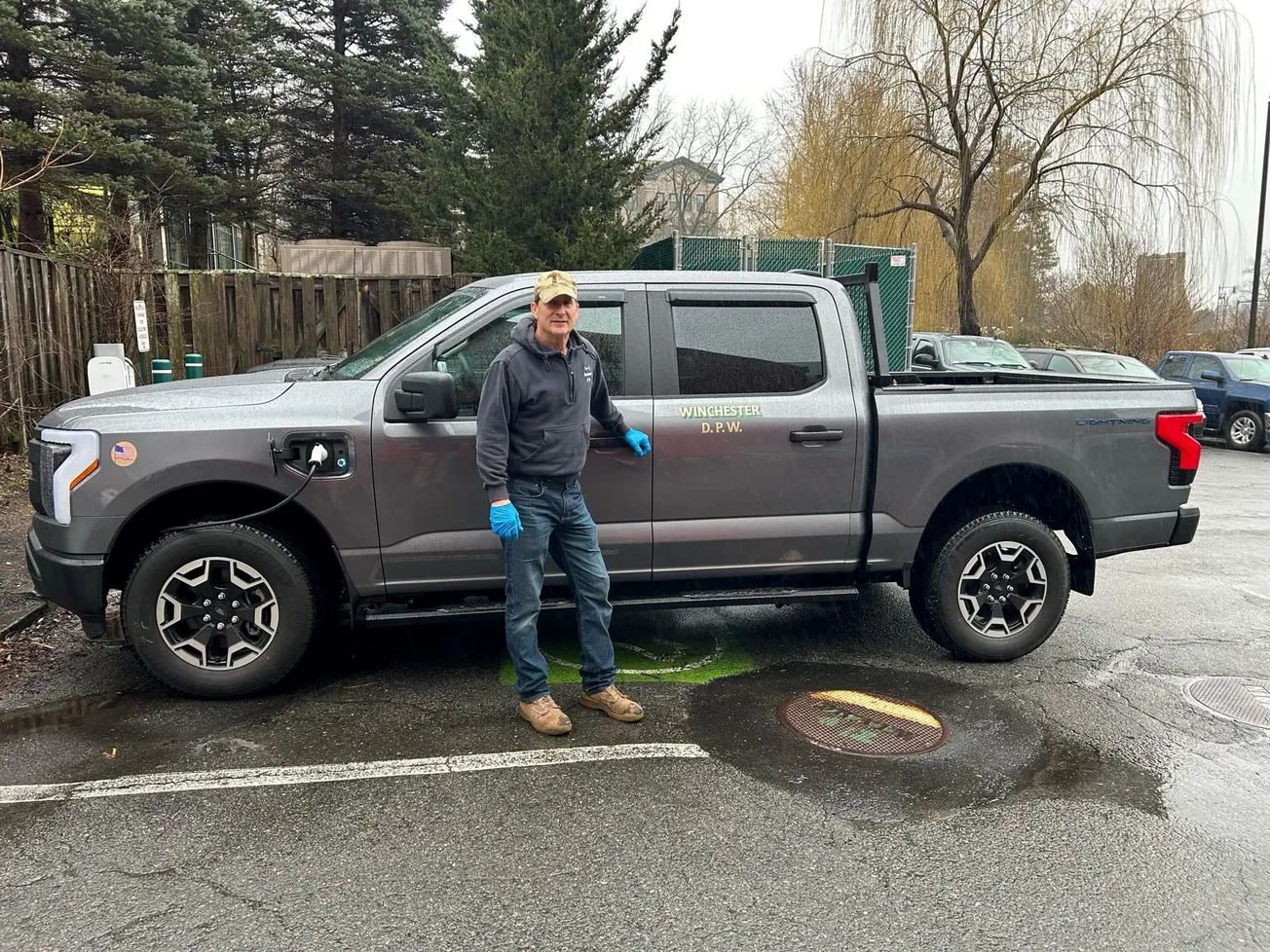
The operational fallout from the freeze is already visible in the town manager’s report. Four DPW positions are on hold — building maintenance coordinator, maintenance skilled laborer, motor equipment specialist and special equipment operator — along with all summer seasonal DPW hires. Three firefighter positions are also frozen.
Bhayani tallied it aloud: “Seven plus summer positions at DPW, all on hold right now, and growing.”
Dispatch was treated differently. The board waived the 15-day waiting period to bring on two full-time dispatchers, Nicholas Ciaccio and Michael Connors, and a part-time dispatcher, Joseph Falso. Senior said the distinction was straightforward.
“These are critical public safety functions,” Senior said. “Dispatch operators, 24/7, so we can’t miss a call.”
Looking beyond the crisis
Late in the meeting, the board turned to a memo from Bhayani and member Michelle Prior examining how Arlington and Andover build their budgets.
Both towns rely on a common financial model with jointly adopted annual growth targets for municipal and school departments — Arlington targets 3.25% municipal growth and 4% school growth; Andover targets 2.75% and 3.75%, according to the memo — and convene their select, school and finance bodies in recurring joint meetings rather than a single winter summit.
The memo describes the effort as “purely informational,” not adopted Winchester policy.
“What other towns have done where their school rate is below 4% and the municipal rate is 3 to 3 1/2% — how do they get there?” Prior asked. “What levers do they use? What kind of diligent planning and circling back and constant communication and update, what kind of structure and discipline and rigor do they put to that process?”
Bhayani said Arlington has the model process most often cited, and noted Andover’s current town manager served as Arlington’s deputy before moving east.
Both communities, the memo notes, use variations of a “tri-board” process that runs throughout the year, culminating in finance committee recommendations before Town Meeting.
No votes were taken on the long-range proposals. The board’s more immediate test comes when the Finance Committee and School Committee meet at the high school and Select Board members are hoping to attend.
Ross said the schools need a few more days before returning with sharper numbers, and cautioned there is little room left to push the free cash draw higher.
Will Dowd is a Massachusetts journalist who covers municipal government and community life for Winchester News. He runs The Marblehead Independent, a reader-funded digital newsroom.