Table of Contents
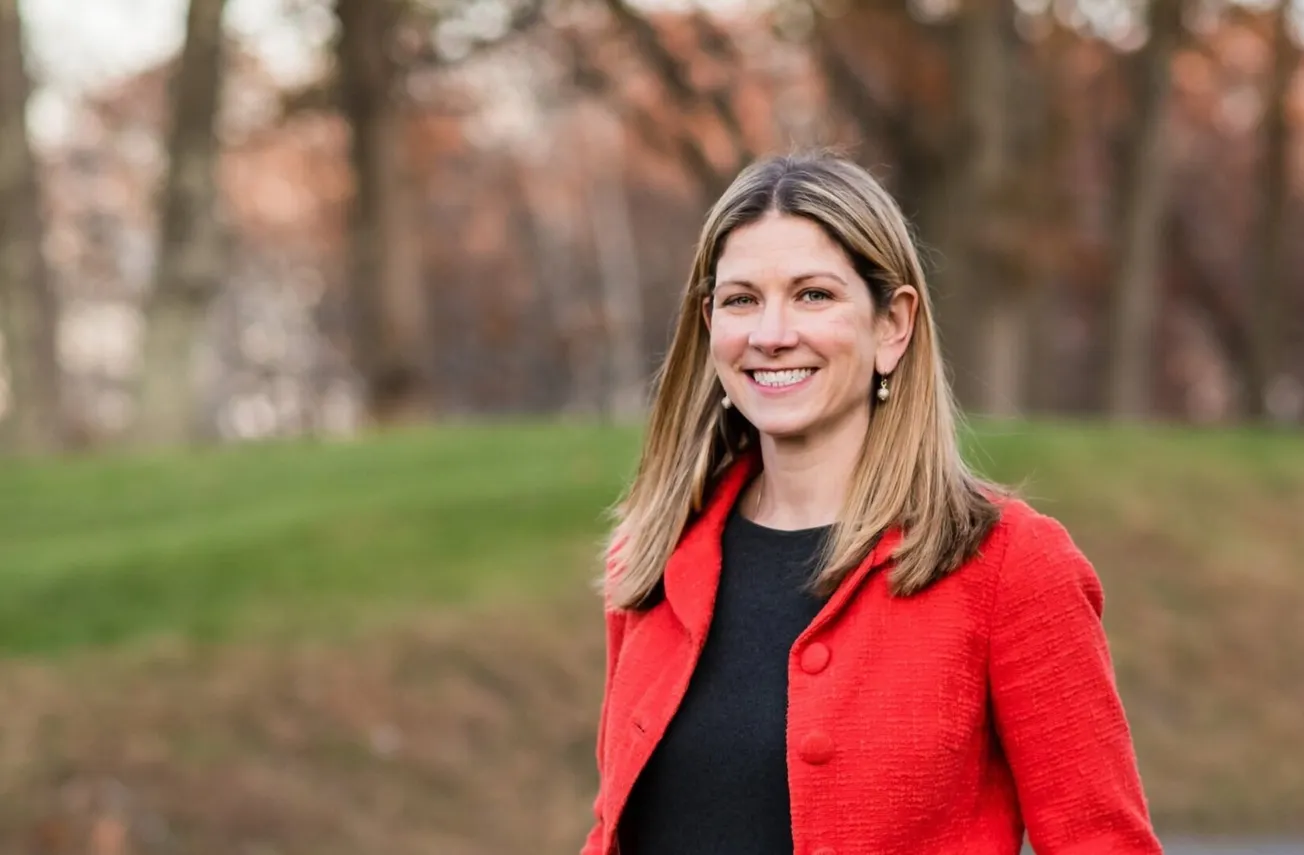
State Rep. Kate Lipper-Garabedian was sworn into the Massachusetts House on March 25, 2020, in what she still calls a “dystopian” ceremony. The State House was distanced, family was barred and she took the oath with a 1-year-old waiting at home and a 6-year-old watching through the broadcast.
Six years later, the legislative victory she returns to first is the state’s decision to make its early childhood and child care grant program permanent, a fight she helped lead when the federal pandemic money began drying up. The work and the life have always been the same argument.
She is now running for the open 5th Middlesex Senate seat being vacated by Jason Lewis, and the contest is a real test of which kind of Democratic politics still wins in this stretch of eastern Massachusetts.
The district covers Malden, Melrose, Reading, Stoneham, Wakefield and parts of Winchester. Malden carries the largest share of the district’s registered voters, a fact that has shaped the early field. Two Malden city councilors, Ryan O’Malley and Carey McDonald, are also running.
Lipper-Garabedian, who represents Melrose, half of Wakefield and a slice of Malden in the House, enters with the kind of résumé local Democrats tend to call serious.
The résumé is unusually policy-heavy, and Lipper-Garabedian frames it not as credential accumulation but as a through-line.
“I think if you look at my career and also just my own personal experience, I’ve really been focused on public service throughout my life,” she said in explaining why she entered the race.
After college she taught seventh-grade English and reading through Teach For America at Walden Middle School in Atlanta’s Sweet Auburn district, two blocks from Ebenezer Baptist Church.
She did her first year of law school at Emory, transferred to Harvard and cross-registered at the schools of education and business because she had gone to law school partly for the classrooms she had left behind.
She clerked for Judge Norman Stahl on the U.S. Court of Appeals for the First Circuit, later served as chief legal counsel to the Massachusetts secretary of education working on the Student Opportunity Act, and served on the Melrose City Council before her House special election.
She now chairs the House Committee on Ethics.
A career threaded through public education
When she describes the job, though, she sounds less like a policy lawyer than a retail politician. She approves nearly every response her office sends to constituent emails, writes a monthly newsletter and holds virtual office hours.
It was at one of those office hours, during the pandemic, that a Melrose mother told her about a 22-year-old daughter with an Individualized Education Program who had been learning, before the shutdowns, to interview for a job and ride the Orange Line into Boston. The services had stopped.
Lipper-Garabedian took the story to the House Committee on Ways and Means. A budget bill that year expanded transition services for older students aging out during the pandemic and put $10 million behind it.
She tells stories about her work in small, specific scenes. She is not a sweeping orator. She speaks in qualified, lawyerly cadences and corrects herself mid-sentence, the way the daughter of two newspaper reporters might.
Asked whether she sees progressive and pragmatic legislators as opposed to each other, she offered an answer that captures how she thinks about power itself.
“I don’t think there’s a difference. I think those can, they can complement each other, right?” she said. “Part of being a legislator, as opposed to an executive branch official, is that you are one of a body, and so each one of us can bring our own idea, ideology informed by our background, our experience to the table, but there has to be, I think, to be effective a level of practicality.”
That practicality requires getting to 50% plus one, and it requires respecting the legitimacy of institutions themselves.
“You can see the pendulum swing if a decision-making body gets out too far ahead of where majority sentiment might be,” she said.
Her bill portfolio reflects that calibration. She filed and pushed the legislation, passed last session, that allows candidates for state and local office in Massachusetts to use campaign funds for child care expenses. The fight, she said, hinged on a fundamental absurdity.
“I did play in a golf tournament for charity, and I could spend funds to go out and have 18 holes of golf. One of my male colleagues could rent a tuxedo for a gala using campaign funds,” she said. “But if I had a fundraiser for myself and I needed to pay a childcare provider, which I’ve had to do, I had to use my personal funds.”
The bill expanded this year to cover all caregiving costs, not just child care.
She is also the House lead on the Location Shield Act, a digital privacy measure limiting how data brokers can sell mobile location data.
She frames it as a response to the post-Dobbs landscape, where anti-abortion organizations have used commercial data to track people coming to Massachusetts for care.
The bills and the people behind them
Her constituent-service identity shapes how she frames the entire job. She described her legislative role not as crusader but as something closer to a conduit between people and government.
“I get an opportunity where you share with me something you’re struggling with. I can honor that by considering where government could maybe assist you,” she said.
That approach means she also hears constantly from people dealing with immediate, unsolved problems. One thing that struck her, she said, is how few of the legislators are parents.
“The last time I checked, of the 200 state reps and senators, I believe fewer than 20 of us are moms with minor children,” she said. “So I think having a mom at the table to be bringing that diverse perspective is critical to what we prioritize.”
She was elected to the House at a moment of acute strain on elected office, and the strain has not eased. Pressed for the least appealing part of the job, she did not name fundraising or committee tedium. She named the assassination, last year, of a House Speaker Emerita Melissa Hortman and her husband, Mark, in their own home.
“We are at a time where it can feel unsafe to be an elected official when you consider you know that a speaker of a House of Representatives was assassinated in her home last year with her husband,” she said.
She mentioned quiet conversations with police chiefs and alerts about specific threats at the State House. Yet, she also said, almost in the same breath, that the job remains a dream — that she still picks up the phone and calls constituents who have sent her nasty emails.
“When you actually hear that, you know, you connect with somebody on a more human level, it can make a real difference, absolutely,” she added.
She is also frank about the limits of what state legislators owe in transparency. Asked about updating Massachusetts open meeting and public records laws, which exempt the Legislature in ways most other states do not, she acknowledged the tension.
As records access officer at the Executive Office of Education, she processed requests herself, working through email threads and statutory exemptions to protect constituents whose private information appeared in agency files.
“The more the government can be open, accessible and transparent to people, generally that's for the best,” she said. “However, having been a records access officer with firsthand experience of the amount of work that can be involved in receiving records requests with regular frequency, I’m mindful of what that will look like in practice.”
CORRECTION: This story has been updated to correct the amount included in a budget bill expanding transition services for older students with disabilities aging out during the pandemic. The amount was $10 million, not $2 million.
Will Dowd is a Massachusetts journalist who covers municipal government and community life for Winchester News. He runs The Marblehead Independent, a reader-funded digital newsroom.