Table of Contents
Three months after Winchester voters rejected an $11.5 million override, the people who logged into a Zoom session on June 23 did not come to re-litigate the result. They came to tell the Select Board what they got wrong on the way to a 293-vote loss.
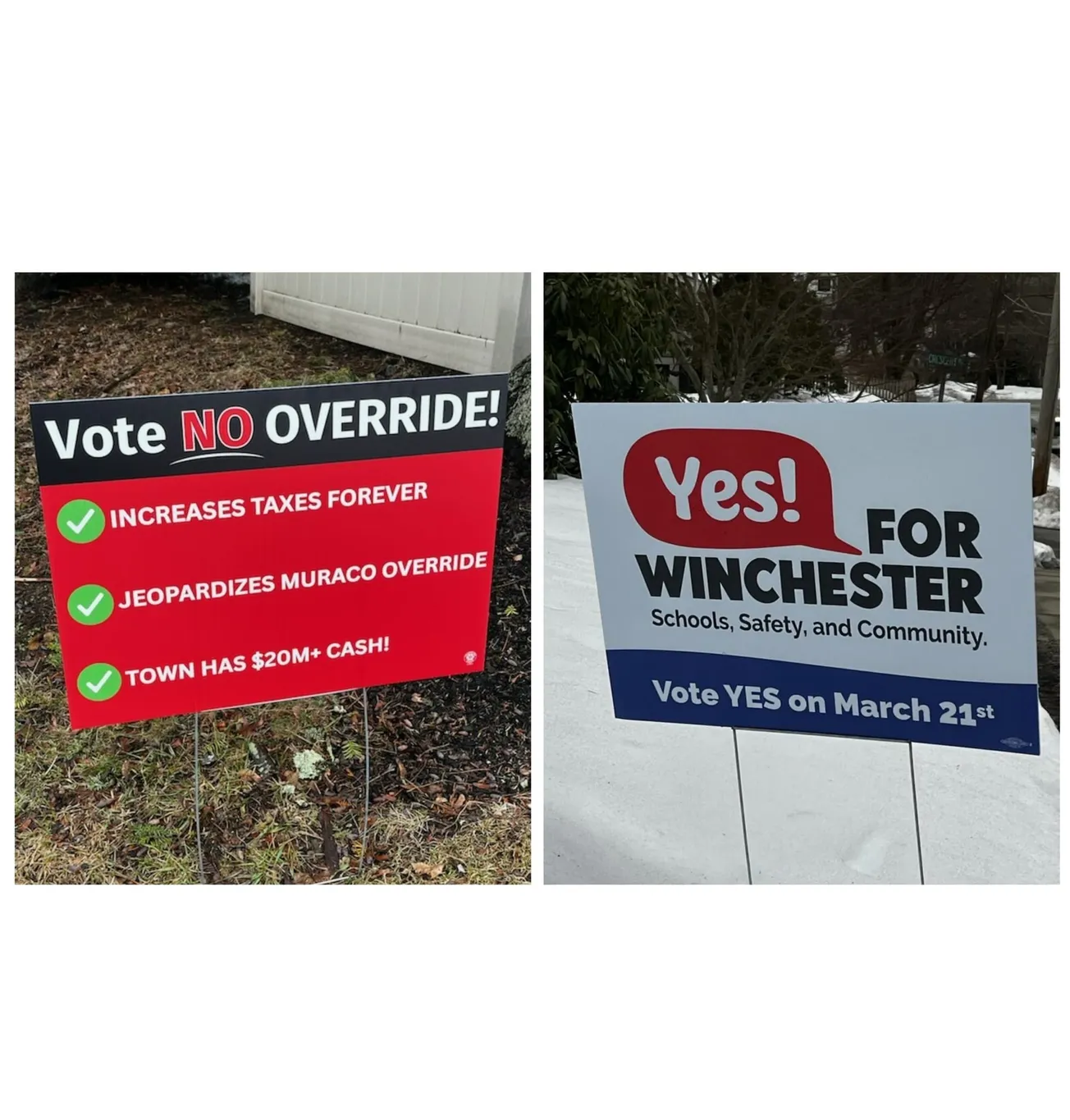
The online focus group, moderated by board member Michelle Prior with member Michael Bettencourt and Select Board Chair Anthea Brady, followed in-person listening sessions and a town survey on the March 21 vote, which failed 2,558-2,265.
The measure would have raised $9 million for town and school operations and $2.5 million for capital stabilization, money officials said was meant to help close a roughly $5 million structural deficit.
The complaint speakers returned to most was not the price. It was the absence of a trusted place to check what they were being told.
Pamela Cort said residents needed somewhere to separate fact from “basic untruths” and suggested a “FAQs” or “facts and myths” page so voters could verify claims for themselves. Confusion, she and others said, bred mistrust.
Several speakers said the town sold what passing the override would buy, but never spelled out what failing it would cost. One resident said neighbors were being surprised after the vote by cuts and cancellations they never saw coming.
Cort said voters could not tell which school jobs were being eliminated because of enrollment and which were tied to the override.
Affordability ran underneath much of it. One speaker said many no votes were not anti-town, but came from people watching out for their own families.
Nick Tracy, speaking for himself and not as chair of the Council on Aging, put numbers to the squeeze: a median household income near $109,000 for residents over 65 against about $250,000 for those under 64, average property taxes around $18,000 and an override that would have added roughly $1,000 more.
Prior laid out the math the board is working against. Property tax revenue can rise 2.5% a year, local receipts roughly 3% to 4% and state aid about 3%, she said, while several costs climb faster.
Health insurance is growing 14% on a $14 million budget — close to $2 million. Pension costs are rising 7% and salaries 3% to 4%.
Trust in the schools surfaced repeatedly. Tracy said parents and teachers at the earlier session told officials the School Committee “lacks transparency,” and several speakers urged a listening session focused on the schools alone.
Others said a chunk of no voters simply did not believe cuts were necessary. They expected the town to run leaner and find waste; one suggested an inspector general or independent audit to chase it.
The board’s open question — one ballot item or two — drew the sharpest split.
Roger McPeek said Winchester backs projects when voters know exactly what they are buying and suggested breaking the request apart, even “half of the loaf is better than none of the loaf.”
A grant writer pushed the other way, warning against “splitting the grant” by loading in items, since any single disliked piece can sink the whole thing.
Several said voters cared less about the difference between an operating override and a debt exclusion than about what the money would actually do.
There was no tidy agreement. Speakers wanted more information and warned that more detail hands opponents more to attack. They wanted transparency and conceded that most voters never open a budget book. They wanted the town to explain consequences without sounding alarmist.
Some said the campaign only ever reached people already voting yes.
One called it an “echo chamber” and pushed the town toward Facebook, Town Day, the transfer station and the library. The grant writer said she could join only because the meeting was remote; she was still at work.
One resident offered the night’s smallest ask: a survey that just asks whether you voted, and whether you want someone to call.
Will Dowd is a Massachusetts journalist who covers municipal government and community life for Winchester News. He is also the founder and editor of The Marblehead Independent, a reader-funded digital newsroom.