
Table of Contents
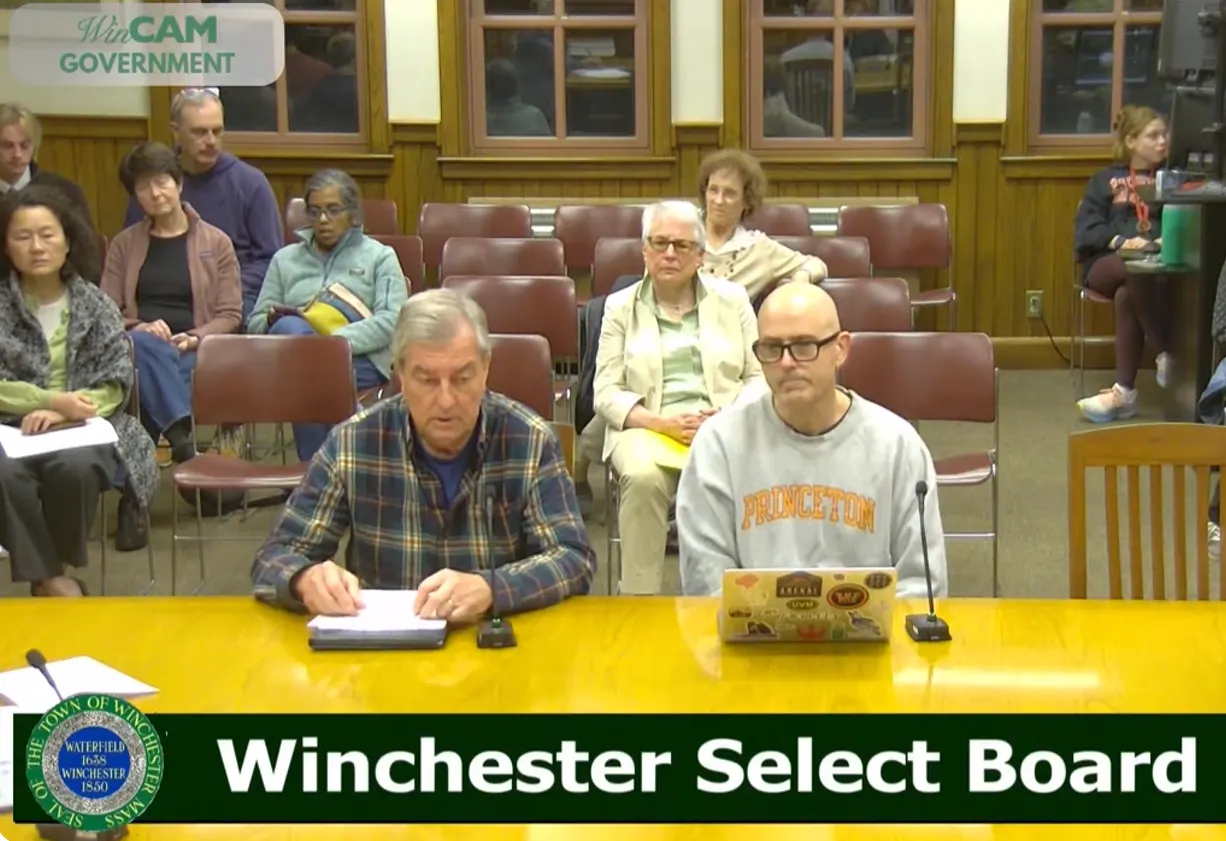
The Winchester Select Board’s June 29 meeting was supposed to run two and a half hours, but nearly four hours in, the board turned to its last item: how to answer an Open Meeting Law (OML) complaint filed against two of its own members by a third.
On June 3, Select Board member Michael Bettencourt filed an Open Meeting Law complaint against two of the other board members, copied to the Massachusetts Attorney General’s Office. That complaint led to an 18-page response by Vice Chair William McGonigle that lays bare a deep division between the two men who are both volunteers on the town's highest board.
At the crux of the matter is Bettencourt’s position on two housing boards, and the timing of the Select Board’s recent removal of him in favor of McGonigle.
Winchester News emailed Select Board Chair Anthea Brady and McGonigle four written questions July 29 about the response, which was written on town letterhead. Neither answered the questions, though McGonigle said the board might issue a joint statement.
Winchester News has not received one.
Bettencourt said any joint statement would have to come out of a public meeting when he discussed the dispute with Winchester News on Aug. 2. No public meeting had been held on the matter as of Aug. 10.
Select Board schism?
Bettencourt had been removed weeks earlier from two town committees — the Affordable Housing Trust (AHT), which funds affordable housing, and the Housing Partnership Board (HPB), which advises the town on housing policy. In the complaint, he accused Brady and McGonigle of timing that removal to change how those boards would handle a lawsuit.
McGonigle’s Response didn’t deny it. It confirmed it, in a sentence public bodies rarely put in writing: “Mr. Bettencourt is correct: the very reason he was replaced on the AHT/HPB, and the reason that replacement was accelerated, was to impact the deliberations of the AHT and HPB,” McGonigle wrote.
Brady and McGonigle were “concerned that discussions may be had or votes taken where the Select Board’s position was misrepresented or Town Counsel’s advice ignored (or refuted),” McGonigle wrote.
McGonigle’s letter spends its first five pages on Bettencourt himself, under the heading “Mr. Bettencourt’s History of Concerning Behavior.” It reaches well past the housing dispute, gathering complaints from other town officials and episodes unrelated to the boards into what it calls “a track record of misrepresenting facts and positions.” Only then does it turn to his conduct at the housing boards in April, and it lands on the board’s “justifiable concern” that he would act “without good faith.”
Bettencourt, McGonigle argues in his letter, had sat through two closed briefings from town counsel and then helped drive both housing boards into a lawsuit the Select Board had told them it did not support — conduct McGonigle calls that of an “unreliable representative.”
The suit, filed April 17 in Middlesex Superior Court by the AHT and three partnership board members, asked a judge to annul the Planning Board’s approval of a 34-unit building at 33 Mount Vernon St., arguing the board let the developer pay $2 million instead of building five affordable units without the review the towns own rules require.
Bettencourt said in the Aug. 2 interview that he was doing the job the town gave him.
“I’m not a rogue member of these committees,” he said. “I represent them.”
The building downtown
Bettencourt helped found the AHT in 2019 and spent 11 years on the Housing Partnership Board — the two bodies the Select Board removed him from.
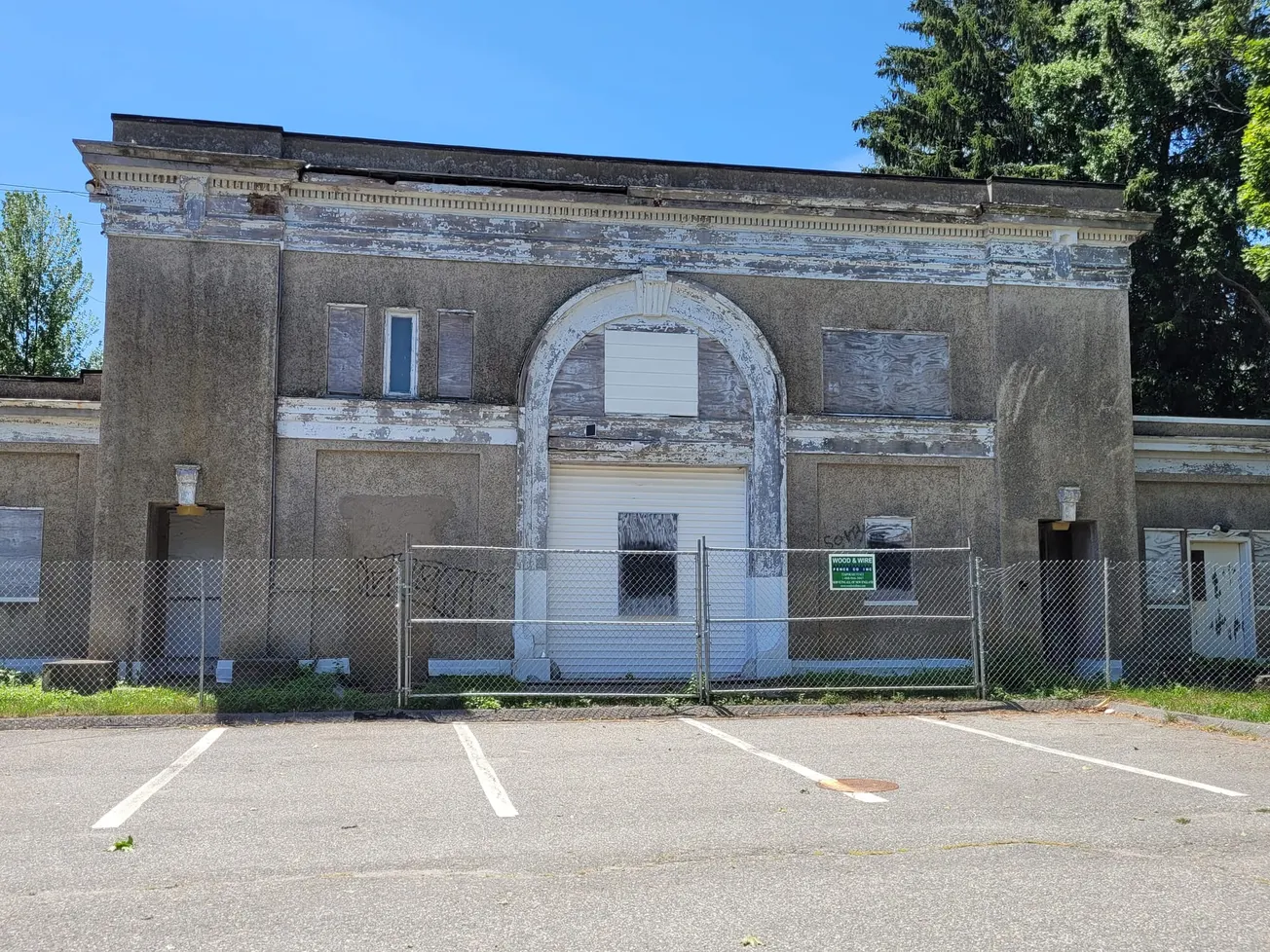
What cost Bettencourt his seats traces back to the 10 Converse Place/33 Mount Vernon St. project near Town Hall, where developer Urban Spaces LLC had proposed a six-story, 38-unit building.
By the time the Planning Board approved it Feb. 27, the project had shrunk to five stories and 34 units, and its affordable-housing requirement had turned into a $2 million cash payment to the trust instead of on-site units — an option a town bylaw allows when on-site housing is infeasible.
An expanded working group reviewed the developer’s financials — the town planner, two Planning Board members, two AHT members, two Housing Partnership Board members and one Select Board member. It concluded the five-story building was not financially feasible with the required affordable units included, but raised concerns about whether the town could convert a cash payment into a comparable number of affordable units.
The number of affordable units at issue changed as the building did. The larger, six-story version would have required six of them, and the pro forma the working group reviewed was for that project.
AHT Chair Marty Jones wrote a Feb. 10 memo the Planning Board relied on in finding six units infeasible in a five-story building, and she proposed a middle course: four units at 80% of area median income guaranteed inside the building, plus a formula for payments. The working group, her memo said, believed that represented “a balanced mix of affordable housing units guaranteed in the building and a reasonable formula for payments.”
Town counsel then advised that the bylaw did not authorize a hybrid — some units plus some payment. It was one or the other. The Planning Board formed a second working group to set a payment amount, and the four in-building units came off the table.
The project the Planning Board approved Feb. 27 would have required five affordable units. It got none. The lawsuit filed in April would allege the $2 million fell short of what the bylaw’s formula required for five units, and that the infeasibility finding rested on a pro forma for a building that was never built.
Jones was later a named plaintiff in that suit.
The developer said the project’s economics were tight and cited pressure from the bank. The board voted 5-0 to grant the permit to build.
The closed room
Two weeks after that Planning Board vote, on March 12, town counsel briefed Select Board member Michelle Prior, then the board’s chair, along with Bettencourt, Town Manager Chris Senior, and Housing Partnership Board Chair John Suhrbier on how the Planning Board had handled the permit. Counsel identified what the response calls potential errors and violations in the Planning Board’s process.
The McGonigle Response wrote that town counsel required anyone who might use the briefing to support an action against the town to recuse immediately. By the McGonigle Response’s account, neither Bettencourt nor Suhrbier did.
Counsel repeated the briefing for the full Select Board in executive session March 16. McGonigle’s Response wrote that Bettencourt again did not recuse himself.
Afterward, McGonigle wrote, the board “made abundantly clear that it did not support any litigation against the Planning Board” — a position no public vote ever recorded.
Two days later, on March 18, Bettencourt and Suhrbier told a Housing Partnership Board meeting what they had learned March 12. Letting the Planning Board decision stand, Bettencourt argued at that meeting, “deeply undermines all of the Town’s inclusionary housing applications and practices.”
Bettencourt would not discuss what was said in the March 16 Select Board executive session.
What he will say is that he is a housing advocate who was the proponent of the Waterfield project and of the Washington/Swanton development, and that pressing the point was, in his telling, enforcement of the town’s bylaws rather than betrayal of the Select Board.
The bylaw he says he was enforcing is the one that permits a cash payment in place of on-site units, and the Planning Board’s use of that option was never found to be a violation.
Town counsel’s later memos did not fault the Planning Board's decision itself; they concluded that neither housing board had the authority to challenge it, and that the power to bring litigation belonged to the Select Board alone. The Select Board did not support a suit.
Bettencourt disputes the account. McGonigle’s response makes his failure to recuse from either closed briefing the center of its case against him.
The Select Board had already set his replacement in motion. On April 6, it reassigned its liaisons, slating McGonigle to take Bettencourt’s seats on both housing boards once spring Town Meeting ended.
Eight days later the Affordable Housing Trust voted 4-2 to sue the Planning Board over the payment, on a motion by Bettencourt. The suit was filed April 17 in Middlesex Superior Court; that same day, Planning Board member Brian Vernaglia filed an OML complaint against the AHT and Jones.
Town counsel answered five days after that, circulating memos that concluded neither housing board had the authority to sue — litigation belonged to the Select Board alone. The partnership board voted to join the suit anyway.
Bettencourt’s removal
Then the calendar tightened. Brady and McGonigle learned May 1 that the AHT had posted a public notice for a meeting for the evening of May 5 — inside the window before the swap was set to take effect. What happened over the next three days is known almost entirely from the timeline in the McGonigle Response.
The Select Board agenda was amended at 12:09 p.m. on May 4 to add “Update effective date of Select Board Appointments.”
Brady made the agenda change, the McGonigle Response says, after town counsel advised it was not required but was best practice. Prior had already told Brady she could not attend. Brady texted Bettencourt that afternoon; he replied that he would not be there either.
That evening, according to the McGonigle Response, the board voted unanimously to seat McGonigle on both housing boards four days early.
The AHT met the next night. Jones told the members she and Bettencourt had been negotiating with Urban Spaces, and four trustees voted in executive session to authorize her to continue. McGonigle, seated the day before, was there for it.
At the Housing Partnership Board on May 6, McGonigle was outvoted 8-2-1. He voted against the settlement again May 13.
The McGonigle Response that went out July 17, signed by McGonigle alone on behalf of both respondents, himself and Brady, opens with a claim: “The Vice Chair was authorized to make this response at the June 29, 2026 meeting of the Winchester Select Board.”
The attorney general’s own OML instructions tell a public body to meet and review a complaint within 14 business days, then allow it to delegate the response to a single member, its counsel or a staff member. No vote is required.
What the record does not show is any board decision about what the response would say. Brady delegated it at the end of a four-hour night, and what went to the state 18 days later was 18 pages of allegations about a sitting member, on the town's official letterhead.
Both sides retreat
McGonigle told Brady that she and town counsel would have a chance to review the response before it went out. Winchester News asked Town Manager Chris Senior whether Brady or town counsel read the 18 pages before they were filed. He did not answer the question.
Bettencourt read the 18 pages on July 18 and called them defamatory. Four days later, he withdrew his OML complaint. He did not give a reason beyond saying he wanted to move past it.
On July 29, Brady wrote to the Division of Open Government to retract the response. She grounded the retraction on a letter McGonigle submitted the same day: “Per the letter submitted on July 29 by William McGonigle, the Response does not constitute the views of the Town or the Select Board.” The author of the 18 pages, in other words, disclaimed them himself.
Brady’s letter reached Winchester News as an attachment to an email from Bettencourt, who wrote both had told the Attorney General’s Office the information in the response was unverified. Brady’s letter does not say that. Winchester News has not obtained McGonigle’s letter and cannot confirm what it says.
Nothing either side did in this dispute moved a vote. The lawsuit town counsel called unauthorized ended in a settlement the boards approved in May, one that put the affordable units back inside the building by spending most of the cash meant to replace them: $1.685 million of the $2 million to secure three one-bedroom units at 80% of area median income. The Planning Board accepted the revised plans June 9.
The four days the acceleration appointment of McGonigle to the two boards produced one recorded vote, at the partnership board May 6, and it landed in the minority. The board’s second vote on the settlement, May 13, came after the date he was scheduled to take the seat anyway. The retracted response concedes the point: “Changing that one vote would make no difference in the outcome or action taken.”
With Bettencourt’s complaint withdrawn and the response retracted, the Attorney General’s Office will not rule on it. The larger question left by the entire affair, never settled in the town’s rules, is what a Select Board appointee to another board is for: an agent sent to carry a position or an independent voice?
Nell Escobar Coakley has been a journalist for more than 30 years. She is co-founder and editor-in-chief of Gotta Know Medford and editor of Winchester News. She can be reached at editor@winchesternews.org.
Will Dowd is a Massachusetts journalist who covers municipal government and community life for Winchester News. He is also the founder and editor of The Marblehead Independent, a reader-funded digital newsroom.