Table of Contents
Winchester officials have approved a $17 million borrowing package that reaches across some of the town’s most expensive ongoing capital work, from the Washington-Swanton affordable housing property to water infrastructure, dam repairs, school traffic improvements and Town Hall and library building needs.
The Select Board approved the issuance of general obligation bonds and short-term bond anticipation notes, commonly known as BANs.
The vote was brief and technical, but the borrowing behind it gives a snapshot of how Winchester is financing major projects: some through short-term notes that can be renewed or later converted to permanent debt, and others through longer-term bonds paid off over 15 years.
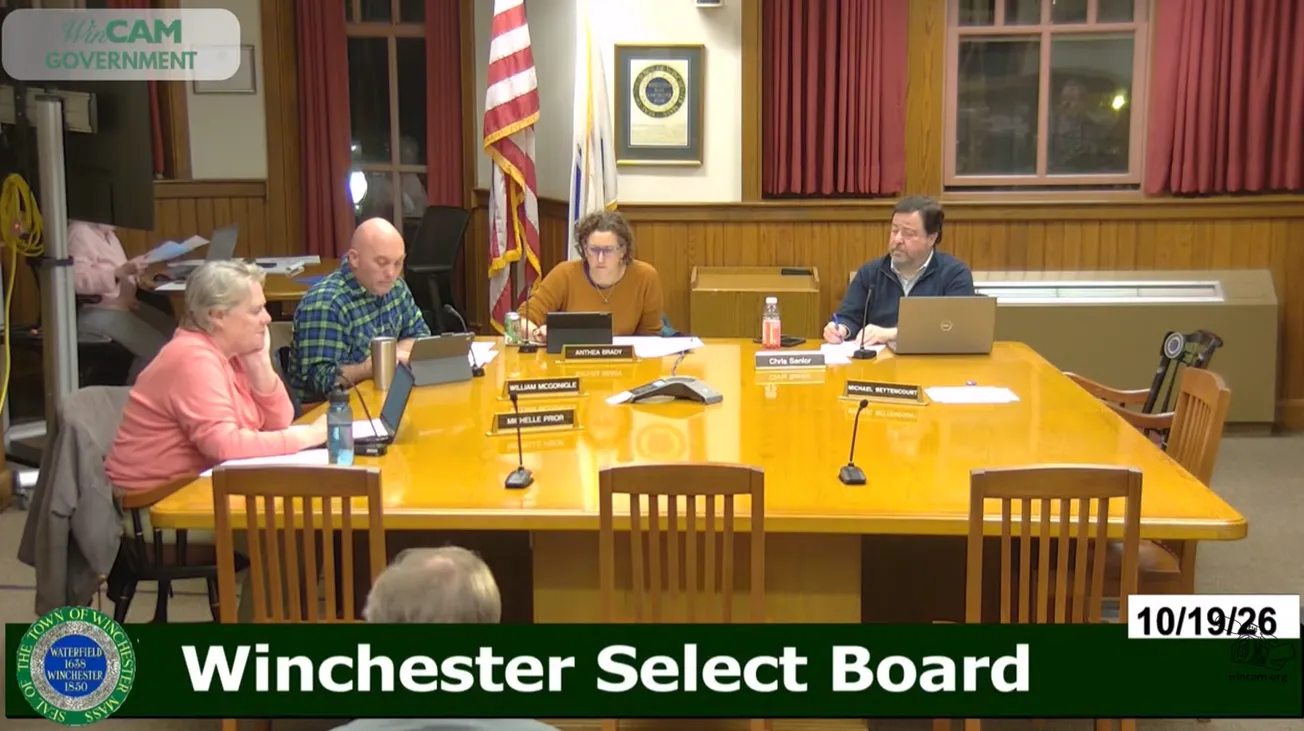
Ann Gill, Winchester’s treasurer/collector, told the board the package required “a lot” of signatures, then walked members through the three parts of the borrowing: a $4.05 million taxable BAN for the Washington-Swanton affordable housing property, $4.3 million in BANs for water and building projects and $8.65 million in 15-year general obligation bonds.
The short-term borrowing begins with Washington-Swanton, a long-running affordable housing redevelopment site at the intersection of Washington and Swanton streets. The town-owned property has been tied to a proposed residential and commercial project and has moved through local permitting after years of discussion about how to reuse the site.
Gill said the Washington-Swanton note was needed because the town is “close to a closing,” but not close enough to avoid issuing another short-term note. The $4.05 million taxable BAN Series A carries a 5% coupon rate and a 4.9869% net interest cost. Gill said the note will come due in March, by which time town officials expect the remaining transaction details to be complete.
“My understanding is everything should be a done deal by then,” Gill told the board.
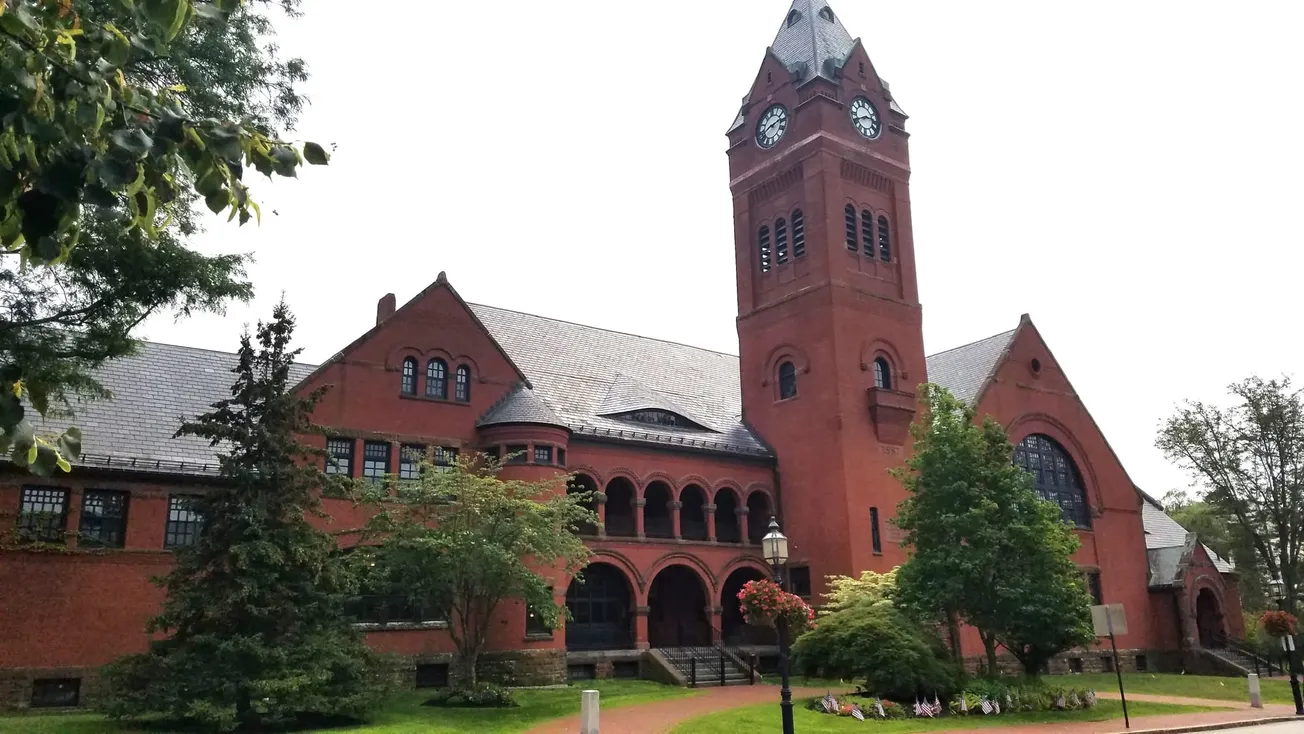
A second set of short-term notes, BAN Series B, totals $4.3 million and covers three projects. The largest piece is $2 million for the Town Hall and library clock tower, listed as new borrowing in this issue.
The package also includes a $1.5 million renewal for Woodside Road pumping station remodeling and an $800,000 renewal for Cambridge Street water system improvements.
That Series B borrowing carries a 4% coupon rate and a 2.9599% net interest cost.
The distinction between the two sets of notes matters. The Washington-Swanton borrowing is taxable and connected to a property transaction still moving toward closing. The Series B notes are tied to town infrastructure and building work, including water-system projects and public-building repairs, with some items renewed from prior short-term borrowing.
The largest permanent borrowing in the package is the $8.65 million general obligation bond issue. Unlike the BANs, which are short-term financing tools, the bonds are structured over 15 years. They cover three projects: $6 million for South Reservoir Dam improvements, $2.5 million for Lynch Elementary School traffic improvements and $150,000 for Woodside Road pumping station engineering.
The 15-year bond package carries a true interest cost of 3.048587%.
The South Reservoir Dam portion accounts for most of the permanent borrowing. The dam project has been treated as a significant capital need because dam maintenance is not merely cosmetic or discretionary. It is part of the town’s obligation to maintain infrastructure that has safety, regulatory and environmental consequences.
The Lynch Elementary School traffic improvements have their own history. The project grew out of concerns about traffic patterns, road safety and neighborhood impacts around the new elementary school. Prior public discussions have focused on circulation, vehicle speeds and how school-related traffic affects nearby streets.
The $2.5 million in permanent borrowing moves that work into the town’s longer-term debt schedule.
The Woodside Road pumping station appears in both parts of the package. The $150,000 engineering cost is included in the 15-year bond issue, while $1.5 million for remodeling is part of the short-term BAN Series B borrowing. Together, they show how one infrastructure project can move through different borrowing stages as engineering, design and construction costs become clearer.
Although routine in form, the vote comes as Winchester continues to wrestle with capital pressure and long-term financial planning. The town is facing a wide range of building, water, school, recreation and public infrastructure needs at the same time residents and officials are debating how much the town can afford after the March operating override failed.
Borrowing does not settle those debates. It determines how approved projects are financed, when debt comes due and how costs are spread over time. Short-term notes can give the town flexibility while projects are still in motion. Long-term bonds convert major capital expenses into scheduled debt payments over many years.
For residents, the projects behind the numbers are easier to see than the financing mechanism: a housing redevelopment site at Washington and Swanton streets, water work at Woodside Road and Cambridge Street, dam repairs at South Reservoir, traffic changes near Lynch Elementary School and building repairs tied to Town Hall and the library.
The paperwork required signatures. The projects require years of planning, borrowing and repayment.
Will Dowd is a Massachusetts journalist who covers municipal government and community life for Winchester News. He is also the founder and editor of The Marblehead Independent, a reader-funded digital newsroom.