
Table of Contents
Winchester’s charter is brief about the Board of Health, saying the group is “responsible for the formulation and enforcement of rules and regulations affecting the environment and the public health.”
Three Winchester residents are elected to sit on the board. Each of the terms run three years, arranged so that one expires annually. This is, in a way, special for Massachusetts as most town boards of health members are appointed by their town manager or a select board.
The Board of Health decides which products may be sold in town and whether a restaurant keeps its permit to operate.
Board of Health Chair Anne Marie Hill and Director of Public Health Jennifer Murphy described how the board and the Health Department divide the work to keep the community safe and healthy
Board vs Department: What is the difference?
Each year, the board appoints the health director as its agent, the official who carries out its decisions.
This is the key difference between the Board of Health and the Health Department. The board sets policy for the town and the department ensures policies are implemented.
Murphy has held the health director role for more than 20 years, and four people work under her to form a cohesive team. Cameron Bishop, the environmental health inspector, conducts routine restaurant inspections and responds to complaints. Dot Butler, the community health program manager, oversees prevention work financed by opioid settlement money. Karen DaCampo is the public health nurse, and Regina Gray is the administrative assistant.
Powers reserved for the board
While the department may cite a restaurant for failing to meet health code, the consequence of that failure is determined by the board.
“The Board of Health is helping in that enforcement, but is ultimately making the decision of whether or not somebody’s going to be able to continue to practice,” explained Hill.
Regulations are also written and adopted by the board. Residents request new rules fairly often, but the Health Department can’t independently adopt any.
“That power lies with the three board members,” the director elaborated.
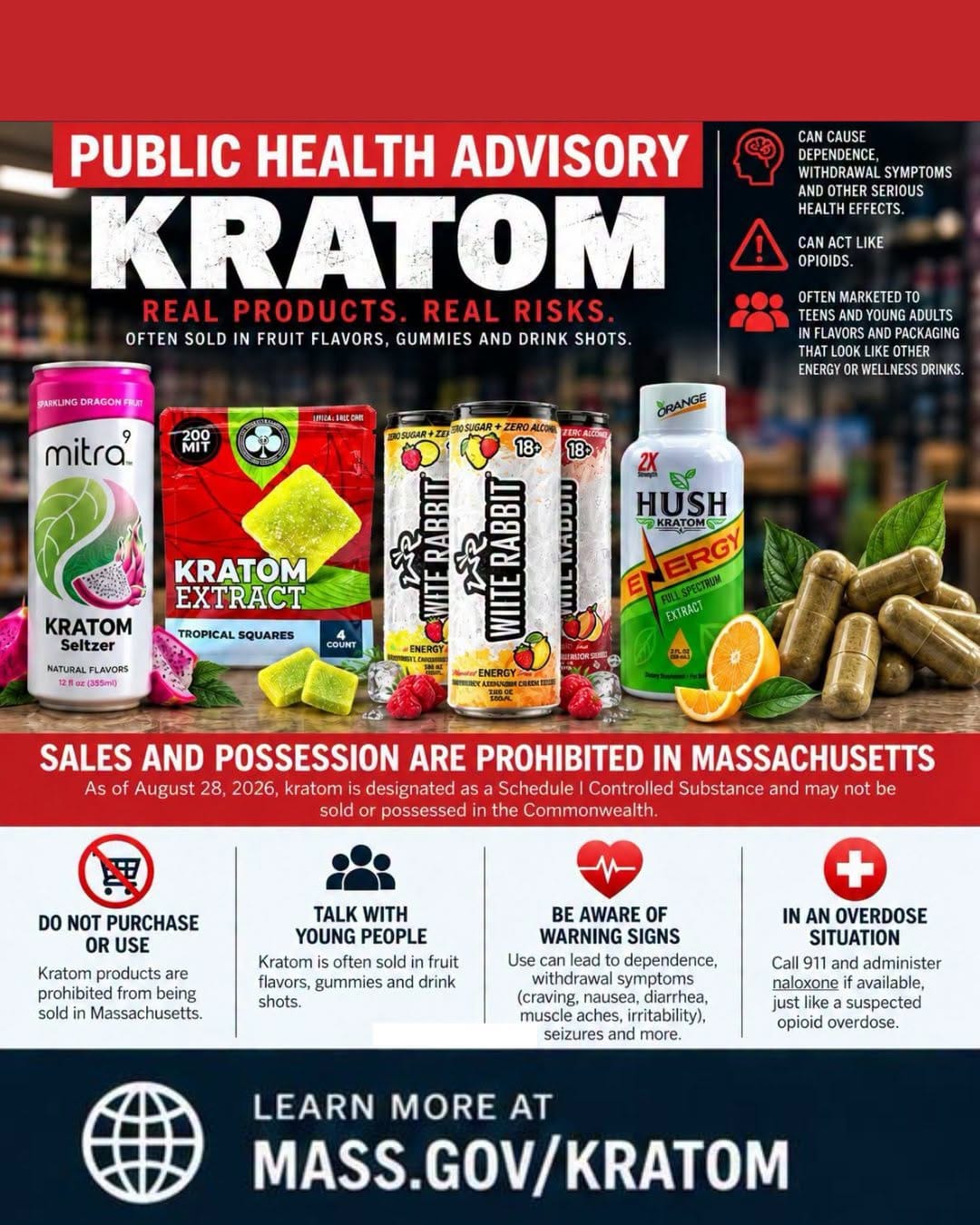
Last autumn, the board prohibited the sale of kratom products — a Southeast Asian herbal product that acts as a stimulant in small doses and an opioid-like sedative in larger doses — in Winchester.
Massachusetts had already placed kratom into the Schedule I drug category on an emergency basis, effective August 2026. The Drug Enforcement Administration defines “Schedule I drugs, substances, or chemicals as drugs with no currently accepted medical use and a high potential for abuse.”
The temporary state order will last up to a year and was issued partly so local boards could write rules of their own. Winchester’s regulation will outlast the state’s temporary pause.
In Winchester, health regulations untouched for decades have also been revised, among them the rules on trash disposal. Work is underway on the keeping of domesticated livestock, prompted by questions from neighbors about chicken coops.
Hill called this a hot button issue and estimated two to three months of drafting before a public hearing that is required for adoption.
Restaurant inspections
Food is the largest code the Health Department enforces and restaurant inspections are probably the thing both the board and department are best known for in the community.
Establishments are classified by risk from one to four, low to high. A convenience store that sells milk and prepares nothing is a one while a kitchen that acidifies sushi rice is a four. That number is the minimum number of annual inspections, although rarely is that the case. More is always better and if there is a violation, there must be a follow up visit.
“It is very rare that we go into a restaurant and don’t see a violation,” Murphy said.
NewsMatch is our biggest fundraising campaign of the year. Your donation could be doubled, or even tripled. To make the most of your donation, hit the button now. Thank you for supporting local news.
This isn’t because the kitchens in town aren’t sanitary or that there are large issues, but rather in an environment with so many moving parts, it can be hard to make sure everything is in order.
The severity of the violation determines the response time. Twenty-four hours is the deadline for a serious violation, while something small like a missing bathroom tile can be considerably longer.
Immediate risk doesn’t need a meeting. As the board’s agent, Murphy has the power to order a restaurant closed at once, and the permit is addressed afterward. Closures are uncommon.
One restaurant was closed during the past year, after what Hill described as repeated attempts to bring it into compliance.
“We want you to be successful out there. We want you to thrive. And how you do that is to keep us out of your hair,” explained Murphy.
Limits on the board’s authority
Residents have sought a local prohibition on anticoagulant rodenticides, a chemical rat poison that works as extra-strong blood thinners, used on private property. They can be extremely dangerous to both pets that may come in contact with them, but also animals in the local environment that can spill the effects over into the ecosystem.
However, the board has no ability to grant it. Murphy clarifies that because it is a state regulation; the Board of Health doesn’t have the jurisdiction.
Nursing homes in the town are licensed by the state. Most other complaints are settled locally.
Murphy explains the department will investigate a complaint about a resident’s care, but it will forward it to the state as well, since a facility’s license is the state’s to act on.
One-day alcohol licenses for single events are issued by the Select Board.
Hill brought up that her board is asking for a joint meeting in the next month to recommend safety conditions. A separate meeting with the school superintendent will cover smoking on school grounds during events, which already is a violation of town and state law.
The pandemic
“Public health was, I have to say, the biggest professional challenge I’ve ever faced,” Murphy said.
Her colleagues in other towns say the same of their own experience.
Murphy’s account starts with a recommendation she made early in 2020: Close the businesses that provide personal services, such as nail salons and hair cutting. Nothing in her two decades of experience on the job had called for an order on that scale.
“That is a very scary thing,” she recalled. “We’ve never taken that drastic of an action.”
The board accepted the recommendation, and that sequence puts the structure of how health in Winchester works in plain view. A paid professional recommended it and three unpaid elected residents decided. The authority to close Winchester businesses came from them rather than from anyone at Town Hall.
Murphy supplied board members with data continuously and briefed the Select Board, the School Committee and the town as conditions shifted. Every step they took had state or federal guidance behind it.
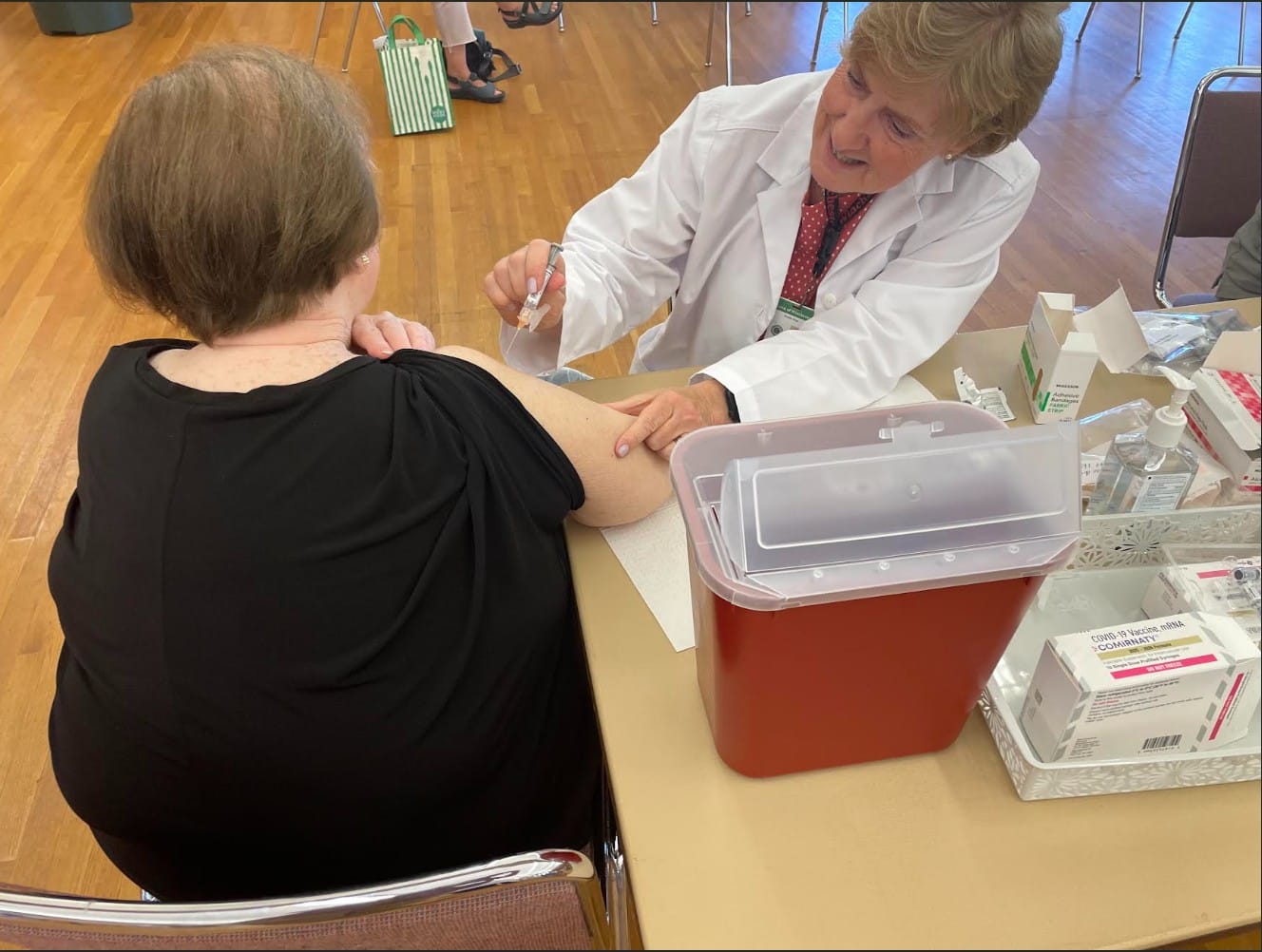
The work quickly outgrew her group of four. Murphy hired consultants, assembled a contact tracing team and brought in nurses, and the department later ran vaccination sites. By late 2020, the board held weekly testing in the Town Hall auditorium, open to all residents, town employees and people who worked in Winchester.
For Murphy, the period is mixed, both immense stress and also pride.
“I was proud of how our town addressed the situation,” she remembered. “They really listened to us.”
Some of what the town was asked to do was, in her words, uncomfortable and scary. She said residents and staff alike could look back on the response with some satisfaction.
Hill did not serve during that stretch, but explained her gratitude for the makeup of the board at the time, with two physicians and a nurse in the three seats. Fortunately, those members were able to draw from what they were seeing in their own practices.
“Well done,” she told Murphy. “Well done.”
Murphy’s reply was shorter, joking, “I wouldn’t wish to do it again, though.”
Present concerns
Hill identified young people as her present concern. She has worked with the town’s substance use coalition since her children, now adults, were in middle school. That emphasis appears in the Nicotine-Free Generation regulation of May 2024, which bars the sale of tobacco and nicotine products in Winchester to anyone born on or after Jan. 1, 2004.
Murphy named mental health, which she had not anticipated when she took the position, and substance use. Winchester received opioid settlement funds, and she said many residents assumed the town had little need for them.
“I often heard that, ‘Oh, Winchester, we don’t have a problem,’” she said.
Since then, the Health Department has funded 21 people in sober living and hired several recovery coaches.
Following the board
Board of Health agendas and minutes are posted on the town’s Agenda Center, and the Health Department may be reached at 781-721-7121.
“You’re welcome anytime you want to come to one of our meetings,” Hill said.
Xiyue Eric Han is a student at Winchester High School. He has been an intern with Winchester News since summer 2025.