Table of Contents
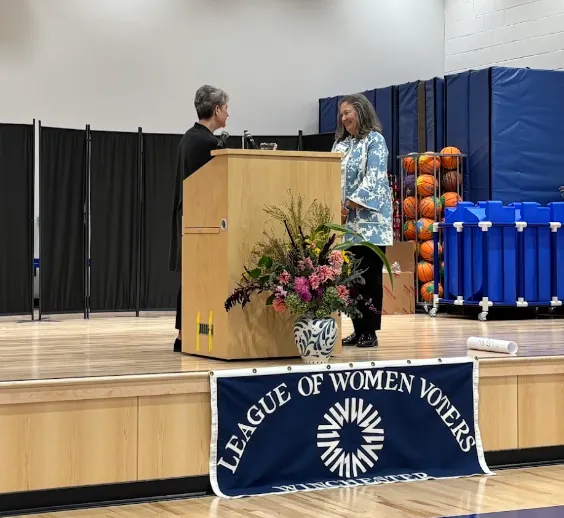
The Select Board meeting on July 13 opened not with town business, but with a silence. Anthea Brady, chair of the board, called Vincent Lawrence Dixon “a bit of a staple in our Winchester government scene,” recalled the Town Day trolley tours he led and his years on the Finance Committee and asked the room to pause in his memory. It was, in its way, the public recognition Dixon had chased at the ballot box for three decades and almost never won there.
Dixon died July 11 at 9:05 p.m. at Tufts Medical Center in Boston after what his longtime partner, Emilieanne Koehnlein, described as an unexpected and sudden decline, following a longtime skin tag on his back that turned to melanoma, with heart problems also involved. He was 74.
Born July 5, 1952, to Vincent DePaul Dixon and Genevieve Dziegel Dixon, he grew up an only child in Allston, lived for many years in Cambridge and had made his home in Winchester for 13 years.
He was a historian, a tour guide, a Town Meeting member from Precinct 3, a candidate for nearly everything and, in his last years, the host of a public-access television program about civics and the rule of law.
His public life turned less on offices held than on a stubborn willingness to keep using the instruments of self-government whether or not they used him back.
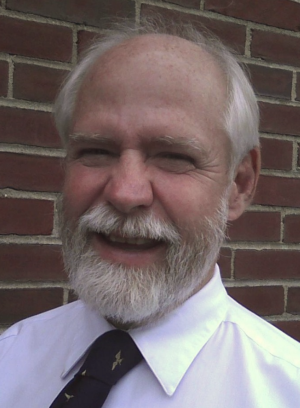
In a Thursday email to members, the Mystic Valley Area NAACP and its Branch Executive Committee said Dixon’s life was defined by service and a belief in civic engagement, whether he was teaching, researching local history, presenting to the branch or speaking at Winchester Town Meeting.
“Vince brought warmth, wisdom, and a historian’s eye for detail to every conversation,” the branch’s president, Jillian Harvey, wrote. “As we move forward, we honor his legacy by carrying his spirit of unwavering passion into everything we do, and continue to uplift our community just as he did.”
Running to be heard
A Winchester News accounting of his candidacies identifies at least 18 separate bids for elected office and 23 ballot contests or appearances over roughly 35 years.
Dixon ran as a Republican in his recorded state races through 2016, then sought a Governor’s Council seat as an unenrolled candidate in 2018. The Massachusetts secretary of state’s database records 12 state or county primary or general contests, among them five primary victories, one primary loss and six general-election defeats.
The offices sprawled across eastern Massachusetts: the Massachusetts Senate, Middlesex County sheriff, Governor’s Council. Dixon also ran for Cambridge City Council in 1999, 2001 and 2003. In Winchester, he ran again and again, for Select Board and for Town Meeting, sometimes for both in the same spring.
The record shows his first confirmed election victory did not come until 2025, when he won the eighth and final Precinct 3 Town Meeting seat with 178 votes.
To file him under perennial candidate would miss what he was doing. For Dixon, appearing on a ballot was itself a civic act, a way to deny an opponent a free pass and put ideas into a race that might otherwise have carried none.
Koehnlein said he believed no one should run unopposed.
“Let them work for it,” she said.
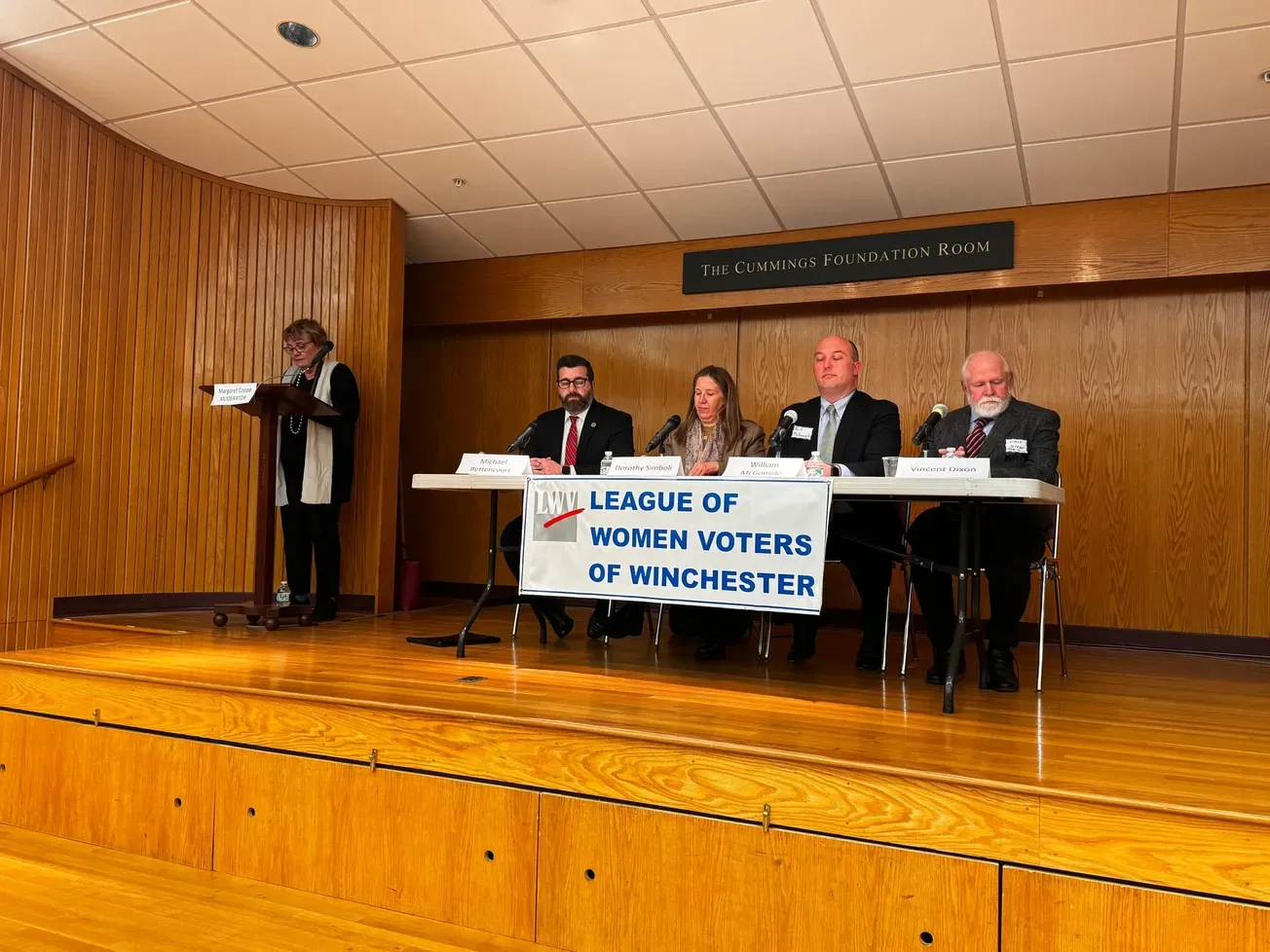
He cared more about getting his ideas heard than about winning, she said, albeit he thought he could accomplish more from inside an office than outside one. When he finally took the Town Meeting seat, the victory nearly slipped past him; there had been as many candidates as open seats.
A colleague had to tell him, “Congratulations, Vince! You won!” She said he was delighted.
Maureen Mansfield, who lived across Wedge Pond from Dixon and had known him since 2008, watched the losses accumulate without watching them wear him down. One election she voted only for him and left the rest of her ballot blank.
Defeat never seemed to embitter him, she said; he would offer a mild remark, that maybe people would be more aware next time, and a small smile.
“I never really saw him having a moment of leisure. He was constantly thinking about American history and the next presentation,” said Mansfield, of his work ethic. “I cannot imagine him even watching a movie unless it was about American history.”
Dixon never sat in the Legislature, but he found a way to put bills in front of it. Using the Massachusetts “by request” process, which allows a resident to petition a lawmaker to file legislation on his behalf, Dixon turned his preoccupations into paperwork at the State House.
None of it made him a sponsor, and the record does not show his ideas becoming law, but the filings stretch across the 190th through 194th General Courts, from roughly 2017-18 through the current session.
Earlier sessions account for 19 bills, resolves, resolutions or orders; the current session connects more than 40 filings to his name, most placed through state Sen. Jason Lewis and state Rep. Michael Day.
The subjects ranged almost past cataloging: primary election and political party endorsement reform; the right of free petition; judicial training and clerk magistrate standards; Chapter 40B housing reform; health care access and mental health privacy; education, workforce training and antitrust enforcement; artificial turf safety; municipal government, public transportation and environmental initiatives; and resolutions urging Congress on NATO and Syria.
The point was never passage, Koehnlein said. He believed a filed bill made an idea harder to ignore, and kept people from later saying, “I didn’t know.”
Bob Colt, who chairs the Winchester Democratic Town Committee and had known Dixon for more than a decade, watched him treat the State House like a standing appointment.
“He would go up and file his own bills at the House or the Senate,” Colt said. “He would follow for years.”
Teaching civics on public-access television
In his last years, Dixon built his clearest platform not at the State House, but at a studio, on Winchester Community Access and Media. He called it “The Vince Dixon Show of History, Current Events, and the Rule of Law,” and gave its episodes titles that read like a night-school catalog: “The Purposes and Evolution of Government,” “The Importance of Evacuation Day,” “Civics and Civic Literacy,” “Patriots Day” and “Frances Perkins: Apostle and Architect.”
The program, Dixon said in its first episode, would explore “a range of facts, areas of knowledge and perspectives on our world.”
Civics, he argued, had been missing from schools for years, and civic education needed to reach adults as much as students.
“Civics is at once relatively simple, and its details and how they interact can be complex,” he said.
Dixon was homeschooled by his parents from Kindergarten through high school in the late 1950s and early 1960s and earned an associate degree and a bachelor’s degree through the Harvard Extension School and a master’s degree from the Harvard Graduate School of Education, with additional graduate work at Harvard Law School and the Radcliffe Institute.
In the TV show, Dixon liked to reduce government to a pair of metaphors: constitutions were “blueprints of government,” he said, and laws their “operating manuals.”
A civic matter, he explained, was anything relating to “a citizen, a city, citizenship or community affairs.” The words civic and civil, he noted, share a root.
Before the television show, he had spent years founding and running Cambridge Advantage, guiding tours through Cambridge, Boston and eastern Massachusetts that explained not only history but transportation, real estate, economics and how cities work. He started giving tours of Harvard Yard; a remembrance notice said they grew so popular that Harvard took them over.
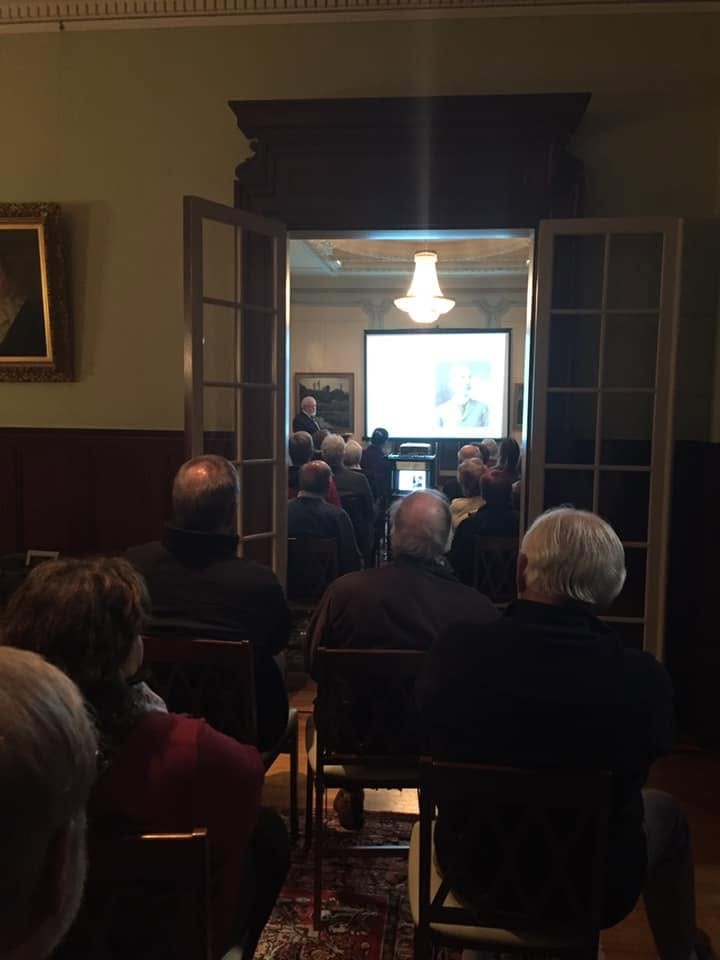
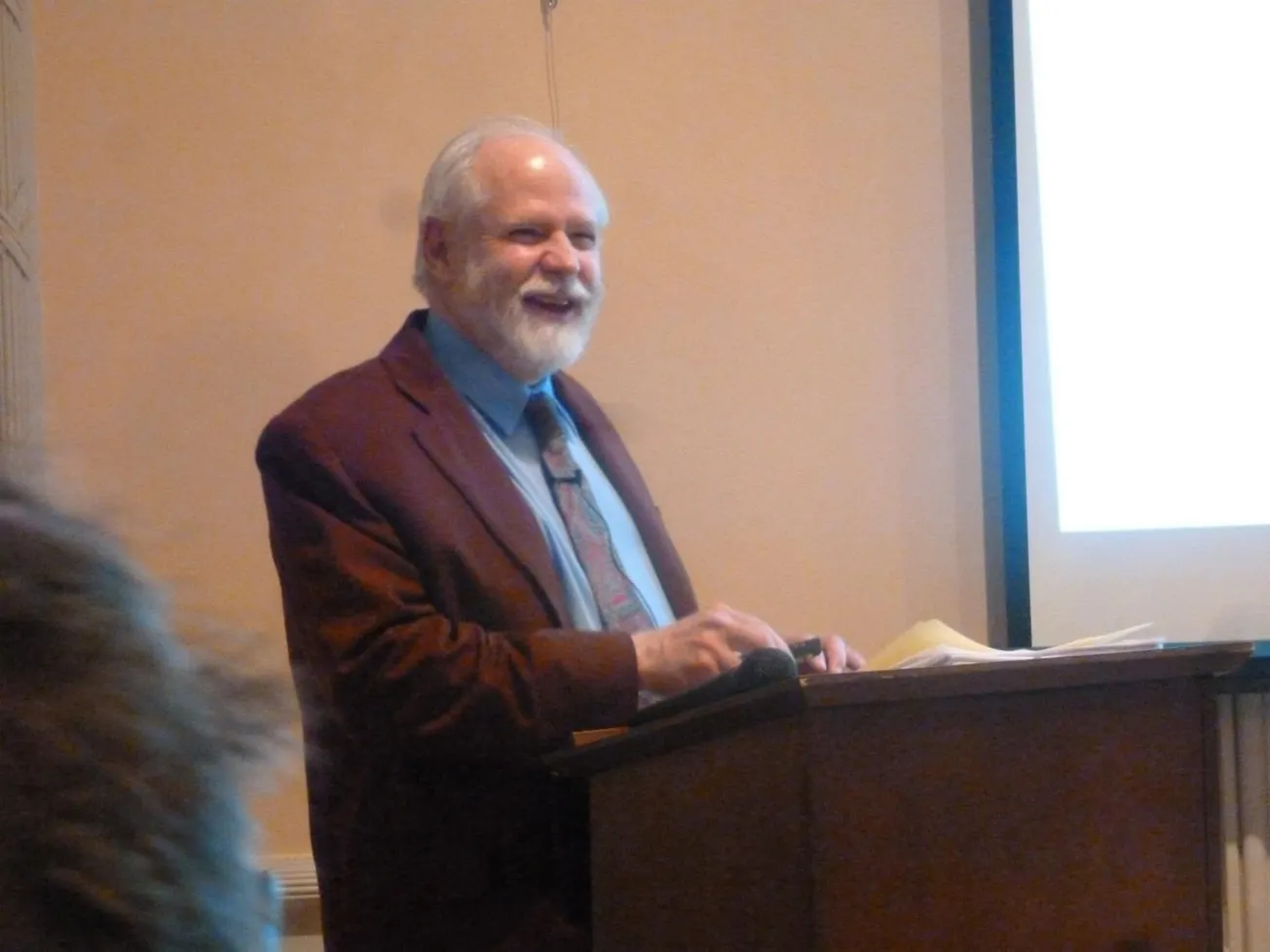
His lectern was often the Winchester Historical Society. He spoke on the town’s schools and their namesakes, on religion in Winchester, on the history of vaccination and disease prevention, on a local first family of figure skating, on Memorial Day and the meaning of memorials and on the parks, landscapes and beaches of Winchester, a presentation that filled a room at Sanborn House in the spring of 2019.
Mansfield, who tried to catch his talks when she could, called him “a fire hose of history.”
He had been preparing a talk on the nation’s 250th anniversary, built around the years 1826, 1876, 1926, 1976 and 2026, when he was hospitalized before he could deliver it. He compiled much of that research on the computers at the Winchester Public Library.
The history and the civics were never far apart. At a recent Town Meeting, Colt said, Dixon joined a group of seven speakers who beat back a proposed demolition and saved the carriage house on the Sanborn property.
Colt opened the case, walking members through the history of the buildings, and Dixon followed later in the night.
“We were like a tag team match,” Colt said.
Ron Latanision, a co-host of Dixon’s show, met Dixon through the Wilson Science and Technology Forum, a Winchester group he moderates. Dixon came as a regular attendee, was named the forum’s historian and gave talks on subjects such as the history of vaccination.
The two traded questions on Dixon’s public-access show, and Latanision said he learned something every time. He pointed to an episode on Frances Perkins: he knew of her, but Dixon opened by asking where she was born, then explained how the answer shaped what she did with her life.
“That’s a perspective that the average guy in the street does not have,” Latanision said. He teased Dixon that he could teach a course on the filibuster. “He could talk forever. He really could.”
Latanision had no warning of the decline. Dixon gave his usual Town Day trolley tour in June, fell that weekend and gashed his forehead and told Latanision he had skipped the doctor. His death “totally shocked me.”
‘I am not going to let his work die’
Dixon and Koehnlein met at Memorial Church in Harvard Yard, where he had turned up in a tuxedo before an afternoon performance with the Cambridge Community Chorus.
He liked to joke, she said, that he “never looked that good in my life since.” She wore a gray suit with a long skirt and figured she looked “like Mary Poppins without the umbrella.” They were partners for 14 years.
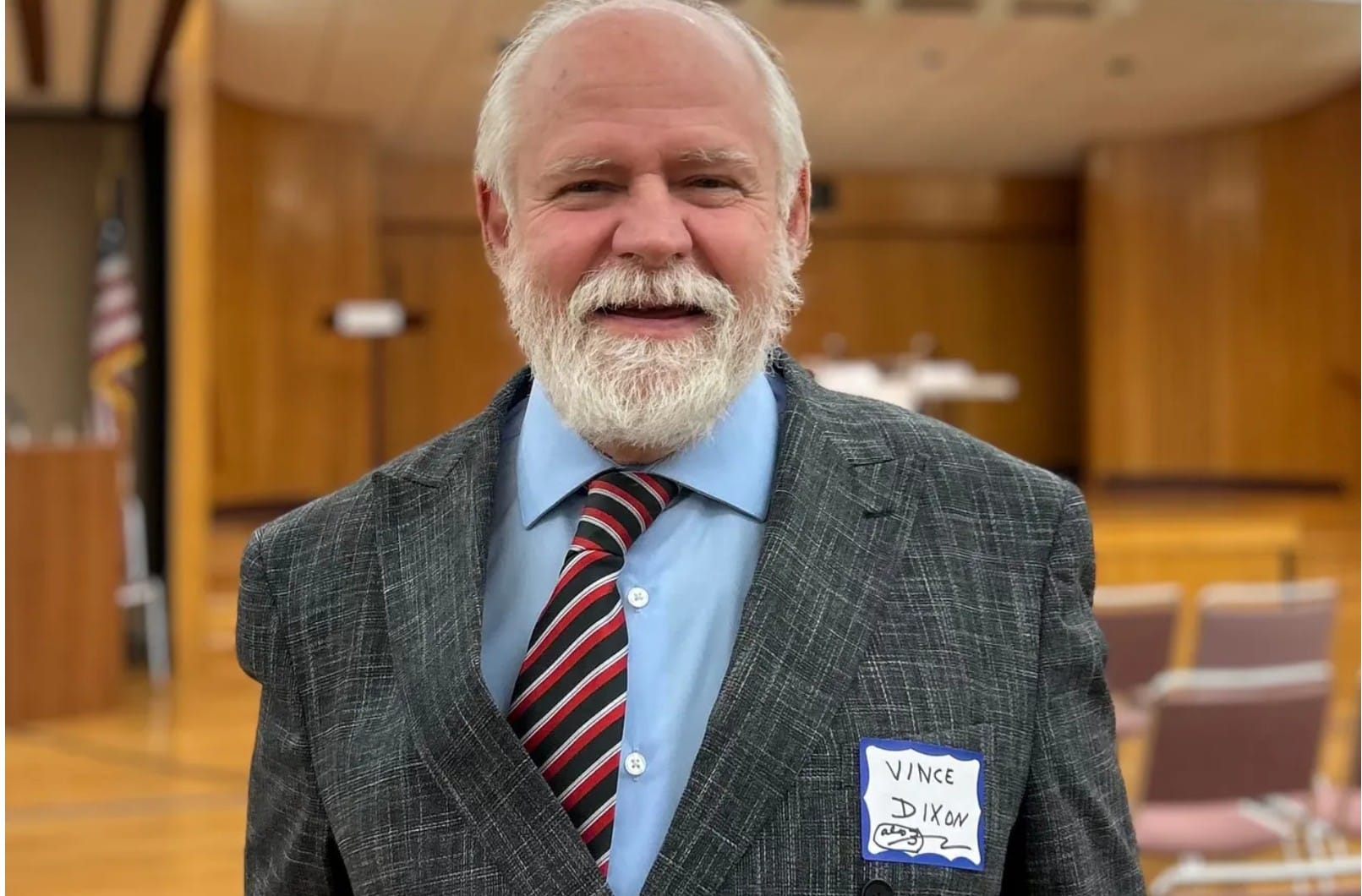
The debates he loved did not stop at the studio door. Mansfield last saw that intensity in December, when Dixon invited her to a tea-burning re-enactment in Lexington. Their argument that night, she said, ran as high as the bonfire, hot enough that onlookers wandered over to make sure the two were all right.
“He could not be persuaded. But I never felt it was anger or hurtful,” she said. “It was all good.”
Koehnlein said she loved his integrity and his “drive for knowledge.” He taught her constantly and loved being out among people, sharing what he knew.
The Winchester Democratic Town Committee, in a note after his death, called him “a dedicated public servant, passion-driven civic advocate and cherished local historian,” noting his independent spirit often sent him onto the ballot under different banners while his commitment to the town held steady.
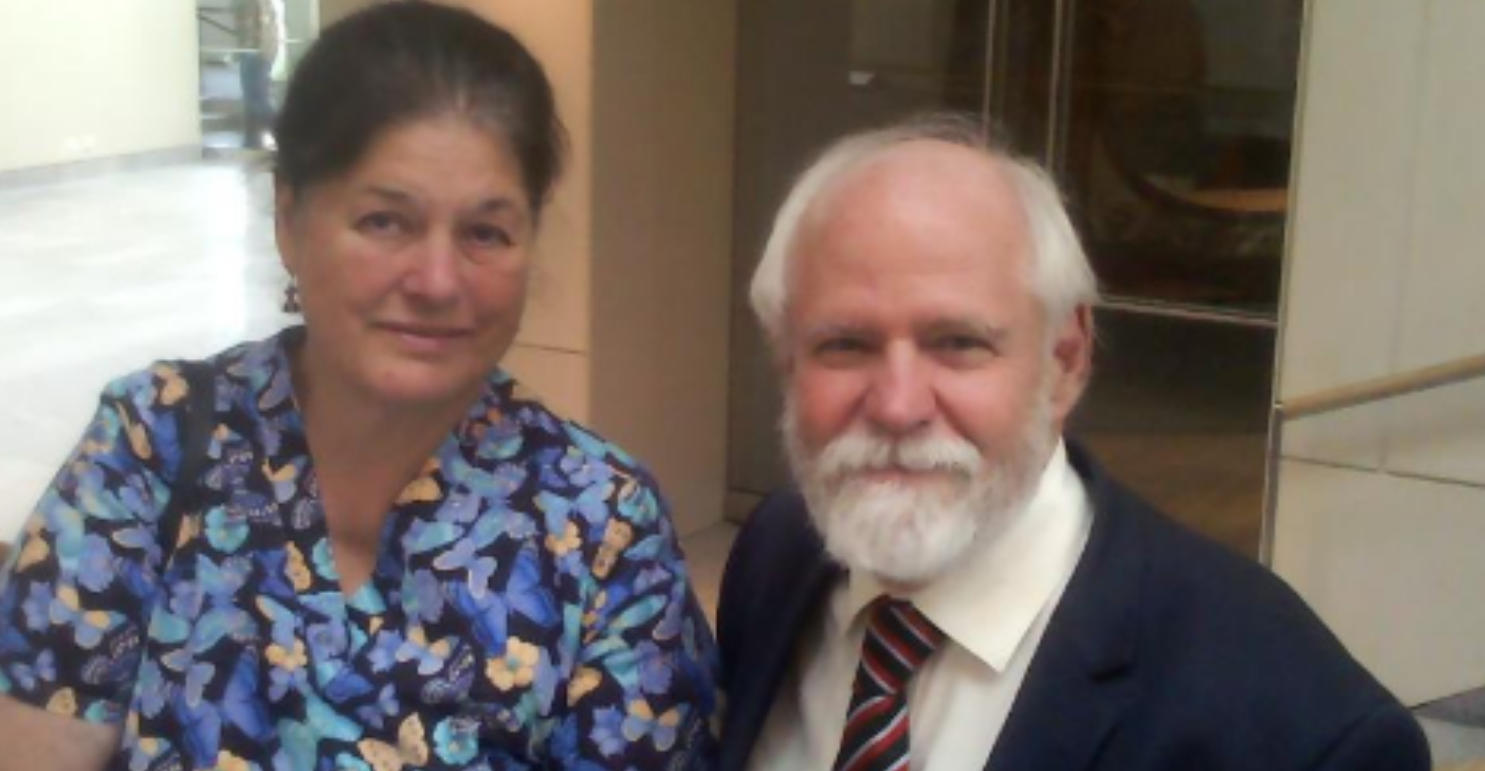
On the Finance Committee from 2015 to 2019, he pushed for full-day Kindergarten and support for municipal services. He had also been a caregiver for his elderly parents.
The Town Meeting seat he won at last carries a term listed through 2028, one he will not serve. The WinCAM episodes remain online, the bills remain in the legislative record and the 250th-anniversary talk stays unfinished.
Koehnlein intends to take up the parts she can.
“I am not going to let his work die,” she said, and said it again and again.
Funeral and collation are scheduled for Tuesday, July 21, at 10 a.m. at Parish of the Epiphany Episcopal Church, 70 Church St., Winchester. There will be a reception from 11 a.m.-12:30 p.m. in Hadley Hall at the church.
There will be no visitation. A funeral procession and burial will follow.
Dixon will be buried in his family plot at Holyhood Cemetery in Brookline.
Will Dowd is a Massachusetts journalist who covers municipal government and community life for Winchester News. He is also the founder and editor of The Marblehead Independent, a reader-funded digital newsroom.