Table of Contents
A dispute over a proposed mixed-use development on Converse Place has spilled into Middlesex Superior Court, triggered an Open Meeting Law complaint and prompted Winchester’s town counsel to conclude that two of the town bodies involved in the litigation never had authority to sue in the first place — all within the past week.
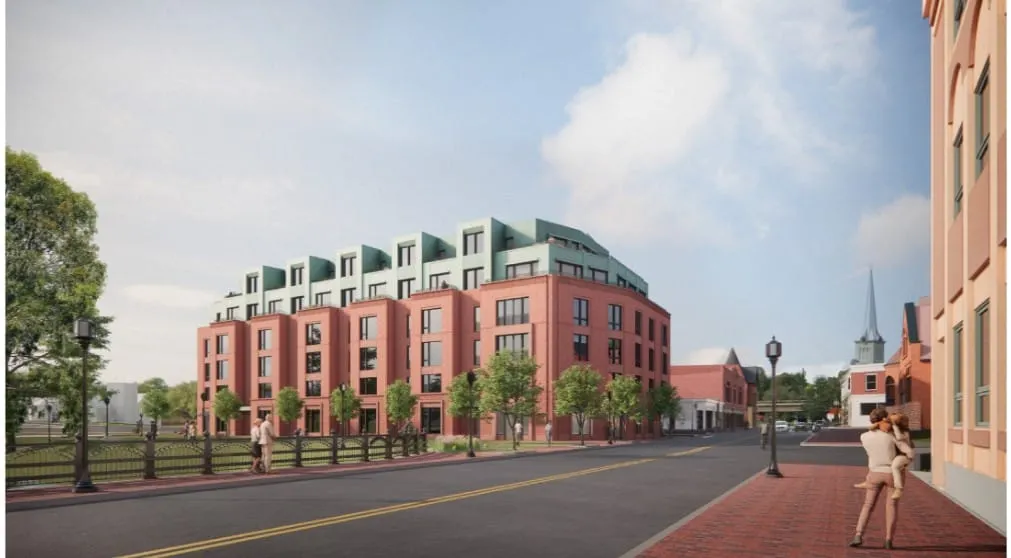
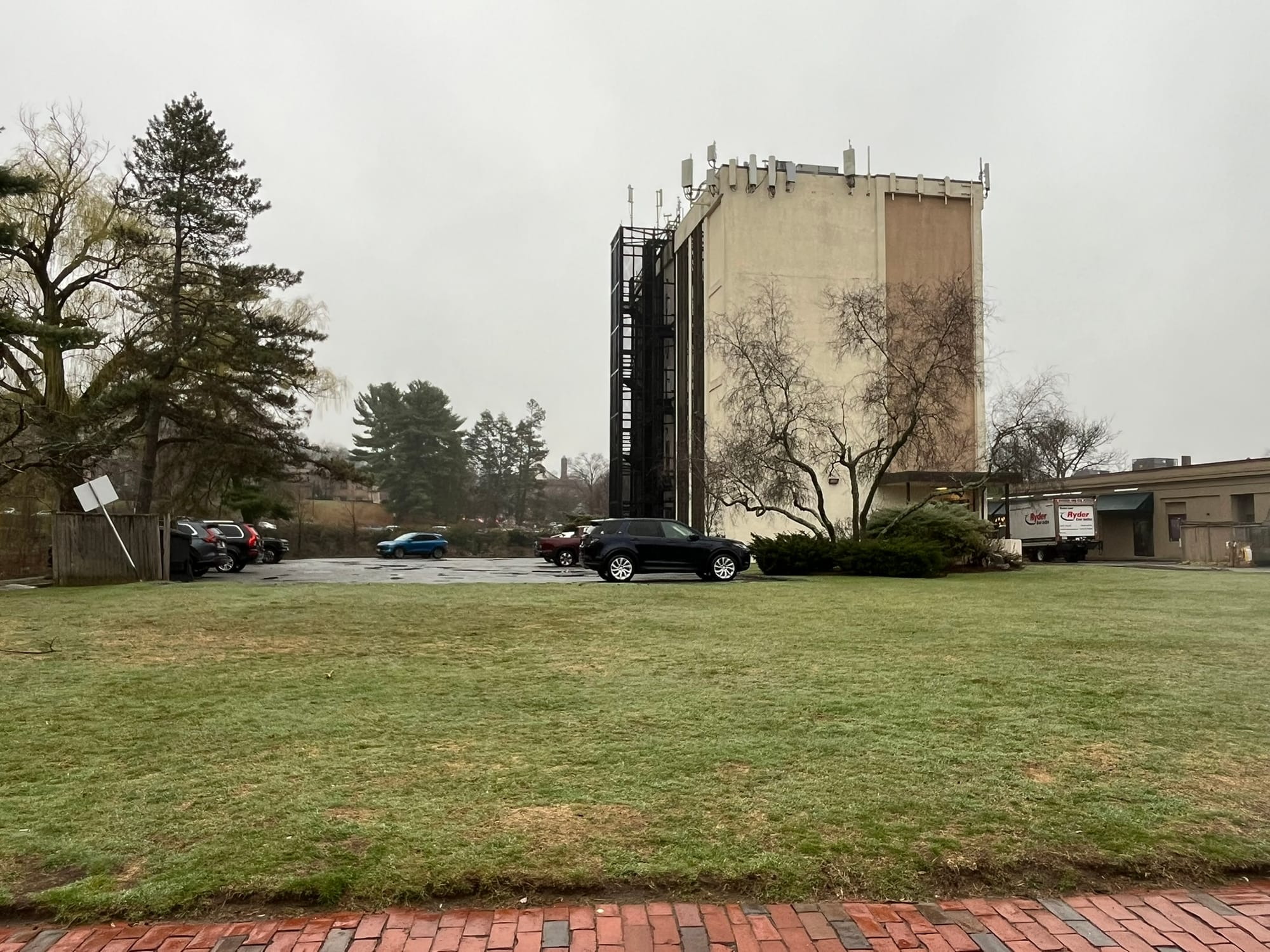
At the center of the conflict is a special permit the Winchester Planning Board granted to Urban Spaces LLC for a five-story development at 10 Converse Place, also identified in town records as 33 Mt. Vernon St.
The permit would allow the developer to demolish the existing building and replace it with two commercial spaces, 34 residential units described in court filings as luxury housing and a wireless communication commercial area. It would also allow departures from certain dimensional requirements.
Four filings dated this week — a Superior Court complaint, an Open Meeting Law complaint and two legal opinions from Town Counsel Karis L. North addressed to the Winchester Select Board — show how a fight over that permit has escalated into intersecting legal and procedural challenges aimed at nearly every body that touched the project.
The court complaint
On April 17, the Winchester Affordable Housing Trust and three members of the Winchester Housing Partnership Board — Allan Rodgers, Martha Jones and John H. Suhrbier — filed a civil complaint in Middlesex Superior Court against members of the Planning Board and Urban Spaces LLC.
The complaint asks a judge to overturn the board’s special permit decision, arguing the board departed from Winchester’s inclusionary-zoning requirements and relied on subcommittee work that, the filing alleges, violated the Open Meeting Law.
Urban Spaces applied for the special permit Aug. 21, 2025. The complaint’s central argument concerns how the board handled the project’s affordable-housing requirement.
Winchester’s zoning bylaw allows a developer to pay money in lieu of providing affordable units on site, but only after the Winchester Housing Partnership Board submits comments and only if the permit granting authority finds both that the substitution serves the town’s best interest and that building the units would make the project economically unworkable.
The lawsuit contends no financial analysis for the project as ultimately approved was ever shared with the Planning Board or the subcommittee tasked with reviewing feasibility.
It also says the partnership board never received a financial analysis of the approved project and therefore never provided comments on whether the affordable-housing requirement would render the development uneconomic.
The filing further alleges the Planning Board created two subcommittees to handle affordability and payment-in-lieu issues, that neither met in public and that the board’s reliance on their work tainted the final permit decision.
Jones, who chairs the trust and also serves on the partnership board, provided a written statement on the trust’s behalf.
“There were significant procedural flaws and informational shortcomings in the permitting and approval process which must be addressed to assure that this and future projects fully comply with the requirements of the Zoning Bylaw and Regulations, including our Town’s obligation to provide affordable housing,” she wrote.
She added the trust welcomed dialogue with stakeholders “to correct the flaws in the process” and said it was prepared to work “quickly and collaboratively” toward what she called a mutually satisfactory resolution. Because of the pending litigation, she said, she did not think it prudent to discuss further details.
Jack LeMenager, chair of the Planning Board and a named defendant in the lawsuit, declined to address specifics in a written response.
“While your questions have merit, at this time, we are not at liberty to discuss the pending litigation,” he wrote, adding the board had not yet met with counsel and that “it would be unwise to make any public comments on the matter at this time.”
For this story, the Select Board declined comment.
The Open Meeting Law complaint
Filed the same day as the court complaint, a separate Open Meeting Law complaint brought by Brian Vernaglia targets the trust itself and Jones as its chair. Vernaglia wrote that Jones convened an executive session April 14 to consider contesting the Planning Board’s permit decision.
Vernaglia alleges two violations. First, he argues the trust has no authority under its 2019 governing declaration to review or contest special permits, meaning the executive session was called for an improper purpose. Second, he alleges the trust took a vote in that session which failed to reach the required majority of members, but the trust proceeded with the action anyway.
The complaint asks that any minutes, notes and documents from the April 14 executive session be released immediately and that any decisions from the session be vacated. It says that if the trust wishes to revisit the matter, it should do so in open session with the required vote.
Town counsel’s opinions
On Wednesday, North sent the Select Board two memos — one addressing the trust, one addressing the partnership board — each concluding the same thing: neither body had the legal authority to initiate the lawsuit.
On the trust, North wrote that its Declaration of Trust, established in October 2019 following a vote at that year’s annual Town Meeting, explicitly grants the trust power to defend lawsuits brought against it, but says nothing about initiating litigation. Under principles of statutory construction, she wrote, that omission cannot be read around.
“In no instance does the AHT have the authority to bring litigation against the Town or any legal entity,” North wrote. “It simply does not have that power.”
North also found the vote authorizing the lawsuit was itself procedurally invalid. The trust’s declaration requires that any exercise of its powers be approved by a majority of all trustees — not merely a majority of a quorum present at a meeting.
North wrote the vote fell short of that threshold, an independent reason she said made the action unauthorized.
On the partnership board, North wrote the body was created by Town Meeting in 1987 to advise the Select Board on housing matters — recommending strategies, reviewing development proposals and reporting on affordable housing activity — but that its advisory role does not extend to suing town agencies.
As a board of the town, she added, its legal counsel is town counsel, who takes direction from the Select Board.
North also addressed Rodgers, Jones and Suhrbier, who are listed individually as plaintiffs.
She wrote no individual board member may act on behalf of a board without a majority vote taken at a properly noticed public meeting called for that specific purpose. North added the partnership board had not met on the matter before the April 17 complaint was filed, making their participation as plaintiffs unauthorized.
“In no instance does the HPB have the authority to independently sue any Town (or other) or officer,” North wrote. “This is true regardless of whether the Town is funding the proposed litigation or not.”
North noted a full analysis of whether the plaintiffs have legal standing to bring the case would be conducted as part of the town’s defense.
Will Dowd is a Massachusetts journalist who covers municipal government and community life for Winchester News. He runs The Marblehead Independent, a reader-funded digital newsroom.