Table of Contents
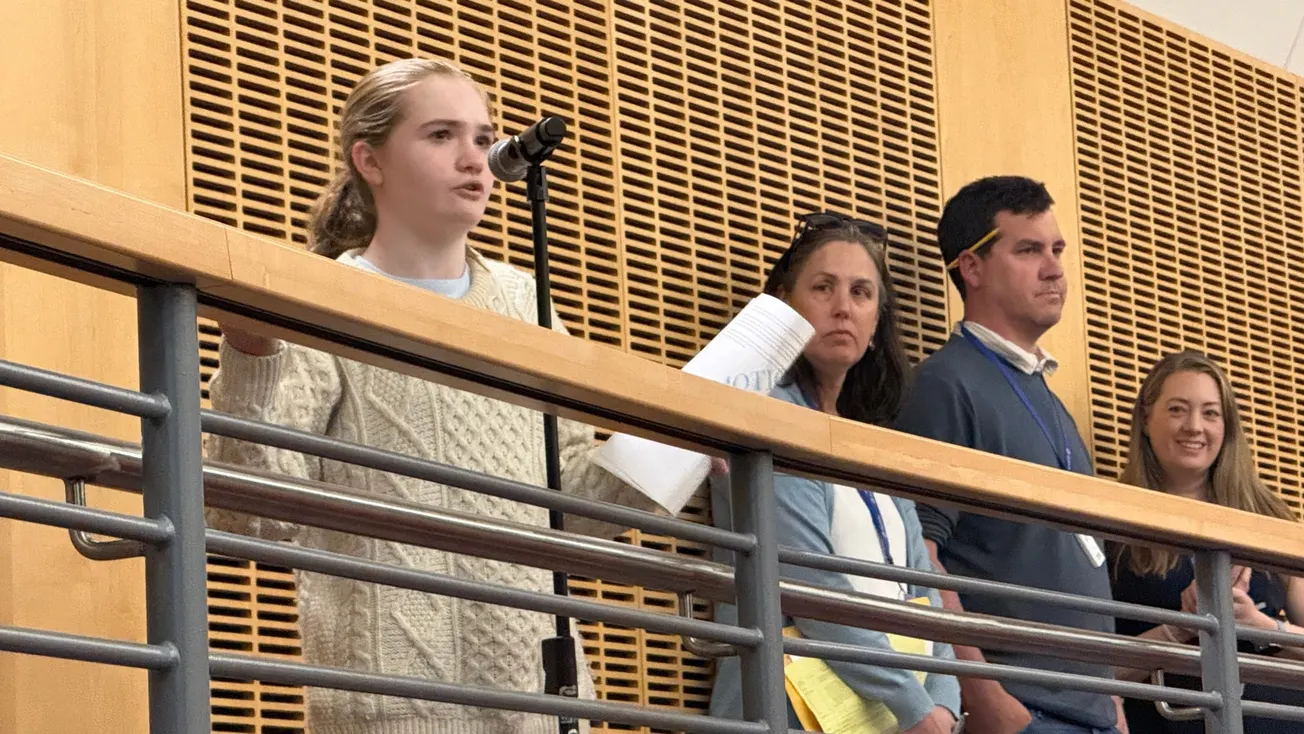
A Winchester student stood at the upper-tier microphone Thursday night and asked the 150 elected members of Town Meeting to understand something. Her brother is in special education. He is not getting the services he needs to thrive. The cuts already baked into the fiscal 2027 budget — the one members were about to vote on — will make that worse.
Lilly Ryan, given the floor by unanimous consent, had run a survey that drew more than 90 student responses. School facilities rated 2.1 out of 5. More than half said their buses are overcrowded and their classes too large.
“These inconveniences might annoy you,” she said, turning toward the adults below her, “but they’re not worth losing someone’s life over.”
Town Meeting voted to pass the budget anyway — because the spending plan, for all its damage, is the best outcome anyone could construct after voters rejected an $11.5 million Proposition 2½ override in March.
The fiscal 2027 General Fund operating budget, totaling about $171 million and including a 4.4% increase for the school side, passed on the Finance Committee’s 10-3 recommendation after the longest budget debate in recent memory.
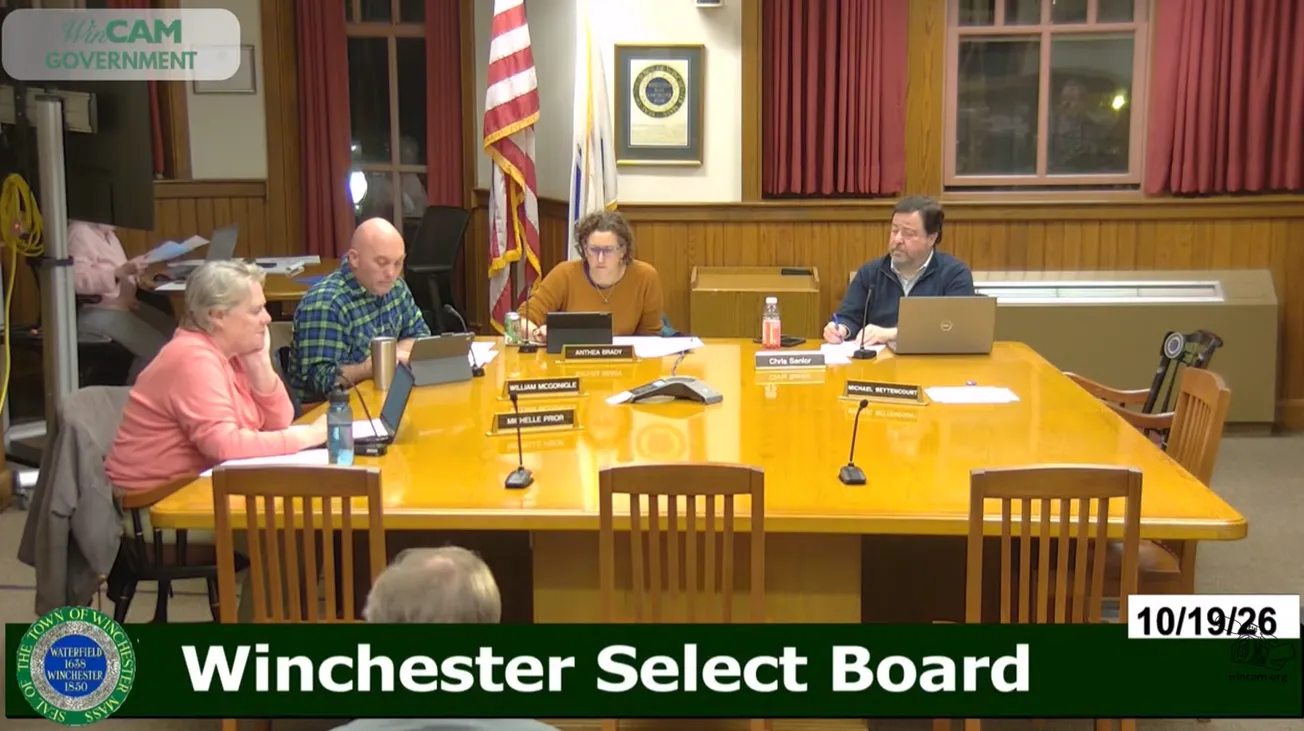
“This budget only staunches the bleeding,” Select Board Chair Anthea Brady, of Precinct 1, said.
She did not mean it as a criticism. She meant it as a description of the town’s condition.
Finance Committee Chair Derek Ross, of Precinct 6, in what he said was his final session in the role, told Town Meeting the gap entering the year was roughly $10 million, closed through 32.5 full-time-equivalent reductions on the school side, municipal hiring freezes and about $3.6 million in free cash.
He described the town’s estimated $21 million in free cash and a $10 million reserve floor as the “hard deck” — the point below which mass layoffs and immediate override pressure become unavoidable. He then acknowledged the three Finance Committee members who voted against the budget he was recommending.
“They are not wrong,” Ross said.
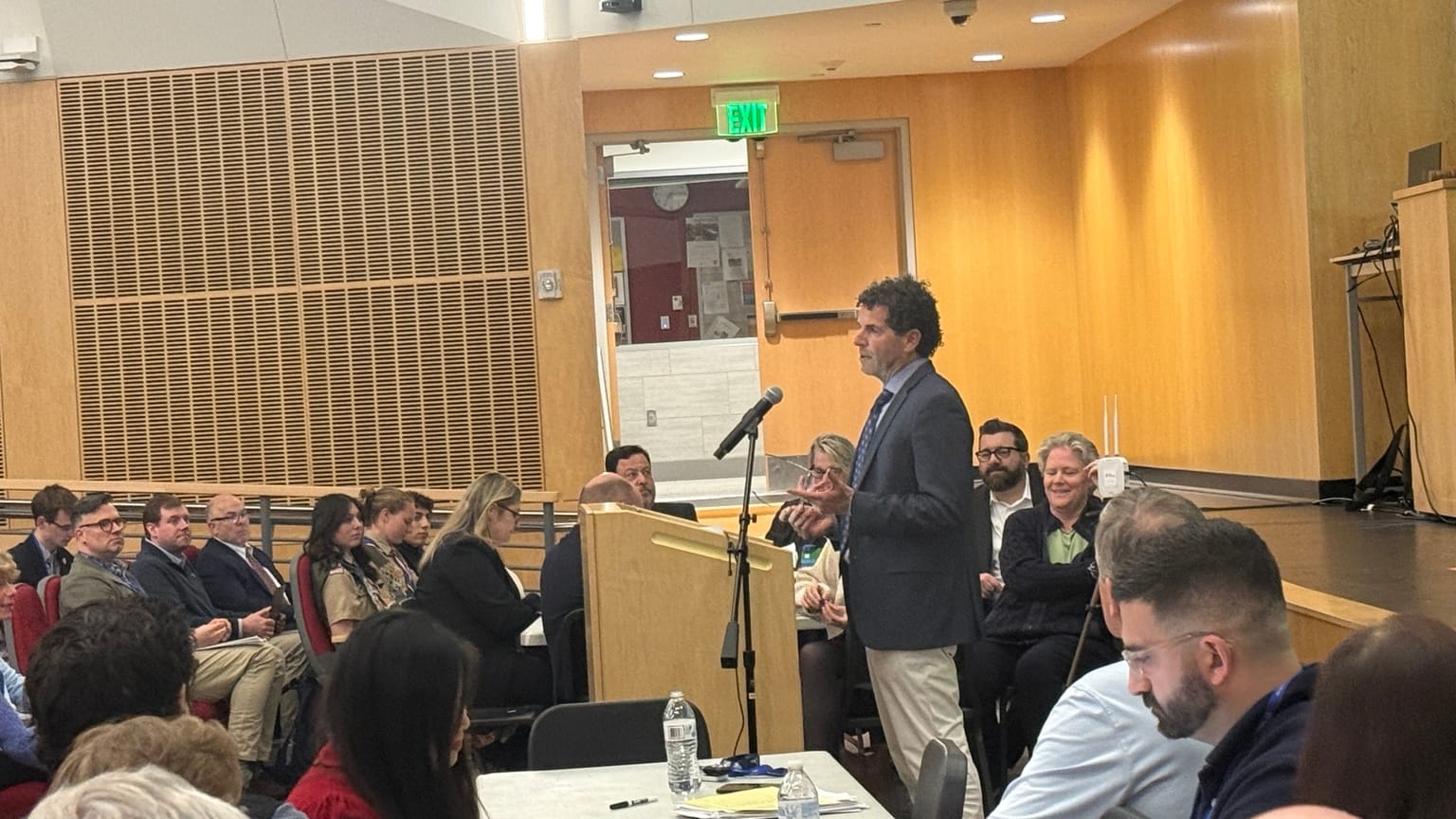
Select Board member Paras Bhayani, of Precinct 8, put the school-side reductions in sharper relief: about 10 of the 32.5 full-time-equivalent cuts are related to a drop in enrollment and 22.5 are not. Literacy specialists Town Meeting funded last year are being laid off.
“We can’t cut our way out of this. We’re burning cash,” Bhayani said. “The cuts from here would be catastrophic. You really need revenue.”
School Committee Chair Tim Matthews, of Precinct 1, called it “a bridge budget for one year only.” The reductions are not abstract numbers, he said — they are educators, education support professionals, interventionists and specialists who help students feel safe and connected each day. The problem is structural: the collision between rising costs and a funding structure that has become unsustainable for communities across Massachusetts.
Among those costs: math.
Superintendent Dr. Frank Hackett told the meeting the district’s entire annual curriculum budget has been about $11,000 — “not going to really do much for us” against a need that mirrors the literacy gap that drew statewide scrutiny in recent years. Winchester added math specialists last year. They are now being cut.
Norah Cooney, of Precinct 5, said she was “shocked” when Hackett told a School Committee meeting he had never worked in a district without elementary math specialists.
Hackett said he hopes to return next year with short-term recommendations, but cautioned that rolling out the new Arts & Letters literacy curriculum will already stretch staff.
“You can’t burn people out,” he said. “They can only do so much.”
Town Meeting passed Article 33, the Personnel Board’s annual wage package, without floor debate — a 2.5% cost-of-living adjustment for non-union employees at a cost of $287,540, a firefighter contract covering fiscal years 2026 through 2028 and a $373,988 placeholder for still-unsettled police contracts. Town Meeting also passed Article 38 unanimously, transferring $3,264,397 from free cash and $450,000 from overlay surplus to reduce the fiscal 2027 tax levy.
Then came the three-vote margin.
Ranked choice vote
A citizen petition to create a seven-member study committee on ranked-choice voting for municipal elections failed 72-75, with two abstentions — the only vote of the night that briefly silenced the room as members watched the precinct-by-precinct tally fill in on the projection screen at the front of the auditorium.
Citizen petitioner John Healey, who is not a Town Meeting member and was given the floor by unanimous consent, opened by putting the question plainly.
“Tonight, you’re not voting on any change to the voting system,” he said. “You’re authorizing a committee to study the potential benefits.”
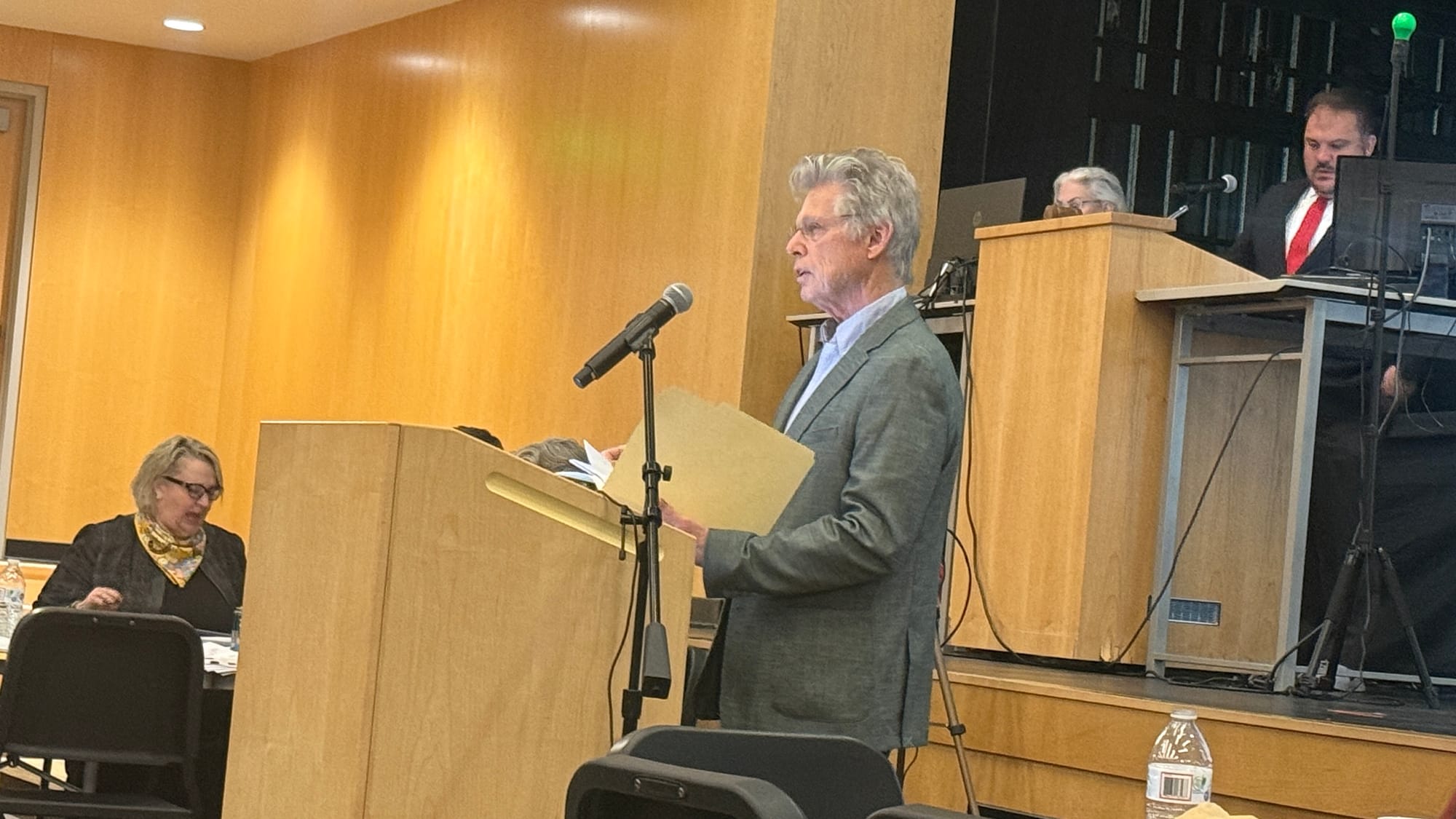
He cited vote-splitting and the chilling effect on candidates who decline to run rather than divide a base of support. He named Cambridge and Easthampton as the only Massachusetts municipalities currently using a ranked ballot and said 10 others have approved an adoption and filed home-rule petitions to implement it.
The opposition came from several angles.
Monica Ross, of Precinct 6, pointed to Massachusetts voters’ 55%-to-45% rejection of statewide ranked-choice voting in 2020, with 80% of the state’s cities and towns voting against it.
Marilyn Gagalis, of Precinct 1, who said she worked in Cambridge her entire career, warned the system produces “slate politics” that moves voters in lockstep across multiple offices.
Town Clerk MaryEllen Marshall said Winchester, “tends to have what we refer to as under-endorsed elections” — cycles in which a single candidate runs for an open seat — and that ranked-choice voting “I don’t think would work in community of this size.”
The Select Board took no position, having not received the full proposal in time for a formal vote. Town Moderator Phil Frattaroli asked members to turn off phones before the vote to speed the electronic tally. The board returned 72 yes, 75 no.
The EFPBC vote
The night’s longest debate opened with a line that acknowledged exactly how uncomfortable things were about to get.
“This is not awkward, is it?” said EFPBC Vice Chair Christian Nixon, of Precinct 1, stepping to the microphone to recommend that Town Meeting vote against an article sponsored by the Select Board — an article that, in its earlier form, would have eliminated his own seat on the Educational Facilities Planning and Building Committee.
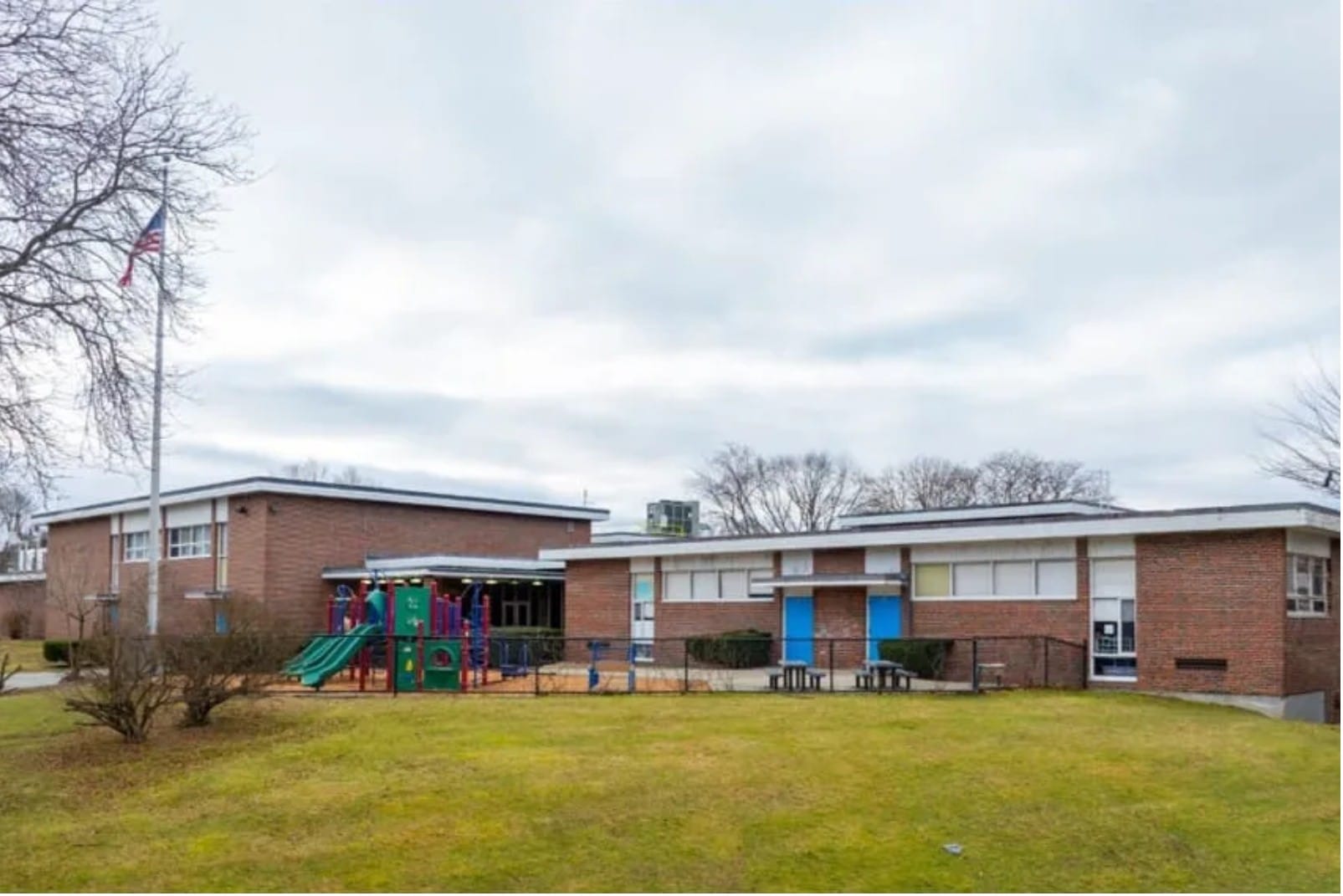
The EFPBC oversees school facility design and construction, including the upcoming Muraco Elementary rebuild.
The problem at the center of Article 45 is narrow but consequential: Massachusetts School Building Authority (MSBA) regulations require a school building committee to include a sitting School Committee member.
The EFPBC does not have one, meaning it cannot currently qualify as a school building committee — even though Town Meeting already authorized the $1.5 million Muraco feasibility study appropriation earlier this spring.
Select Board member Bill McGonigle, of Precinct 3, presenting for the board, said the original article would have let the School Committee swap its EFPBC appointee in and out depending on when MSBA compliance required it.
Nixon objected to the structure. A single appointee, he said, would be “essentially performing for an audience of one, or in this case, three, since three constitutes a quorum of the school committee.”
He flagged the July 1 effective date as poorly timed given active concrete-repair work at the high school he is personally overseeing.
Kara Nierenberg, of Precinct 7, who joined the EFPBC last summer as a jointly appointed engineer member, called the proposal “almost insulting” to volunteer board members. It took her 10 months of weekly meetings to fully come up to speed on the committee’s technical work, she said.
Diab Jerius, of Precinct 8, said the situation will largely correct itself in 10 months when the relevant terms expire.
John Bellaire, of Precinct 2, countered that Winchester had already been forced to ask MSBA for an extension past a May 1 deadline.
Kathleen Bodie, of Precinct 3, widened the aperture: MSBA regulations require not just a School Committee member, but also the local administrator, the person responsible for school-building maintenance, a school principal, a local budget officer, two members with engineering or construction experience and a procurement-certified member.
McGonigle acknowledged the article addresses only one of those requirements.
Late in the debate, former town moderator Heather von Mering, of Precinct 8, cut through it. She moved a floor amendment: rather than restructuring the existing seat, the EFPBC would simply add two — a sitting School Committee member and the school district’s director of finance.
Nixon said he welcomed the change, noting Director of Finance Andrew Marin already attends every weekly EFPBC meeting for its entirety and “functions essentially as a member.”
The Select Board backed the amendment. The School Committee voted 5-0 favorable.
Terence Tirella, of Precinct 2, a current EFPBC member, supported it from the floor.
The amendment carried on a voice vote, the article passed as amended and Nixon kept his seat.
What to do with the carriage house
The final article of the night was also the one with the most history behind it.
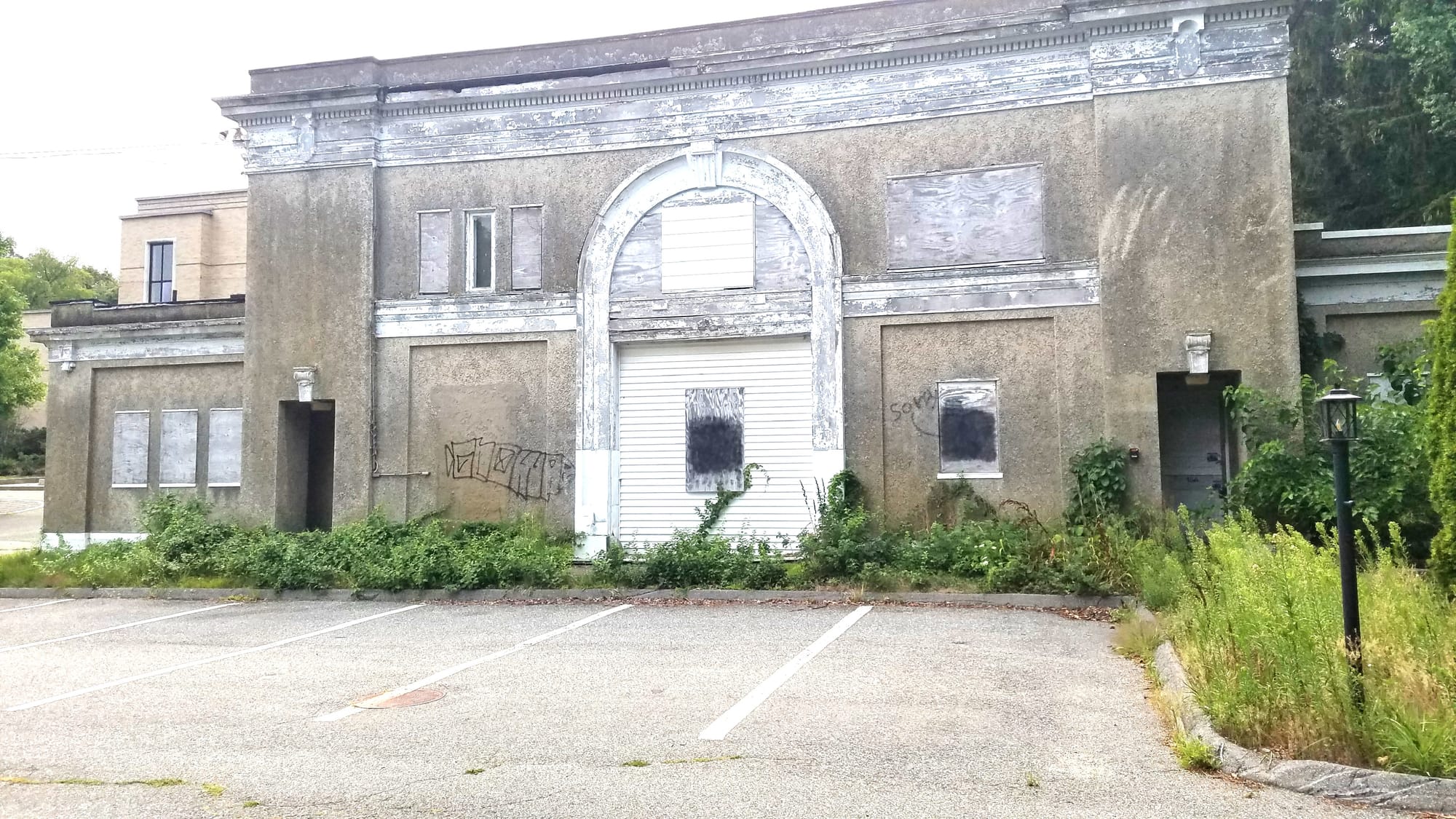
Brady and Matthews presented Article 46 together — a proposed five-member study committee, one appointee each from the Select Board, School Committee, Capital Planning Committee, Finance Committee and Historical Commission, charged with working alongside the Winchester Historical Society on a path forward for the Sanborn carriage house at 21 High St.
The building is the Ambrose Elementary outbuilding whose $300,000 demolition Town Meeting rejected 61-89 the previous week.
The committee’s mandate came in two phases. By two weeks before the fall warrant closes, the Historical Society would have to show “tangible progress”: a project narrative, conceptual drawings, a preliminary private budget, a structural engineer’s opinion the building is sound and evidence of private fundraising momentum.
By spring 2027, the bar would rise to interior blueprints, exterior renderings, abatement plans for mold and asbestos, a traffic and safety analysis and demonstrated financial progress.
The article had been amended on the floor to bar Historical Society board members and their immediate family from serving on the committee.
Bill Swanton, of Precinct 5, who sits on the Historical Society board, called the benchmarks “very aggressive” given Community Preservation Act funding cycles and the lead time required to assemble private money.
“A hair trigger that says, well, if you don’t get all this done, we’re just going to tear down the building, is not in the spirit of what was voted the other night,” he said.
Nixon, before moving to indefinitely postpone, walked Town Meeting through the actual cost picture.
The $7 million figure that has circulated as shorthand for restoration, he said, was a 2022 estimate for a full envelope rebuild including demolition of a 1960s concrete-block wing and an elevator that now runs close to $1 million on its own.
Piecemeal estimates from two to three years ago put the roof and envelope at $1 million to $1.5 million and interior abatement at $500,000 to $1 million — real money, but well short of the number critics have cited.
Stefanie Mnayarji, of Precinct 5, who presented Article 25 the previous week, pressed for action. Fresh graffiti had appeared on the building’s facade within the past month. Students at Ambrose are regularly shooed away. Parents stationed themselves outside on Halloween night to make sure no one entered or exited.
“There is increasing vandalism. There is increasing suspicious activity in this neighborhood where other people live,” she said.
Cooney, whose backyard abuts the building, supported keeping the benchmarks. She said drug paraphernalia and recent break-in attempts make the carriage house a genuine safety concern and that securing it will carry costs — fencing, fire-protective measures, police response — that the town will need to absorb if private fundraising stalls. She has already begun corresponding with police and fire officials about making the structure secure.
Doug Marmon, of Precinct 1, moved to postpone the article to fall Town Meeting.
Frattaroli ruled that motion out of order: Town Meeting cannot place items on a future warrant. An indefinite-postponement motion would be in order, he said.
Pamela Cort, of Precinct 5, offered the observation that settled the question. Whether Town Meeting approved the article or not, she said, the Select Board can assemble exactly this committee with exactly these goals — no Town Meeting vote required.
Town Meeting voted to indefinitely postpone. Frattaroli closed the warrant and a motion to adjourn and dissolve carried, ending the 2026 spring annual Town Meeting.
Will Dowd is a Massachusetts journalist who covers municipal government and community life for Winchester News. He runs The Marblehead Independent, a reader-funded digital newsroom.