Table of Contents
Update, April 27, 2026, 5:43 p.m.: This guide has been updated to reflect revised Town Meeting materials and late-breaking clarifications ahead of tonight’s session. Changes include updated Article 4 Human Rights Commission language; expanded Article 5 rules-of-procedure details; revised Article 18 close-out totals; added context on Article 20’s borrowing rescission; the now-filled Article 28 literacy appropriation amount; a clearer breakdown of Article 33’s six-motion personnel package; and corrected Article 43 language clarifying that support from 66 residents and a state senator referenced a separate proposed house design, not the petition itself.
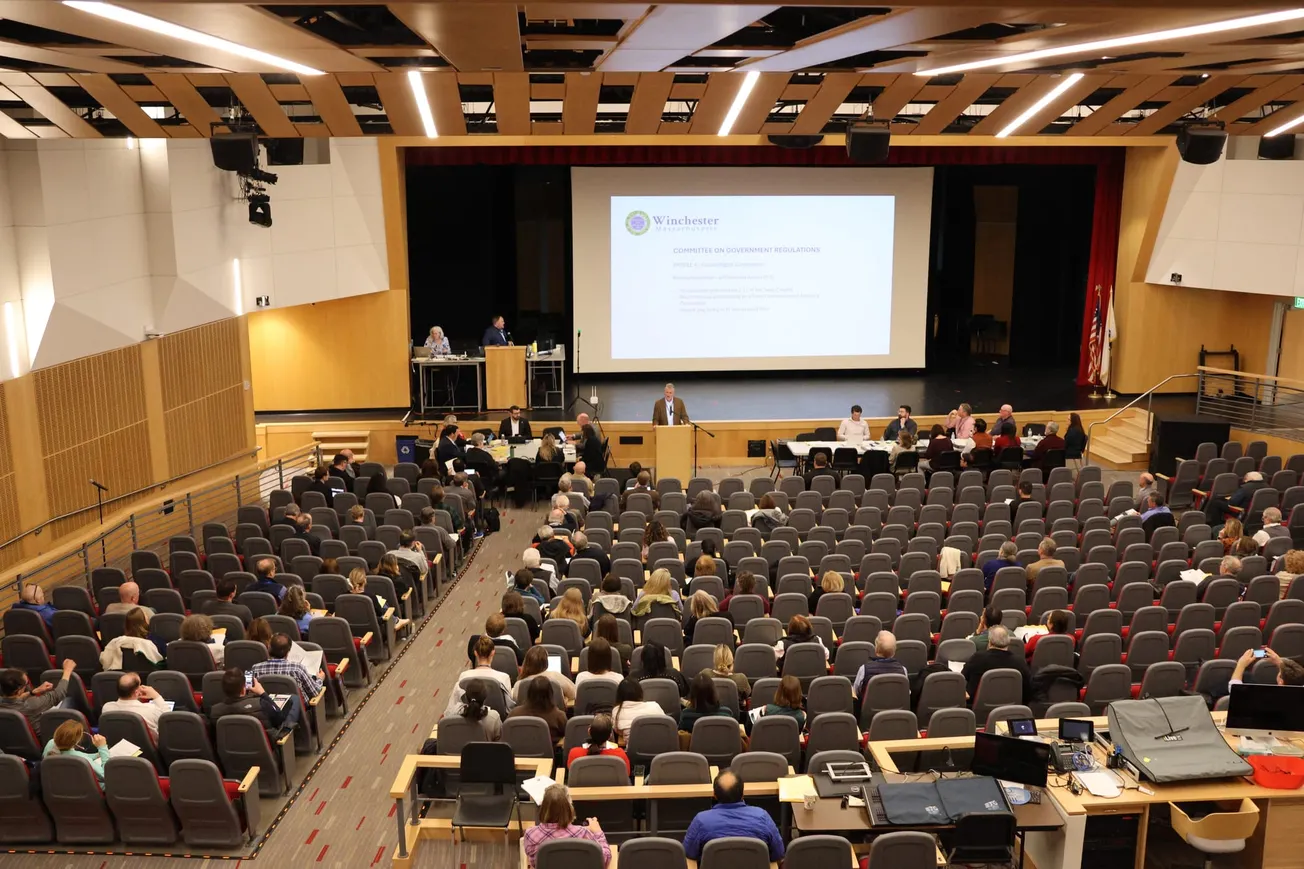
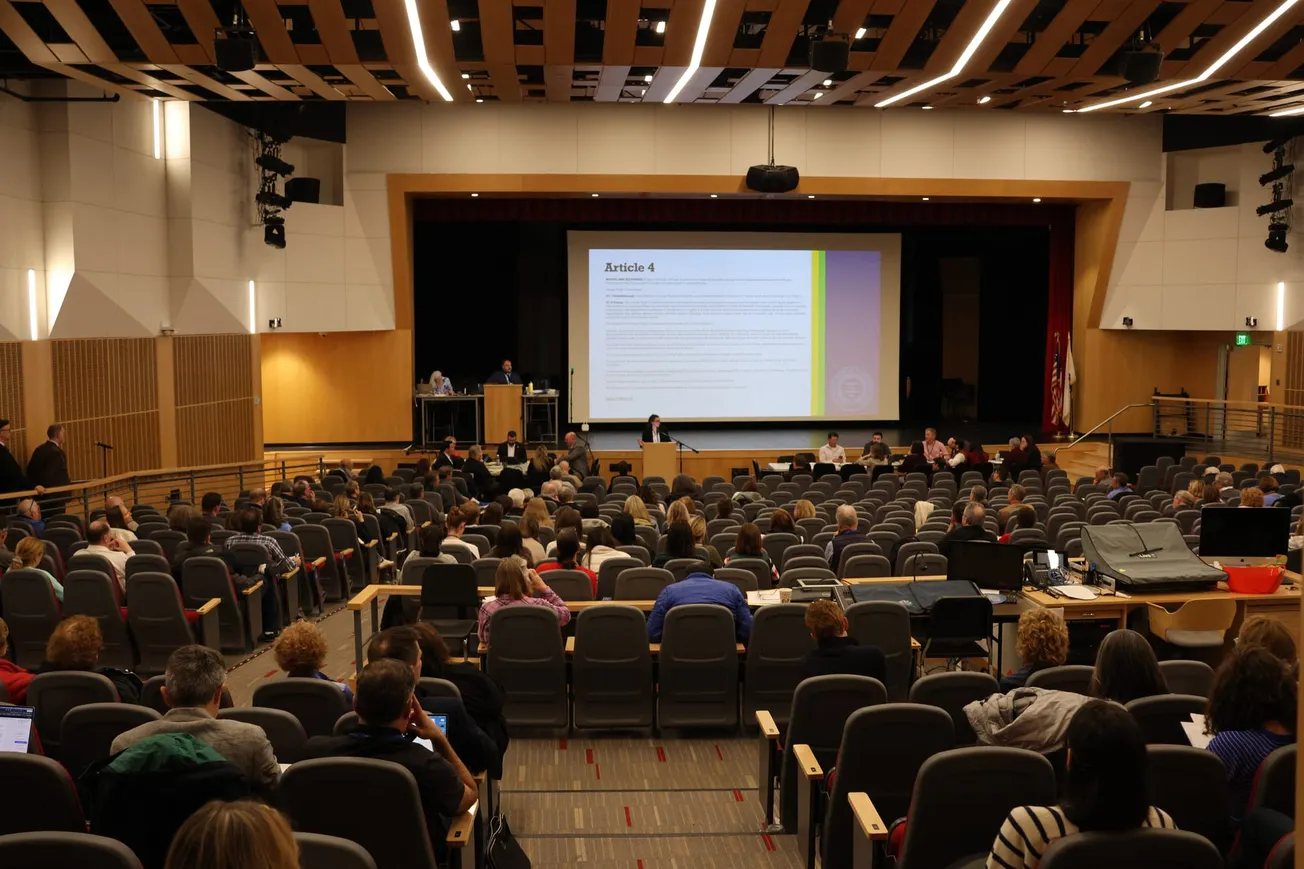
The 2026 Spring Annual Town Meeting begins at 7 p.m. Monday, April 27, at Winchester High School in Winchester. This guide outlines the dollar figures and policy questions on the 46-article warrant.
Readers who want to dig deeper can explore the interactive warrant tracker, which breaks down all 46 articles in one place with article-by-article detail, key dollar amounts, and sponsor information. It is a useful companion to this guide if you want to scan the full warrant quickly, compare articles or look up a specific item before Town Meeting.
When: Monday, April 27, 2026, 7 p.m. Where: Winchester High School Auditorium, 80 Skillings Road, Winchester, Massachusetts Articles on the warrant: 46 Format: Representative Town Meeting — voting is limited to elected Town Meeting members; proceedings are open to the public Financial articles: Under the Home Rule Charter, financial articles cannot be taken up until the third night of the meeting
Draft status. This guide is based on the warrant signed April 6 and an advance copy of the motion book. The motion book includes specific dollar amounts but remains in draft. Articles may be amended, indefinitely postponed or withdrawn before or during the meeting. Articles 2, 9, 13, 14 and 26 are indefinitely postponed in the April 10 motion book. Articles 2, 8, 9, 11, 12, 13, 15, 26, 29, 32, 34 and 35 are listed for the proposed consent agenda.
How Town Meeting works
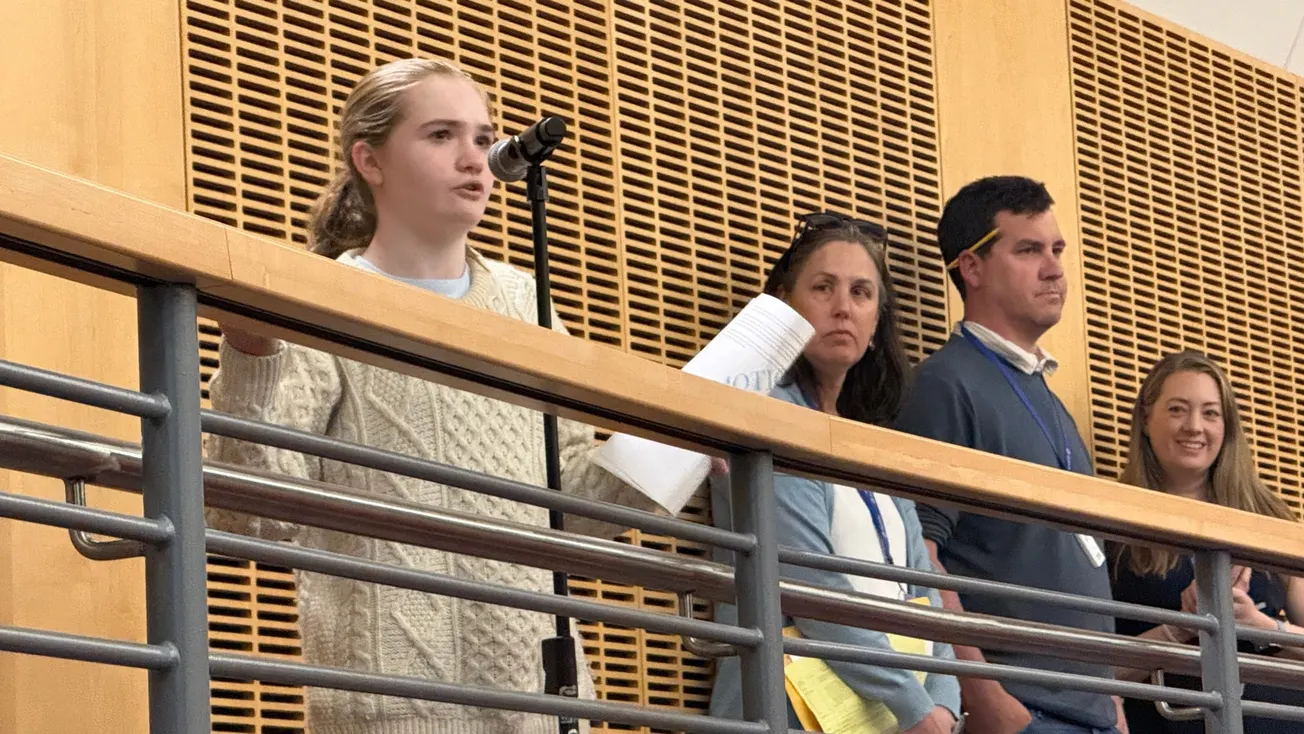
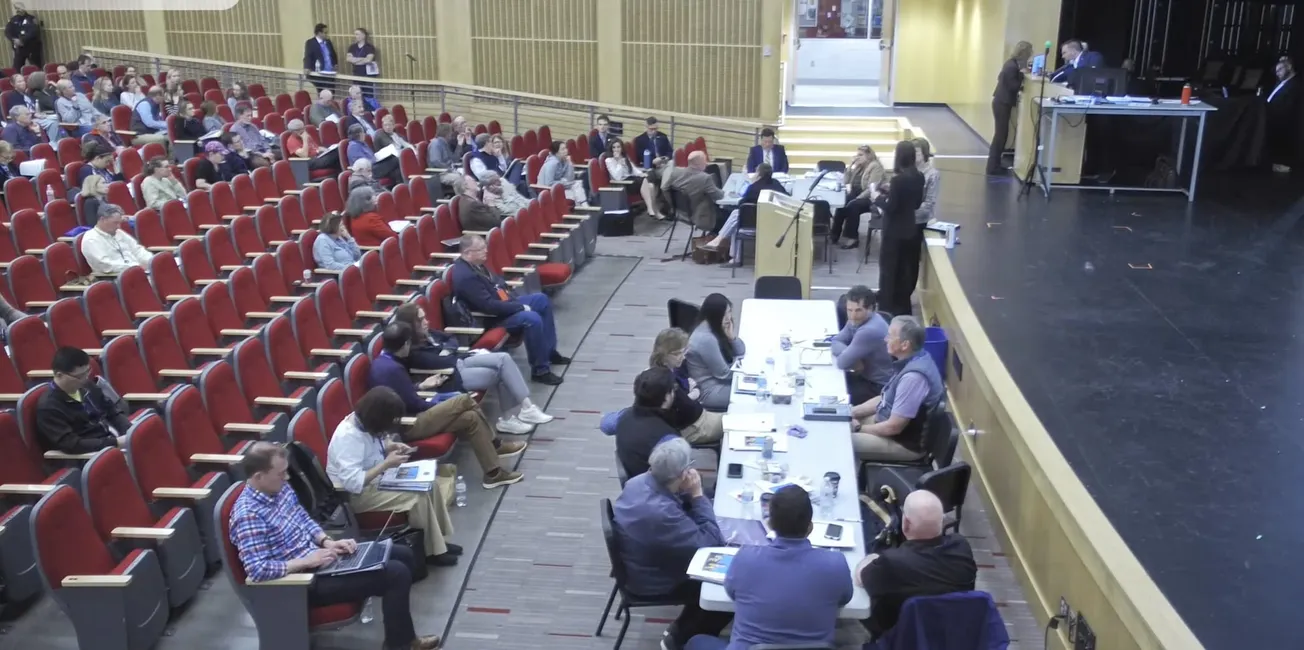
Winchester uses a Representative Town Meeting under Article 2 of the Home Rule Charter. Voting is limited to elected Town Meeting members. Proceedings are open to the public and any Winchester resident may speak with the moderator's recognition.
Under the current parliamentary authority, the initial proponent of a main motion has up to 10 minutes. Any other person speaking on any motion is limited to 5 minutes unless granted an extension. No member may receive more than one extension on a pending motion. Motions to close debate ("move the vote") require a two-thirds vote for passage.
Voting is by voice, by standing count or by electronic tally. The town clerk provides an electronic system that can display final vote totals and, at the request of 20 or more members, a listing of how each member voted. A record of the vote is made available electronically to the public within 24 hours.
Financial articles cannot be taken up until the third night of the meeting. The moderator may adjourn from night to night, typically on successive Monday and Thursday evenings.
Fiscal 2027 operating budget: $171.7 million
The fiscal 2027 operating budget proposed by town manager Chris Senior totals $171,733,429 across all departments and expense lines. That is a 3.18% increase over the fiscal 2026 appropriation. The proposed budget includes $1,737,059 in cuts shared proportionally across the municipal, school and undistributed budgets.
The budget book states the proposed FY27 budget uses $2.1 million in projected fiscal 2026 turnbacks and surplus revenue and an additional $3 million in available free cash. For context, the budget book states Winchester entered the fiscal 2026 budget process with a $3.9 million deficit, funded with $3.5 million of free cash and $400,000 from the overlay surplus. The budget book notes that this closed the budget gap but did not fix the underlying imbalance between expenses and revenue.
Closing the fiscal 2027 gap
Fiscal 2027 operating budget breakdown
Revenue projections. Tax revenue, including property tax plus water, sewer, and debt exclusions, is projected at $135.4 million for fiscal 2027, up from $131.2 million in the fiscal 2026 budget and $125.8 million actual in fiscal 2025. Local receipts are projected at $12.671 million, and state Cherry Sheet aid at $13.8 million. Property tax covered roughly 73% of the fiscal 2026 budget; about 95% of that property tax came from residential property. The Board of Assessors voted on February 6, 2026, to release $450,000 from the overlay surplus for fiscal 2027 use. New growth is projected at $750,000, down from $1.3 million budgeted in fiscal 2026.
Expense drivers. Undistributed expenses rise 9.93%, reflecting shared and mandated costs such as energy, employee benefits, and insurance. Health insurance base rates rise 14.4% for active employees and 10% for Medicare supplemental plans. Workers' compensation rises 12.82%. General insurance rises 5.88%. Contributory retirement rises 4.83%. Municipal department budgets rise 4.62%, driven in part by two years of contract salary adjustments and information technology cybersecurity investments. The school department level-services budget rises 5%. The School Committee's adopted budget rises 8.3%, includes strategic additions, and assumes passage of an override.
Sources: Town Manager's Financial Plan, FY 2027; April 6 Select Board meeting; Motion Book, April 10, 2026.
Article 16 solar bond: $7.9 million; 25-year net savings $4.9 million
Article 16 would appropriate $7,943,000 by borrowing under Massachusetts General Laws Chapter 44, Section 7(1) for solar panel acquisition and installation at five town and school sites. Solect Energy estimates total net savings of $4,868,000 over 25 years, combining energy savings with federal tax credits.
The article authorizes borrowing of $7,943,000. The $381,000 difference between the authorization and the site-by-site total represents contingency and incidental costs. Requires a two-thirds vote.
Source: Article 16 motion, Motion Book, April 10, 2026.
Article 27 Muraco feasibility study: $1.5 million; MSBA reimbursement rate 32.47%
Article 27 would appropriate $1,500,000 for a feasibility study of Muraco Elementary School at 33 Bates Road in Winchester, with the work coordinated through the Educational Facilities Planning and Building Committee (EFPBC). Funding would come through borrowing under Chapter 44. The motion book states the town may be eligible for a Massachusetts School Building Authority (MSBA) grant, and that if the MSBA does not fund the study, any costs incurred above any grant approved by and received from the MSBA would be the sole responsibility of the town. Winchester accepted the MSBA invitation into the Eligibility Period on March 2, 2026, after the MSBA Board voted on December 12, 2025, to invite Winchester following its September 2025 Senior Study site visit.
The $1.5 million is the full authorization Town Meeting is being asked to approve. The motion book states Winchester’s current MSBA reimbursement rate is 32.47%, applied to costs associated with feasibility, and says the town’s true net cost is expected to be substantially lower than $1.5 million. The motion further states that the amount of any borrowing authorized by Town Meeting would be reduced by any grant amount set forth in the Feasibility Study Agreement that may later be executed between the town and the MSBA.
Voters approved a $3.6 million debt-exclusion override in 2020 for life-extension work at Muraco. Projects under that authorization included replacement of three modular gas-fired boilers in 2021, a roof repair project in 2022, partial replacement of the building’s original 1965 electrical panelboards in 2023, and flooring, painting, and new sinks in 2025-2026. Nearly 200 windows are original single-pane steel-sash units. Winchester submitted MSBA Core Replacement Program Statements of Interest in 2017, 2018, 2019, and April 2025 before advancing into the current pipeline.
Article 45 would modify the EFPBC appointing structure effective July 1, 2026. Under the proposed structure, nine members would be appointed for staggered three-year terms; the School Committee’s appointee would serve at the committee’s pleasure; those 10 members must be Winchester residents; and the superintendent of schools or designee would serve as the 11th member.
Article 28 would appropriate $598,540 from free cash for the purchase and implementation of a comprehensive K-5 elementary literacy curriculum recommended by the Early Literacy Team after a two-year process that concluded with a pilot during the 2025-2026 school year. The two curricula piloted were “Arts & Letters” by Great Minds and the “EL K-5 Language Arts Curriculum” by EL Education. The evaluation drew on feedback from approximately 152 educators, nearly 400 students, and 149 families across all five elementary schools.
Sources: Articles 27, 28 and 45 motions, Motion Book, April 10, 2026; State of the Town briefing.
Article 35 Forest Circle and Fallon Road acquisition: $3 million; grant reimbursement up to $1.4 million
Article 35 would authorize the Conservation Commission to acquire approximately 13.66 acres at Forest Circle in Winchester (Parcels 1-202 and 1-273 on the Assessors Map) and Parcel 26-0-1A at Fallon Road in Stoneham, Massachusetts, for conservation and passive recreation under the Community Preservation Act (CPA). The first motion authorizes $3,000,000 in borrowing by the treasurer under Chapter 44B, Section 11. A separate second motion appropriates $28,500 from the FY26 Community Preservation Annual Budgeted Reserve for one-time legal and acquisition costs.
The motion book states the purchase will be funded through issuance of a bond for the full purchase price and that WCCP funds will pay annual debt service. The motion book states the maximum grant reimbursement is $1,425,000 and that any reimbursement would reduce the bond principal. The parcel abuts the Middlesex Fells Reservation.
Article 34, the annual CPA budget, appropriates or reserves a total of $2,055,000: $1,800,000 in CPA surcharge revenue plus $255,000 in state match. Appropriations: $40,000 for administrative expenses (which the motion book notes is about 1.9% of revenue); $205,500 each for open space, historic resources and community housing restricted reserves ($616,500 total); and $1,398,500 in undesignated reserve. The motion book states fiscal 2027 is the second year Winchester will collect CPA funds and the first year of a full application cycle.
Sources: Articles 34 and 35 motions, Motion Book, April 10, 2026; Winchester Committee on Community Preservation.
Room occupancy tax at 6%: Department of Revenue figures imply about $17,000 a year
Article 7 would impose a local room occupancy excise tax at 6% of the price charged for each room rental under Massachusetts General Laws Chapter 64G, Section 3A. The Massachusetts Department of Revenue (DOR) supplied estimates: had the tax been in effect, Winchester would have received $15,683 in fiscal 2024, $16,711 in fiscal 2025 and $6,012 in the first two quarters of fiscal 2026.
Percentage note. The 6% rate is a policy parameter applied to the price charged for each room rental. Applying the rate to DOR figures implies a Winchester taxable room-rental base of about $261,000 in fiscal 2024 and about $279,000 in fiscal 2025. Revenue at those levels is a fraction of 1% of the town's operating budget. Winchester does not specifically regulate short-term rentals. DOR figures reflect only Winchester rentals already paying the state room occupancy tax; platforms including Vrbo and Airbnb fall within scope.
Source: Article 7 motion, Motion Book, April 10, 2026.
Citizen petitions: five on the 2026 warrant
Article 39, George Nowell. Would establish a five-member Transfer Station Data and Resource Committee, a majority of whom must be Town Meeting members at the time of appointment, appointed by the moderator, with a one-year trial period. The motion book background states the transfer station operates with approximately annual revenues and expenses exceeding $2.3 million.
Article 40, Shamus Brady. Would replace Chapter 8 Public Order Sections 8-28 and 8-29. Per the printed warrant and motion book: owners or occupants of residentially zoned land abutting a paved sidewalk must clear snow and ice within 8 hours between sunrise and sunset, subject to a $25-per-day fine. Owners of apartment or multi-unit condominium property must clear the full width within 3 hours, with a $50-per-day fine. Property used for business purposes must clear within the first 3 hours between sunrise and sunset; Section 8-29 as rewritten sets a $50-per-day fine (the current commercial fine of $10 per day is crossed out in the petition). The petition also creates a three-member annual review committee appointed jointly by the police chief, the DPW director and one Winchester resident who holds no elected office.
Article 41, Katherine Valone. Would add Chapter 27 to the Code of Bylaws banning the use of first- and second-generation anticoagulant rodenticides (ARs) on town-owned property. The motion book states that second-generation compounds remain in animal tissues for an extended period due to long half-lives (in brodifacoum, up to 330 days). The Board of Health could issue emergency waivers, restricted in time and location, only after a well-documented request showing a significant rodent infestation of public-health consequence where all viable integrated pest-management practices and non-AR rodent mitigations have been exhausted. The motion book background references two state bills (S2721 and H965) to ban ARs statewide.
Article 42, John Healey. Would establish a seven-member Ranked Choice Voting Study Committee: the town clerk or designee; one member of the Board of Registrars of Voters; three town residents appointed by the Select Board; one Town Meeting member appointed by the moderator; and one member designated by the League of Women Voters of Winchester. The committee would report to the 2026 Fall Town Meeting. The motion book background states that as of March 2026, 49 American jurisdictions use ranked choice voting in public elections or have passed it for upcoming elections, reaching nearly 14 million voters across 22 states and Washington, D.C.
Article 43, Wyatt Biel. Would direct the town manager and the Department of Public Works (DPW) to remove an 18-inch municipal stormwater drain pipe installed in May 2018 on private property at 176 Dothan St. (assessor's Parcel ID 25-91-0), restore the property and reroute the drainage through a public right-of-way. The motion book states the pipe conveys stormwater and snowmelt runoff from approximately 50 acres of watershed and was installed pursuant to a temporary construction and access easement that expired by its own terms on December 4, 2018. The petition identifies the McClennen Park Detention Ponds in Arlington as the already-intended destination for the runoff. Supporting materials for the article also reference backing from 66 residents and a state senator for a separate proposed house design that would have accommodated the existing Town-installed stormwater pipe and culvert without an easement. According to those materials, that design was later voted unfavorably by the Planning Board, Design Review Committee and ZBA because of a dimensional zoning deviation.
Source: Articles 39, 40, 41, 42 and 43 motions, Motion Book, April 10, 2026.
Financial context
Post-override actions
Voters rejected the $11.5 million override on March 21. The Select Board had considered a range of $12.5 million to $15 million before settling on $11.5 million. Town manager Chris Senior told the Select Board on March 30 that he had imposed a hiring freeze and discretionary spending limits and had asked department heads for reduction options.
Bill McGonigle in a four-page memo dated March 24 proposed raising commercial transfer station fees 50% over fiscal 2025 levels, which he estimated could generate $300,000 to $400,000 in annual new revenue. He also proposed reducing the town's contribution to other post-employment benefits (OPEB) to the state statutory floor, which he estimated could save at least $1.125 million of the roughly $1.5 million the town currently spends annually on that line. Additional proposals included outsourcing custodial services performed by about 30 Department of Public Works employees and directing the town manager to identify departmental reductions focused on quality-of-life services rather than public safety.
Outgoing chair Michelle Prior called for focus groups, listening sessions and surveys to learn why the override failed. Michael Bettencourt said he wanted more direct engagement with town management, the schools and the Finance Committee. Anthea Brady said the board would work to schedule a tri-board meeting ahead of Town Meeting.
By the numbers
| $171.7M | Proposed FY27 operating budget |
| $135.4M | Projected FY27 tax revenue |
| $13.8M | Projected FY27 state Cherry Sheet aid |
| $12.7M | Projected FY27 local receipts |
| $7.9M | Article 16 solar bond |
| $4.9M | Est. 25-year solar savings |
| $3M | Article 35 land bond |
| $3M | Additional FY27 free cash |
| $2.4M | Article 22 Town Hall/Library |
| $2.1M | Projected FY26 turnbacks |
| $2M | Article 15 stabilization |
| $1.74M | Proposed FY27 budget cuts |
| $1.5M | Article 27 Muraco feasibility |
| 46 | Warrant articles |
Supplemental fiscal 2026 transfers: about $928,081
Article 12 carries seven motions. Transfers come from free cash unless otherwise noted.
- Snow and ice personal services: $25,000 from the snow and ice equipment budget and $236,488 from free cash.
- Snow and ice expense: $307,593 from free cash.
- Energy expense: $143,000 from free cash. The motion book states the Lynch Elementary School solar system was not energized until March 24, leaving the building on grid power for about 8 months. Andelman & Lelek estimated annual electricity cost at $267,450 ($22,287 per month on average) without a solar offset. The estimated FY26 additional budget needed was $142,996 after solar savings and the $80,000 Lynch energy budget already appropriated.
- Fire Department personal services: $117,000 for retirement accrual buyouts.
- Medicare tax: $20,000.
- Comptroller's office personal services: $5,000 for payroll work tied to federal Public Law 119-21 overtime-deduction tracking.
- Finance Committee Reserve Fund: $74,000 to replenish transfers made since the 2025 Fall Town Meeting.
Personnel and wage actions
Article 33, Personnel Board. This is a six-motion package rather than a single general personnel article. The motions would amend the non-union municipal compensation schedules for a proposed 3% cost-of-living adjustment effective July 1, 2026; raise and appropriate $344,285 to fund that 3% COLA across municipal, water/sewer and recreation budgets; amend the firefighters compensation schedule under the January 15, 2026 memorandum of understanding with IAFF Local 1564; transfer $289,950 from the FY25 unallocated wage account to fund FY26 firefighter contract costs; raise and appropriate $437,572 for FY27 firefighter contract costs; and raise and appropriate $324,743 for the FY27 unallocated wage account for unsettled police collective bargaining agreements. The article also retains the classification and compensation study question for non-union positions.
Stabilization actions: $3.1 million total
Article 15 would appropriate $2,000,000 from free cash to the General Stabilization Fund. The motion book states the Massachusetts Department of Revenue recommends maintaining the General Stabilization Fund in the range of 5% to 7% of the operating budget. Article 18 would transfer $848,451.07 from unexpended capital accounts to the Building Stabilization Fund and $97,584.34 to the Capital Stabilization Fund, for a total of $946,035.41.Article 20 would rescind a $1,025,000 borrowing authorization approved November 14, 2024 for McCall Middle School and Ambrose Elementary School roof repair. Capital Planning says bids came in well below engineering estimates, so the borrowing was not needed to complete the project. The rescission helps offset the borrowing proposed under Article 22.
Capital projects beyond solar: $3.6 million across three articles
- Article 21, South Reservoir Dam. Additional $830,000: $22,996.32 from Thornberry Road Pumping Station available moneys; $477,742.67 from unexpended bond proceeds (motion book itemizes $25,402.30 from the Water & Sewer Vactor truck account and $452,340.37 from North Reservoir Dam); and $329,261.01 in borrowing.
- Article 22, Town Hall and Library. Additional $2,400,000 for roof repair, Town Hall Bell Tower renovation and Town Library window replacement: $1,400,000 from the Building Stabilization Fund and $1,000,000 in borrowing.
- Article 23, Town Hall design and development. $200,000 from the Capital Stabilization Fund for architectural and engineering services covering HVAC improvements, ADA compliance, electrical and network upgrades, fire suppression system renovation, restroom improvements, window replacement and structural repairs.
- Article 24, Strategic Capital Maintenance Fund. $200,000 from free cash. The motion book states Town Meeting has each year since spring 2015 approved $100,000 from free cash for this program; the town manager is recommending funding be increased to $200,000.
- Article 25, Carriage House demolition, 21 High St. $300,000: $19,463.32 from the Carriage House Architectural & Engineering account and $280,536.68 from the Capital Stabilization Fund.
- Article 19, capital effective July 1, 2026. ADA Transition Plan $125,000 from the Capital Stabilization Fund; MS4 Permitting $150,000 ($9,800 from the MS4 Permit Year 3 account and $140,200 from Water & Sewer Retained Earnings); Everett Avenue area drainage engineering analysis $50,000 from Water & Sewer Retained Earnings.
- Article 26. Indefinitely postponed in the April 10 motion book.
Operating transfers and revolving funds
Article 10 would appropriate $206,864.70 from the Public, Educational and Government (PEG) Access and Cable Related Fund: $186,864.70 for PEG access service programming, franchise-agreement monitoring and license-renewal preparation, and $20,000 for capital purposes. The motion book notes Winchester Community Access and Media (WinCAM) has managed PEG programming since 2000.
Article 11 would appropriate $8,000 from the Parking Meter Fund to the Town Center Parking Account (for four kiosks at the Aberjona, Laraway and Cullen lots) and $21,000 to the Wedgemere Parking Account. The motion book states the town operates the Wedgemere Station Commuter Rail Parking Lot under an agreement with the Department of Conservation and Recreation (DCR) and is required to pay DCR 66.67% of revenue collected at the lot, net of a $22,500 cap of certain direct and indirect costs.
Article 32 would set fiscal 2027 revolving-fund spending caps: Archival Center $5,000; Energy Use $80,000; Board of Health Clinics $130,000; Grass Fields $100,000; Synthetic Fields $100,000; Historical Commission $6,000.
Governance and rules
Article 4 would add Sections 4.6 through 4.6.7 to Chapter 2 of the Code of Bylaws establishing a Human Rights Commission of nine members: four residents, including one liaison to the Council on Aging and one liaison to the Disability Access Commission; two student members who are secondary students in public, private or home schools and residents of Winchester; one senior member of the School Department administration; the town manager or a designee from the Office of the Town Manager; and the chief of police or a designee from the senior ranks of the Winchester Police Department. Student members would serve one-year terms, with one term expiring each June; other appointed members would serve staggered three-year terms. The Select Board would appoint three resident members and one student member, while the School Committee would appoint one resident member, one student member and the School Department representative, who would serve at its pleasure. The commission’s duties would include advocacy, education, policy review, referrals and consultation on human-rights matters. The motion background references Human Rights Commissions in Lexington, Arlington, Stoneham, Medford, Woburn and Belmont.
Article 5 would amend the Rules of Procedure for Town Meeting in Chapter 2, Section 3. The revised motion would replace Robert's Rules of Order Revised with "Town Meeting Time, A Handbook of Parliamentary Law, 4th edition" as the parliamentary authority; establish an assistant moderator role appointed before each meeting to support the moderator but without authority to run the meeting in the moderator's absence; add preparation-for-debate language; and codify Winchester's "move the vote" practice, including a two-thirds threshold to close debate. The revised motion also formalizes consent-agenda procedures, requires the Town Manager's office to deliver main motions, supporting reports and the consent agenda at least seven days before the first session unless prohibited by law, and adds electronic voting, display and public vote-record provisions. Adoption of the consent agenda as a whole would require the affirmative vote necessary to satisfy the most restrictive voting threshold applicable to any article included.
Article 44 would amend Section 7.3.19 of the Zoning Bylaw to clarify requirements set forth in Section 7.3.19.2 regarding inclusionary zoning, permitting the Special Permit Granting Authority to negotiate the disposition of that provision by allowing a combination of on-site affordable housing and payments in lieu of units.
Winchester News coverage
The headlines below are Winchester News stories that reported on issues leading into this Town Meeting. They are listed for reader reference and are not source documents for this guide.
April 12 – Winchester Select Board clashes over budget process as $5.1 million gap looms
Apr. 10 — Winchester library begins major roof, window project
Apr. 10 — Winchester seeks two volunteers for Education Facilities Planning and Building Committee
Apr. 10 — Winchester weighs cuts, fees and possible new override after $11.5 million ballot defeat
Apr. 10 — Winchester Select Board clashes over budget process as $5.1 million gap looms
Apr. 10 — Winchester haulers push back on proposed transfer station fee hikes
Mar. 27 — With override rejected, Winchester shifts from campaigning to budget planning
Mar. 27 — Solar, lodging tax, reserve policy anchor Winchester spring Town Meeting warrant
Mar. 20 — Winchester Planning Board discusses future of short-term, vacation rentals
Mar. 20 — Winchester Select Board signals support for 7% water and sewer rate increase
Mar. 20 — Winchester Town Meeting to take up major $6.2 million solar expansion plan
Mar. 13 — Did you know: What is an override?
Mar. 6 — Winchester Select Board has full slate for April 27 Town Meeting
Feb. 27 — In letter, Winchester Select Board releases plan for $11.5 million override on March 21 ballot
Feb. 20 — First test for CPA: What Winchester learned from its pilot funding round
Feb. 13 — Winchester Select Board settles on $11.5 million override after marathon negotiation
Feb. 13 — Winchester school officials struggle with unconventional budget season
Feb. 13 — Winchester special Town Meeting sharpens override debate as Select Board weighs final price tag
Feb. 13 — Winchester Select Board forms working group to draft Human Rights Commission bylaw
Jan. 30 — Winchester School Committee hones fiscal 2027 budget
Jan. 30 — Select Board debates Winchester property tax override, members split on amount
Jan. 30 — Winchester School Committee grapples with Muraco feasibility funding question
Jan. 16 — Did you know: What is Representative Town Meeting?
Jan. 16 — Winchester Select Board schedules special Town Meeting on fiscal challenges
Jan. 9 — Winchester school officials seek $4.5 million to fund literacy, equity improvements
Source library
- 2026 Spring Annual Town Meeting Warrant
- Winchester Town Meeting Members Association Discussion Board for additional information on warrant articles, from Town Meeting representatives.
- Contact your Town Meeting representatives
TMMA list of Town Meeting representatives - 2026 Spring Annual Town Meeting Motion Book (in draft form but should be forthcoming; subject to revision before and during the meeting)
- Winchester Home Rule Charter, Article 2: Representative Town Meeting · Home Rule Charter (PDF)
- Code of Bylaws, Chapter 2 — Town Meetings
- Town Manager's Financial Plan, Fiscal Year 2027 —Town Manager Chris Senior
- Transfer Station revenue increase memo, Bob LaBossiere, director of public works, April 3 and April 9, 2026
- "Proposed Next Steps and Timeline in Wake of Override Failure," memo from Bill McGonigle, March 24
- State of the Town briefing materials, Select Board, January and February 2026 — Select Board letter and override detail · State of the Town TMMA update, Feb. 2
- March 21, 2026 Town Election final results