
Table of Contents
The following was submitted by Deborah Johnson:
Winchester is fortunate to have many beautiful natural attributes, and the Aberjona River and its wetland surrounds are one of them. Most residents cross the Aberjona every day without giving much thought to its health, and many of our parks, such as Ginn Field and Leonard Field, are near its banks.
This past Saturday, May 2, the Conservation Commission led a clean up event focusing on removing invasive plants from two areas along the Aberjona River: Davidson Park, off Cross Street, and Judkins Pond’s banks, along the bike path and Skillings Road.
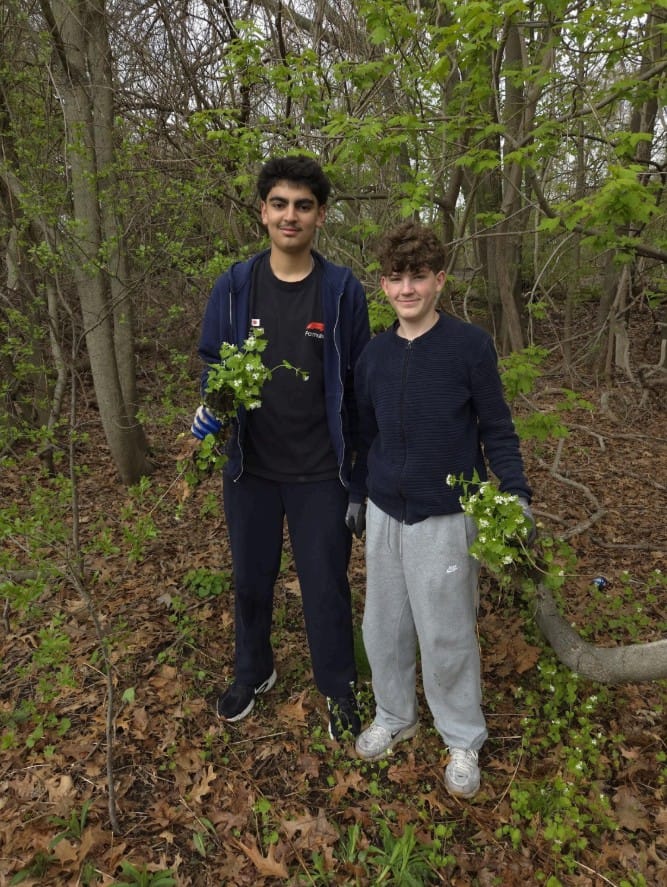
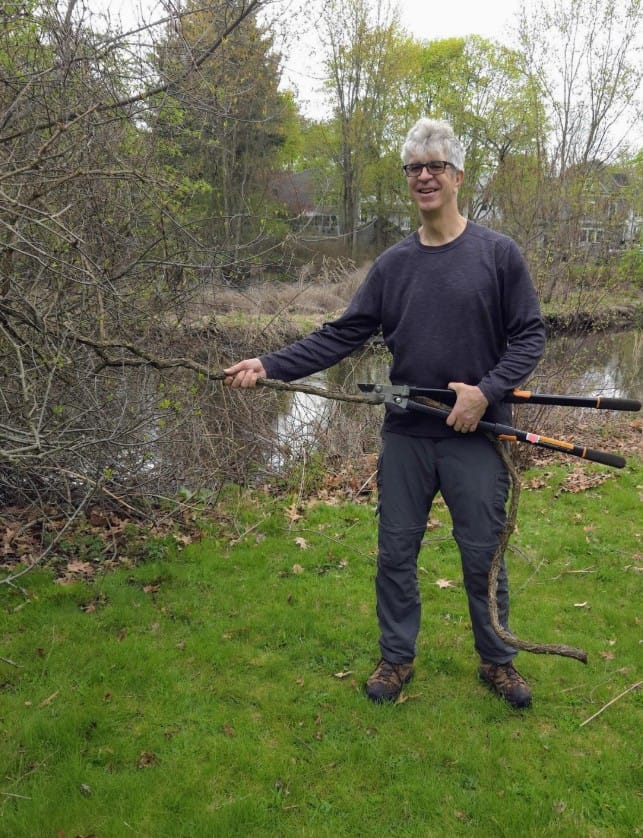
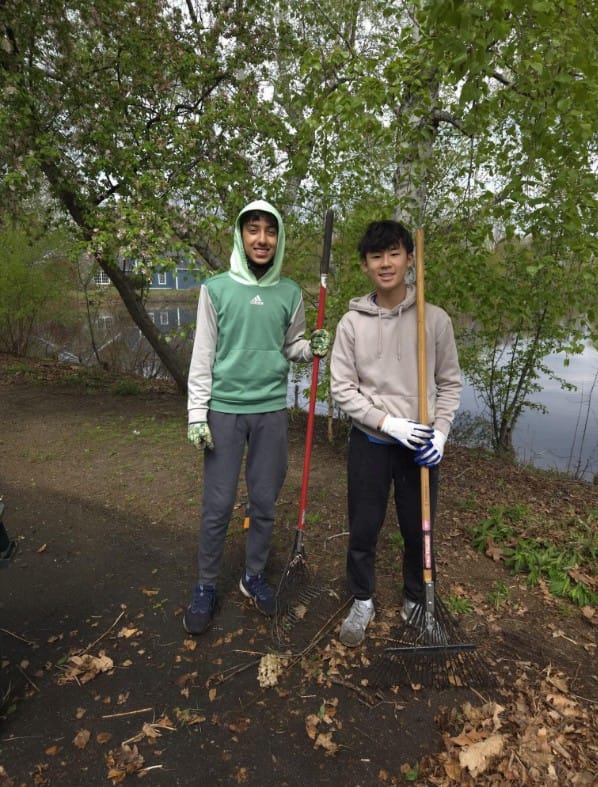
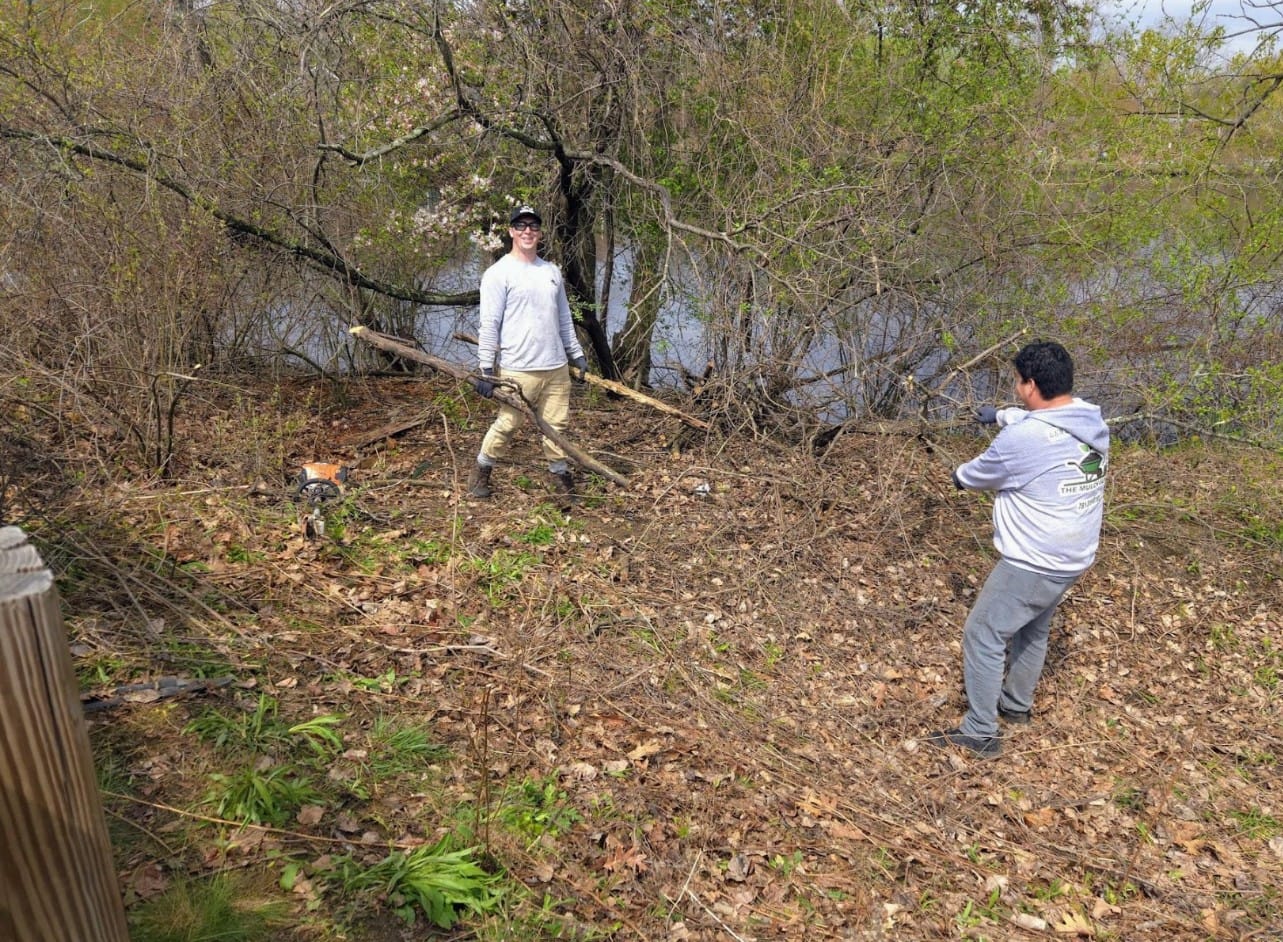
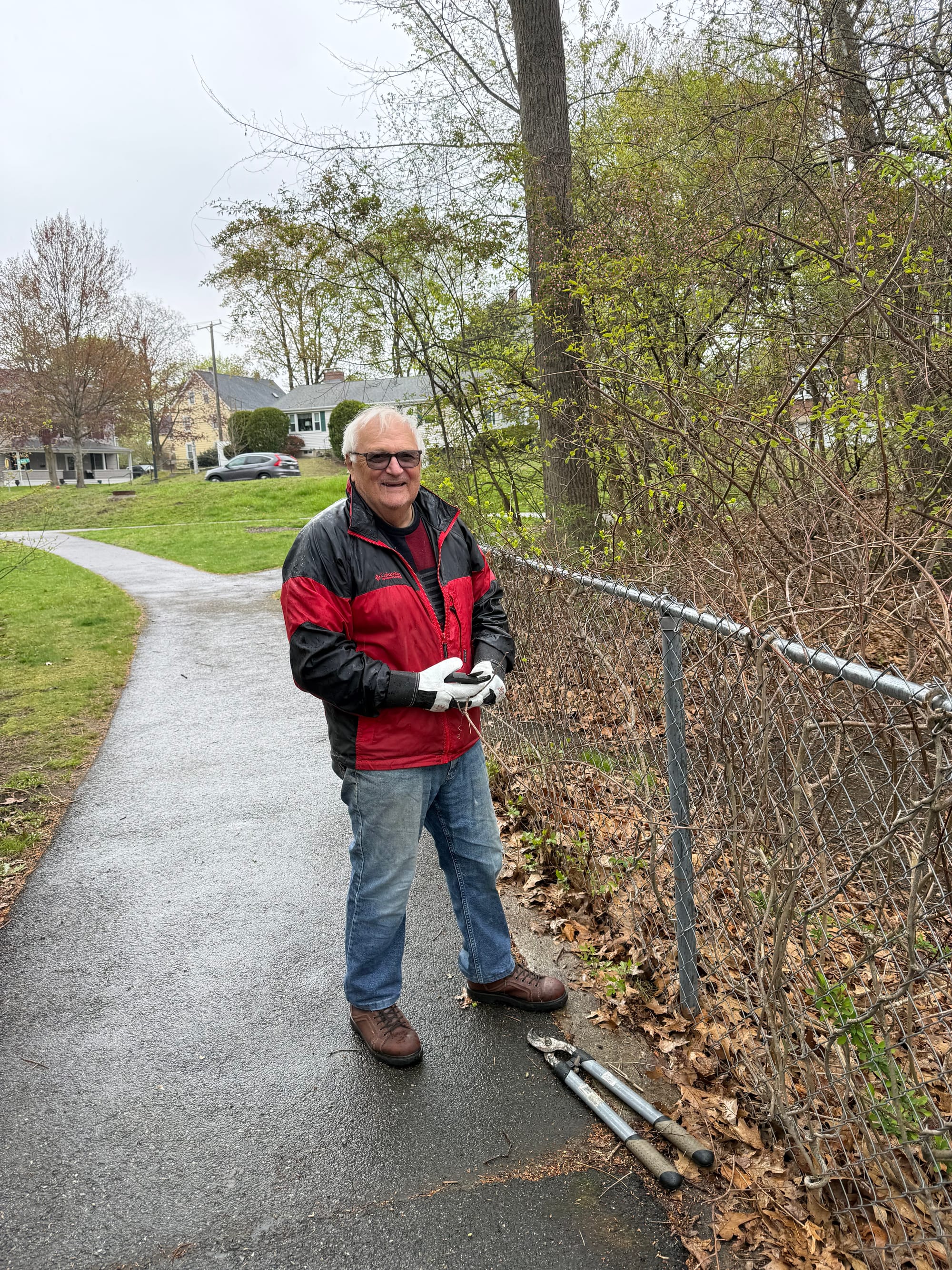
Clockwise, from the top, Najeeb Owies and William Thiery pulling Garlic Mustard at Davidson Park, David Tomaszewski removing Bittersweet at Davidson Park, The Mulch Guys’ Shaun Tibbo and Alex Colon tackling Oriental Bittersweet at Judkins Pond and Ayaan Bhakhri and Ethan Zhang at Judkins Pond. COURTESY PHOTOS/DEBORAH JOHNSON
Many invasive plants were originally introduced in the U.S. under a misguided
plan that due to their ability to grow fast in adverse conditions, they would help stabilize soil in difficult areas, such as along roadways. Unfortunately, the ability to grow quickly in poor conditions allows these plants to flourish, and choke out the native plants.
Oriental Bittersweet vines and Garlic Mustard were two invasive species that volunteers removed on Saturday. Oriental Bittersweet can grow to 60 feet, and the vines can harm or kill native trees as they girdle the trunks. Garlic Mustard is a herb that grows about 2 feet in height in shady areas; it is a threat because it can quickly establish itself in large groups that push out native species, and also releases compounds that inhibit other seed types from germinating in that area.
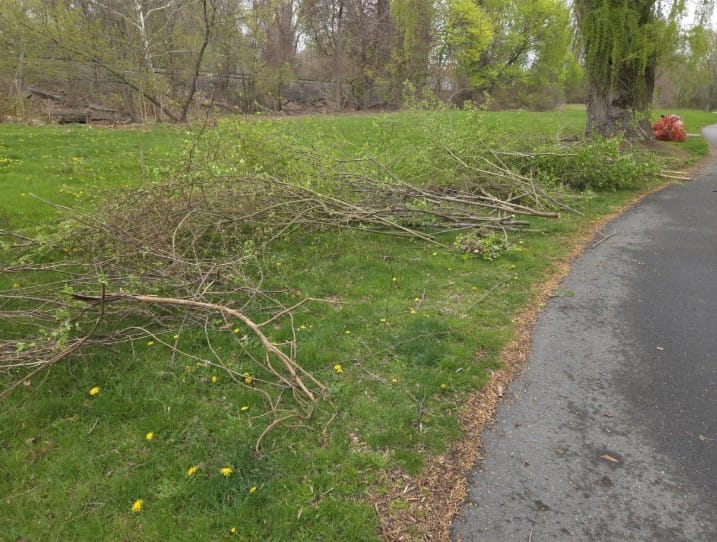
Volunteers, including The Mulch Guys, a local landscape business, and members of the Conservation Commission, removed huge piles of Oriental Bittersweet and other invasives from the banks of Judkins’ Pond. As many Jenks Center visitors enjoy bird watching from the back patio, that was one area of focus, to remove invasives blocking the view of the pond, and prune native shrubs to encourage better growth.
At Davidson Park, Jessica Zander guided the volunteers as they removed yards of tangled Oriental Bittersweet vine from along the riverbank, as well as Garlic Mustard from beneath the trees. She explained how the invasives’ seeds travel to the yards throughout Winchester, and can quickly overwhelm the home garden.
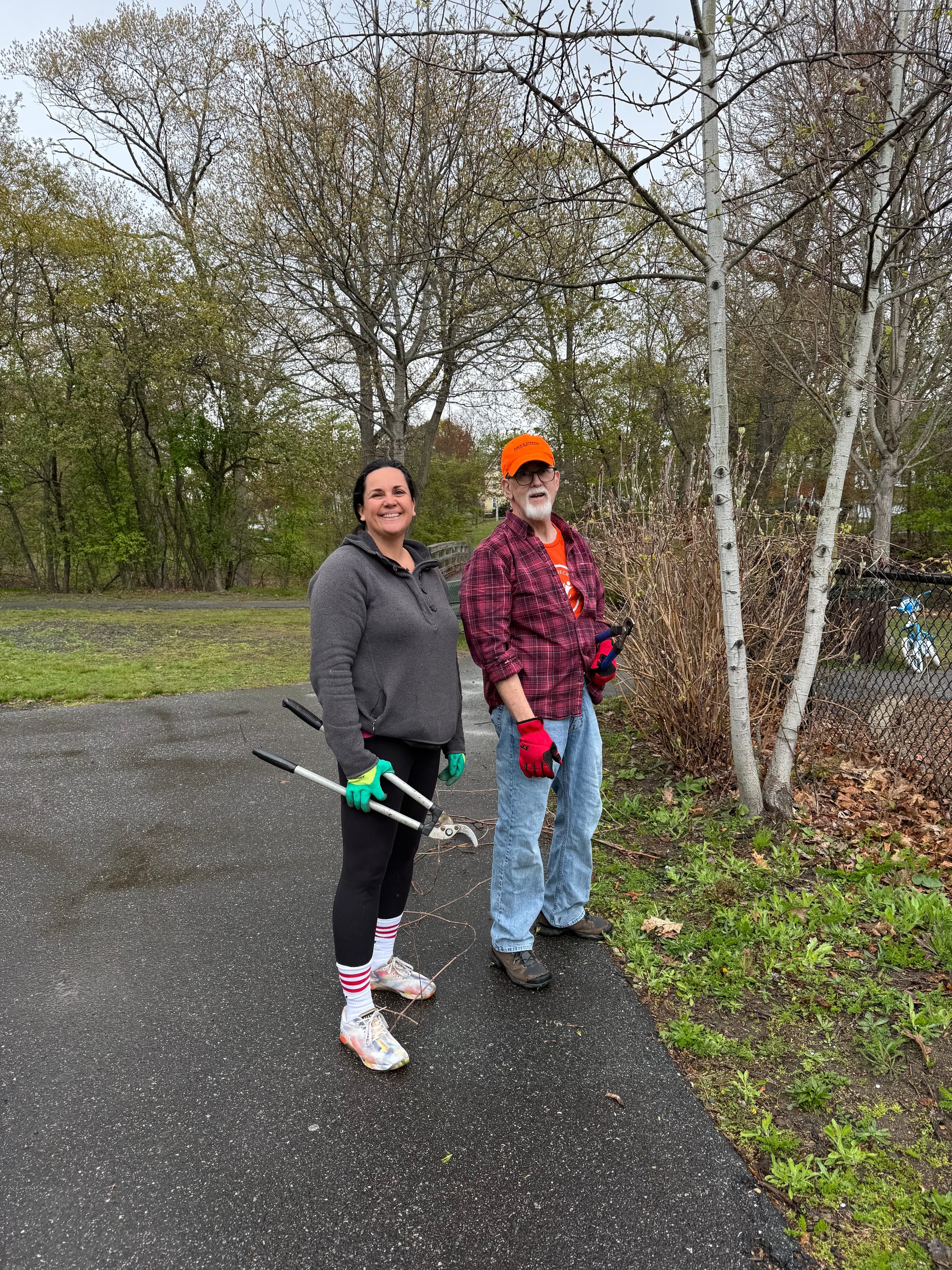
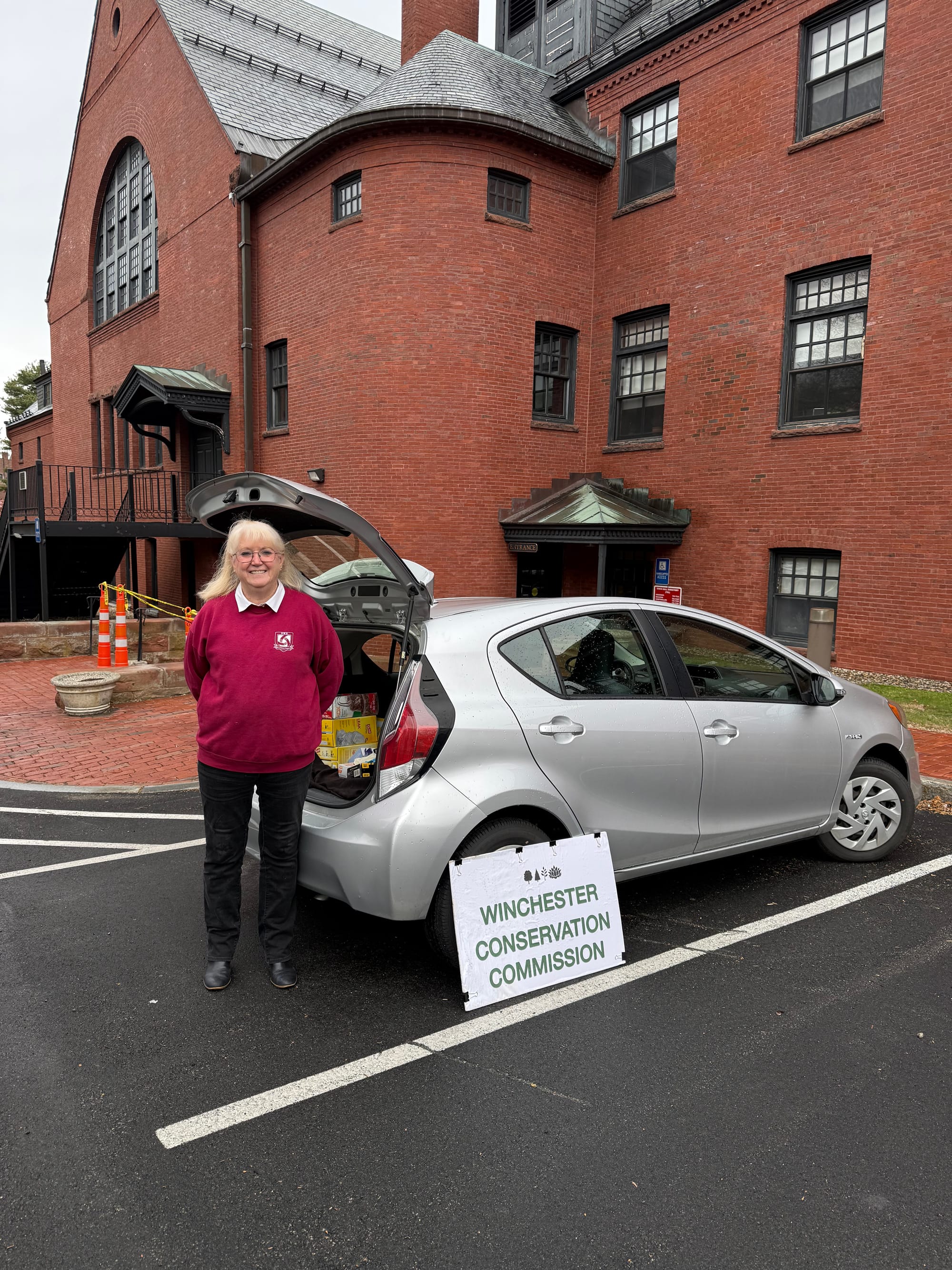
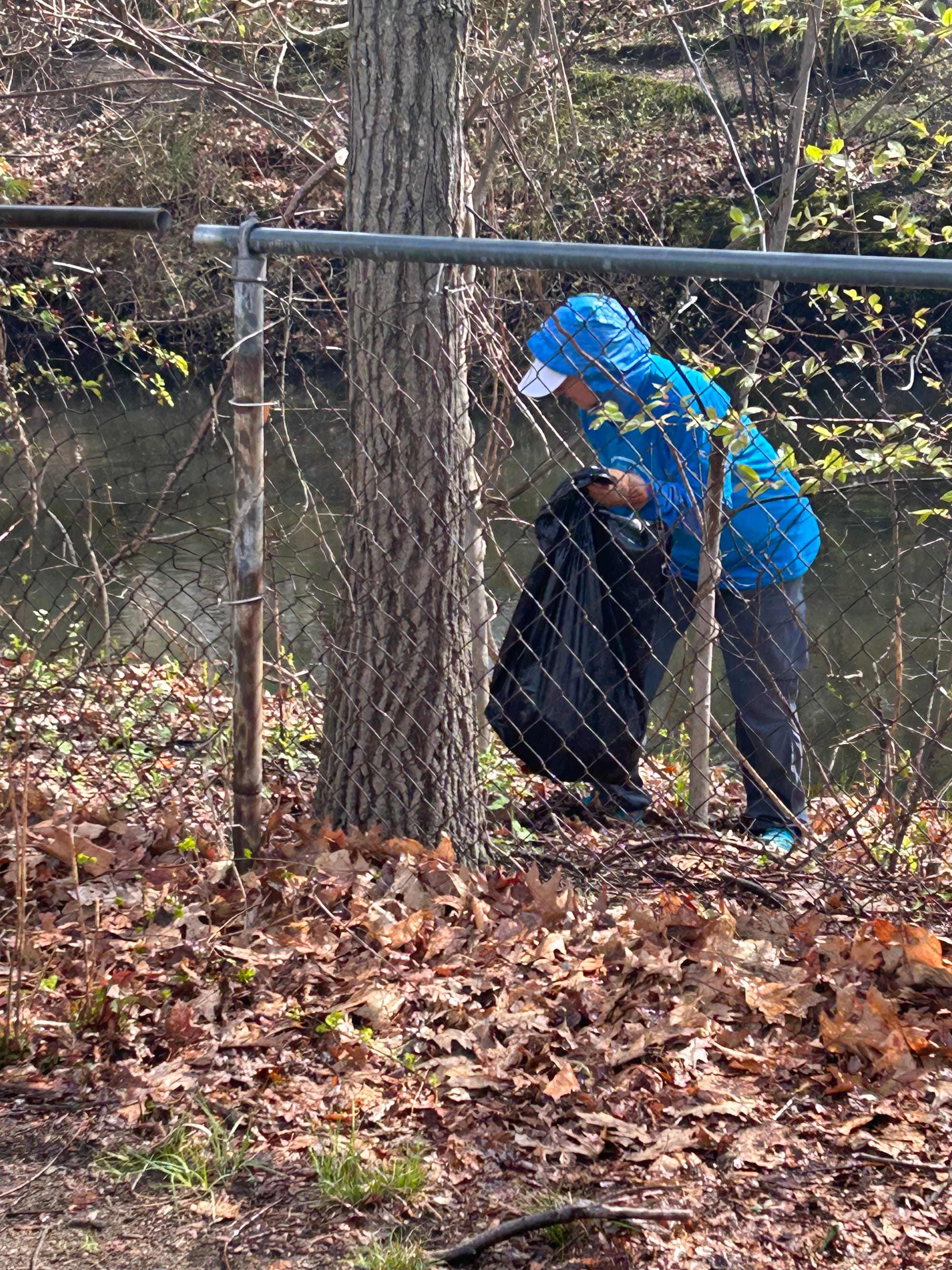
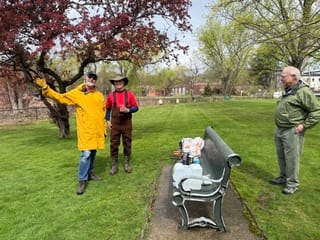
Volunteers from the Friends of Winchester Recreation were also on hand for Aberjona River Day on May 2. COURTESY PHOTOS/LAUREN HERRMANN
Removing invasives can be time consuming and costly; volunteering at events such as this annual clean up, responsibly taking care of your own property, and learning to identify and appropriately remove invasives and support native plants are all ways to help.
A single plant, such as invasive Multiflora Rose, can produce up to 500,000 seeds, so it is important to deal with these plants as soon as you notice an issue on your property. Seeds are often distributed by birds, wind or water.
One great online resource is Natick’s Invasive Plants Online Directory.
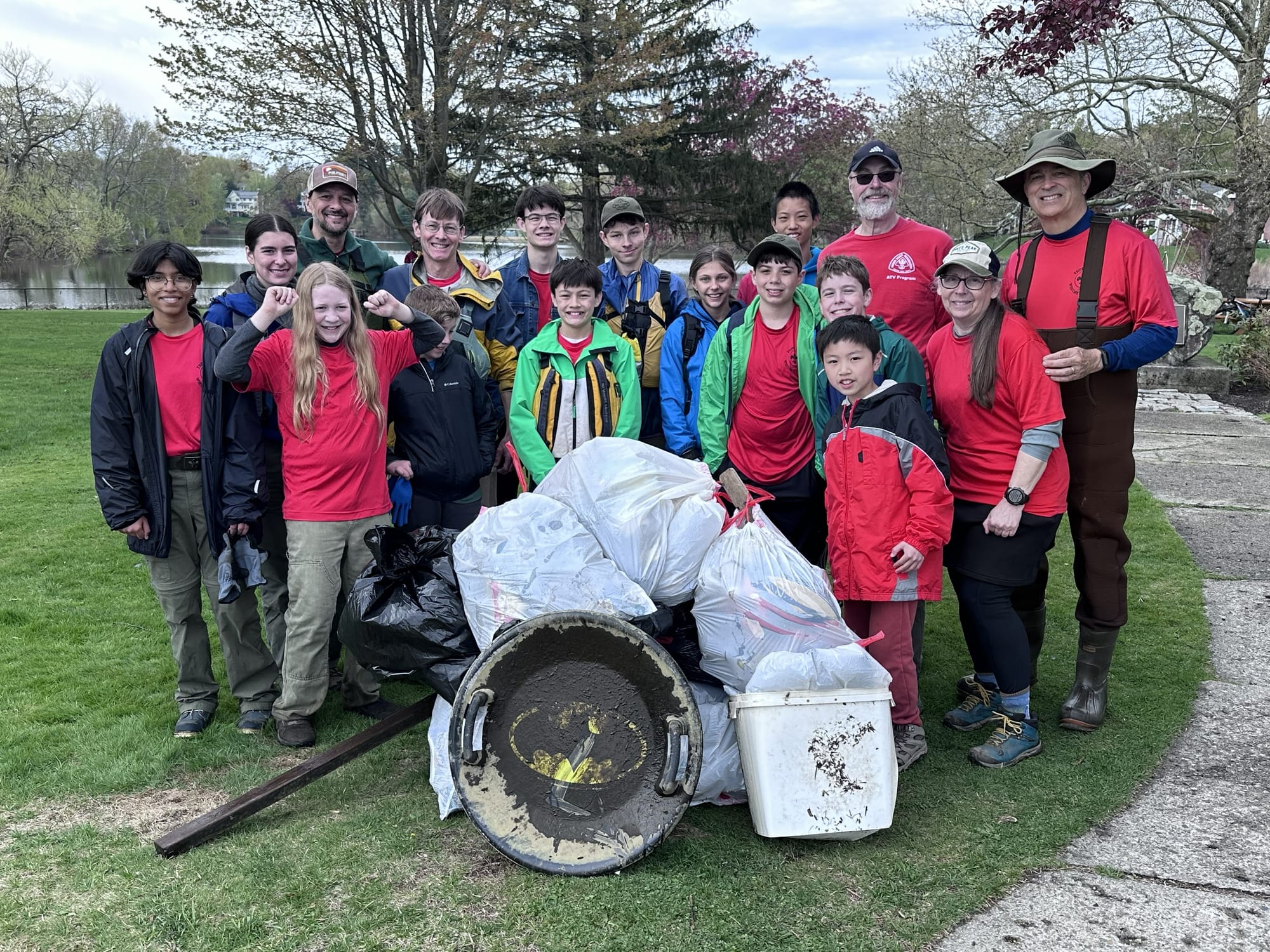
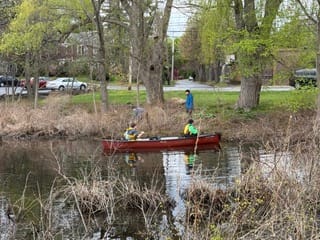
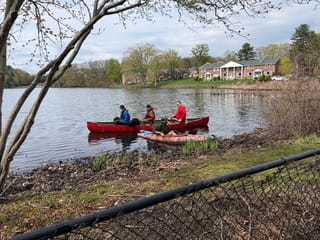
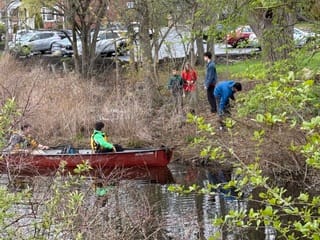
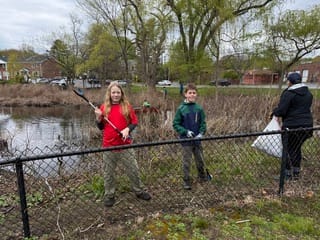
Winchester residents and scouts from Troop 507 collect trash from Elliott Park and the shores of Wedge Pond. COURTESY PHOTOS/RANDIE BLACK-SCHAFFER
The Friends of Winchester Recreation were also on hand for Aberjona River Day, focusing their efforts on the Stone Family Playground, including along the river bank between the playground and the fence.
Randie Black-Schaffer said, “Scouts from Troop 507 and local residents also removed trash from Elliott Park and the shoreline of Wedge Pond this morning. Despite the rain we removed a lot of trash!”