Table of Contents
Editor’s Note: Earlier this summer, we sent our intern Xiyue Eric Han out to meet public officials in Winchester and ask them what they do when it comes to town government. Here’s what he found out.
“If you could ask a hundred people what the powers and duties and responsibilities of the Select Board might be, you’d get 300 answers,” explained Bill McGonigle, a Select Board member.
Most residents know the Select Board runs the town. How far that goes is less clear.
What duties does the charter actually give the Select Board?
The town of Winchester runs on a home rule charter that splits the town into two parts. The Select Board heads the executive branch, while the legislative power belongs to the representative Town Meeting of 192 elected members.
Section 3-2 of the document designates that the Select Board shall have five members elected to three-year staggered terms. The board receives the executive powers of the town with two specific tools.
The first is appointing power. The board appoints the town manager, town counsel, the town comptroller, the registrar of voters, and the members of most appointed committees in town. Those range from the Conservation Commission to three of seven seats on the Capital Planning Committee.
The second is licensing. The Select Board serves as the town’s licensing board. If a restaurant on Main Street wants to serve alcohol, or a club wants to change its manager of record, that hearing goes onto the agenda of the board.
In its first weeks under current Select Board Chair Anthea Brady this spring, the board approved a 7% increase in water and sewer rates and worked through eight applications from restaurants seeking outdoor dining permits, which together claimed 19 public parking spaces downtown.
Although the charter designates five members to the Select Board, they’ve been down to four since Paras Bhayani’s resignation took effect on July 14. The vacated seat runs until March 2028, and there is no deadline given by the charter nor the town bylaws to fill it.
It is now up to the remaining four members to schedule a special election.
What doesn’t the charter give?
Article 4 of Winchester’s charter is the most surprising part of the document for many town residents. This is because the town manager, not the Select Board, is the chief administrative officer of Winchester. The manager sits in on all Select Board meetings with a voice but no vote.
The manager has the ability to hire and fire department heads, handles all purchasing, sets the compensation of the employees he/she appoints, and writes the proposed annual operating budget and capital improvement program.
The board’s leverage over all of that is indirect, but nonetheless real. It hires the manager. It can reject any appointment the manager makes, but only within 15 days and only by a majority vote of the full board.
And the board can remove the manager, through a process the charter lays out in detail: a preliminary resolution, an optional public hearing at which the manager may bring a lawyer and call witnesses, then a final resolution.
Winchester has spent the last year learning how much that hiring power matters and just how important the role of town manager is to make everything run smoothly.
Town Manager Beth Rudolph resigned in July 2025. Two internal interim managers followed. The board hired Christopher Senior in December on a two-year contract, and he was sworn in on Jan. 14. Counting the interims, five people occupied the manager’s chair before Senior sat down in it.
“We’re a strong manager, a town government form of government,” said Bhayani.
In other words, suppose the snow on the street needs to be cleared. The Select Board does not plow your street. Rather, it hires and evaluates the person who is responsible for the person who plows your street. And Town Meeting, not the Select Board, appropriates the money that pays for the plow.
Michelle Prior, a current member who chaired the board for two years, drew the same line during her re-election campaign back in March. When asked how she would decide what services to cut if the override failed, she explained that her role would be advisory. It would be up to the town manager, the school superintendent and Town Meeting to make that call.
The unwritten powers
Ask McGonigle what eats his time. It isn’t licensing nor appointments.
“There’s not just the de jure power, there’s de facto power,” he elaborated. “What the authority people give us because we are just town leadership. They look to us for guidance. They look to us for problem solving. They look to us to be a guidepost for where the town wants to go. And that is not very well prescribed.”
One of the clearest examples is a committee that appears nowhere in the town charter. When the Select Board decided Winchester needed a long-term financial plan, it built one.
The State of the Town Committee was created in early 2025, drew 25 members from five separate boards plus 7 residents that met nearly 20 times over eight months. Nothing authorized its existence, yet people came together to meet and produced a $11.5 million override proposal.
That gap between what the charter says and what residents expect is where most of the job lives. It also shapes what kind of participation works and what type of feedback is useful.
There are two different things people call public comment, and the board treats them differently. The formal kind is the item on the agenda where a resident gets three minutes. Members sit and listen. They are not supposed to ask questions or debate.
“It’s not an opportunity for ideation or work-shopping an idea,” McGonigle said. “It’s just to hear from one person at a time.”
The informal kind is everything else, and McGonigle is candid about how it gets weighted.
“If someone comes to me and they have a well-researched proposal that is packaged with a solution, that tells me exactly what needs to be done and what I have to do to make it successful, that’s going to get a lot more weight than somebody who just kind of comes up to me when I’m getting a cup of coffee and starts griping about how their neighbor has a tree that overhangs into their garden,” he said.
In other words, do your homework. Come with a specific “ask” in hand, not just a complaint.
What does the appointing power look like?
In January 2025, the Capital Planning Committee of the town had an open seat. The Select Board had a difficult decision between two applicants.
One was James “Jimmy” Johnson, who had served on the committee for around 20 years and had been involved in the town’s government for around double that time. Nobody in the room doubted that Johnson had the largest pool of knowledge about the town’s capital plan than anyone else.
“The guy was easily, hands down, the expert in town when it came to our capital plan,” explained McGonigle.
The alternative was Enzo Rascionato, a former Finance Committee chair with a background in finance and operations. He presented himself as someone who could bring a fresh perspective while respecting the established processes in the committee.
However, the board has a policy of its own making: after three consecutive terms, a member steps aside for at least a year before reapplying. The goal? To widen the pool of applicants who can serve and bring new ideas to the group. This applied to Johnson, meaning the expert was ineligible.
With a tough choice, the board followed it. The vote to approve Rascionato was unanimous.
McGonigle elaborated that he had a personal relationship with Johnson, calling him a “friend” and “a mentor.” Saying no to him was difficult for many reasons.
“Do I regret it? No. Because I have to live according to the law and according to the policies. Otherwise, what good are they?” continued the Select Board member. “This is, in my opinion, a nation, a town built upon laws, not upon people, not upon culture, personality.”
This policy was not mandated as a law, but rather as a self-imposed policy. At the time, Brady suggested the town had not been advertising seats as open before considering a termed-out incumbent for reappointment. The board applied the policy regardless.
The budget is the name of the game
Ask any of the members of the board what piece of the agenda has dominated the year and you will get the same answer. The budget.
On March 21, Winchester voters rejected an $11.5 million Proposition 2½ override, 2558 to 2265 (52.5% against). Proposition 2½ caps the growth of a town's property tax levy at 2.5% a year plus new growth. Winchester is more than 95% residential, meaning property taxes are one of the only levers available for increased budget.
This was the first failed override since 2017, breaking a streak of seven straight approvals.
McGonigle has been blunt about the override.
“We did our best to understand what the worst case scenario was if we couldn’t pass an override this past year,” he said. “It turns out that it was worse than we expected and continues to be.”
The $11.5 million number was not any member’s first choice and came after much compromise.
In February, Michael Bettencourt and Prior both argued for an operating override around the ballpark of $8 to $10 million. Bettencourt argued the number would allow for operations plus a bit of capital that would carry the town to the end of the decade and cover every school addition requested.
The majority lay between $12.5 and $15 million. The board settled at $11.5 million after negotiations ran nearly three hours.
That is the clearest illustration of what a five-member executive board looks like. Nobody got the number they wanted, they got the number they agreed on.
The town is in a structural deficit that is debilitating the town, at roughly $5 million. Proposition 2½ caps how much Winchester can raise property taxes, yet property taxes are nearly the town’s only source of money. The costs of the town are not capped, for example, health insurance by itself rose about 19% this past year.
“There’s only so much blood you can squeeze from a stone,” continued McGonigle.
The problem has not been with mismanagement. In February, Moody’s Ratings reaffirmed Winchester’s Aaa bond rating.
How the Select Board has pivoted after March 21 is crucial for the direction of the town. They have taken big steps in terms of health insurance benefits, instituted a hiring freeze at the Town Hall, and combed through other expenses.
Yet, there is a limited amount of these opportunities left. For McGonigle, it is more crucial to examine why the override failed.
“More of the pivot has to start happening, in my opinion, as to how to better campaign another override attempt,” he said. “Ultimately, I think information is the most critical tool in getting one passed.”
His colleagues argue differently.
Bettencourt pointed to 2019 when the town published a parallel budget showing exactly what types of cuts a defeat to the override would bring.
Brady argued the problem wasn’t local, rather pointing to the list of communities across Massachusetts facing overrides in their own fiscal 2026 or 2027.
Prior said that the town wasn’t ready for the task, citing financial plans and joint meetings between the Finance and School committees that hadn’t yet occurred.
Town Meeting passed a $171 million budget for fiscal 2027 back in April, totaling a 3.1% increase. The schools’ budget took up nearly half, at 47%. The remainder went toward municipal departments, benefits, energy, insurance and many smaller items.
How to participate
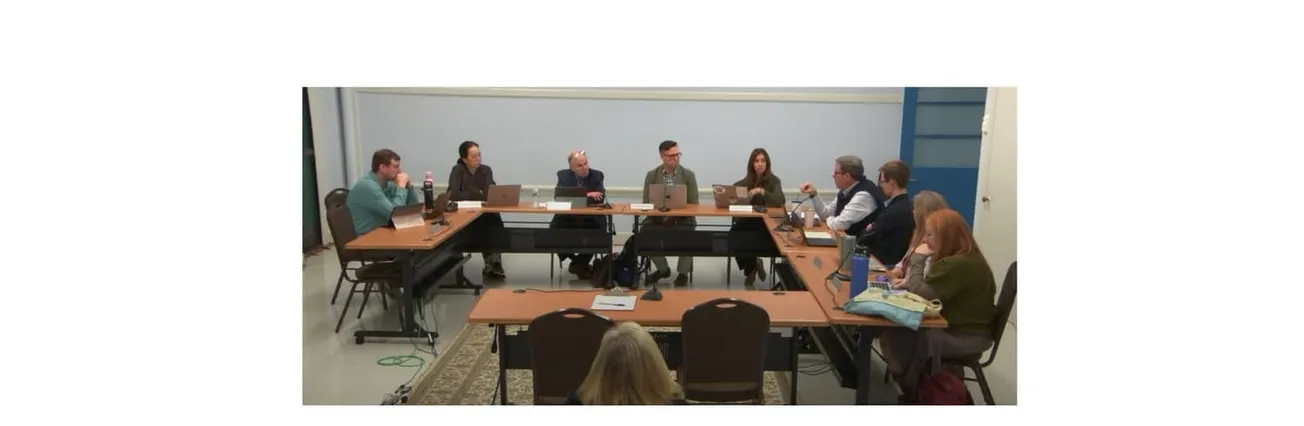
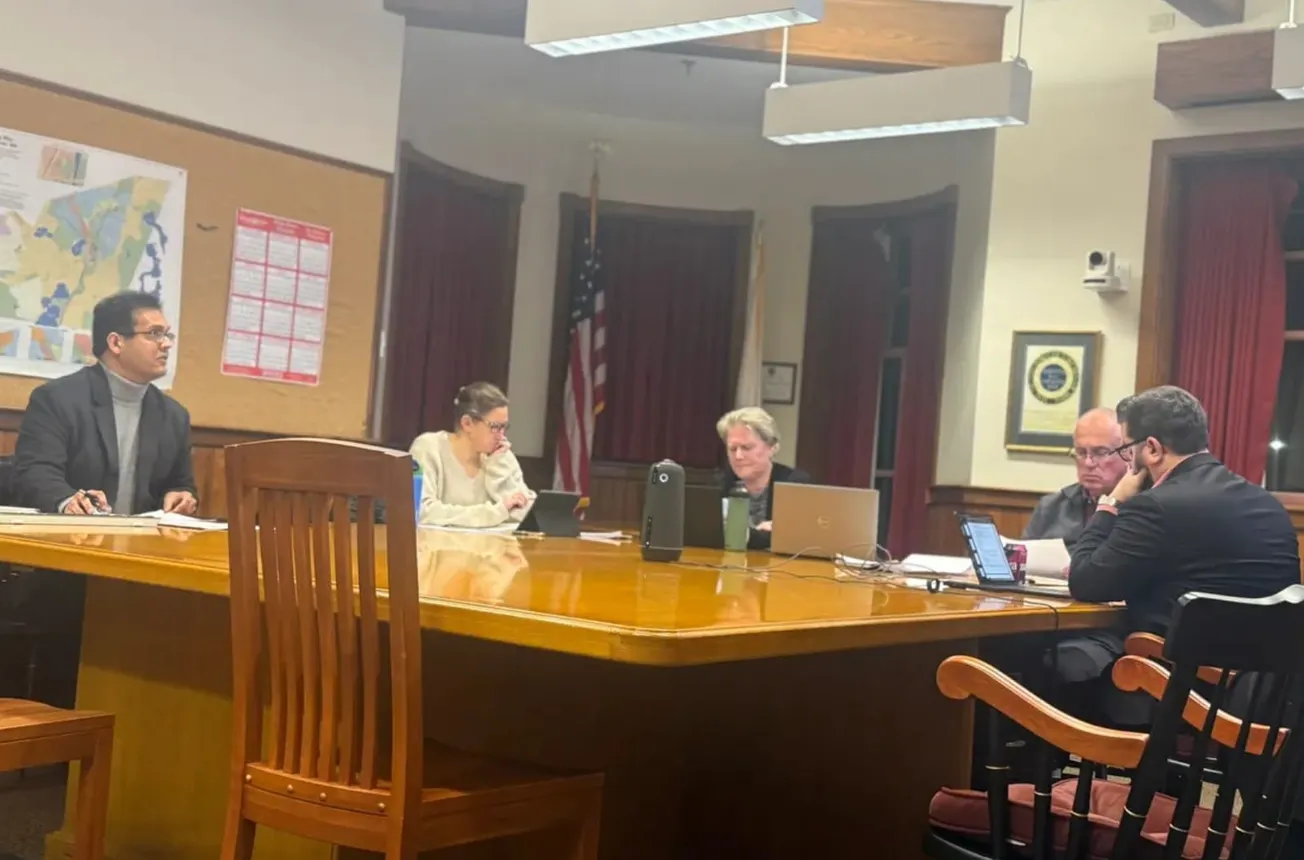
If you want to be in the room while decisions are made, the board meets in Town Hall and streams on WinCAM. Agendas and minutes are posted on the town’s website.
If you want to change what the town spends money on, the Select Board proposes and the Town Meeting decides. Your Town Meeting members are elected by precinct, and those seats are often uncontested. If you want a voice in that, consider running.
If you want to serve the town, the Select Board has power to appoint members to most committees in town. The three-term policy means seats come open on a regular schedule. Applications go through the town manager’s office.
Xiyue Eric Han is a student at Winchester High School. He has been an intern with Winchester News since summer 2025.