Table of Contents
Wyatt Biel’s citizen petition starts with a date. The temporary easement that let the town install a stormwater drain pipe across 176 Dothan St. expired on Dec. 4, 2018, according to the petition. The pipe stayed.
More than seven years on, the petition says, no permanent easement has ever been obtained or recorded. The owners say the pipe halves the buildable area of the lot. To force a fix, they put the petition on the spring warrant.
It is one of five.
At the back of the warrant, Winchester voters will find Articles 39 through 43 — citizen petitions on Transfer Station oversight, sidewalk snow clearing, anticoagulant rat poison, ranked-choice voting and that drain pipe. Together they ask the same basic question: when residents think town government has not moved far enough or fast enough, what can Town Meeting make happen?
The five sort into three groups. Two ask whether the town has been transparent and properly authorized. Two propose local rules for problems the sponsors say residents face every winter or every summer. The fifth proposes a study of how the town picks its leaders.
Transparency and authorization
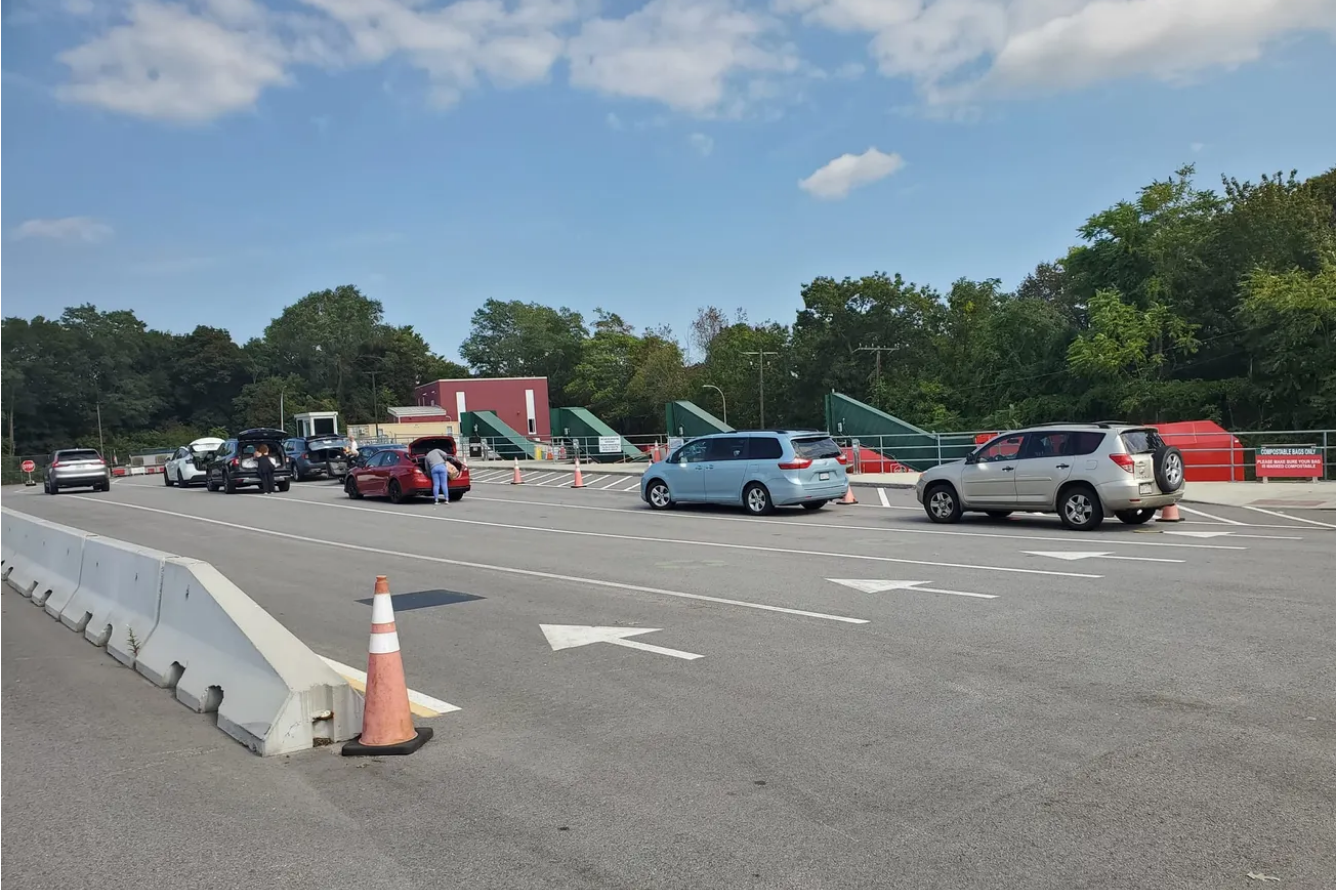
Article 39, sponsored by George Nowell, would create a five-member Transfer Station Data and Resource Committee. Its charge is technical: gather and organize revenue, expense and waste-generation data and report annually to Town Meeting.
The committee would not set fees or policy.
The motion book describes a Transfer Station with annual revenues and expenses of roughly $2.3 million. The town’s fiscal year 2027 budget book carries Transfer Station-related borrowing, engineering, trailers and capital items.
Nowell’s argument, as laid out in the motion book, is that a standing fact-finding body reporting in plain English to Town Meeting once a year would consolidate information that is now spread across departmental and budget materials.
The same fiscal 2027 budget book references a Transfer Station working group the town manager has said he plans to convene to review fees and charges and report to the Select Board by July 1.
The two bodies would overlap in subject matter and differ in audience: the working group is to report to the Select Board; Nowell’s proposed committee would report to Town Meeting.
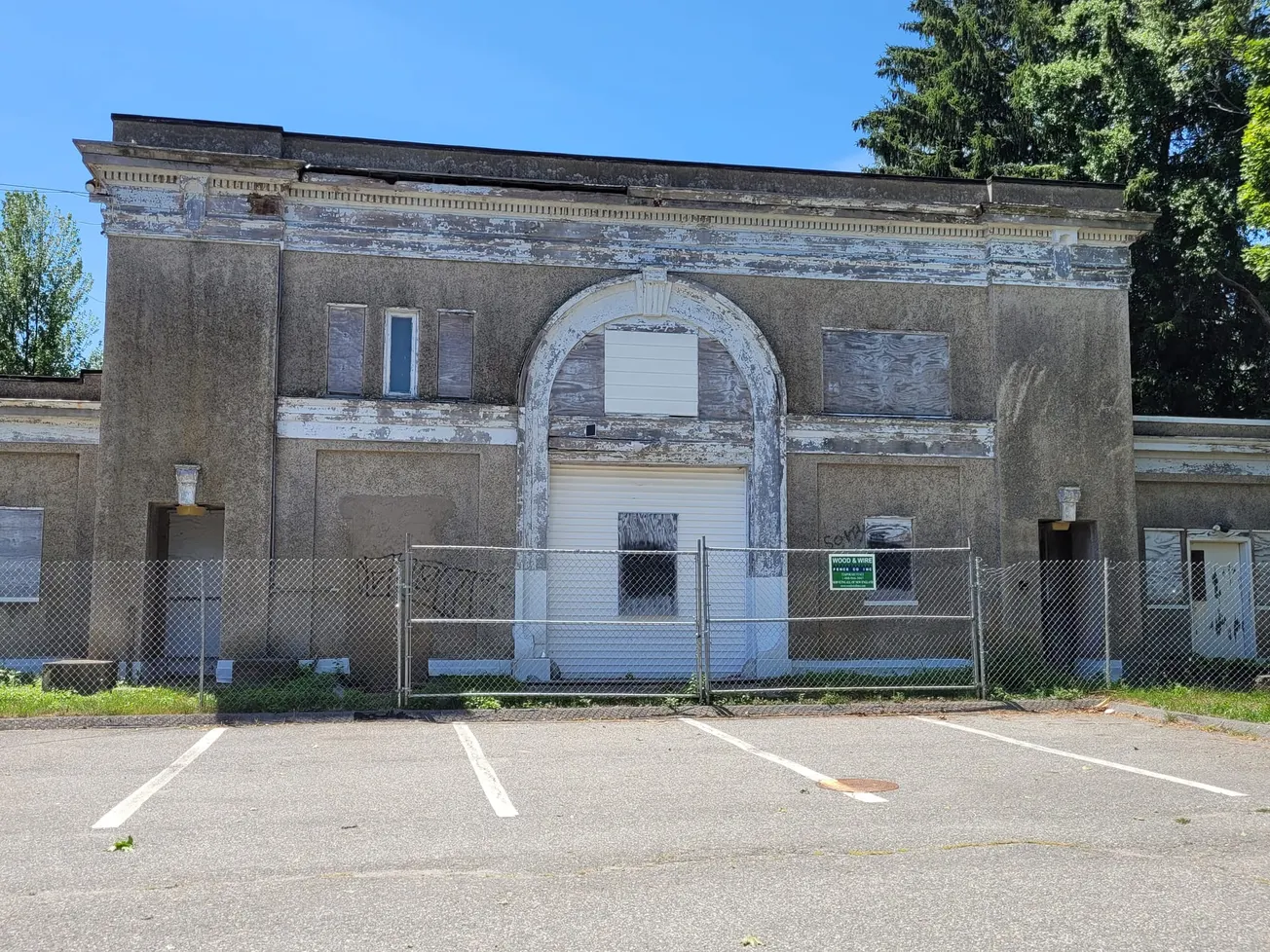
Article 43, sponsored by Biel, would direct the town to remove the stormwater drain pipe crossing 176 Dothan St., restore the property, pay the costs and reroute the flow through public right-of-way.
The chronology in the motion book is short. The pipe was installed in 2018 under a temporary easement. That easement expired on Dec. 4, 2018. No permanent easement was ever obtained or recorded. The property owners say the pipe constrains rebuilding and halves the buildable area of the lot.
Article 43 would put the question of the unrenewed easement to Town Meeting rather than to a court.
Local rules
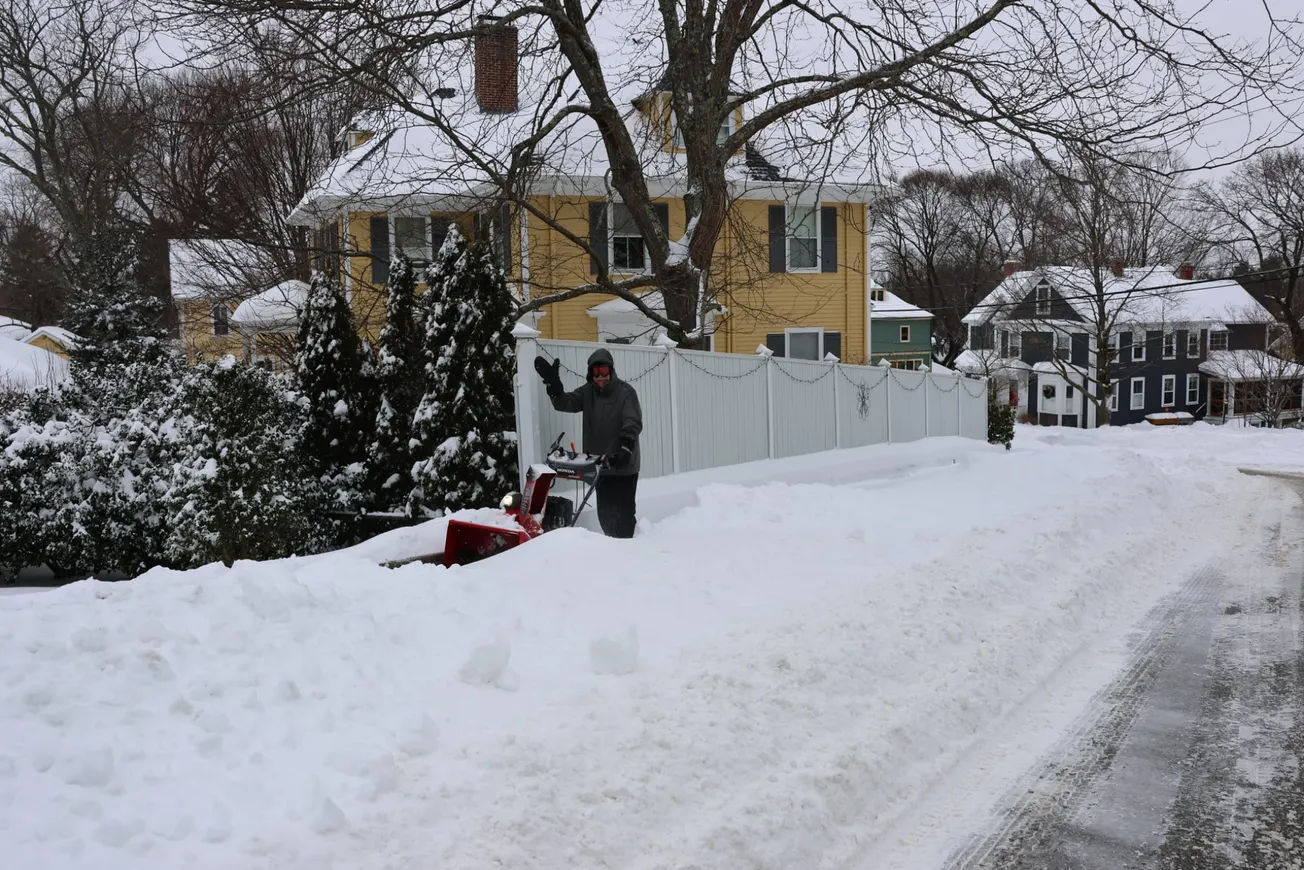
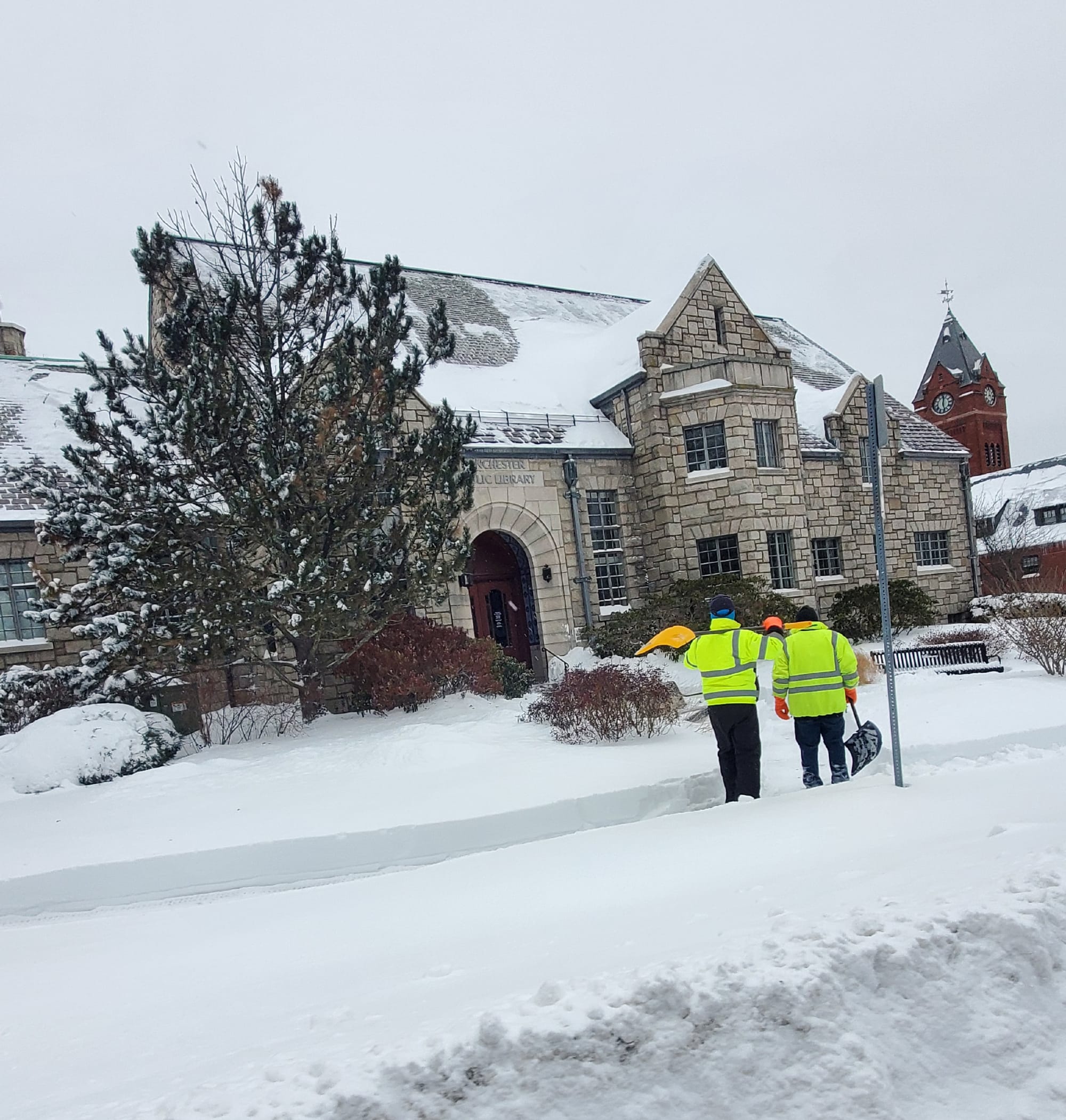
Article 40, sponsored by Shamus Brady, would expand Winchester’s snow-and-ice clearing rules.
Residential abutters would have eight hours of daylight after a storm to clear sidewalks wide enough for two pedestrians. Apartment houses, condominiums and businesses would have three hours to clear the full width.
Fines would run $25 a day for residential violations and $50 a day for apartments, condominiums and businesses.
The article includes a hardship-exemption track and a three-member committee to review the bylaw each year.
The motion book says Article 40 is largely based on Arlington’s current bylaw. Arlington uses the same eight- and three-hour deadlines and the same $25 and $50 daily fines, with hardship relief for some residents.
Other Massachusetts municipalities have similar rules. Cambridge requires private property owners to clear sidewalks within 12 hours of daytime snowfall and before 1 p.m. after overnight snow, with $50-a-day fines.
Brookline, after a December 2022 vote, requires a 36-inch clear path within 24 hours for most properties and three hours for commercial buildings and large multifamily ones, with penalties that escalate to $200 for repeat commercial offenders.
Franklin, East Longmeadow and Wakefield have variants on the books, some dating back decades.
The vote in front of Town Meeting is whether Winchester wants the Arlington model on its own books.
Article 41, sponsored by Katherine Valone, would add a new bylaw chapter aimed at eliminating all anticoagulant rodenticides in Winchester, both first-generation anticoagulant rodenticides (FGARs) and second-generation anticoagulant rodenticides (SGARs).
The article points pest-control work toward Integrated Pest Management (IPM) as the alternative.
Anticoagulant rodenticides interfere with Vitamin K and cause internal bleeding. SGARs are stronger, persist longer in the body and pose a higher risk of secondary poisoning when predators or scavengers eat poisoned rodents.
The Massachusetts Division of Fisheries and Wildlife says SGARs can poison wildlife both directly and secondarily. The state’s wildlife-and-rodenticide page reports that SGAR poisoning was the confirmed cause of death of two bald eagles in 2021 and a contributing cause of death of another bald eagle in 2023.
The U.S. Environmental Protection Agency (EPA) has pulled SGARs from the consumer market and limits their registration to commercial and structural pest-control uses.
Winchester debated a narrower rodenticide article in spring 2025 that focused on eliminating SGARs on town-owned property. The 2026 article goes broader in two ways. It covers all anticoagulant rodenticides, not just SGARs. And it sets the policy in a bylaw chapter rather than a town-property restriction.
Local IPM practice is also part of Winchester’s record. Publicly available Winchester school IPM records show that town schools maintain IPM plans, and a 2025 outdoor plan for Winchester High School lists bromadiolone-based products, including Contrac Blox, among pesticides that may be used if needed. The records do not show how often the products are actually applied.
The 2025 Committee on Government Regulations memo on the earlier Winchester rodenticide article flagged a set of procedural questions: whether rodenticide rules belong in the bylaws or with the Board of Health, whether state pesticide law occupies enough of the field that a local bylaw becomes awkward or incomplete, and whether a Winchester chapter would accomplish what similar measures have done in other communities. Even chapter numbering needed cleanup.
The article sits inside an active state-level argument. House Bill 965, “An Act restricting the use of rodenticides in the environment,” remains pending in the Massachusetts Legislature.
Mass Audubon led a 2025 rally at the State House in support of broader restrictions.
The state already regulates pesticides in schools and day cares under a chapter of the Code of Massachusetts Regulations (333 CMR 14.00) that promotes IPM in sensitive settings.
The Town Meeting question is whether Winchester moves on its own before the Legislature acts, and whether a bylaw chapter is the appropriate mechanism.
A study, not an adoption
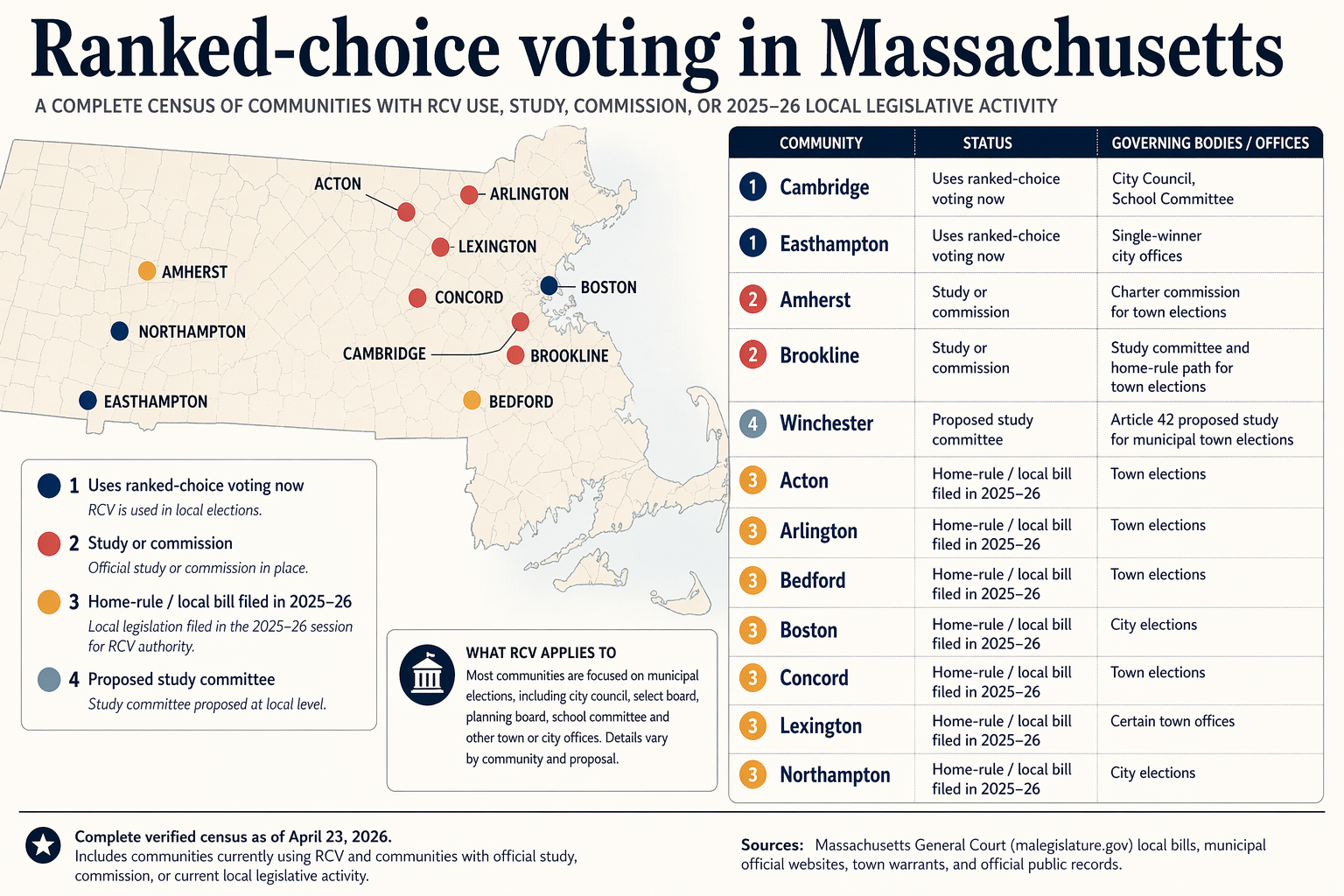
Article 42, sponsored by John Healey, would not adopt ranked-choice voting in Winchester. It would create a seven-member study committee charged with examining the feasibility and effects of ranked-choice voting and reporting recommendations to the fall 2026 Town Meeting.
The vote on the article is on whether to study the system, not whether to adopt it.
Ranked-choice voting lets voters rank candidates in order of preference instead of picking just one. If no candidate wins a majority of first-choice votes, the lowest finisher is dropped and those ballots are reallocated to voters' next choices, with the process repeating until a candidate clears a majority.
Supporters of the method make two main arguments. First, that it produces winners who hold majority support after votes are reallocated, rather than candidates who win pluralities in crowded fields. Second, that it lets voters mark their honest first preference without worrying they will help elect a candidate they oppose by drawing votes away from a more competitive choice they also like.
Other Massachusetts communities have followed similar study-first paths. Cambridge has elected its City Council and School Committee by proportional representation using ranked ballots since 1941, and tells voters as much in its election materials.
Easthampton voters approved ranked-choice voting in 2019 for single-winner city races and used the system for the first time at the November 2021 city election.
Brookline created a study committee after a November 2020 Town Meeting vote, charged it formally in January 2022 and produced a final report in May 2023.
Amherst built a Ranked-Choice Voting Commission into its town charter. Concord reauthorized a home-rule petition in 2025.
he Massachusetts Legislature is still working a local-option municipal ranked-choice voting bill through the 2025-2026 session.
The vote in front of Town Meeting is whether Winchester wants to formally join the Massachusetts communities that have studied election reform.
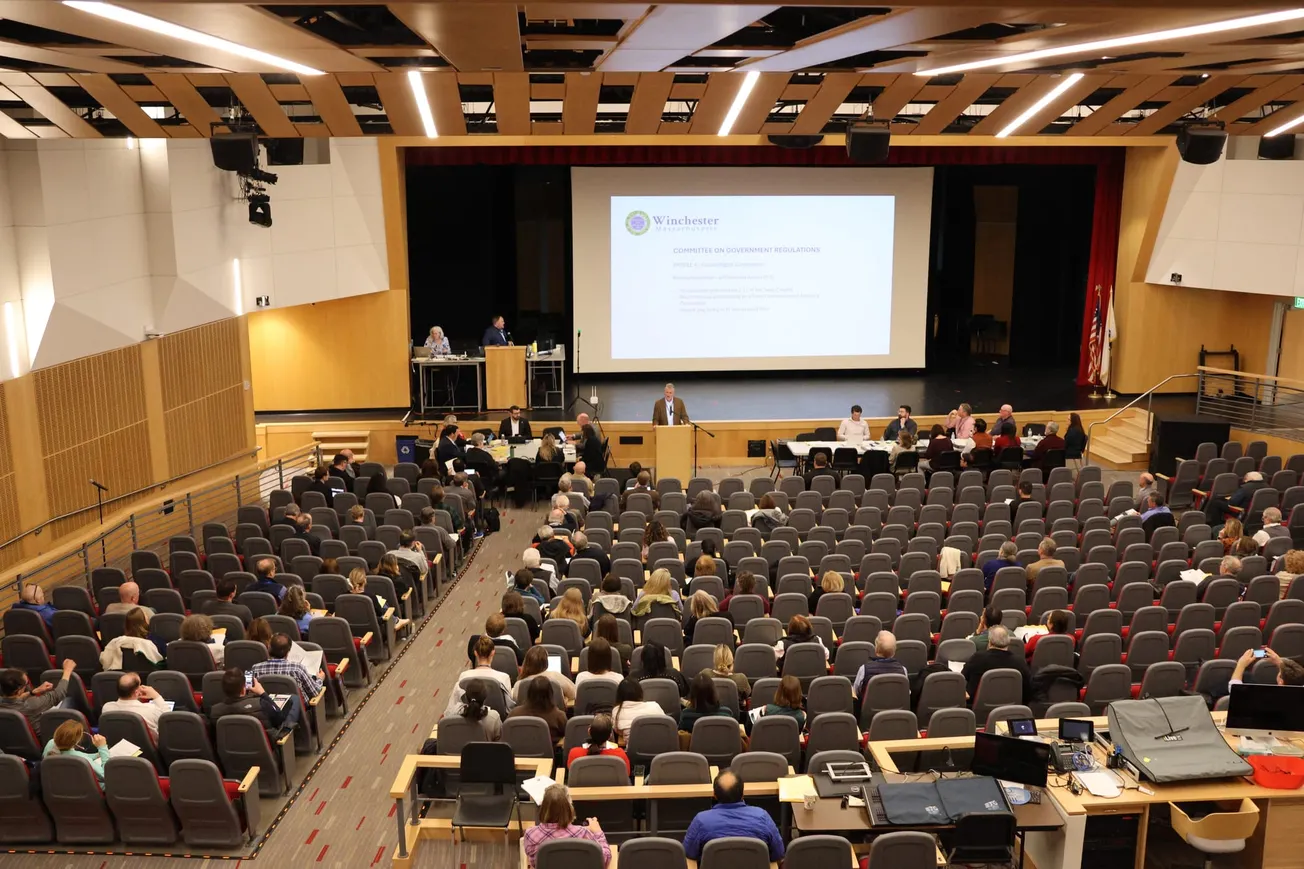
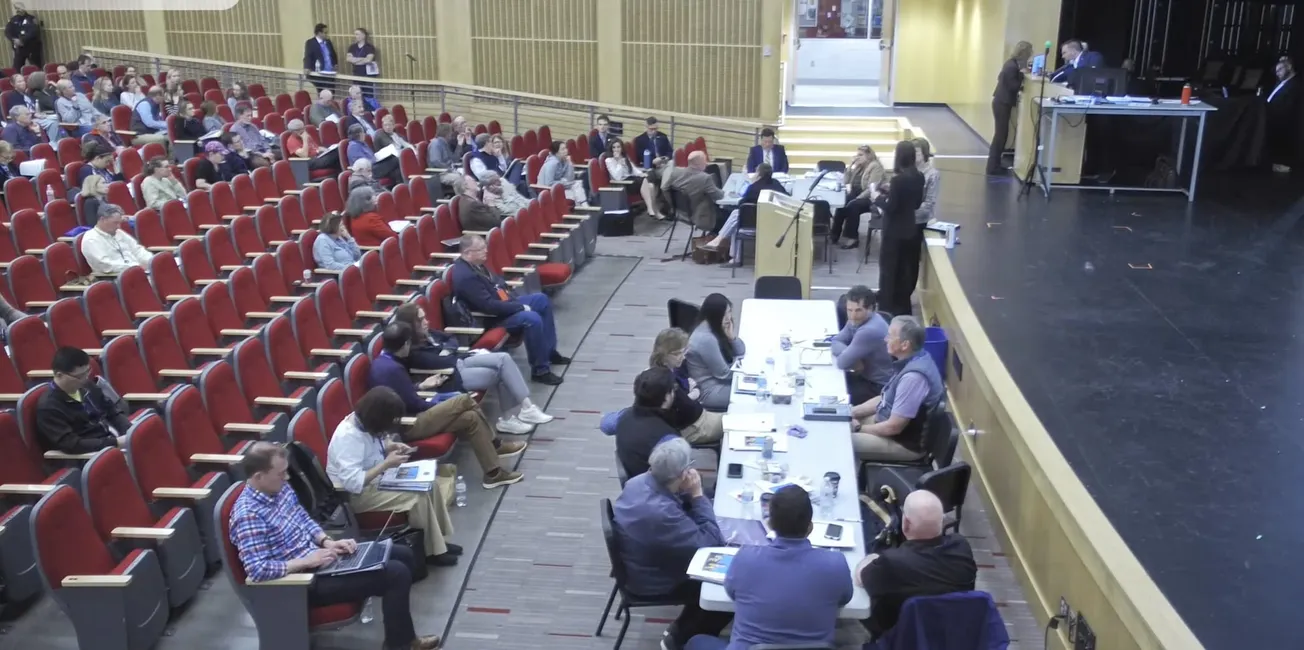
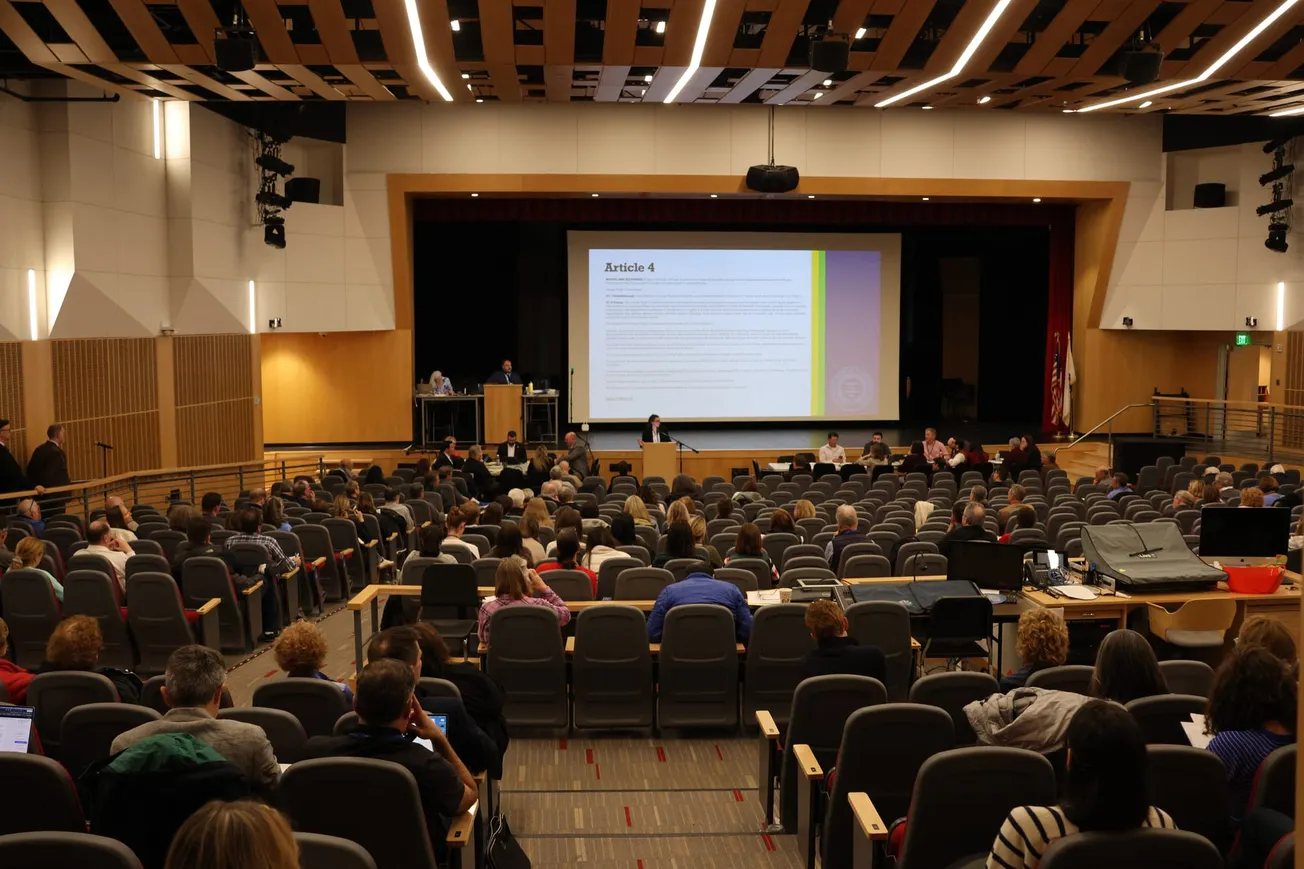
Town Meeting opens Monday, April 27. The citizen petitions are at the back of the warrant, as Articles 39 through 43. The full 2026 spring warrant and a guide to every article are available by clicking here.
Will Dowd is a Massachusetts journalist who covers municipal government and community life for Winchester News. He runs The Marblehead Independent, a reader-funded digital newsroom.